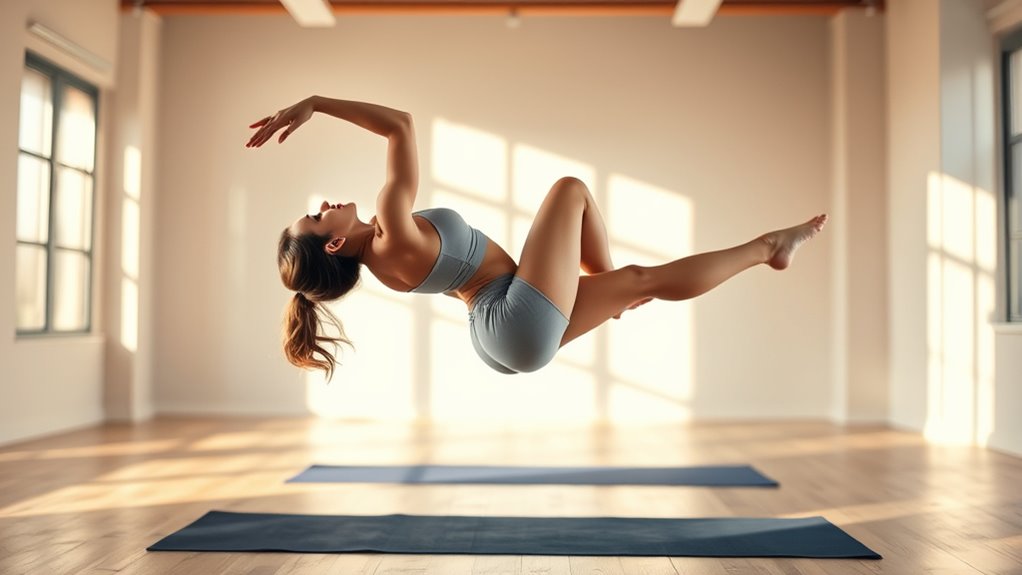

Floating hip circles and pelvic tilts are excellent exercises to boost hip mobility, strengthen your core, and improve posture. With controlled movements, you engage key muscles like glutes and abs, helping to reduce stiffness and lower back discomfort. Performing these regularly can enhance your movement efficiency and stability. Keep practicing consistently and focus on deliberate motions—there’s more to discover that can elevate your practice even further.
Key Takeaways
- Floating Hip Circles and Pelvic Tilts improve hip mobility, core stability, and posture, reducing stiffness and lower back discomfort.
- Proper technique involves slow, controlled movements that activate hip and core muscles for maximum benefit.
- Regular practice enhances movement efficiency, stability, and body awareness, supporting injury prevention and daily activity ease.
- These exercises can be performed lying down or standing, requiring minimal equipment and suitable for home or gym routines.
- Consistent mindful execution fosters personal growth, mindfulness, and alignment with the Law of Attraction principles.
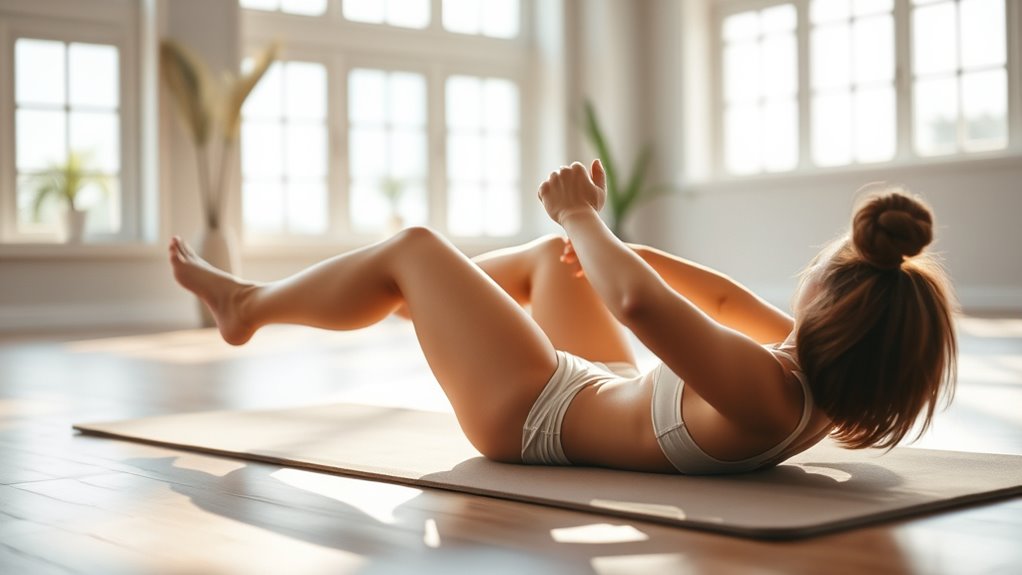
If you’re looking to improve your flexibility and core stability, incorporating floating hip circles and pelvic tilts into your routine can make a noticeable difference. These simple yet effective exercises target key areas that often get neglected, helping you move more freely and with better control. When you focus on hip mobility, you open up your hips, reducing stiffness and preventing injuries. At the same time, strengthening your core through these movements enhances your overall stability, which benefits everything from daily activities to athletic performance. Techniques like these also support the principles of the Law of Attraction by fostering a positive mindset through intentional movement and self-care practices.
Floating hip circles are a dynamic way to loosen up your hips and increase their range of motion. To do them, you start by standing or lying down, then lift one leg slightly off the ground, keeping it relaxed. Moving your leg in slow, controlled circles, you focus on engaging your hip muscles and maintaining balance. The key is to keep the movement smooth and deliberate, avoiding unnecessary tension or jerks. As you perform these circles, you activate the muscles around your hips—like the glutes, hip flexors, and rotators—improving hip mobility. This increased mobility helps you move more effortlessly, especially during activities that require bending, twisting, or lateral movements.
Pelvic tilts are equally effective for enhancing core stability and aligning your pelvis properly. To perform pelvic tilts, lie on your back with knees bent and feet flat on the floor. Gently tilt your pelvis backward, pressing your lower back into the ground, then tilt it forward, lifting your tailbone slightly. Focus on engaging your abdominal muscles throughout the movement. These tilts strengthen your deep core muscles, providing better support for your spine and pelvis. As your core stabilizes more effectively, you’ll notice improvements in posture and a reduction in lower back discomfort. Plus, pelvic tilts serve as a foundation for more advanced core exercises, making them a valuable addition to your fitness routine.
Incorporating these exercises regularly helps create a balanced connection between your hips and core, which is *essential* for overall stability and mobility. They’re simple enough to do at home or at the gym, with minimal equipment needed. Over time, they enhance your movement efficiency, decrease the risk of injury, and make everyday activities easier. Remember, consistency is key—performing floating hip circles and pelvic tilts daily or a few times a week will yield the best results. Developing awareness of your body’s movement patterns can also support your overall well-being and personal growth by promoting mindfulness and intentional action. With patience and focus, you’ll notice your hip mobility improving and your core becoming stronger, empowering you to move with greater confidence and control.
Frequently Asked Questions
Can These Exercises Help With Chronic Hip Pain?
Yes, these exercises can help with chronic hip pain. They improve joint mobility and promote muscle activation around your hips, which can reduce stiffness and alleviate pain. By regularly practicing floating hip circles and pelvic tilts, you strengthen supporting muscles and increase flexibility. This combination helps stabilize your hips, potentially decreasing discomfort and improving your overall movement. Always consult a healthcare professional before starting new exercises for persistent pain.
Are There Any Contraindications for Pelvic Tilts?
Think of pelvic tilts as a gentle dance, but like any dance, you need to know the steps. If you’re pregnant or have osteoporosis, avoid these moves or consult your doctor first. Pregnancy precautions and osteoporosis considerations are key, as pelvic tilts might strain your bones or overstretch your abdomen. Always listen to your body and seek guidance to make sure you’re safe while maintaining your fitness routine.
How Often Should I Perform Floating Hip Circles?
You should perform floating hip circles about 3 to 4 times a week to improve your hip mobility. Aim for 10 to 15 repetitions per session, ensuring you’re moving slowly and with control. This exercise frequency helps maintain flexibility and strength in your hips without overdoing it. Remember to listen to your body and adjust the reps or days if you experience discomfort or fatigue.
Can These Exercises Improve Athletic Performance?
Yes, these exercises can improve your athletic performance by enhancing hip mobility and core stability. When you regularly perform floating hip circles and pelvic tilts, you strengthen your core muscles and increase flexibility in your hips, which helps with better movement efficiency and injury prevention. This improved mobility and stability allow you to move more freely and powerfully during sports, boosting your overall athletic ability.
Are Modifications Needed for Pregnant Women?
You should definitely consider pregnancy modifications for these exercises. Imagine your body gently shifting as you move—this means adapting the movements to guarantee prenatal safety. During pregnancy, your body needs extra care, so modify floating hip circles and pelvic tilts accordingly. Always consult your healthcare provider to tailor these exercises safely, preventing strain and supporting your changing body. Prioritize comfort and safety to enjoy the benefits without risk.
Conclusion
So, next time you do those floating hip circles and pelvic tilts, remember they’re your secret weapon against stiffness and imbalance. Keep moving like a modern-day yogi, and don’t forget to have a bit of fun—maybe even pretend you’re at a medieval feast, swirling your hips like a dance hall king. Consistency is key, so stay committed, and soon you’ll feel more agile and centered. Just don’t forget your trusty scrolls… or yoga mat!