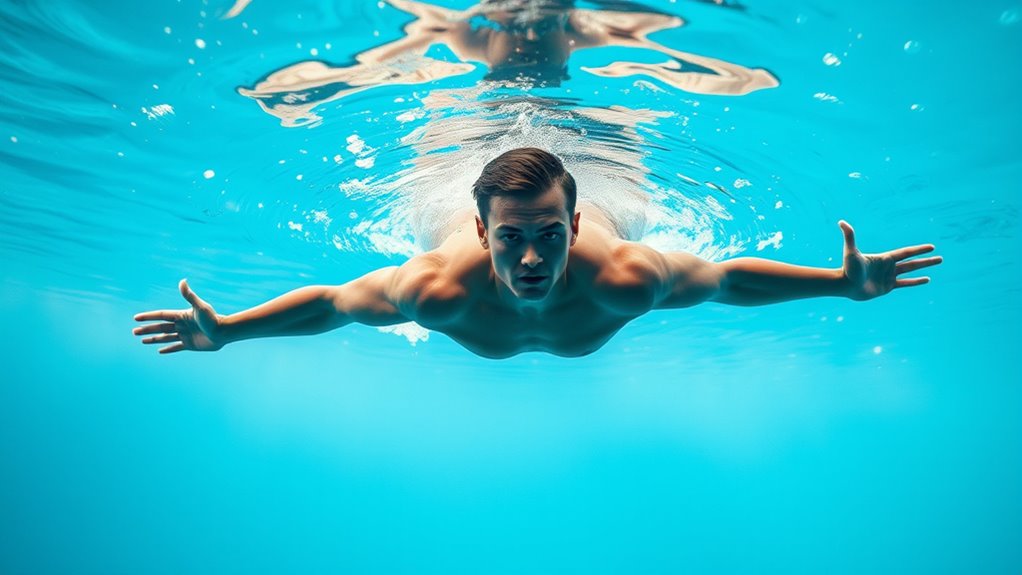

To optimize floating and breath control, focus on mindful breathing techniques that promote relaxation and energy conservation. By maintaining steady, controlled breaths, you can reduce muscle tension, stay calm, and improve buoyancy, which boosts your overall performance and mental resilience. Incorporating awareness of your body and breath helps you stay present and manage fatigue better. Keep exploring these techniques further, and you’ll discover how they can give you a real edge in any athletic challenge.
Key Takeaways
- Controlled breathing enhances buoyancy by promoting relaxation and reducing stress responses in water.
- Mindfulness techniques improve focus, enabling athletes to maintain steady breath and body position while floating.
- Slow, deep breaths help conserve energy and reduce muscle tension during aquatic activities.
- Breath awareness supports mental resilience, aiding athletes in overcoming panic and fatigue in challenging water conditions.
- Integrating breath control with floating practice optimizes movement efficiency and overall aquatic performance.
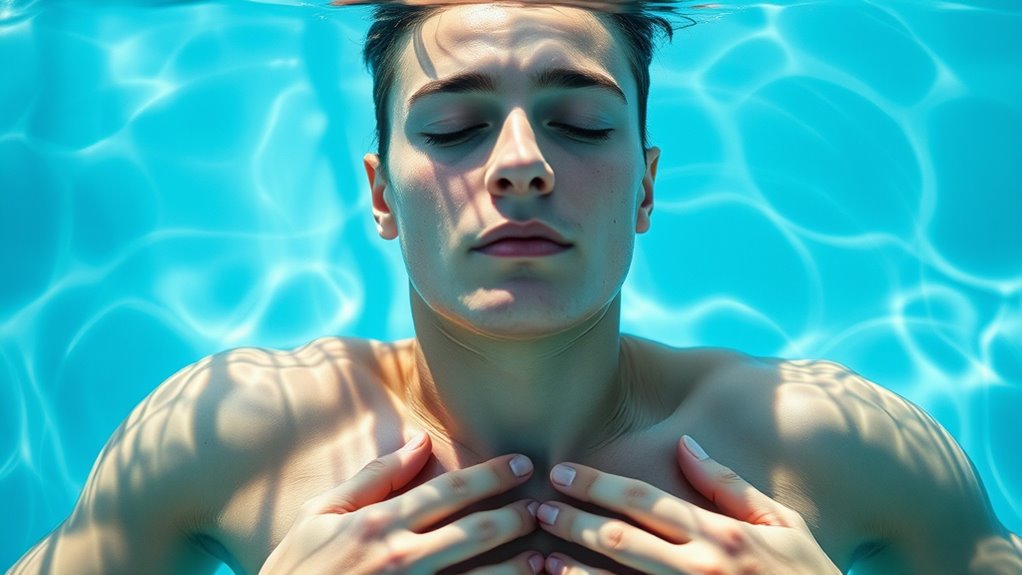
Have you ever wondered how elite athletes maintain focus and conserve energy during intense performances? The secret often lies in mastering their breath and cultivating mental resilience through mindfulness techniques. These practices help you stay present, control your physiological responses, and push through physical and mental fatigue. When you learn to harness your breath and develop a calm, focused mind, you gain a significant edge over the competition.
Mindfulness techniques are essential tools in this process. They teach you to pay close attention to your breath, bodily sensations, and mental state without judgment. By practicing mindful breathing, you can slow your heart rate, reduce anxiety, and improve concentration. For example, during training or before a competition, taking a few deep, controlled breaths can help you center yourself, clear your mind of distractions, and prepare for peak performance. Over time, these techniques build mental resilience — your ability to bounce back from setbacks, stay calm under pressure, and sustain effort during long or grueling events.
Practicing mindful breathing enhances focus, reduces anxiety, and builds resilience for peak athletic performance.
Conscious breathing also enhances your floating ability, which is indispensable in water sports or any situation requiring buoyancy and smooth movement. When you focus on slow, steady breaths, you control your body’s natural response to stress and maintain a relaxed, efficient posture. This relaxation reduces unnecessary muscle tension, conserving energy and allowing you to float effortlessly. It becomes easier to stay balanced and move gracefully, even when fatigue sets in. Furthermore, mindful breathing promotes a sense of calm that helps you avoid panic or overexertion in challenging moments, keeping your mental resilience intact.
Integrating mindfulness into your training involves regular practice. You might set aside a few minutes each day to focus solely on your breath, noticing the inhale and exhale without trying to change it. As you become more adept at observing your breath, you start to notice subtle shifts in your mental state and physical tension. This awareness allows you to intervene early, adjusting your breathing or mindset to stay in control. Additionally, understanding how Artificial Intelligence can analyze and optimize your training routines can further enhance your progress and prevent injuries. Over time, these techniques become second nature, empowering you to manage stress, improve focus, and maintain energy levels during competition.
In the end, mastering mindfulness techniques and strengthening your mental resilience through breath control transforms how you perform. You become more attuned to your body and mind, able to sustain effort and stay calm when it counts the most. This mental and physical harmony gives you the confidence to push your limits and excel in high-pressure situations, making breath control a fundamental part of your athletic toolkit.
Frequently Asked Questions
How Quickly Can Athletes See Results From Floating and Breath Control Training?
You can start noticing benefits from floating and breath control within a few sessions, especially in muscle recovery and injury prevention. As you practice regularly, your body becomes more efficient at relaxing muscles and reducing stress, which speeds up recovery. Improved breathing techniques also enhance oxygen flow, helping prevent injuries. Consistency is key; after a few weeks, you’ll likely see significant improvements in overall performance and resilience.
Are There Any Risks or Contraindications for Beginners Practicing Floating Exercises?
Did you know that 15% of beginners experience mild dizziness during initial floating exercises? You should be aware of risk factors like anxiety or claustrophobia, which can worsen with new practices. Contraindication considerations include respiratory issues or heart conditions. Always start slowly, listen to your body, and consult a healthcare professional if you have concerns. This helps guarantee safety and maximizes benefits as you incorporate floating exercises into your routine.
Can Floating and Breath Control Techniques Improve Mental Focus During Competition?
Yes, floating and breath control techniques can boost your mental focus during competition. By practicing mindfulness meditation alongside these exercises, you’ll enhance your ability to stay present and reduce stress. This combination helps you manage anxiety, sharpen concentration, and maintain calm under pressure. Incorporating these skills into your routine can give you a mental edge, allowing you to perform at your best when it matters most.
What Equipment Is Necessary for Effective Floating and Breath Control Training?
You mainly need equipment essentials like a comfortable, supportive floatation device or pool noodles to practice floating, and a stopwatch or timer to monitor breath control exercises. Training accessories such as breath trainers or diaphragmatic breathing tools can enhance your technique. Make certain your environment has a safe, controlled water setting. With the right gear, you’ll improve your floating stability and breath control, boosting your mental focus during competitions.
How Do These Techniques Differ Between Individual Sports and Team Sports?
In individual sports, you focus on mastering personal coordination and precise breath control to optimize performance. You can tailor techniques specifically to your needs, emphasizing solo rhythm and control. In team sports, you coordinate with teammates, adapting breath control and floating to enhance team dynamics and synchronization. Your approach shifts from solo mastery to collective harmony, ensuring your techniques support both personal performance and seamless integration within the team.
Conclusion
By mastering floating and breath control, you unlock a secret garden of calm within your mind and body. These skills are your wings in the storm, helping you glide smoothly through challenges. As you harness your breath and float with grace, you’ll discover a wellspring of strength and serenity beneath the surface. Embrace these techniques, and watch your athletic journey become a graceful dance—fluid, effortless, and full of power waiting to be unleashed.