To determine when it’s safe to wing foil, consider wind speed, gust patterns, and environmental cues. Steady winds between 10-20 mph are ideal for most skill levels, but your experience plays a key role; more advanced riders can handle higher gusts. Watch for signs like flags, clouds, and water smoothness to gauge conditions. If you pay attention and adapt, you’ll enjoy safer sessions—continue exploring how to read the wind and stay safe.
Key Takeaways
- Wait for steady, moderate winds and avoid gusty or shifting conditions to ensure safe wing foiling.
- Use wind indicators like flags, clouds, and water surface signs to assess real-time wind strength.
- Understand your skill level and start in lower wind ranges, gradually progressing as confidence and control improve.
- Check detailed weather forecasts and use wind meters to confirm conditions meet your safety thresholds.
- Recognize calm water and smooth surfaces as signals to wait, and choppy or gusty water as signs to proceed cautiously.
What Do You Need to Know About Wind Conditions for Wing Foiling?

Understanding wind conditions is essential for wing foiling, as they directly influence your safety and performance on the water. Knowing the wind direction helps you choose the right spot and plan your route, ensuring you’re not caught off guard. It’s also vital to observe gust patterns, which are sudden increases in wind speed that can affect your control. Steady winds are preferable for safer, smoother rides, while unpredictable gusts can cause you to lose balance or fall. Pay attention to how the wind shifts throughout the day, and always check local weather reports for detailed forecasts. By understanding these factors, you’ll be better equipped to pick safe conditions and enjoy your wing foiling experience confidently.
How Does Your Skill Level Influence the Safe Wind Range?
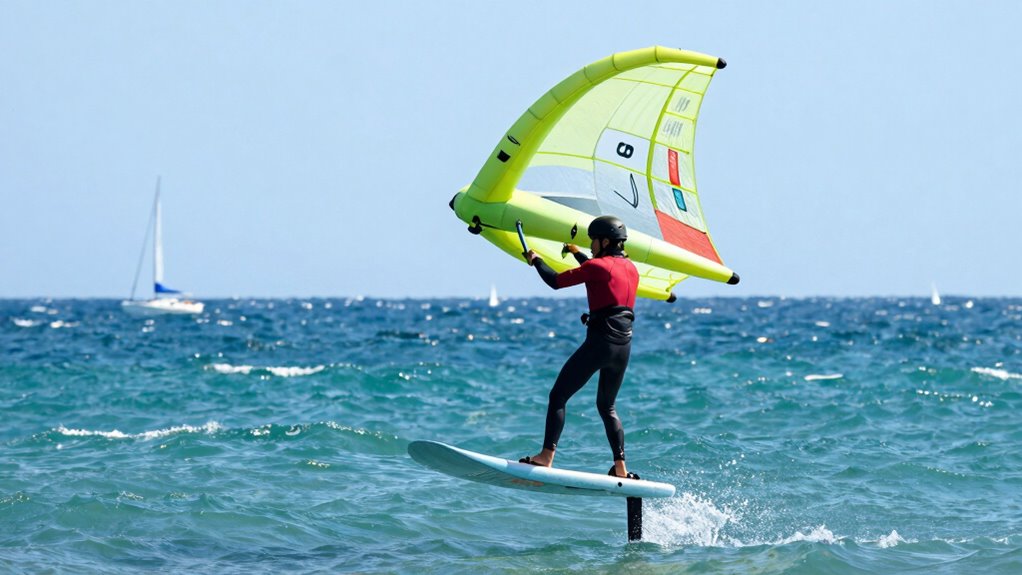
Your skill level directly affects how much wind you can handle safely. As you gain experience, you’ll develop better wind tolerance and more confidence, expanding your safe wind range. Remember, increasing your safety margin depends on honest assessment of your abilities and limits.
Skill Level and Wind Tolerance
As you gain more experience, you’ll find that your ability to handle a wider range of wind conditions improves considerably. Your skill level directly impacts how much wind speed you can safely manage, especially under varying weather patterns. More experienced wing foilers develop better control, quick decision-making, and confidence, allowing you to push your limits safely.
Consider these factors:
- Increased skill allows handling higher wind speeds with control
- Improved understanding of weather patterns reduces risk
- Experience helps anticipate gusts and lulls
- Better technique minimizes falls in stronger winds
- Familiarity with equipment enhances safety in varying conditions
Ultimately, your growing skill enhances your wind tolerance, enabling you to explore more challenging conditions responsibly.
Experience and Safety Margin
As your skill level grows, so does your ability to safely operate in winds that might challenge less experienced wing foilers. With more experience, you better anticipate and respond to sudden changes caused by wind gusts or wind shear. These rapid shifts can unexpectedly increase wind strength, making conditions dangerous for amateurs. Skilled wing foilers learn to read the water and wind patterns, giving them a safety margin to avoid risks during gusty conditions. They also develop better control and confidence, allowing them to handle unexpected gusts without losing stability. As you gain experience, you can push your limits safely, knowing how to manage the variability in wind conditions and recognize signs that it’s no longer safe to go out.
What Environmental Factors Affect Wing Foiling Safety?
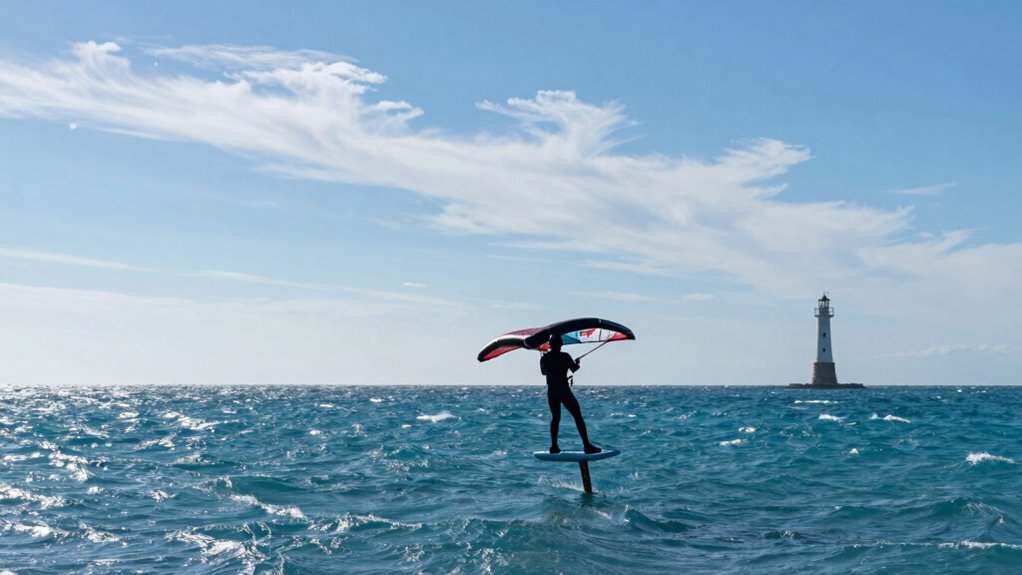
Environmental factors play a crucial role in ensuring safe wing foiling experiences. Wind turbulence and unpredictable weather patterns can considerably impact your safety on the water. Sudden gusts or shifts in wind direction may cause loss of control, while changing weather patterns can bring unexpected storms or fog. It’s essential to monitor these factors before heading out. Be aware of:
- Wind turbulence, which creates unstable conditions
- Weather patterns that shift rapidly
- Wind speed variations within the wind range
- Approaching storms or fronts
- Changes in temperature affecting wind behavior
How to Recognize When Conditions Are Too Windy or Too Calm

Learning to recognize wind indicators early helps you stay safe on the water. Keep an eye on flags, trees, and clouds to gauge wind strength. Additionally, calm water signs like glassy surfaces or lack of ripples signal when conditions might be too calm for wing foiling.
Recognize Wind Indicators Early
Noticing wind conditions early can make all the difference in your wing foil experience. Recognizing subtle wind indicators helps you judge if conditions are suitable or too risky. Pay attention to weather cues like sudden gusts, shifting clouds, and ripples on the water surface. These signs can reveal upcoming changes in wind strength. Keep an eye on:
- The movement of nearby trees or flags
- The appearance of whitecaps or choppy water
- Changes in cloud formations signaling wind shifts
- The sound of rustling leaves or distant wind noise
- The way your hair or clothing feels for sudden gusts
Assess Calm Water Signs
How can you tell if the water is too calm or too windy for wing foiling? Look for signs like overly smooth, glassy water, which indicates calm water and a potential wind lull. If the surface is mirror-like with no ripples, it suggests there’s little to no wind, making it unsafe for wing foiling. Conversely, if the water appears choppy or rough, it’s a sign the wind is stronger than you might want. A wind lull often leaves the water eerily still before gusts pick up again, so be cautious during these periods. Calm water signs help you gauge whether conditions are suitable or if you should wait for a better wind window. Recognizing these signs ensures you stay safe and enjoy your wing foiling session.
How to Assess Wind Safety Before Heading Out?
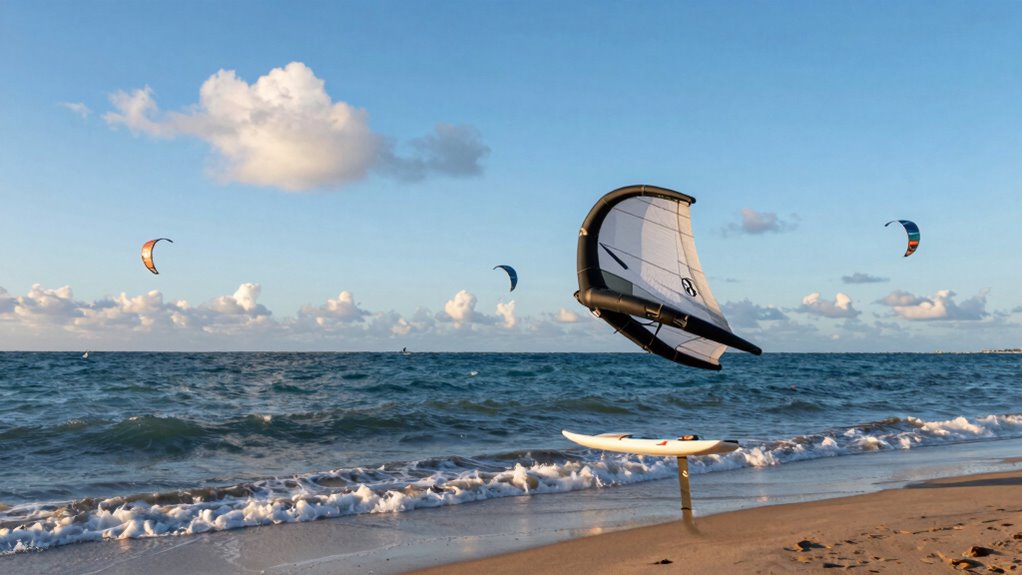
Before heading out on your wing foil session, it’s crucial to evaluate the wind conditions to guarantee safety. Pay attention to wind gusts, which can suddenly spike, making conditions unpredictable. Observe wind shear, the variation in wind speed and direction at different heights, as it can cause instability. Check local weather reports and use an anemometer if available for real-time data. Assess the terrain—shallow waters and open areas tend to be safer. Look for signs of changing wind patterns, such as clouds or sea state. Always communicate with fellow enthusiasts to get recent updates. Remember, sudden shifts in wind gusts or wind shear can compromise your control and safety, so stay alert and make informed decisions before launching.
Tips for Monitoring Wind and Making Smart Decisions

Monitoring wind conditions effectively allows you to make smarter decisions and stay safe on the water. Keep an eye on weather forecasts regularly, as they provide vital updates on wind gusts and changing conditions. Use a wind meter or an app to track real-time wind speeds and gusts during your session. Recognize that sudden gusts can be dangerous, even if the forecast suggests safe conditions. Adjust your plans accordingly, and always have an exit strategy if wind speeds exceed your comfort zone.
| Tip | Why it Matters |
|---|---|
| Check weather forecasts | To anticipate changing wind conditions and gusts |
| Use a wind meter or app | To monitor real-time wind speeds and gusts |
| Watch for gusts | To avoid surprises that could jeopardize safety |
| Stay adaptable | To make smart decisions based on current conditions |
Building Confidence to Handle Different Wind Conditions

Building confidence to handle different wind conditions comes from experience and preparation. As you gain more time on the water, your wind confidence improves, enabling you to make smarter decisions and manage risks effectively. To strengthen your skills, focus on understanding how wind shifts and gusts influence your ride. Practice incremental exposure by gradually challenging yourself in varying conditions. Develop a clear risk management plan, including knowing when to stay ashore or head back early. Stay vigilant about weather updates and learn to read the water and wind cues. Building this confidence reduces hesitation and helps you respond calmly to unexpected changes, ultimately making you a safer and more proficient wing foiler.
- Study local wind patterns and forecasts
- Practice in controlled, moderate conditions first
- Keep safety gear accessible and in good condition
- Reflect on each session to identify areas for improvement
- Maintain a conservative approach when unsure
Frequently Asked Questions
Can Weather Forecasts Reliably Predict Wind Changes During Wing Foiling?
Weather forecasts can be somewhat reliable thanks to advanced predictive models, but they aren’t perfect. You should always consider weather accuracy, especially for wind changes during wing foiling. Keep an eye on real-time updates and local reports, as wind can shift unexpectedly. Don’t rely solely on forecasts—use them as a guide, but stay cautious and prepared for sudden wind fluctuations to stay safe while enjoying your session.
How Do Tide Levels Impact Safe Wing Foiling Conditions?
Sure, tide influence and timing can seem like minor details, but they’re actually your secret weapons for safe wing foiling. High tide might seem calm, yet it can boost wave size unexpectedly, while low tide exposes hazards. Always check tide timing beforehand. Ironically, ignoring tide levels can turn a perfect day into a tricky adventure, so respect the rhythm of the water and plan your session accordingly.
What Safety Gear Should I Carry for Different Wind Conditions?
You should always carry personal flotation devices, helmets, and harnesses to stay safe across different wind conditions. In strong winds, a personal flotation device ensures buoyancy if you fall, while a helmet safeguards your head from impacts. A harness gives you better control and reduces fatigue. For lighter winds, consider lightweight gear, but never omit safety equipment, no matter the wind strength, to stay protected and enjoy your wing foiling session.
How Does Temperature Affect Wing Foiling Safety in Varying Winds?
Think of temperature as the unseen tide shaping your ride—chilly air acts like wind chill, turning your thermal comfort into a fragile bubble. When the air’s cold, your safety depends on staying warm enough to prevent hypothermia, especially in brisk winds. Dress in layered gear, keep your movements nimble, and monitor how the wind cools you down. Warmth and awareness keep your wing foiling adventure safe, even in biting weather.
Are There Specific Signs Indicating Sudden Wind Shifts or Gusts?
You should watch for wind shift indicators like rapidly changing wind direction or sudden gust warning signs, which can signal unpredictable gusts. Feel the wind’s intensity often, and if it suddenly strengthens or shifts direction, it’s best to head back. Keep an eye on your surroundings, and stay alert for these signs, so you can react quickly and stay safe during your wing foiling session.
Conclusion
So, next time you’re enthusiastic to hit the water, remember that wind’s a tricky partner—sometimes a gentle breeze, other times a wild beast. It’s funny how the safest choice is often to wait, even when you’re itching to go. But hey, mastering wind awareness not only keeps you safe—it makes every ride that much more rewarding. Because, after all, what’s more ironic than risking everything just to prove you can handle the wind?