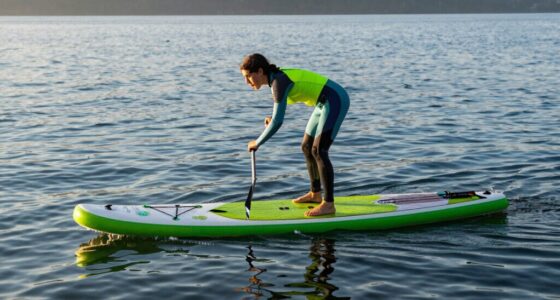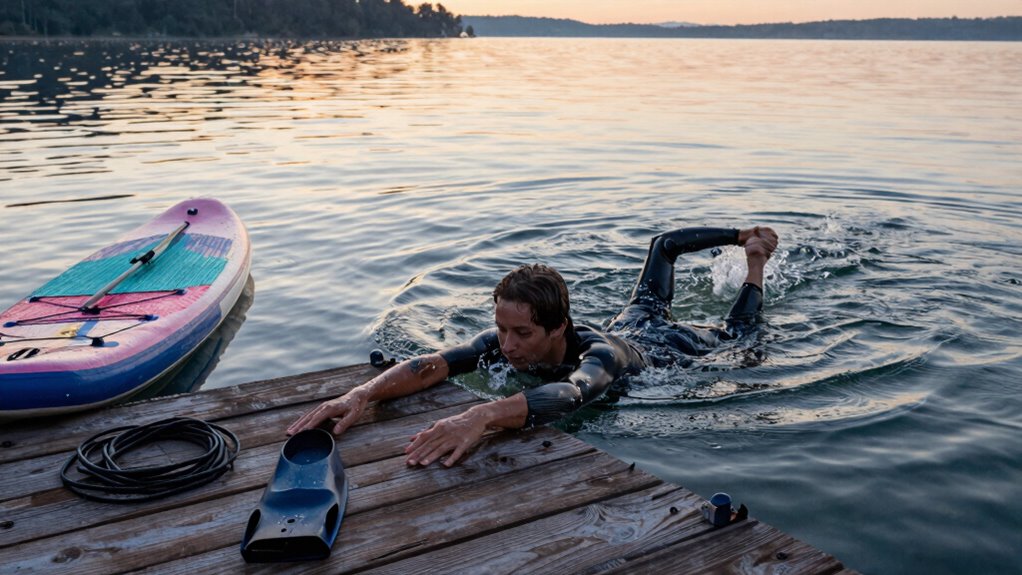

Many water sports enthusiasts skip a proper warm-up and hydration, which they often regret later with cramps, strains, or injuries. You might think a quick splash or cold water is enough, but neglecting dynamic stretches and gentle aerobic activity can leave your muscles stiff and unprepared. Properly warming up boosts flexibility and blood flow, reducing discomfort and risks. Keep going, and you’ll discover how to stay safe, comfortable, and maximize your water adventure.

Get pool and patio gear delivered free with Prime
- Fast, free delivery on millions of items
- Prime Video, Amazon Music and more included
- Member-only deals all year
Key Takeaways
- Many overlook dynamic stretching, leading to increased injury risk and muscle stiffness during water activities.
- Skipping proper hydration before water sports can cause cramps and reduce performance.
- Neglecting a targeted warm-up for shoulders and legs impairs movement and increases strain.
- Failing to prepare muscles and joints results in higher chances of strains, tears, and soreness post-activity.
- Not prioritizing warm-up and hydration diminishes enjoyment and safety during water sports.

Have you ever wondered why warming up before water sports is vital? It’s a common mistake to skip this step, thinking you can just jump into the water and start having fun. But neglecting a warm-up can lead to injuries, cramping, and a less enjoyable experience overall. One of the key elements often overlooked is properly preparing your muscles and joints, which can be effectively achieved through targeted stretching routines. These routines help increase flexibility and blood flow, making your movements smoother and reducing the risk of strains or tears.
Equally important is paying attention to hydration techniques. Water sports demand physical exertion, and staying hydrated guarantees your muscles function at their best. Many people underestimate how quickly dehydration can set in, especially when exposed to sun and wind for extended periods. Proper hydration isn’t just about drinking water right before you start; it’s a continuous process. You should hydrate well in advance, sipping fluids consistently to maintain electrolyte balance and prevent cramps during your activity. Incorporating electrolyte drinks or natural sources like coconut water can boost your hydration efforts, especially on hot days.
Skipping a warm-up often seems tempting because it feels like a waste of time when you’re excited to get into the water. However, taking even five to ten minutes for a proper warm-up can dramatically improve your performance and safety. Start with light stretching routines that focus on the muscles you’ll use most—your shoulders, back, legs, and arms. Dynamic stretches, such as arm circles or leg swings, are ideal because they mimic the movements you’ll perform during water activities. These routines loosen stiff muscles and prepare your joints for the physical demands ahead, making your movements more efficient and less prone to injury.
In addition to stretching, incorporate some light aerobic activity—like brisk walking or jumping jacks—to elevate your heart rate gradually. This increases blood flow to your muscles, helping prevent sudden strains once you hit the water. It’s also beneficial to pay attention to proper hydration techniques, which include hydrating before, during, and after your activity to keep your body performing at its best. Remember, hydration techniques shouldn’t be ignored; hydrate before, during, and after your activity to keep your body performing at its best. Additionally, understanding the importance of muscle preparation can significantly reduce the likelihood of soreness and injury. A comprehensive warm-up routine, which emphasizes the significance of blood flow, can greatly enhance your readiness and reduce injury risk during water sports.
Most people tend to dismiss these vital warm-up components, only realizing their importance when they suffer soreness or a minor injury afterward. Don’t make that mistake. A quick, deliberate warm-up that includes stretching routines and proper hydration techniques can make all the difference between an enjoyable, safe water sport experience and one marred by discomfort or setbacks. Invest a few minutes beforehand, and you’ll thank yourself later.
water sports warm-up stretching routine
As an affiliate, we earn on qualifying purchases.
As an affiliate, we earn on qualifying purchases.
Frequently Asked Questions
How Long Should a Water Sports Warm-Up Typically Last?
A water sports warm-up should last about 10 to 15 minutes. During this time, you focus on dynamic stretches and light activity to boost your core temperature and prepare your muscles. Remember, hydration importance can’t be overstated, so drink water beforehand. Also, make certain your equipment readiness—check your gear to avoid interruptions. A proper warm-up prevents injuries, improves performance, and keeps you safe while enjoying the water.
Are There Specific Warm-Up Exercises for Different Water Sports?
Yes, specific warm-up exercises vary depending on the water sport, like swimming, surfing, or water polo. These exercises improve the effects of warm-up on performance, ensuring your muscles are ready and reducing injury risk. They also boost psychological readiness for water sports, helping you stay focused and confident. Tailoring your warm-up to each activity helps you perform better and enjoy your time in the water more safely.
Can Skipping Warm-Up Increase Injury Risk During Water Activities?
Skipping warm-up definitely increases your injury risk during water activities. Without preparing your muscles for movement, your flexibility drops, and you might strain or tear muscles unexpectedly. Your heart rate stays low, delaying blood flow and oxygen delivery to muscles, making sudden moves more dangerous. So, don’t risk it—warming up guarantees your muscles are flexible, your heart rate is ready, and you stay safe while enjoying your water sport adventure.
What Are Common Mistakes People Make During Warm-Up?
You often make mistakes during warm-up by rushing through it or neglecting key exercises, which can hinder muscle flexibility and mental preparation. Instead, you should focus on dynamic stretches that target major muscle groups and take time to mentally prepare yourself for water activities. Avoid skipping this essential step, as it helps prevent injuries and boosts confidence, ensuring you’re fully ready for the water adventure ahead.
Is Warm-Up Necessary for Short Water Sport Sessions?
Yes, warm-up is necessary even for short water sport sessions. It offers several benefits, including increased blood flow, improved flexibility, and mental focus. Warming up helps prevent injuries by preparing your muscles and joints for activity. Skipping this step might save time initially, but it can lead to strains or pulls later. Taking a few minutes to warm up ensures you stay safe, perform better, and enjoy your water sports more fully.
Conclusion
Skipping your water sports warm-up is like diving into icy water without a moment to acclimate—you might start strong, but you’ll quickly regret it. I once watched a friend jump straight into the surf without warming up; he pulled a muscle and missed out on the fun. Remember, a proper warm-up isn’t just about avoiding injuries—it’s about setting yourself up for smooth, enjoyable experiences. Take that extra minute; it’s worth it for a safer, more fun day on the water.
Halloween Picks
halloween
As an affiliate, we earn on qualifying purchases.