
To stay safe with an underwater scooter, focus on preventing ear issues by equalizing early and often, descending slowly, and avoiding overexertion by controlling your speed and using proper breathing. Keep your gear well-maintained and listen to your body to prevent fatigue. Staying aware of your surroundings and communicating with your dive buddy help avoid accidents. For more tips on enjoying a safe, comfortable dive, explore the detailed strategies to keep your underwater adventures enjoyable.
Key Takeaways
- Equalize ears early and often using techniques like Valsalva or Frenzel to prevent barotrauma during descent.
- Descend slowly with your head upright to allow proper pressure adjustment and reduce ear discomfort.
- Maintain controlled, steady breathing with slow inhalations and exhalations to prevent overexertion and fatigue.
- Regularly monitor your physical condition and take breaks to avoid physical exhaustion during the dive.
- Keep your underwater scooter well-maintained and avoid overusing it to prevent equipment failure and unnecessary exertion.
What Are the Main Risks When Using an Underwater Scooter?

Have you ever wondered what dangers you might face while riding an underwater scooter? One main risk is equipment failure, which can happen if you neglect proper battery maintenance or skip routine inspections. A poorly maintained battery might overheat or stop working unexpectedly, leaving you stranded or struggling to surface. Regular equipment inspections help identify cracks, loose wiring, or corrosion that could compromise safety. Overlooking these checks increases the risk of malfunction during your dive. Additionally, faulty or poorly maintained batteries can leak harmful chemicals or cause electrical shorts. To stay safe, always ensure your scooter’s battery is fully charged, in good condition, and that your equipment has been thoroughly inspected before each dive. Proper maintenance minimizes risks and keeps your underwater adventures enjoyable.
How Do I Prepare My Gear and Body for a Safe Dive?

To guarantee a safe dive, you need to properly prepare both your gear and your body before entering the water. Start with gear maintenance by inspecting your underwater scooter and equipment for any damage or loose parts. Confirm your mask, fins, and wetsuit fit correctly to prevent discomfort and potential issues underwater. Hydration tips are vital; drink plenty of water beforehand to avoid dehydration, which can lead to fatigue and disorientation. Staying well-hydrated boosts your endurance and helps prevent ear problems caused by pressure changes. Stretch lightly to loosen muscles and increase flexibility. By maintaining your gear and following hydration tips, you set a solid foundation for a safer, more enjoyable diving experience.
How Can I Control My Underwater Scooter Safely?
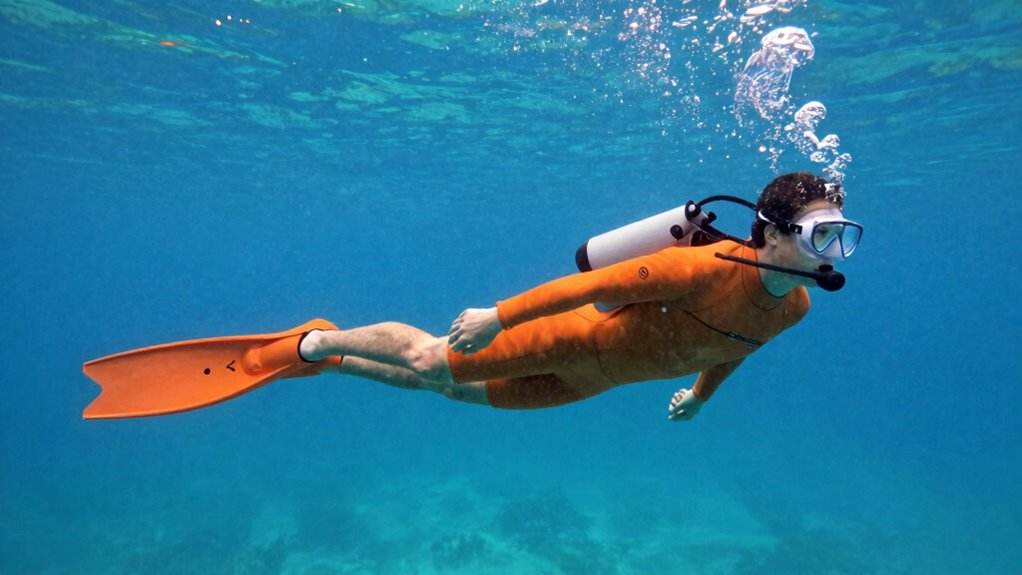
Controlling your underwater scooter safely starts with familiarizing yourself with its functions and controls before entering the water. Practice using the throttle, brakes, and steering to build confidence. Keep your movements smooth to avoid sudden jerks that could cause injury or damage. Effective techniques for underwater communication, like hand signals, help you stay in contact with your dive buddy, ensuring coordinated control. Regular maintenance tips for scooters, such as checking batteries, cleaning the propeller, and inspecting seals, keep your device functioning properly and prevent unexpected failures. Always stay aware of your surroundings and avoid overexerting yourself, which can lead to loss of control. By mastering your scooter’s controls and maintaining it properly, you ensure a safe, enjoyable underwater experience.
How Can I Prevent Ear Problems During My Dive?

Since your ears are sensitive to pressure changes underwater, taking steps to prevent ear problems is essential for a safe dive. You can do this by mastering equalization techniques to manage ear pressure effectively. Start equalizing early and often, before discomfort begins, using methods like the Valsalva or Frenzel techniques. Keep your head upright and descend slowly to allow your ears time to adjust.
| Ear Pressure | Equalization Techniques |
|---|---|
| Feel discomfort | Use the Valsalva maneuver |
| No discomfort | Practice the Frenzel method |
| Persistent pain | Ascend slightly and re-equalize |
Proper equalization prevents barotrauma and keeps your ears healthy, ensuring a smooth, enjoyable dive.
How Do I Manage My Effort to Stay Comfortable and Safe?

Managing your effort during a dive is crucial to staying comfortable and safe underwater. Use proper breathing techniques to conserve energy and reduce fatigue, such as slow, steady breaths that help you stay relaxed. Focus on controlled inhalations and exhalations to avoid overexertion and maintain oxygen levels. Additionally, good physical conditioning plays a key role; staying fit improves your endurance and allows you to handle longer dives without strain. Pay attention to how your body feels, and don’t push beyond your limits. Take breaks when needed and adjust your speed to match your comfort level. By combining mindful breathing and staying physically conditioned, you’ll enjoy a safer, more enjoyable dive while minimizing risks of fatigue and overexertion.
Frequently Asked Questions
What Signs Indicate I Should Stop Using My Underwater Scooter Immediately?
If you experience ear pain or dizziness symptoms while using your underwater scooter, you should stop immediately. These signs indicate your ears may be under too much pressure or affected by water, risking injury or ear issues. Don’t ignore these signals—pause, ascend slowly, and check if symptoms subside. Your safety is essential, so always listen to your body and avoid pushing through discomfort underwater.
Are There Specific Health Conditions That Make Underwater Scooter Use Risky?
If you have heart conditions or are prone to ear infections, using an underwater scooter can be risky. These health issues can be the straw that breaks the camel’s back, leading to complications like ear infections or increased strain on your heart. Always consult your doctor before diving in, and listen to your body. If you feel uncomfortable or symptoms worsen, stop immediately to avoid making a mountain out of a molehill.
How Often Should I Take Breaks During Prolonged Underwater Scooter Sessions?
You should take rest breaks every 30 to 45 minutes during prolonged underwater scooter sessions to prevent fatigue and overexertion. Use these breaks to hydrate and stretch, which helps maintain your energy levels and avoid ear discomfort. Keep hydration tips in mind by drinking water regularly, and listen to your body—if you feel tired or uncomfortable, pause and rest before continuing your underwater adventure.
What Are the Best Practices for Equalizing Ear Pressure While Using the Scooter?
Think of your ears as delicate doors that need regular opening to equalize pressure. To balance ear pressure while using the underwater scooter, employ techniques like the Valsalva maneuver or swallowing to keep the flow of air steady. Stay alert for any discomfort or fullness, and don’t hesitate to pause and perform equalization techniques frequently. These practices safeguard your ears, ensuring your underwater adventure remains smooth and safe.
Can Underwater Scooters Cause Long-Term Ear Damage?
Underwater scooters can potentially cause long-term ear damage if you experience ear barotrauma or acoustic trauma. If you don’t equalize pressure properly or if loud noises occur nearby, you risk damaging your ears over time. To avoid this, always equalize early and often, wear ear protection if needed, and stay alert to any discomfort. Proper precautions help prevent lasting issues like hearing loss or persistent ear pain.
Conclusion
Remember, diving with an underwater scooter is like riding a bike—you gain confidence with practice, but safety always comes first. I once saw a diver overexert and struggle to surface, reminding me how easily things can go wrong without caution. By preparing properly, controlling your speed, and listening to your body, you’ll enjoy the thrill safely. Stay mindful, stay safe, and let your underwater adventures be as smooth as a well-oiled propeller.