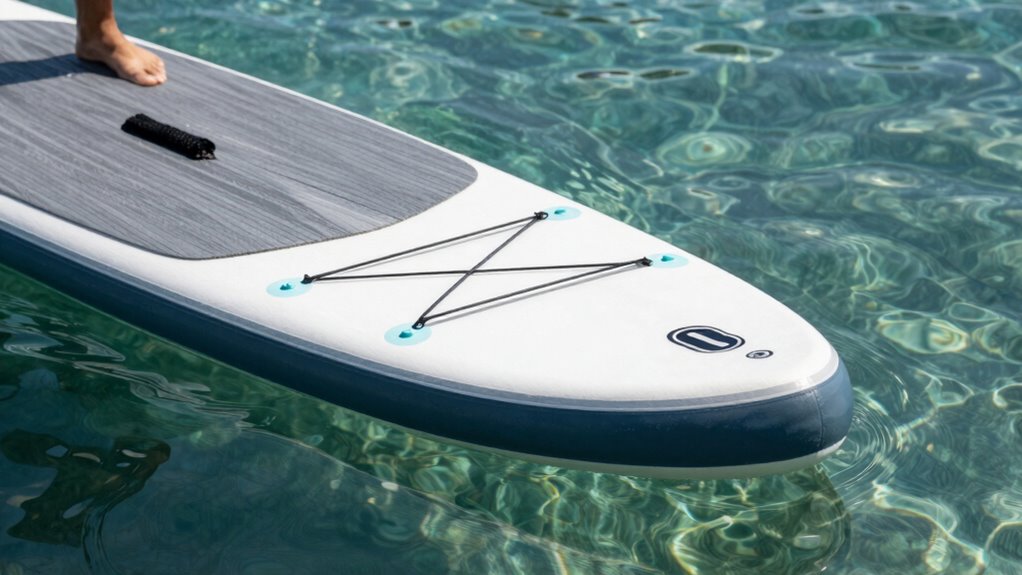

Choosing a 6-inch thick SUP isn’t always the best for stability because factors like width, shape, volume, and material quality also play key roles. Thicker boards often support more weight and feel more stable, but design influences responsiveness and maneuverability. If you want better balance or specific activities, other features might matter more. Keep exploring to discover how to find the perfect SUP for your skills and goals.
Key Takeaways
- Thicker boards (around 6 inches) generally increase stability but may reduce maneuverability and responsiveness, impacting performance for advanced paddlers.
- Stability depends more on design factors like shape and volume rather than thickness alone; overly thick boards aren’t always more stable.
- Thinner boards can be more agile and better suited for activities like racing or surfing, despite having less overall buoyancy.
- Material quality and construction influence durability and safety, meaning thickness isn’t the sole determinant of stability or performance.
- The ideal thickness varies based on user skill, activity type, and water conditions; no single thickness suits all paddlers equally.
What You Need to Know About SUP Thickness and Stability

Understanding SUP thickness and stability is vital for a safe and enjoyable paddling experience. When choosing a SUP, consider material durability; high-quality materials like epoxy or military-grade PVC guarantee your board withstands regular use and rough conditions. Thicker boards generally offer more stability, making them ideal for beginners or those focusing on balance. Additionally, color options aren’t just about style—they can improve visibility on the water, enhancing safety. Bright colors help you stay visible to others, especially in crowded areas or low-light conditions. While a thicker SUP may feel more stable, it’s essential to balance durability, stability, and your personal preferences. Ultimately, selecting the right thickness and color options guarantees your paddleboarding adventures are both safe and fun.
How Thickness and Buoyancy Affect SUP Performance
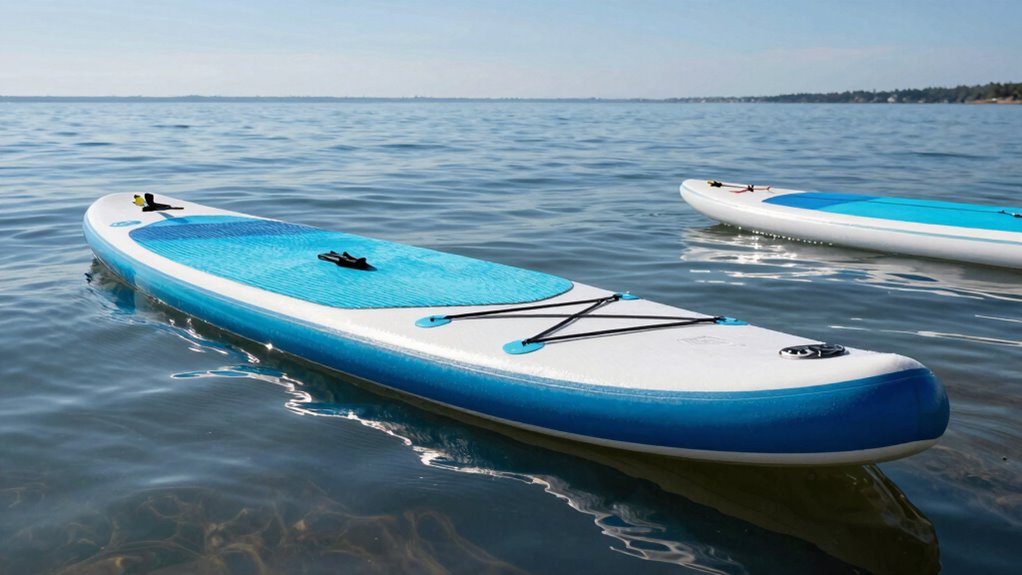
Thicker SUPs usually offer more buoyancy, making it easier to stay afloat and maintain stability. However, increased thickness can also add weight, affecting portability and maneuverability. Finding the right balance between performance and convenience depends on understanding how thickness and buoyancy influence your ride.
Impact of Thickness on Buoyancy
The thickness of your SUP board plays a crucial role in determining its buoyancy, directly impacting how well it supports your weight and maintains stability on the water. Thicker boards generally displace more water, providing better flotation, which is crucial for beginners or larger paddlers. Material considerations are key here—lighter, high-density foam or composite materials can enhance buoyancy without adding unnecessary weight. Additionally, color options can indirectly influence buoyancy perceptions; brighter colors increase visibility, which can be helpful in crowded waters. Keep in mind that increased thickness doesn’t always mean better performance; overly thick boards may become less maneuverable. Understanding how thickness affects buoyancy helps you choose a board that balances support, ease of use, and your specific activity needs.
Stability Versus Portability Balance
As you consider SUP board design, balancing stability and portability becomes a key factor. Thicker boards offer increased buoyancy, providing more stability, but they can be heavier and less portable. This affects deck anchoring, making it harder to secure gear or accessories securely on the board. Additionally, a thicker deck can influence paddle ergonomics, as it may alter your stance or make paddling less comfortable over time. Lighter, thinner boards are easier to transport and maneuver, but they might sacrifice some stability, especially in rougher conditions. Finding the right balance means evaluating how much stability you need versus how portable you want your board to be. Your choice impacts overall performance, ease of use, and how confidently you can enjoy your time on the water.
Performance Trade-offs Explained
When you increase a SUP’s thickness and buoyancy, it directly impacts how it performs on the water. Thicker boards offer more stability, but they can introduce balance challenges, especially for beginners or those looking for agility. Material considerations also come into play; heavier materials may add to the board’s weight, reducing maneuverability. Conversely, lighter, high-density foam cores can improve responsiveness but might compromise durability. The trade-off is clear: increased buoyancy improves stability and load capacity but can make the board feel sluggish or harder to handle. You need to find the right balance to match your skill level and intended use. Understanding these performance trade-offs helps you choose a SUP that aligns with your goals without sacrificing too much in either stability or agility.
How Volume and Displacement Impact Stability

Understanding how volume and displacement influence stability is essential for ensuring a structure’s safety and performance. When you consider volume, think about the overall size of your SUP; a larger volume generally provides more buoyancy, helping you stay balanced. Displacement, which is the water moved when the board is in use, affects how stable you feel on the water. Material composition plays a role here, as lighter or denser materials can alter the board’s weight and buoyancy. Additionally, color options can influence visibility and safety, but they don’t impact stability directly. By paying attention to volume and displacement, you can select a board that matches your skill level and typical water conditions, ensuring a safer, more stable experience.
Why Thicker SUPs Aren’t Always More Stable for Everyone
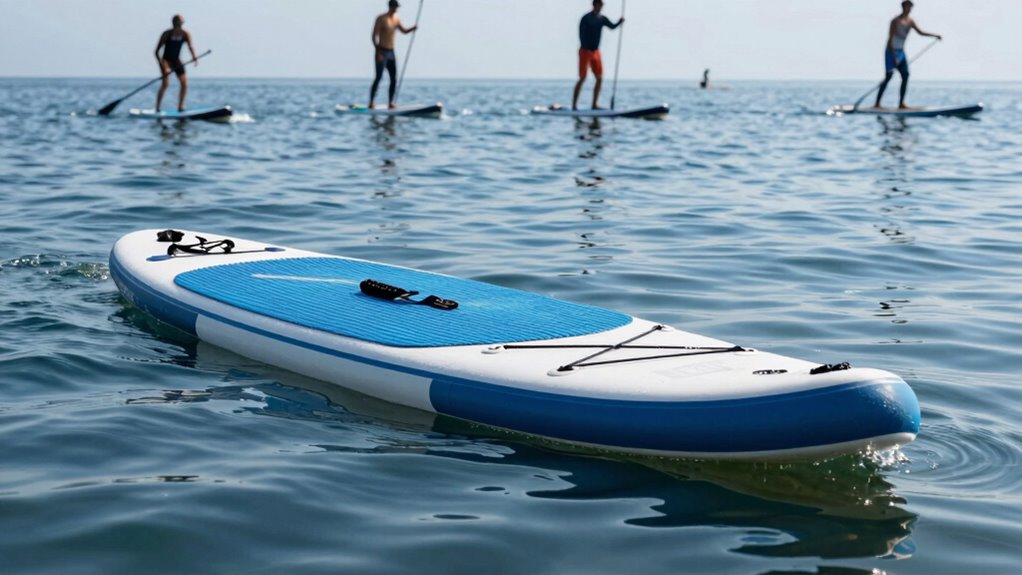
A thicker SUP can feel more stable for some, but it might not suit everyone’s needs. Your weight and skill level influence how well you balance on different board thicknesses, and a heavier or less experienced paddler may prefer a different setup. Plus, thicker boards tend to be less portable, which can be a drawback if you need to carry or store your board frequently.
Increased Weight Impact
While adding extra thickness to your SUP might seem like a straightforward way to boost stability, it doesn’t always work for everyone, especially if you’re heavier. Thicker boards can handle more weight, but they also alter the board design, affecting how your weight is distributed. Heavier paddlers might find that increased weight impacts balance and responsiveness, especially if the material durability isn’t up to par. A stiff, durable material guarantees the board maintains its shape under extra load.
| Aspect | Impact for Heavier Paddlers |
|---|---|
| Board Design | Thicker boards may feel less responsive |
| Material Durability | Essential for supporting increased weight |
| Stability | Can be compromised if weight isn’t evenly distributed |
Skill Level Matters
Even though thicker SUPs are often marketed as more stable, they don’t automatically suit every skill level. Your experience and comfort on the water play a big role in what board works best for you. Material choices influence stability—rigid, high-density foam boards feel different than inflatable models, regardless of thickness. If you’re a beginner, a thicker board might seem stable, but if it’s made from less durable or flexible materials, your balance could suffer. Additionally, color options aren’t just aesthetic; they can help with visibility and confidence. Choosing a board that matches your skill level involves considering these material qualities and color choices to ensure you feel secure and confident, rather than just assuming a thicker board is automatically more stable.
Portability Concerns
Have you ever noticed that thicker SUPs can be more difficult to carry or transport? Their increased weight and bulk create transportation challenges, making it harder to load them into cars or carry them over distances. This added size can also lead to storage limitations, especially if you have limited space at home or in your vehicle. Thicker boards tend to be less portable, which may discourage spontaneous outings or frequent use. If you prefer convenience and ease of movement, a thinner, more lightweight SUP might suit your needs better. While thicker boards might offer more stability in the water, their reduced portability can be a significant drawback if you’re always on the go or have limited storage options.
How Width and Shape Influence SUP Stability Beyond Thickness

The width and shape of a stand-up paddleboard play essential roles in determining its stability, often more so than thickness alone. A wider board provides a larger surface area, making it easier to balance. The shape influences how the board interacts with the water, affecting stability and maneuverability. A well-designed deck enhances your grip and confidence, especially on choppier water. Material durability guarantees the board withstands impacts without compromising stability. Consider these factors:
- Wider boards improve balance, ideal for beginners
- Narrower boards excel in speed but reduce stability
- Flat, broad shapes increase overall stability
- Deck design with textured surfaces offers better grip
- Durable materials maintain shape and stability over time
Who Benefits Most From Thicker SUPs?
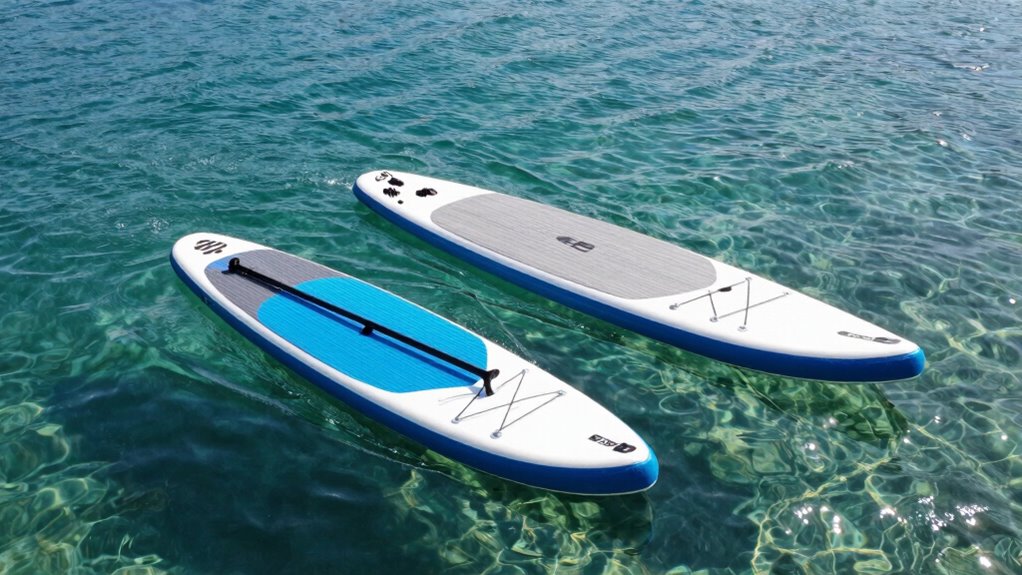
Thicker SUPs are particularly advantageous for paddlers who prioritize stability and comfort, such as beginners and those engaging in recreational paddling. With increased thickness, your board offers better balance, making it easier to stay upright and confident on the water. This stability helps you develop core strength more effectively as you focus on maintaining proper posture and control. Additionally, a thicker SUP can improve paddle technique by providing a steadier platform, reducing the need for constant adjustments. This allows you to build skills gradually without feeling overwhelmed by instability. If you’re new to paddling or prefer relaxed, leisurely trips, a thicker SUP can make your experience more enjoyable, helping you feel secure while you focus on learning and having fun.
Signs a 6-Inch SUP Might Not Be Right for You
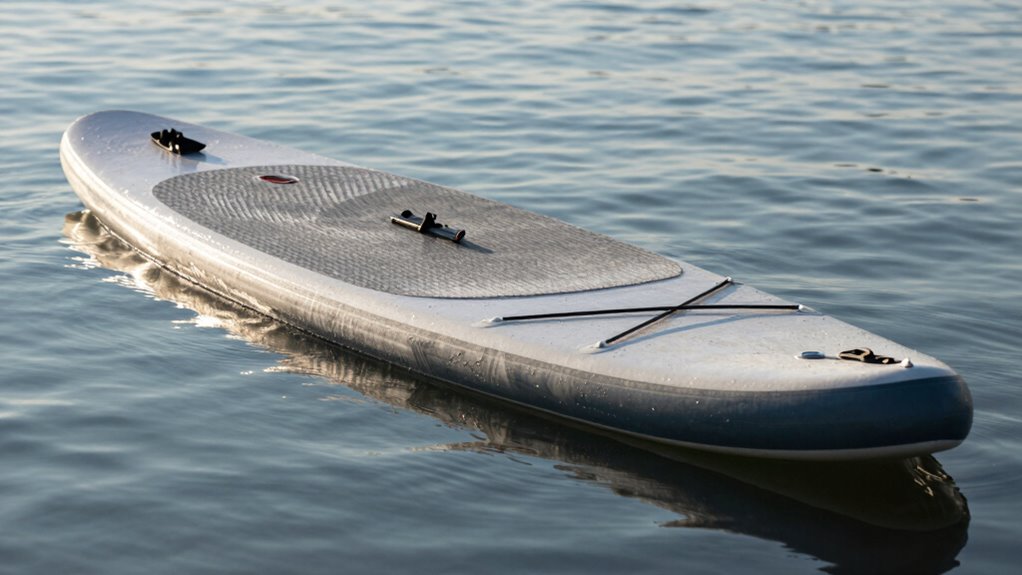
A 6-inch SUP might not be the best choice if you’re an experienced paddler seeking agility and quick maneuverability. If your focus is on performance and precision, this thickness could limit your board design options and restrict your paddle technique. You may notice:
- Difficulty executing sharp turns due to increased stability requirements
- Reduced responsiveness in fast-moving or choppy water
- A feeling of sluggishness when trying to accelerate or change direction
- Struggling to perform advanced maneuvers that require quick, fluid motions
- Feeling overly stable or sluggish for activities like racing or surfing
If these signs resonate, a thinner board might suit your style better. A thicker SUP tends to favor stability over agility, which isn’t ideal for paddlers who prioritize speed and maneuverability.
How to Choose the Right SUP Thickness for Your Goals

Choosing the right SUP thickness depends on your specific goals and needs. Consider what you’ll use your board for, how much weight it needs to support, and whether portability or storage is a priority. These factors will help you find a thickness that offers the right balance of stability and convenience.
Purpose of Your SUP
Have you ever wondered how the thickness of your stand-up paddleboard (SUP) impacts its performance and stability? Your SUP’s purpose guides the ideal thickness. For beginners focused on balance adjustment and stability, a thicker board (around 6 inches) offers more confidence. If you prioritize paddle efficiency for racing, a thinner, lighter board enhances speed and maneuverability. For yoga or leisurely paddling, a moderate thickness balances stability and comfort. Consider these factors:
- Your experience level
- Specific activity (racing, yoga, touring)
- Need for balance adjustment
- Desired paddle efficiency
- Portability and transportation ease
Choosing the right SUP thickness aligns with your goals, ensuring ideal performance and confidence on the water.
Weight Capacity Needs
Ever wonder how your SUP’s weight capacity influences the ideal thickness for your needs? Your board design plays a vital role here, as thicker boards typically support more weight, providing better stability and buoyancy. Consider your weight and any gear you plan to carry—heavier loads require increased thickness to prevent sagging or instability. Material durability also matters; stronger, high-quality materials allow for thinner boards without sacrificing strength, making your SUP both lightweight and supportive. For instance, a durable, well-constructed board with the right thickness can handle multiple users or gear, enhancing versatility. On the other hand, choosing a board with insufficient thickness might lead to a compromised experience, especially if your weight exceeds the recommended capacity. Always match your SUP’s thickness with your weight capacity needs for optimal performance.
Portability and Storage
When prioritizing portability and storage, selecting the right SUP thickness is crucial to guarantee your board is easy to carry and store. Thinner boards, around 4-6 inches, are lighter and more compact, making transportation simpler. Consider material durability; lightweight materials like inflatable PVC or composite layers help reduce weight without sacrificing strength. Design aesthetics also matter, as sleeker, thinner boards often look more streamlined and modern. Keep in mind that thinner boards are easier to store in small spaces or racks and are less cumbersome to carry on your own. However, balance your goals with durability needs—thinner boards should still withstand regular use. Ultimately, choosing the right thickness ensures your SUP fits your lifestyle, whether you’re commuting, backpacking, or storing it in tight spaces.
Common Myths About SUP Thickness and Stability Debunked

Many misconceptions about SUP thickness and stability persist, causing beginners to doubt the safety and performance of various boards. One common myth is that thicker boards are always more stable; however, material durability plays a bigger role than thickness alone. Thinner boards can be surprisingly stable if designed properly, and thicker boards aren’t necessarily more durable or aesthetically appealing. Here’s a quick look:
| Myth | Truth | Impact on Choice |
|---|---|---|
| Thicker = More Stable | Stability depends on design, not thickness | Focus on design over thickness |
| Thicker = Less Portable | Material quality influences portability | Material durability matters |
| Durability = Thicker Boards | Material quality affects durability, not thickness | Aesthetic appeal varies |
| Thicker Boards Are Heavier | Weight varies with materials, not just thickness | Check material for durability |
| Stability = Safety | Proper design is key to safety | Don’t judge solely by thickness |
Test and Compare SUP Thicknesses Before Buying
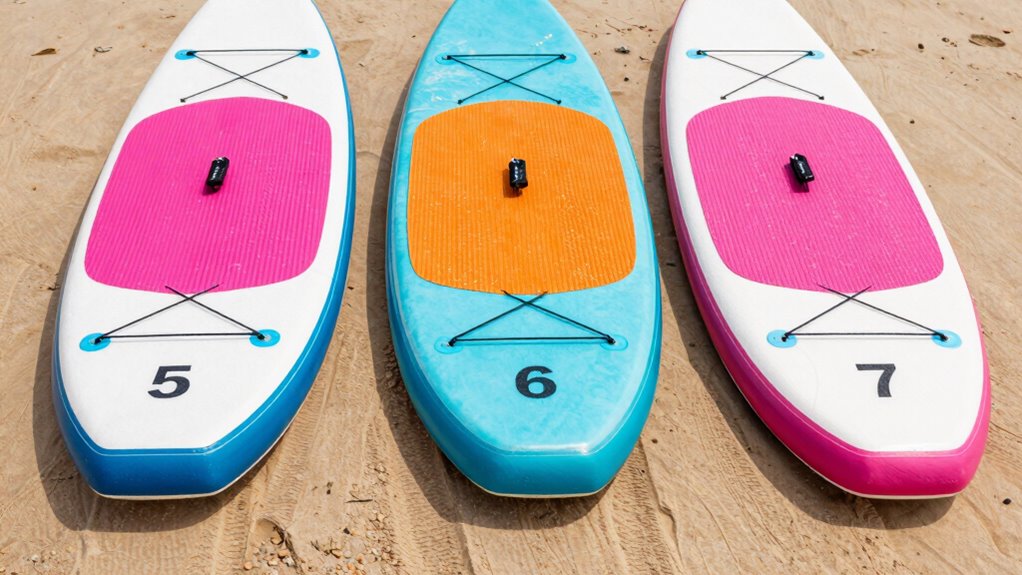
How can you guarantee you’re choosing a SUP that offers the right balance of thickness and stability? The key is to test and compare different SUPs before buying. Check material durability by inspecting the core and outer layers—sturdier materials last longer and handle more wear. Consider color options not just for style but visibility on the water. When comparing thicknesses, try out boards in person, if possible, to feel how they respond under your weight. Don’t forget to evaluate:
- Overall material quality and durability
- Thickness consistency across the board
- Color options for visibility and style
- Responsiveness during testing
- Feel of stability at different water conditions
Testing firsthand ensures you find a board that balances thickness with stability, making your purchase smarter and more tailored to your needs.
Frequently Asked Questions
How Does Paddle Technique Influence SUP Stability Regardless of Thickness?
Your paddle technique greatly influences SUP stability, regardless of thickness. By focusing on paddle efficiency, you minimize unnecessary movements that can destabilize you. Good balance techniques help you stay centered and balanced on the board, even if it’s thinner or thicker. When you paddle smoothly and maintain proper stance, you improve stability, making your experience safer and more enjoyable. Proper technique is key to mastering SUP, no matter the board’s thickness.
Can Environmental Conditions Override the Benefits of Thicker SUPS?
Did you know that strong winds and choppy water can reduce a SUP’s stability by up to 50%? Environmental factors like wind, waves, and currents can indeed override the benefits of a thicker SUP. Even the best SUP design, including thickness, can struggle in rough conditions. Always consider environmental conditions before choosing your board, as they play a critical role in your overall stability and safety on the water.
What Role Does Deck Padding or Accessories Play in Stability?
Deck padding and accessories considerably influence your SUP’s stability. Proper deck accessories, like non-slip pads or textured mats, enhance grip and prevent slipping, especially in wet conditions. Padding effects also cushion your stance, offering better balance and comfort. When you choose the right deck accessories, they work synergistically with your board’s design, making it more stable and easier to control, regardless of SUP thickness variations.
Are There Specific Activities Better Suited for Thinner SUPS?
Thinner SUPs excel at lightweight paddling and beginner-friendly activities, offering increased maneuverability, easier transport, and quicker responsiveness. If you’re into quick turns, casual paddling, or practicing balance, a thinner board provides the agility you need. They’re ideal for calm waters, flat lakes, and relaxed outings. While they may sacrifice some stability, their ease of use makes them perfect for newcomers and recreational paddlers seeking a more nimble, accessible experience.
How Does User Weight Distribution Affect Stability on Different SUP Thicknesses?
Your weight distribution greatly influences stability on different SUP thicknesses. When your center of gravity is centered and evenly distributed, a thicker board offers more stability, especially for beginners. However, if your weight shifts forward or backward, thinner SUPs can become less stable, as they respond more to your movements. Adjusting your stance and keeping your weight balanced helps you stay stable, regardless of board thickness.
Conclusion
Choosing the right SUP thickness isn’t just about going thicker; sometimes, less is more. While a 6-inch board might seem more stable, it can actually hinder agility and performance for some paddlers. Think of it like a balancing act—you need the right mix of width, shape, and volume. Don’t assume bigger always means better. Test different thicknesses and find what truly suits your goals, because stability isn’t just about size—it’s about how you use it.