Choosing between a single fin and a 1+2 fin setup depends on your water conditions and skill level. A single fin offers stability and straightforward tracking, perfect for calm waters and beginners. A 1+2 system enhances maneuverability, making sharp turns easier and better suited for choppier water or advanced paddlers. Understanding how each affects performance helps you pick the right setup. Keep exploring to find the best fin configuration for your paddleboarding adventures.
Key Takeaways
- Single fins offer stability and straightforward handling, ideal for flatwater paddling and beginners.
- 1+2 fin systems provide better maneuverability and control in choppier or complex water conditions.
- Fin material affects durability and responsiveness; softer materials suit gentle waters, rigid ones excel in rougher conditions.
- Customization options like fin color and size enhance visibility and performance based on water conditions.
- Regular maintenance ensures fins stay secure and functional, supporting optimal paddling experience across setups.
Getting to Know Your Paddleboard Fin Setups
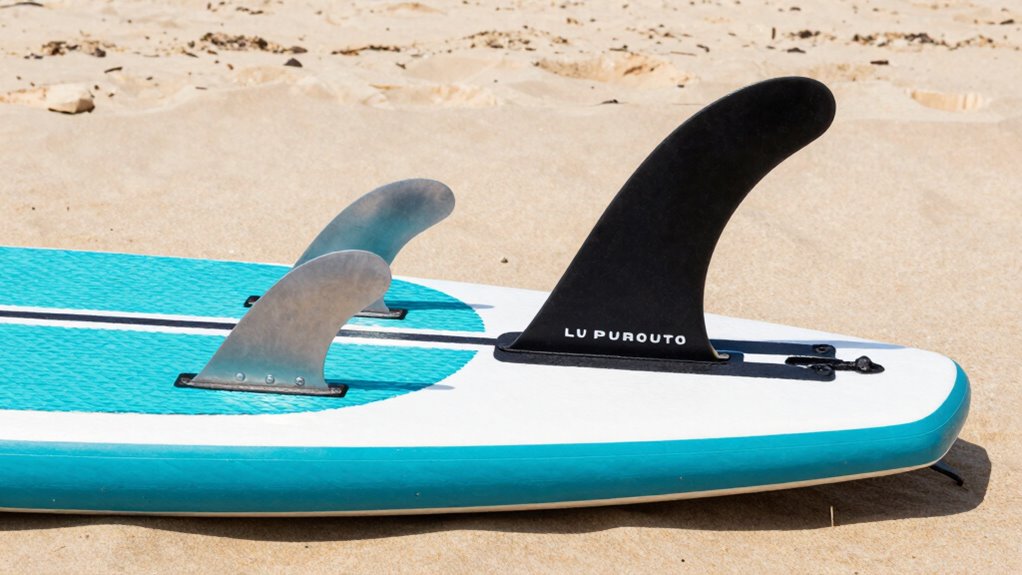
Understanding your paddleboard fin setup is essential for optimizing performance on the water. Fin material plays a big role in durability and flexibility. Common options include fiberglass, plastic, and composite materials, each offering different levels of stiffness and responsiveness. The fin color may seem purely aesthetic, but it can also help you quickly identify different fins or setups. Bright colors like red or yellow stand out, making it easier to switch fins or check your gear at a glance. You might prefer a clear or black fin for a sleek look, but bold colors can add visibility. Knowing the differences in fin material and color helps you customize your paddleboard to match your style and paddling conditions, giving you better control and confidence on the water.
Single Fin vs. 1+2 Fin System: Which Is Better for You?
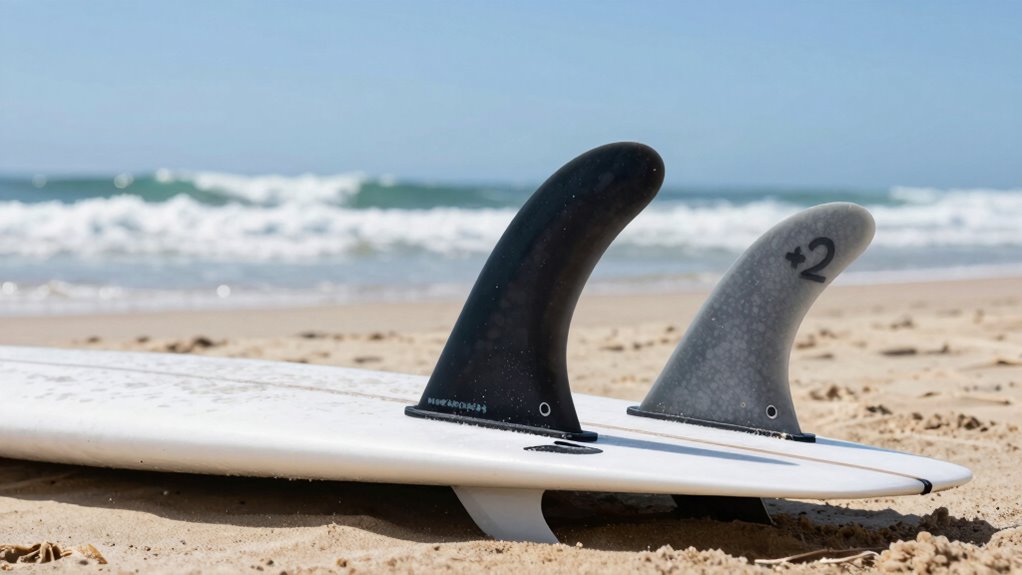
Choosing the right fin setup can greatly impact how your paddleboard handles on the water. If you prefer a sleek look, consider the fin aesthetics—single fins offer a clean, streamlined appearance, while 1+2 systems can appear more versatile and customizable. Fin material also matters; plastic fins are durable and budget-friendly, but fiberglass or carbon fins provide better performance and are often lighter. A single fin setup typically gives you a straightforward, stable ride, ideal for cruising or flatwater paddling. In contrast, a 1+2 fin system offers more tuning options, enhancing maneuverability and control in varied conditions. Your choice depends on your paddling style and priorities: simplicity and stability with a single fin, or adaptability and precision with a 1+2 system.
How Fin Setups Affect Stability, Maneuverability, and Performance
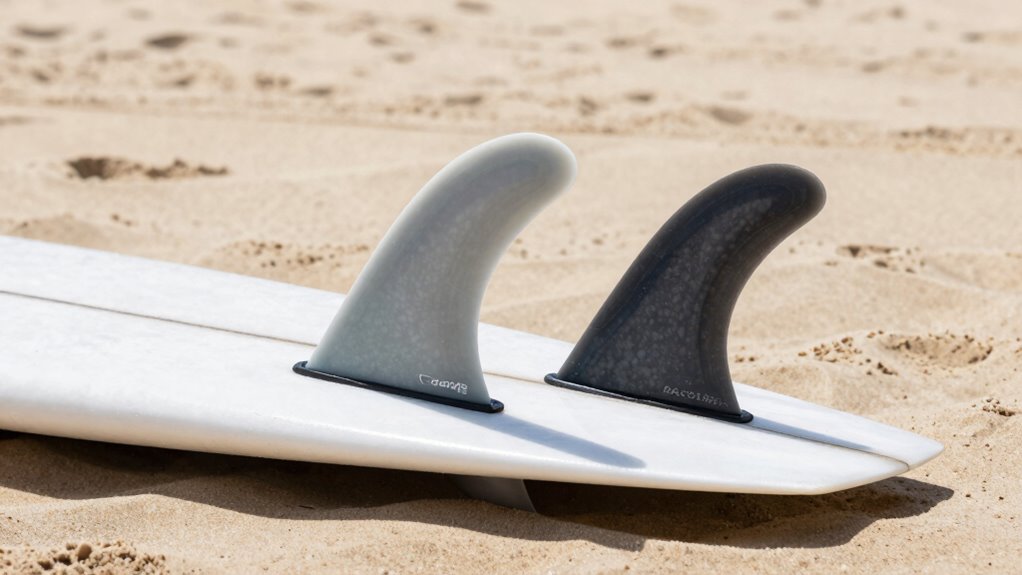
The fin setup you choose directly influences your paddleboard’s stability, maneuverability, and overall performance on the water. A single fin offers steady tracking and enhanced stability, making it easier to stay on course, especially in flat water. A 1+2 fin system increases maneuverability, allowing sharper turns and better control in choppier conditions. Fin durability matters because a well-made fin withstands impacts and prolonged use, maintaining performance over time. Fin aesthetics also play a role, as sleek, well-designed fins can boost your board’s visual appeal without sacrificing functionality. Choosing the right fin setup balances these factors, helping you optimize stability, agility, and performance based on your paddling style and water conditions.
Choosing the Best Fin Setup for Your Water Conditions and Skill Level
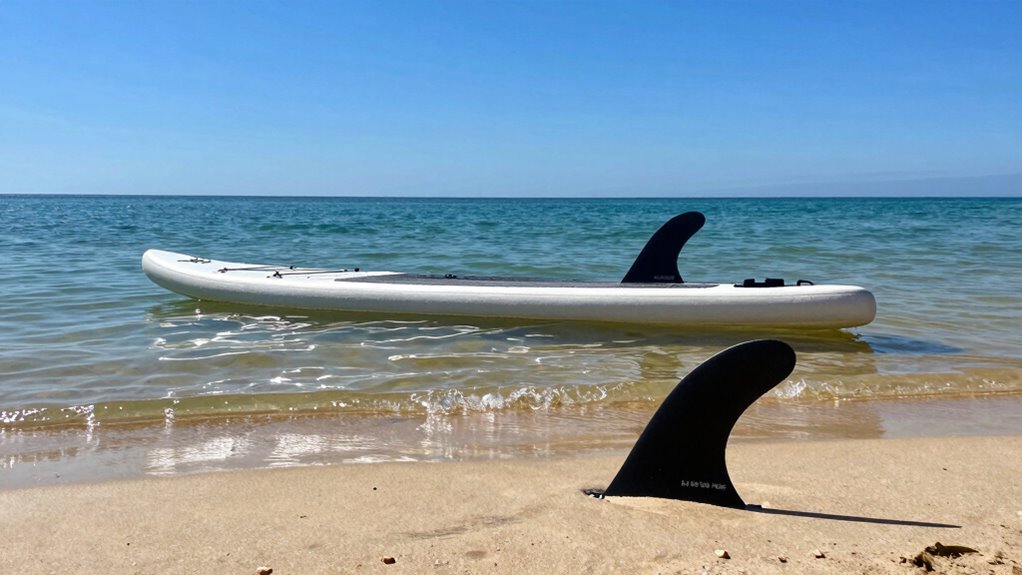
Matching your fin setup to your water conditions and skill level is essential for getting the most out of your paddleboarding experience. Your choice depends on factors like water type, your experience, and personal preferences. For calmer waters, a single fin with durable fin material offers stability, while multiple fins provide better maneuverability in choppier conditions. Consider fin color too; brighter colors improve visibility, especially in crowded spots. The fin material influences durability and flexibility—rigid options suit rougher conditions, while softer materials add flexibility. If you’re just starting, a simple single fin setup with a neutral fin color might be best. As you gain skill, experimenting with different fin configurations and colors can help you tailor your ride for performance and safety.
How to Adjust and Maintain Your Fin Setup for Optimal Performance
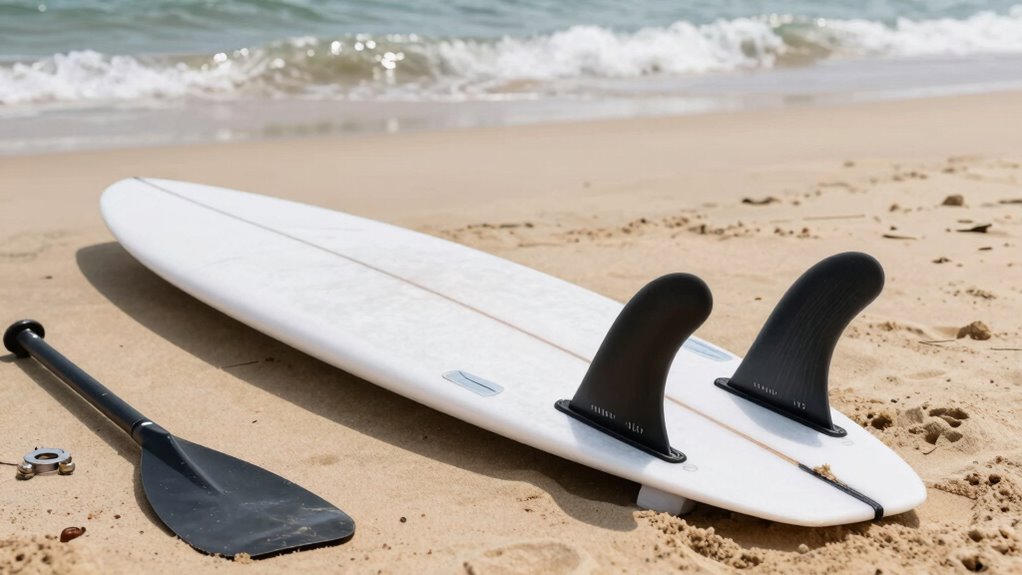
To guarantee your fin setup performs at its best, regularly adjust and maintain it based on your water conditions and riding style. Fin maintenance is key to ensuring ideal performance; check for damage, dirt, or corrosion before each session. Proper fin installation is essential—ensure fins are securely fitted and aligned correctly to prevent wobbling or misdirection. Tighten fin screws or clips firmly but avoid over-tightening, which can cause damage. After paddling, rinse your fins with fresh water to remove salt and debris, and store them in a cool, dry place. Periodically inspect for cracks or wear, replacing damaged fins immediately. Maintaining your fin setup helps improve control, speed, and maneuverability, giving you a smoother, more efficient paddling experience every time.
Tips for Making the Final Decision: Picking the Right Fin for Your Paddleboarding Style
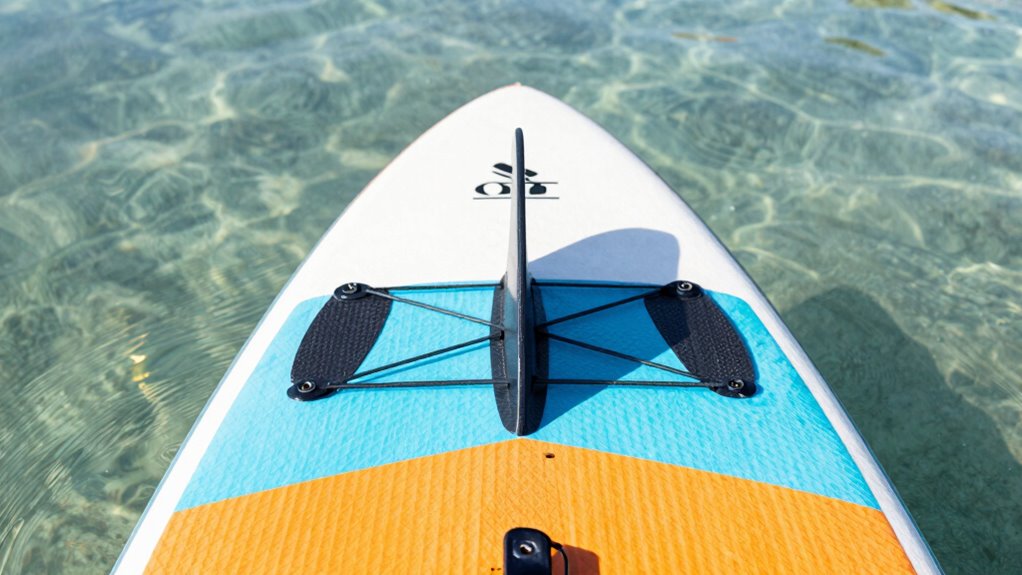
Choosing the right fin for your paddleboarding style starts with understanding how different fin types influence your ride. Your choice impacts maneuverability, speed, and stability. Consider fin material—plastic fins are durable and affordable, while fiberglass or carbon fins offer better performance but come at a higher cost. Fin aesthetics also matter; sleek, minimal designs reduce drag and look sharp, but some paddlers prefer more visible fins for style or easier handling. To make the best decision, think about your typical paddling environment and goals.
- Match fin material to your frequency of use and budget
- Consider fin aesthetics for personal style and confidence
- Choose a fin setup that complements your skill level and paddling terrain
Common Questions About Paddleboard Fin Setups
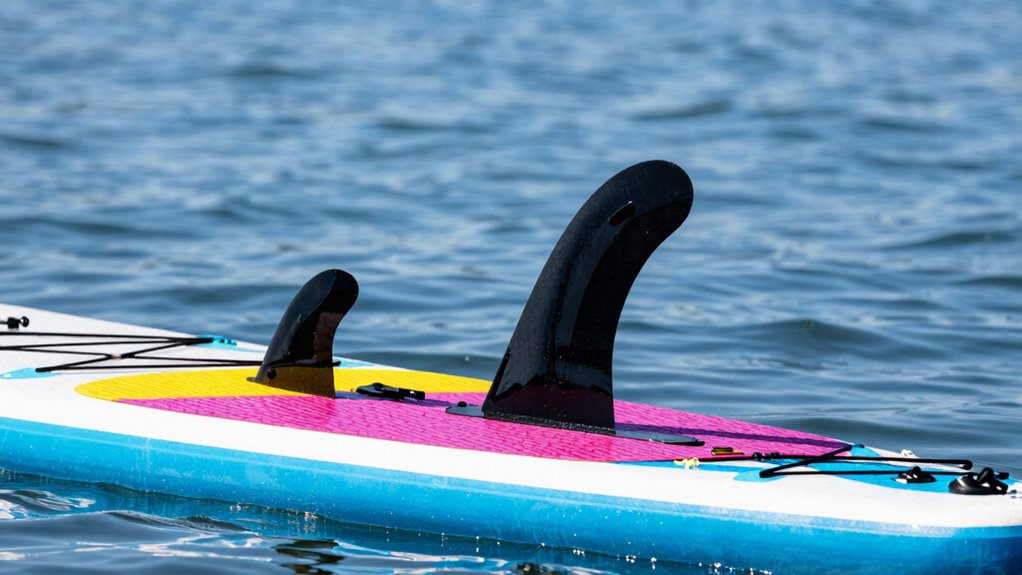
Have you ever wondered which paddleboard fin setup is best for your needs? Many paddlers ask about fin material and fin color. The material affects durability and performance; plastic fins are affordable and sturdy, while fiberglass fins offer smoother tracking. Fin color is mostly aesthetic but can help with visibility in the water or matching your board’s design. Common questions include whether a single fin is better for stability or if a 1+2 setup enhances maneuverability. Here’s a quick comparison:
| Fin Material | Fin Color | Best Use |
|---|---|---|
| Plastic | Bright | Beginners, casual paddling |
| Fiberglass | Clear | Speed, performance, advanced |
| Carbon fiber | Custom | Racing, expert paddling |
| Plastic | Neutral | General use |
| Fiberglass | Bright | Visibility, style |
Frequently Asked Questions
Can I Switch Between Fin Setups Easily on My Paddleboard?
Yes, you can switch between fin setups easily on your paddleboard if it has compatible fin compatibility and a quick release system. Many boards are designed for easy fin swaps, allowing you to change from a single fin to a 1+2 setup or vice versa. Just make certain your fins fit the fin box correctly and use the quick release mechanism for a hassle-free shift.
Do Fin Setups Impact Paddleboard Durability and Lifespan?
Your fin setup can impact your paddleboard’s durability and lifespan, mainly through fin maintenance and fin material. Regularly cleaning and inspecting your fins prevent damage, especially with softer materials prone to wear. Choosing high-quality fin materials like fiberglass or carbon enhances longevity, while cheaper plastics may crack or break sooner. Proper care guarantees your fins stay strong, and your board remains in good condition for many paddling adventures.
Are There Specific Brands Known for High-Quality Fin Systems?
Sure, because choosing a fin system brand is like picking a unicorn—rare and magical. Brands like FCS, Futures, and BPS are renowned for high-quality fins that deliver performance and durability. If you’re after reliable, exceptional fin system brands, these names should be on your radar. They’re trusted by paddlers worldwide for their craftsmanship and innovation, ensuring your paddleboarding experience stays smooth and responsive, no matter what adventure awaits.
How Does Fin Size Influence Performance in Different Water Conditions?
You’ll notice that larger fins boost hydrodynamic efficiency, helping you glide smoothly in open water. Smaller fins enhance maneuverability, making quick turns easier. The right fin size depends on your water conditions; bigger fins excel in choppy or flat water, while smaller ones suit tight spots or surfing. Balancing fin size ensures peak performance, giving you a good mix of stability and agility across different paddling scenarios.
Can Fin Setups Improve Paddleboarding Safety for Beginners?
While fin setups alone won’t guarantee safety, they can definitely help. With proper balance techniques, a stable fin setup offers better control, reducing the risk of falls. Regular equipment maintenance guarantees your fins stay secure and effective, preventing accidents. Combining these factors, especially for beginners, makes paddling safer and more enjoyable. So, choose the right fin setup, practice balance, and keep your gear in top shape for a smoother, safer experience.
Conclusion
Choosing the right fin setup is like finding your true North—guiding your paddleboarding journey with confidence. Whether you opt for a single fin or a 1+2 system, remember that your choice shapes every glide and turn. Trust your instincts, adapt as you learn, and embrace the adventure ahead. Like a ship’s compass, your fin setup points you toward better stability, control, and fun—making each paddle stroke a step toward mastery.