
Balanced regulators help you breathe smoothly by adapting to pressure changes, providing a steady airflow no matter your depth. Unbalanced models often cause fluctuations and increased effort, making breathing feel uneven and harder. This difference is due to their mechanical design—balanced regulators maintain consistent performance, while unbalanced ones depend on simpler parts that can shift with pressure. Want to discover how these designs impact your breath comfort? Keep exploring to learn more.
Key Takeaways
- Balanced regulators maintain consistent airflow regardless of tank pressure changes, resulting in smoother, easier breathing.
- Unbalanced regulators are affected by pressure fluctuations, causing variable airflow and increased breathing effort.
- Balanced regulators use a diaphragm and spring system to stabilize cracking pressure, enhancing breathing comfort.
- Unbalanced regulators rely on simpler components, which can lead to fluctuations, resistance, and fatigue during use.
- Choosing a balanced regulator improves breathing ease, especially at varying depths or pressure conditions.
What Are Regulators and Why Do They Matter?
Have you ever wondered who guarantees that industries follow the rules and keep things safe? That’s where regulators come in. They play a crucial role in ensuring proper pressure regulation, preventing dangerous over-pressurization, and maintaining safety standards. Regulators work by controlling flow mechanics, so gases and liquids move at safe, consistent rates. They help keep equipment functioning correctly and protect users from potential hazards. Whether in medical devices, industrial systems, or firefighting gear, regulators ensure that pressure stays within safe limits. Without them, systems could malfunction or cause accidents. Understanding how regulators control flow mechanics and pressure regulation is essential to appreciating their importance. They’re the silent guardians that keep everything running smoothly, safely, and reliably.
How Do Regulators Control Airflow During Breathing?
Regulators guarantee that airflow during breathing remains steady and safe, much like they do in industrial systems. They achieve this by continuously adjusting airflow to match your breathing mechanics. When you inhale, the regulator detects changes in pressure and opens to allow more air in; when you exhale, it reduces airflow accordingly. This constant regulation ensures you don’t experience sudden bursts or shortages of air. Key points include:
Regulators ensure smooth, safe airflow by automatically adapting to your breathing needs.
- Maintaining consistent airflow regardless of breathing effort
- Responding quickly to changes in inhalation and exhalation
- Preventing pressure spikes that could cause discomfort
- Supporting smooth, natural breathing patterns
Through precise airflow regulation, regulators help you breathe comfortably, mimicking natural breathing and preventing stress on your respiratory system.
What Are the Main Differences Between Balanced and Unbalanced Regulators?

Balanced and unbalanced regulators differ mainly in their mechanical design, which affects how they maintain consistent airflow. This difference influences your breathing experience, especially at varying tank pressures. Understanding these distinctions helps you choose the right regulator for your needs.
Mechanical Design Differences
The main mechanical difference between balanced and unbalanced regulators lies in how their internal components respond to pressure changes. Balanced regulators use mechanical components designed with specific design principles to keep cracking pressure stable as tank pressure drops. In contrast, unbalanced regulators rely on simpler mechanical components that can experience variations in cracking pressure. Key differences include:
- Balanced regulators feature a diaphragm and spring assembly that counteracts pressure fluctuations.
- Unbalanced regulators have a direct connection between the valve and pressure source, affected by pressure changes.
- The design principles of balanced models prioritize consistent performance across varying tank pressures.
- Mechanical components in unbalanced models are less complex, leading to potential inconsistencies over time.
Understanding these mechanical design differences helps you choose the right regulator for stable, reliable breathing.
Breathing Experience Variations
When you breathe through a regulator, the type can substantially affect how smooth and natural that experience feels. Balanced regulators deliver consistent oxygen, providing enhanced breathing comfort because the demand doesn’t impact performance. Unbalanced regulators, however, can cause slight variations in oxygen delivery, especially at different tank pressures, making your breathing feel less steady. To clarify, here’s a quick comparison:
| Feature | Balanced Regulator | Unbalanced Regulator |
|---|---|---|
| Oxygen Delivery | Consistent regardless of tank pressure | Varies with tank pressure |
| Breathing Comfort | Smoother, more natural | Slightly more effort at low pressure |
Choosing a balanced regulator generally offers a more natural, comfortable breathing experience during dives.
How Does Breathing Feel With a Balanced Regulator?

Breathing with a balanced regulator feels smooth and effortless, giving you a natural, unrestricted sensation underwater. You’ll notice consistent breathing comfort, even as depth or tank pressure changes. This stability results from superior regulator performance, which minimizes breathing resistance. You won’t experience sudden increases in effort or awkward pauses.
Key benefits include:
- Consistent airflow, making breathing feel natural
- Less fatigue over long immersions
- Reduced effort during inhalation and exhalation
- Reliable performance regardless of depth or tank pressure
This balance creates a seamless breathing experience, allowing you to focus on your dive instead of your gear. It’s designed to provide maximum comfort, ensuring your breathing feels unrestricted and effortless throughout your underwater adventure.
Why Might Unbalanced Regulators Make Breathing More Difficult?

Unbalanced regulators can make breathing feel harder because they increase your airway resistance, requiring more effort to breathe. They can also cause uneven airflow, reducing flow consistency and making each breath less smooth. As a result, you’ll find yourself working harder with each inhale, which can quickly become tiring.
Increased Airway Resistance
Have you ever wondered how small changes in regulator balance can make breathing harder? When your regulator isn’t balanced, it can increase airway resistance, making airflow more difficult. This change affects airflow dynamics, causing you to work harder to breathe. Unbalanced regulators can cause slight airway obstruction, which amplifies resistance. You might notice:
- Increased effort during inhalation
- Shorter, labored breaths
- Reduced overall airflow efficiency
- Greater fatigue over time
These issues make it harder for air to pass smoothly through your airways, forcing your respiratory muscles to work harder. The disruption in airflow dynamics results in a feeling of tightness or difficulty in breathing, especially during exertion. Proper regulator balance helps maintain minimal airway resistance, ensuring easier, more comfortable breathing.
Reduced Flow Consistency
When a regulator isn’t properly balanced, it can cause fluctuations in airflow, making your breathing less consistent. These airflow fluctuations disrupt the steady delivery of air, forcing your respiratory system to work harder to adjust. As a result, your breathing may feel uneven or unpredictable, leading to discomfort or increased fatigue. Unbalanced regulators don’t provide a smooth, reliable flow, which impacts your breathing consistency. Instead, you might notice sudden changes in how easy or difficult it is to breathe, especially during inhalation or exhalation. This inconsistency can make breathing feel more strenuous and less natural. Ensuring your regulator is balanced helps maintain steady airflow, supporting smoother, more comfortable breathing during your dives or activities.
Higher Breathing Effort
Why does an unbalanced regulator make breathing more difficult? Because it increases your breathing effort by raising airway resistance. When the regulator isn’t balanced, you often have to work harder to draw air because of inconsistent airflow paths. This additional effort can cause you to tire more quickly and feel fatigued. Unbalanced regulators may:
- Create uneven flow, forcing you to exert more effort
- Increase airflow resistance, making each breath harder
- Cause fluctuations in pressure, requiring extra effort to stabilize
- Lead to a feeling of restricted breathing due to inconsistent delivery
All these factors contribute to higher breathing effort. You’ll notice it as increased fatigue and discomfort, especially during extended dives. Maintaining balance in your regulator minimizes these issues, making breathing feel more natural and less strenuous.
When Should You Use a Balanced Regulator?

A balanced regulator is the ideal choice when precise pressure control and stability are essential, especially in applications requiring consistent delivery over time. If you often encounter changing conditions like altitude adaptation, a balanced regulator maintains steady performance regardless of depth or atmospheric pressure shifts. This consistency reduces breathing effort and ensures reliable airflow. Additionally, because balanced regulators are designed for durability, they require less frequent regulator maintenance, making them a smart choice for long-term use. You should opt for a balanced regulator when you need consistent performance in variable environments or when comfort and safety depend on stable airflow. In such situations, a balanced regulator provides the reliability you need, regardless of external conditions.
In Which Situations Are Unbalanced Regulators Suitable?
Unbalanced regulators are suitable in situations where cost, simplicity, or specific performance characteristics matter more than steady pressure. In scuba diving, they’re often used in recreational setups where budget is a concern, and the environment is predictable. Industrial applications also benefit from unbalanced regulators when durability and ease of maintenance are priorities. They work well when:
- The environment is stable and predictable
- Cost savings are essential
- Simplicity and ease of repair are needed
- Precise pressure regulation isn’t critical
While they may cause breathing differences due to pressure fluctuations, unbalanced regulators provide a reliable, affordable solution for many scenarios. They’re ideal when performance stability is less important than practicality and economy.
How Can You Identify a Balanced Regulator From Its Design?
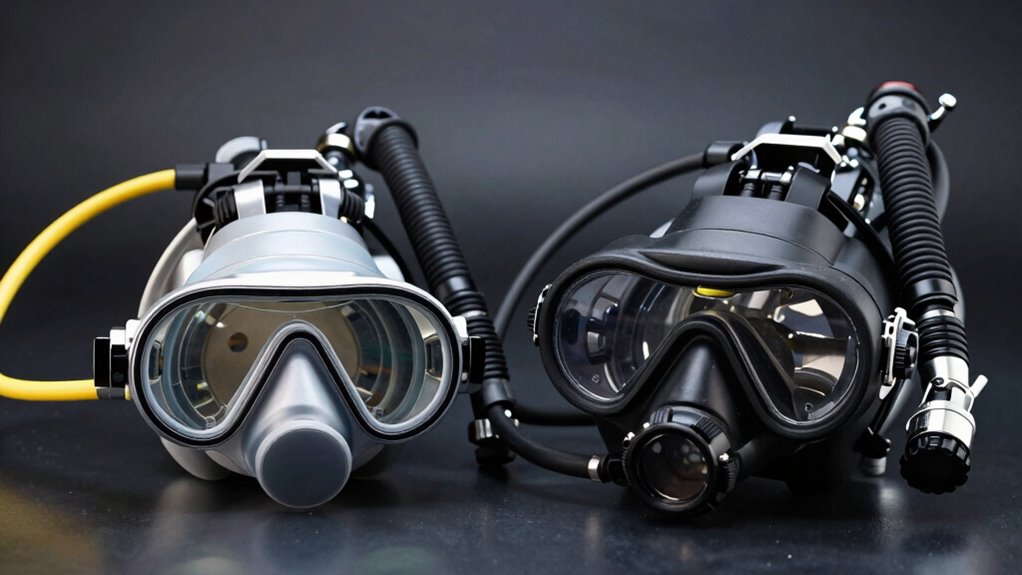
You can identify a balanced regulator by examining its design features, which differentiate it from unbalanced models. Balanced regulators typically have a more streamlined, compact structure with fewer external parts, making regulator maintenance easier and more straightforward. Look for an ergonomic design that fits comfortably in your hand, often with controls positioned for easy access. These features help reduce hand fatigue and improve handling during use. The balanced mechanism maintains consistent airflow regardless of tank pressure fluctuations, which is reflected in a cleaner, more symmetrical appearance. Unlike unbalanced models, balanced regulators often have a more refined, integrated look, emphasizing ease of use and durability. By paying attention to these design cues, you can confidently identify a balanced regulator.
Troubleshooting Breathing Issues Related to Regulator Types?
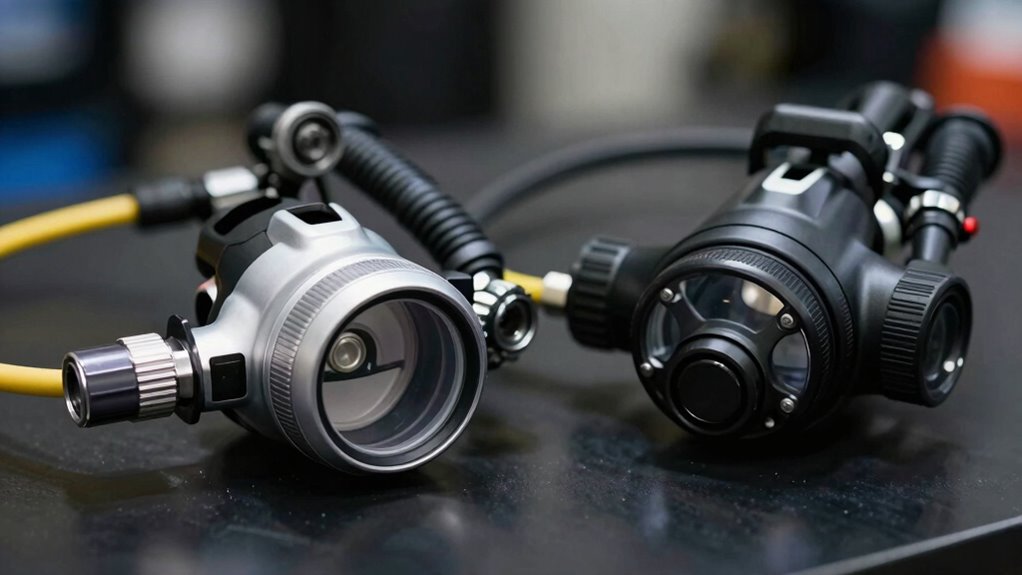
Have breathing issues during diving often stem from regulator problems that can be linked to the type of regulator in use? Unbalanced regulators may cause inconsistent airflow, leading to breathing discomfort, especially at depth or tank pressure changes. To troubleshoot, start with proper regulator maintenance—clean and inspect for debris or corrosion. Check for:
- Free-flowing issues or sudden air bursts
- Difficulty inhaling or exhaling smoothly
- Leaks or hissing sounds
- Freezing or icing around the regulator
Addressing these issues involves ensuring the regulator is well-maintained and functioning correctly. Regular maintenance improves breathing comfort and prevents problems during dives. Remember, unbalanced regulators may require more frequent checks, especially in challenging conditions, to ensure peak performance and safety.
Factors to Consider When Choosing Your Regulator Type?

When choosing a regulator, it’s vital to evaluate the type that best suits your diving needs and conditions. Consider the gas mixture you’ll dive with—balanced regulators perform better with air and enriched air nitrox, while unbalanced models might struggle with different mixes. Think about how often you’ll dive and the ease of regulator maintenance; a balanced regulator typically requires less frequent servicing and offers consistent performance, making it ideal for regular divers. If you plan to dive in cold water, make sure your regulator is designed to handle low temperatures. Compatibility with your tank and regulator system is also essential. Ultimately, selecting the right regulator involves balancing your specific conditions with ease of maintenance to guarantee reliable, comfortable breathing underwater.
Frequently Asked Questions
Can Regulator Type Affect Underwater Breathing Duration?
Yes, your regulator type affects underwater breathing duration by influencing regulator performance and breathing effort. A balanced regulator provides consistent airflow with less effort, allowing you to breathe more efficiently and extend your dive time. Conversely, an unbalanced regulator requires more effort, which can fatigue you faster and limit your breathing duration. Choosing the right regulator guarantees smoother breathing, conserving your air supply and enhancing your overall diving experience.
Are There Safety Risks Associated With Unbalanced Regulators?
Unbalanced regulators do pose safety risks if they fail, especially during dives. You could experience free-flowing air or difficulty breathing, which can be dangerous. To stay safe, you should know emergency procedures like switching to your alternate air source quickly. Regular maintenance and checks reduce the chances of regulator failures. Always stay prepared and trained to handle such situations to ensure your safety underwater.
How Maintenance Differs Between Balanced and Unbalanced Regulators?
A stitch in time saves nine, so you should prioritize proper regulator maintenance. For balanced regulators, maintenance is simpler because they require fewer calibration procedures and are more resistant to pressure fluctuations. Unbalanced regulators, on the other hand, need more frequent calibration and checks to guarantee consistent performance. Regular inspections and calibration procedures keep both types functioning safely, but unbalanced models demand more attention to prevent issues.
Do Regulators Impact Breathing Comfort During Extended Use?
Yes, your regulator impacts breathing comfort during extended use. If it has high breathing resistance, you’ll notice more effort needed to breathe, causing fatigue. Good regulator ergonomics minimize this resistance, making breathing feel easier and more natural. A well-designed regulator reduces strain on your jaw and face, ensuring comfort during long dives. Choosing the right regulator with ideal ergonomics helps you breathe smoothly and stay comfortable throughout your dive.
Can Regulator Choice Influence Oxygen Toxicity Risks?
Yes, your regulator choice can influence oxygen toxicity risks. Lighter regulators with sleek aesthetic designs tend to encourage longer, more comfortable dives, reducing stress and rapid breathing that could increase risk. However, guarantee it has appropriate features like precise flow control and reliable performance. Always follow safe oxygen exposure limits, regardless of regulator weight or appearance, to minimize toxicity risks during extended dives.
Conclusion
Think of your regulator like the steering wheel of a boat. A balanced regulator guides you smoothly through calm waters, making breathing effortless. An unbalanced one, like a shaky helm, can feel unpredictable and harder to control. Choosing the right regulator is about finding your steady course. When you understand how each type works, you can navigate your breathing comfortably, steering confidently through every dive or breath. Smooth sailing starts with the right choice.