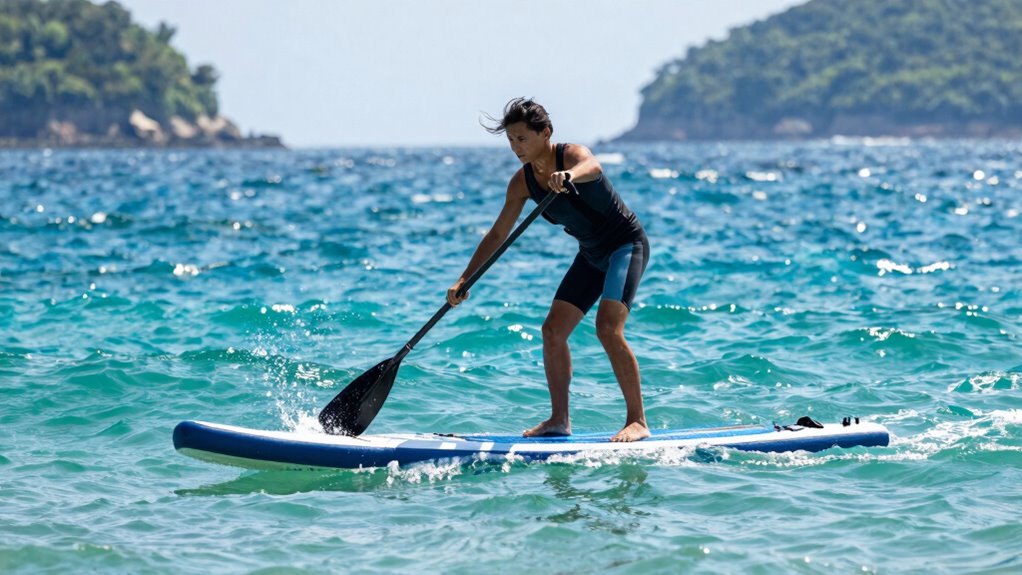
To stay straight while paddleboarding in wind, focus on angling your board into the wind and keeping your strokes short and controlled. Widen your stance, bend your knees, and lean into gusts to improve balance. Use your paddle as a steering tool by paddling at an angle and keeping it close to the board. Staying relaxed and target-oriented helps you maintain course, and if you keep practicing, you’ll master this technique more effortlessly.
Key Takeaways
- Paddle at an angle into the wind to counteract drift and maintain a straight course.
- Keep a wider stance and bend knees to improve stability and control in windy conditions.
- Shorten your strokes and keep the paddle low and close to the board for precise, responsive paddling.
- Focus on steady, deliberate movements and target your destination rather than reacting to gusts.
- Shift your weight into the wind and angle the board slightly to enhance balance and reduce sideways drift.
How Can I Paddleboard Effectively in Wind?
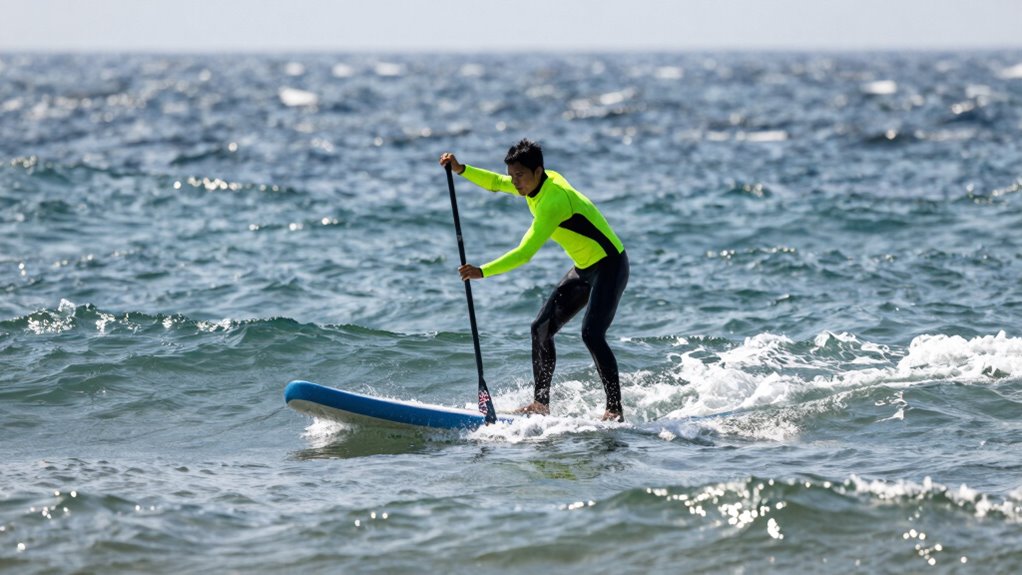
When paddling in wind, your goal is to stay stable and maintain control. To do this, focus on balance tips that help you adapt to changing conditions. Keep your feet shoulder-width apart and distribute your weight evenly across the board. Slightly bend your knees for better stability and quick adjustments. Use wind adaptation techniques like paddling with shorter strokes and keeping your paddle low and close to the board to maintain momentum. Stay relaxed and avoid stiff movements that can throw you off balance. Constantly scan the water to anticipate gusts, and adjust your stance or paddle angle accordingly. With these balance tips and wind adaptation strategies, you’ll stay more stable, control your direction, and enjoy your paddleboarding experience even in challenging conditions.
What Are the Best Paddleboards for Windy Conditions?
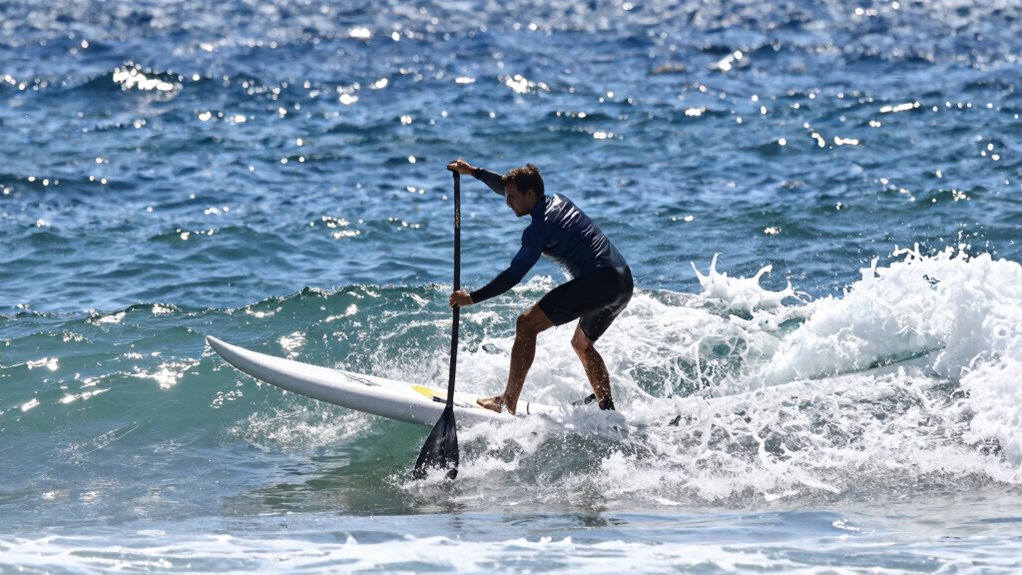
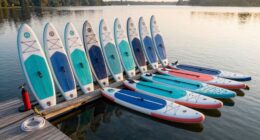
Choosing the right paddleboard for windy conditions can make a significant difference in your stability and control on the water. Look for boards with specific design features that combat wind, such as wider shapes for stability and thicker profiles for buoyancy. Here are the top options:
- Inflatable boards with a broad, stable design, often featuring a wider deck for better balance.
- Racing paddleboards that have a pointed nose and narrow tail, helping slice through wind and chop.
- All-around boards with a flat bottom and a rounded shape, offering versatility and improved wind resistance.
- Boards with wind resistant features, like high-density foam cores and reinforced rails, to enhance durability and control.
These paddleboard designs help maintain your course in challenging wind conditions.
How Do Wind Conditions Affect Your Paddleboarding Course and Stability?
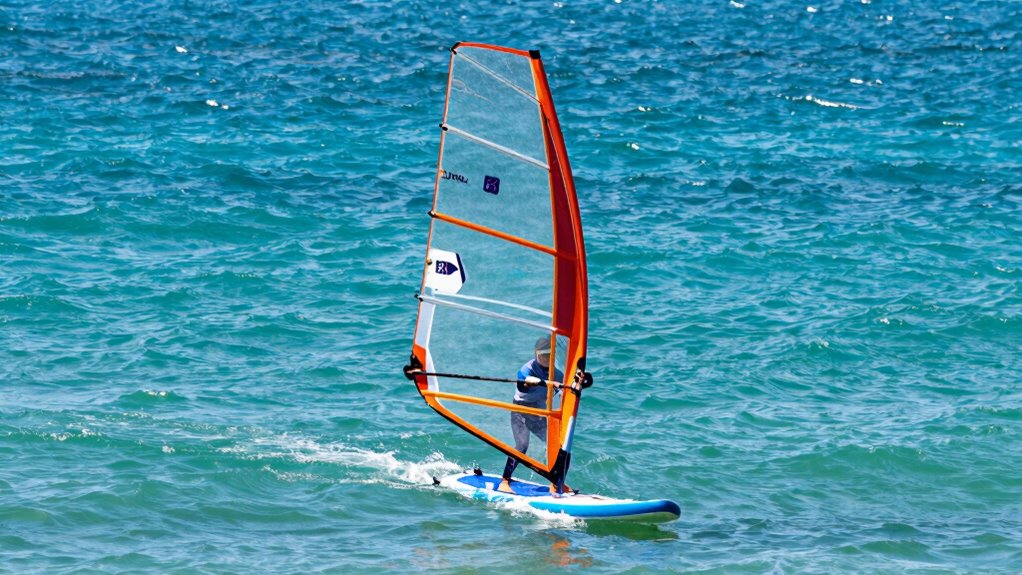
Wind conditions directly influence your paddleboarding course and stability by creating resistance and unpredictable movements on the water. As wind blows, it pushes against your board, causing course deviation if you’re not careful. Strong wind resistance can make steering difficult, especially if you’re paddling into the wind or crosswind. You might notice your board drifting off course, requiring constant adjustments to stay on track. Here’s a visual to help:
| Wind Direction | Effect on Course | Stability Impact | Needed Technique | Difficulty Level |
|---|---|---|---|---|
| Headwind | Slows you down | Less stable | Short strokes | High |
| Crosswind | Pushes sideways | Instability | Low, wide strokes | Moderate |
| Tailwind | Speeds you up | More stable | Steady paddling | Low |
| Gusts | Sudden shifts | Unpredictable | Stay centered | High |
| Calm | Minimal effect | Most stable | Normal paddling | Low |
How to Choose the Right Gear and Safety Equipment for Windy Days
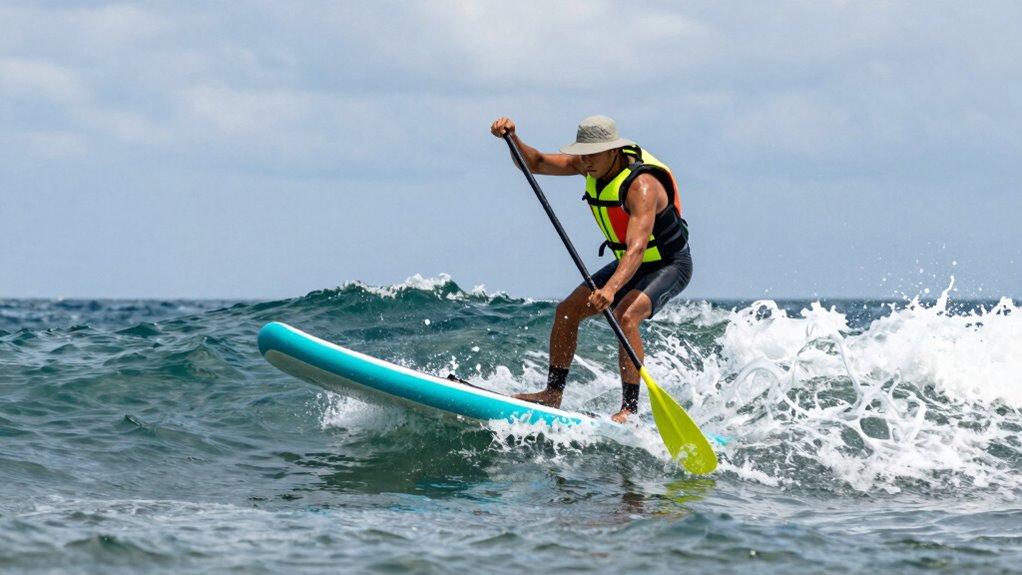
Navigating windy conditions requires selecting the right gear and safety equipment to guarantee stability and safety on the water. To stay secure, focus on wind resistant gear and safety essentials. First, choose a paddleboard designed for stability in gusty conditions, with a broader and thicker profile. Second, wear a life jacket with reflective elements and quick-release buckles for safety. Third, utilize a paddle with adjustable length and a textured grip to maintain control. Fourth, carry an emergency whistle and waterproof communication device to alert others if needed. These gear choices help you stay balanced and protected during strong winds, reducing the risk of accidents. Proper gear selection ensures you can paddle confidently through challenging conditions, keeping safety at the forefront.
How to Adjust Your Stance for Better Balance in Gusts
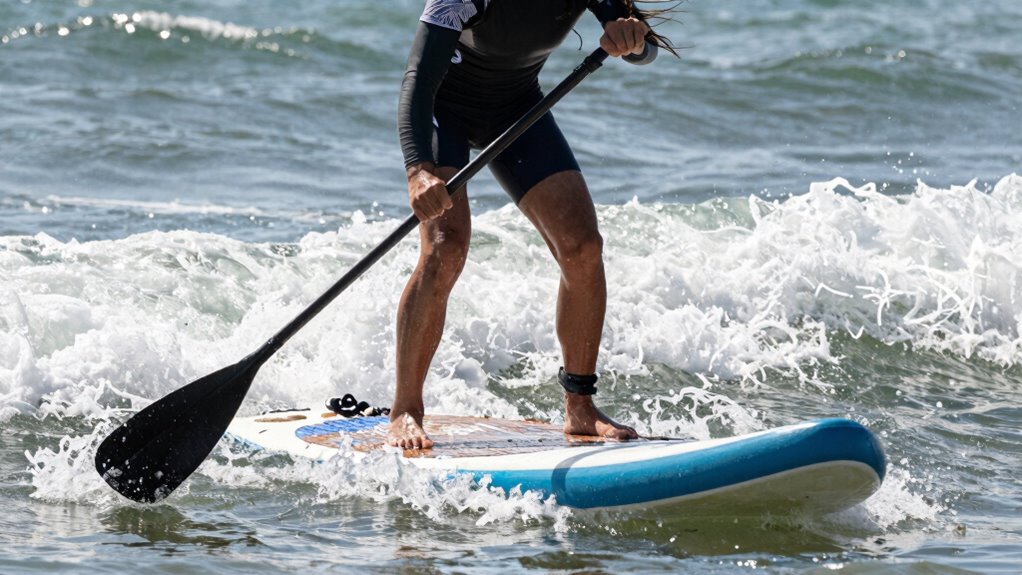
When gusts hit, adjusting your stance can make a significant difference in maintaining your balance. To improve stability, widen your stance slightly, keeping your feet shoulder-width apart or a bit more. Bend your knees slightly to lower your center of gravity, which helps absorb the wind’s force. Keep your weight centered over the board, leaning into the gusts rather than against them. Engage your core muscles to stabilize your body and prevent wobbling. Small stance adjustments, like shifting your feet or angling your board slightly into the wind, can enhance your balance improvement. This proactive stance adjustment allows you to stay upright and maintain control, even when the wind becomes unpredictable. Mastering this technique keeps you steady and confident on the water.
What Are the Key Paddle Strokes to Maintain Your Direction?
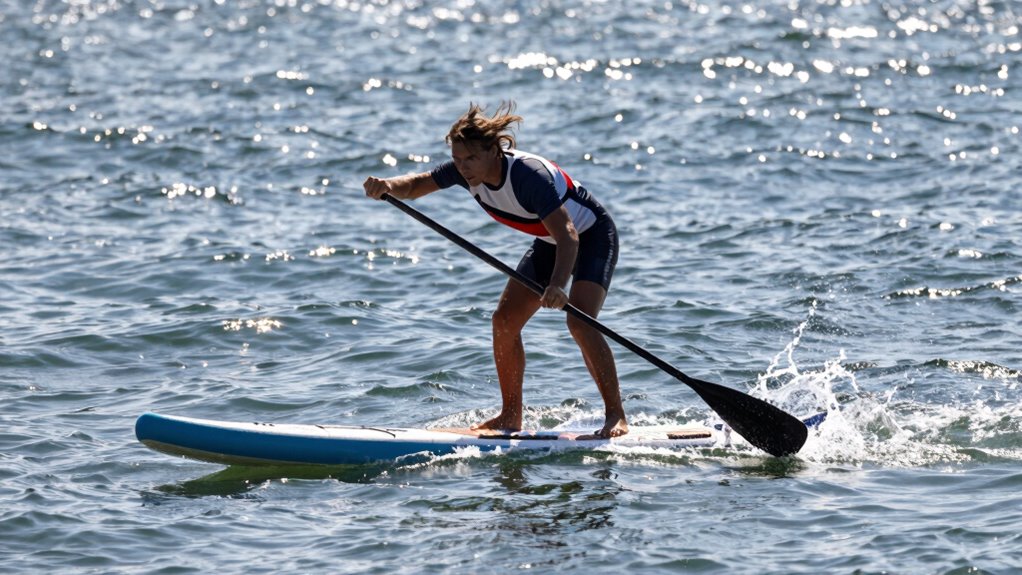
To stay on course while paddleboarding, mastering the key strokes that control your direction is essential. Your paddle stroke techniques and wind direction awareness are crucial for maintaining a straight path. Focus on these strokes:
- Draw Stroke – Pull the paddle close to your board’s side to steer against wind drift.
- Sweep Stroke – Make wide, smooth arcs to turn or correct your course, especially in crosswinds.
- Reverse Stroke – Push the paddle backward to slow down or stop drifting.
- J-Stroke – Add a slight twist at the end of your paddle pull to keep your board moving straight without veering off course.
Practicing these strokes with awareness of wind direction helps you stay balanced and on track, even in gusty conditions.
How to Use Your Paddle as a Windbreak and Steering Tool
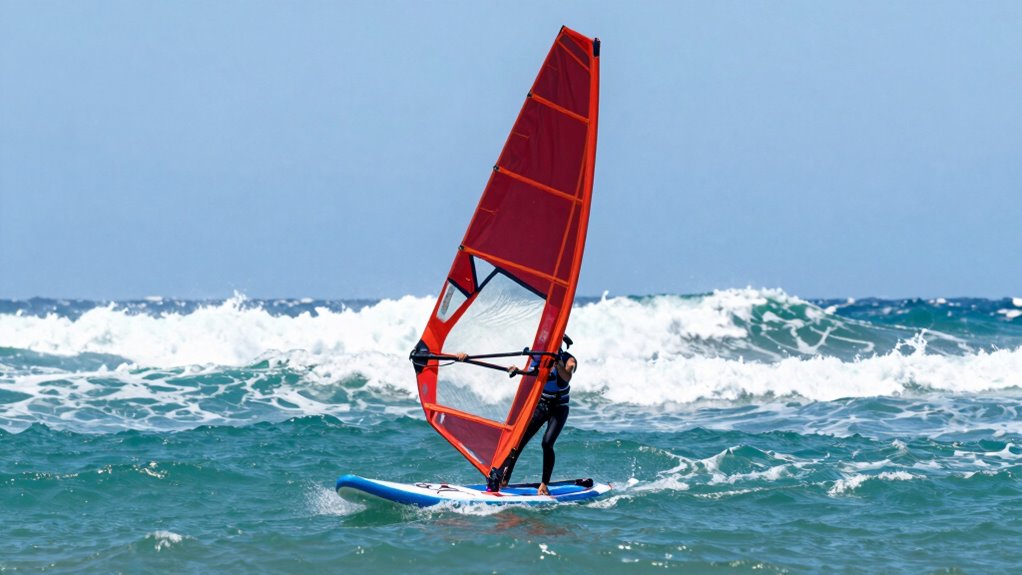
You can use your paddle strategically to block the wind and steer your board more effectively. Proper paddle positioning helps create a windshield that minimizes resistance and keeps you stable. Mastering these techniques allows you to control your movement even in challenging gusts.
Paddle Positioning Strategies
In windy conditions, mastering how to position your paddle can make a significant difference in maintaining control and stability. Your paddle grip and paddle length are key factors. Proper paddle positioning helps you steer, act as a windbreak, and keep your board on course.
Here are some strategies to contemplate:
- Keep a firm but relaxed paddle grip for better control.
- Use a longer paddle in strong winds to reach further into the water for stability.
- Angle your paddle slightly forward or backward to influence direction.
- Vary paddle depth depending on wind intensity, keeping it deeper to resist gusts.
Adjusting your paddle position with mindful grip and length enables you to counteract wind effects and stay on track.
Using Paddle as Windshield
When facing strong winds while paddleboarding, your paddle can serve as more than just a tool for propulsion—it’s also an effective windbreak and steering aid. To maximize this, verify your paddle is well-maintained, with smooth edges that cut through wind resistance efficiently. Position the paddle vertically or at an angle against the wind to block gusts and stabilize your board. Keep an eye on water temperature, as colder conditions may make paddle maintenance more critical—icy water can cause wear or damage over time. Use the paddle’s surface to shield your body from wind, reducing fatigue and improving control. Regularly inspect for cracks or splinters, especially if you’re in rough conditions, so your paddle remains a reliable tool for both steering and wind protection.
How to Correct Your Course When the Wind Pushes You Off Track
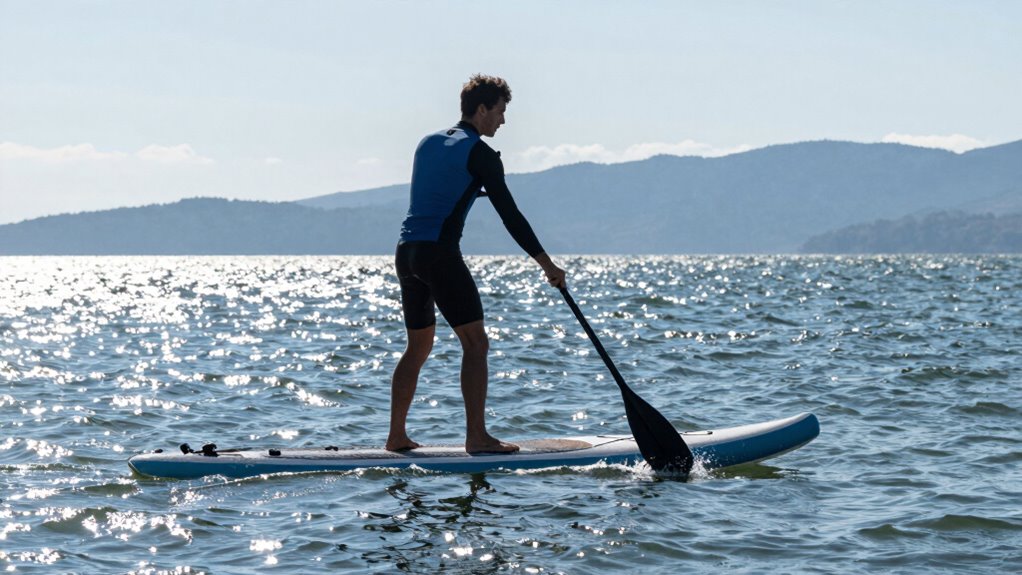
Wind can easily push your paddleboard off course, especially when you’re trying to stay on a straight path. To maintain control, you need good wind awareness and quick course correction. First, identify the wind’s direction and strength. Then, adjust your paddle strokes to counteract the push:
- Shorten your strokes to stay balanced.
- Paddle at an angle into the wind to slow drift.
- Use your core to shift your weight slightly into the wind for better stability.
- Keep your eyes on your target, not the wind, and make small, deliberate corrections.
When Should You Turn Back or Find Shelter From the Wind?
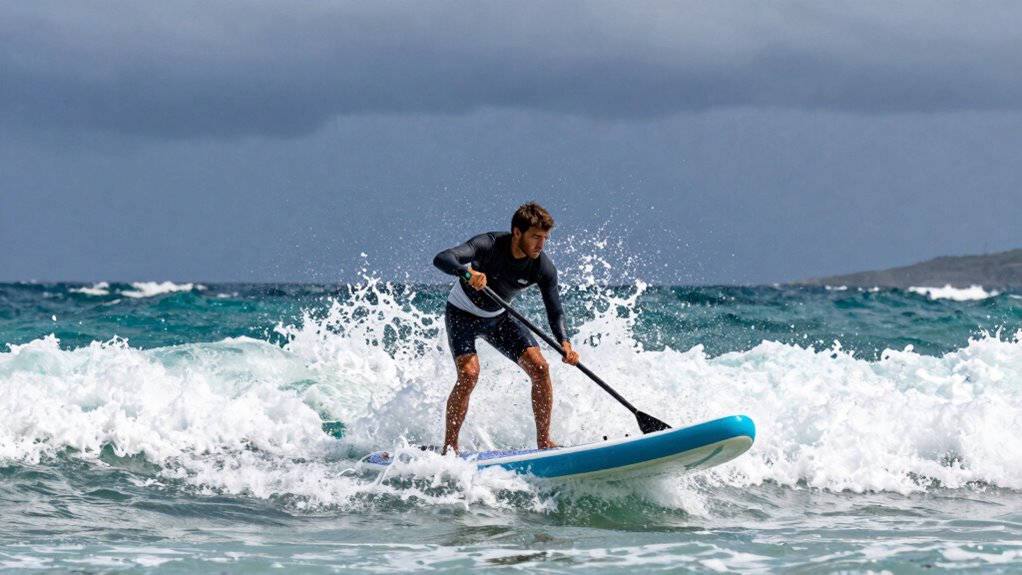
As the wind picks up and begins to feel overwhelming, it’s time to contemplate turning back or seeking shelter. Your wind awareness is vital; if the gusts grow stronger and disrupt your balance or control, it’s a clear sign to reconsider your route. Recognizing when to shelter seek can prevent dangerous situations.
| Calm Winds | Moderate Winds | Strong Winds | Dangerous Winds |
|---|---|---|---|
| Easy paddling | Slight difficulty | Challenging control | Risk of falling or capsizing |
| Comfortable pace | Need to adjust stance | Increased fatigue | Immediate retreat advised |
| Safe distance | Stay alert | Seek shelter soon | Turn back immediately |
| Preparedness | Better judgment | High caution needed | Avoid further exposure |
Knowing when to turn back keeps you safe and preserves your enjoyment.
How Can I Practice Paddleboarding in Wind Safely and Effectively?
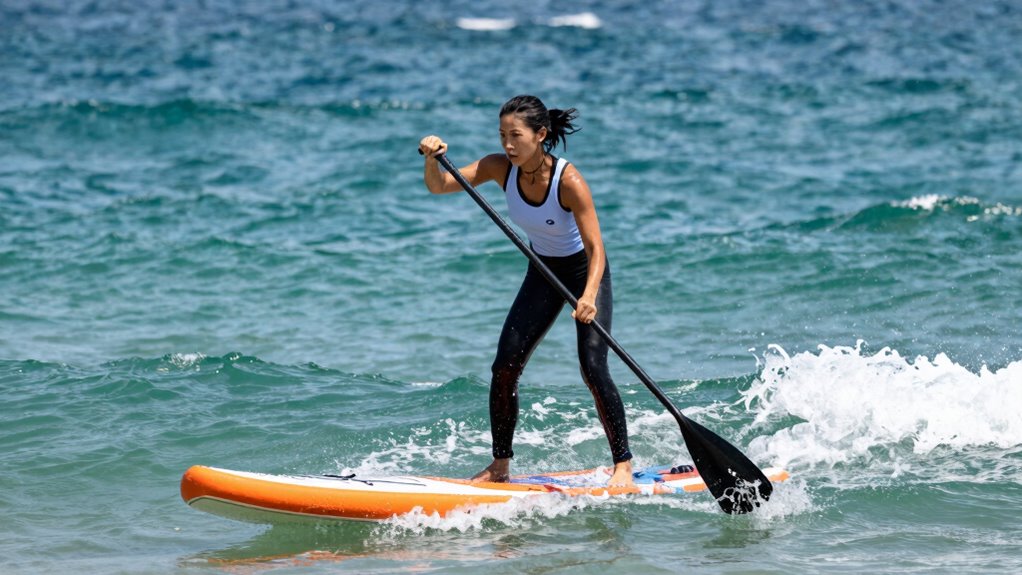
Practicing paddleboarding safely in windy conditions requires developing specific skills and adopting mindful techniques. To manage wind resistance and gusts, focus on these key practices:
Practice near shore, stay low, anticipate gusts, and paddle smoothly to stay safe in windy conditions.
- Start Close to Shore – Practice near the beach where you can easily reach safety if needed.
- Use Proper Stance – Keep a low center of gravity, leaning into gusts to maintain balance and control.
- Anticipate Gusts – Watch the wind’s movement and adjust your paddling to counteract sudden gusts.
- Control Your Speed – Paddle smoothly to handle wind resistance, avoiding sudden bursts that can throw you off balance.
These steps will help you build confidence, improve gust management, and stay safe while enjoying paddleboarding in windy conditions.
Frequently Asked Questions
How Does Wind Direction Influence Paddleboarding Strategies?
Wind direction profoundly influences your paddleboarding strategies. When facing wind drift, you should adjust your angle to compensate for the wind pushing you off course. Use gust management by paddling more powerfully during gusts and easing up during lulls. By staying aware of the wind’s direction and adapting your strokes, you can maintain control and stay on your desired path, making your paddleboarding experience smoother and more enjoyable.
What Are Signs of Unsafe Wind Conditions for Paddleboarding?
If you notice rapidly changing gust patterns or a significant drop in wind chill, it’s a sign of unsafe wind conditions for paddleboarding. Strong gusts can destabilize you, making it hard to control your board, while falling wind chill indicates dropping temperatures that can cause hypothermia. If these signs appear, it’s best to postpone your trip or head back to safety, ensuring you avoid accidents caused by unpredictable winds.
Can Wind Impact Paddleboard Speed and Maneuverability?
Did you know wind resistance can reduce your paddleboard speed by up to 30%? Wind definitely impacts paddleboard speed and maneuverability by creating additional resistance against your board. Strong gusts can make maintaining paddle stability difficult, causing you to zigzag or drift off course. To stay on track, use a low stance and paddle on the windward side, helping you counteract wind effects and keep better control in challenging conditions.
How Does Wind Affect Paddleboard Weight Distribution?
Wind can cause balance challenges on your paddleboard, making you shift your weight more frequently. As the wind pushes against you, you need to adjust your weight distribution to stay stable and maintain control. By consciously shifting your weight toward the windward side or keeping your core engaged, you improve your balance and counteract the effects of the wind, ensuring smoother paddling and better direction.
Are There Specific Locations Ideal for Paddleboarding in Windy Weather?
You should look for a windy lake or sheltered coastal spots when paddleboarding in windy weather. These locations often have calmer waters, making it easier to stay balanced and control your board despite coastal gusts. Avoid open ocean areas with strong gusts, as they can be challenging. Instead, choose places with natural barriers like trees or cliffs that reduce wind impact, so you can enjoy your paddleboarding experience safely.
Conclusion
Just like steering a ship through choppy waters, mastering paddleboarding in wind takes patience and technique. I remember a day when strong gusts pushed me off course, but adjusting my stance and using my paddle strategically kept me steady. Think of wind as a tricky dance partner—you can’t always control it, but with the right moves, you stay in step. Stay calm, adapt, and enjoy the ride—even when the wind tries to steer you astray.