Choosing the wrong SUP length can make your paddling uncomfortable and frustrating. If your board is too long, it feels unwieldy and hard to control; too short, and you’ll struggle with stability and balance. Your body size, paddling style, and water conditions all matter for picking the right size. If you keep mismatching these factors, your experience on the water will suffer. Stick around to discover how to find the perfect fit and enjoy every paddle.
Key Takeaways
- Choosing too long or too short a SUP reduces stability, making paddling frustrating and difficult to control.
- Incorrect SUP length hampers paddle efficiency, causing fatigue and hindering your overall paddling experience.
- Failing to consider body size, paddling style, and water conditions can lead to an ill-fitting board.
- Not testing different sizes on water increases the risk of selecting a board that feels unwieldy or unstable.
- Proper sizing enhances control, balance, and enjoyment, preventing the dislike associated with the wrong SUP length.
Why Choosing the Right SUP Length Is Key for Stability and Performance
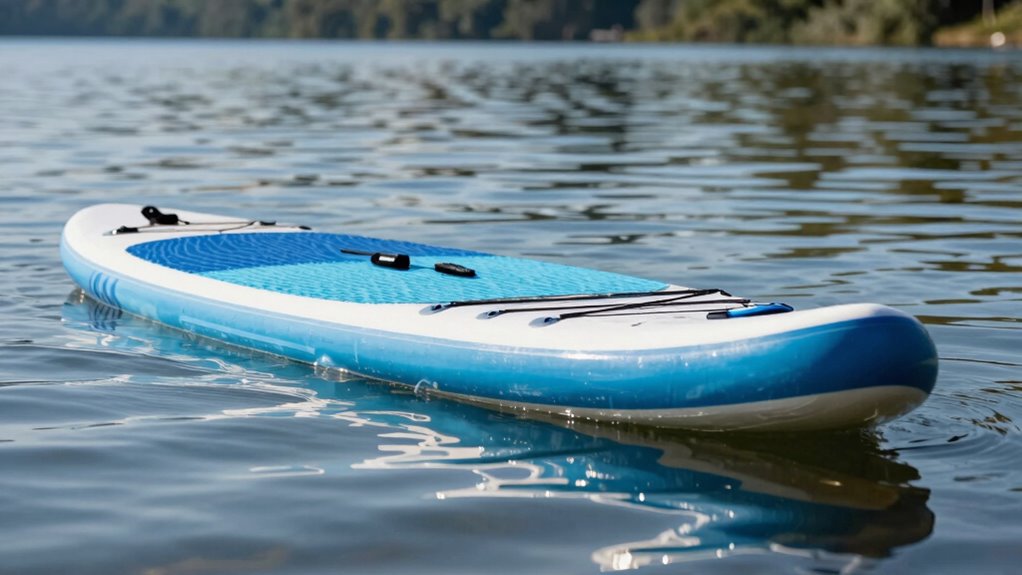
Choosing the right SUP length is essential because it directly impacts your board’s stability and performance on the water. A properly sized board offers better board stability, helping you stay balanced whether you’re cruising or practicing tricks. When your SUP is the right length, you’ll notice improved paddle efficiency, making each stroke more effective and less tiring. Too long a board can feel unwieldy, reducing control and making it harder to maneuver, while a board that’s too short might wobble and lack stability. By selecting the correct length, you guarantee a smoother, more stable ride, allowing you to focus on your technique and enjoy your time on the water. Ultimately, the right SUP length maximizes your comfort and performance.
How Your Body Size and Paddling Style Affect Your SUP Size
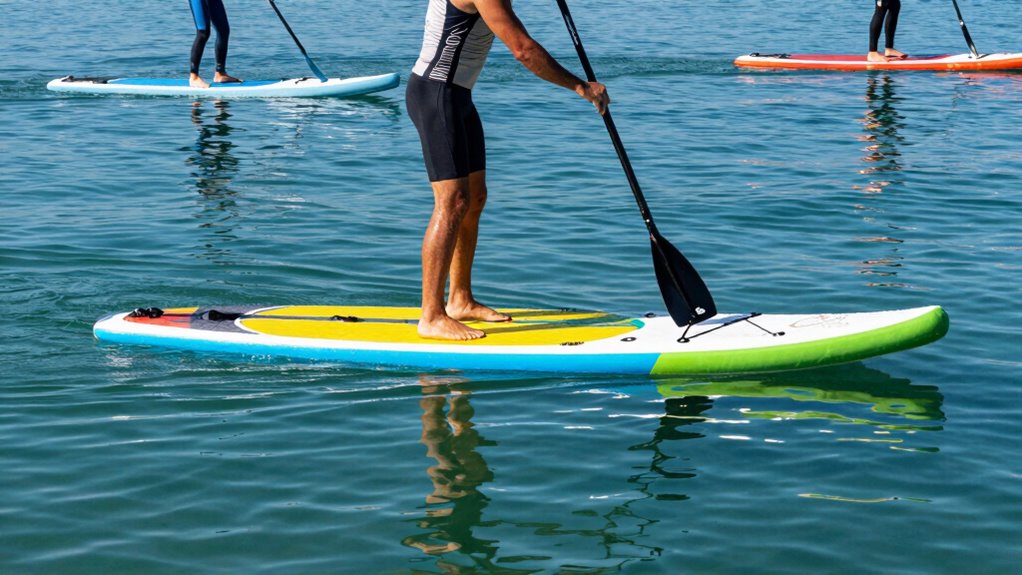
Your body weight influences the board size you need for stability and ease of paddling. Your paddling style, whether aggressive or relaxed, also impacts the ideal SUP dimensions. Additionally, your skill level plays a role in selecting a board that matches your experience and technique.
Body Weight Impact
Have you ever wondered how your body weight influences the ideal stand-up paddleboard size? Your weight affects the board’s stability and buoyancy, so a heavier paddler needs a larger, more stable board. A bigger board offers better support but may feel less maneuverable. Board flexibility also matters—stiffer boards provide more efficient power transfer, which is vital if you have a heavier body and need responsive control. Additionally, your paddle grip can impact your comfort and efficiency; a larger or more secure grip may be needed to handle your weight effectively. Choosing the right size isn’t just about length but also about how the board responds to your weight and paddling style. Getting this right ensures a smoother, more enjoyable experience on the water.
Paddling Technique Needs
Since your paddling style and body size directly influence how you maneuver on the water, they should play a key role in selecting the right SUP size. If you prefer a more aggressive paddling technique, a narrower board might suit you better, offering better agility. Conversely, if you focus on stability and longer sessions, a wider, more stable SUP is ideal. Your paddling technique also affects SUP storage needs; paddles made from lightweight materials like carbon or fiberglass can improve control and reduce fatigue, especially if you paddle frequently or for extended periods. Additionally, choosing the right paddle materials ensures efficient strokes and less strain, allowing your paddling style to shine without compromising your SUP size. Tailoring your board and gear to your technique boosts performance and enjoyment.
Skill Level Considerations
When selecting the right SUP size, skill level plays a crucial role in ensuring comfort and performance. Beginners often benefit from wider, more stable boards, while advanced paddlers prefer narrower, agile models. Your paddling style also influences size choice—recreational paddlers prioritize stability, whereas racing enthusiasts seek speed. Tech innovations and eco-friendly materials are transforming SUP design, making boards lighter and more durable, regardless of skill level. Here’s a quick comparison:
| Skill Level | Ideal Board Features | Paddling Style Impact |
|---|---|---|
| Beginner | Wide, stable, forgiving | Focus on balance, stability |
| Intermediate | Moderate width, versatile | Mix of stability and agility |
| Advanced | Narrow, lightweight, fast | Speed, maneuverability |
| Recreational | Extra stability, comfort | Casual paddling |
| Racing | Light, sleek, responsive | High performance |
The Best SUP Lengths for Different Water Conditions and Activities
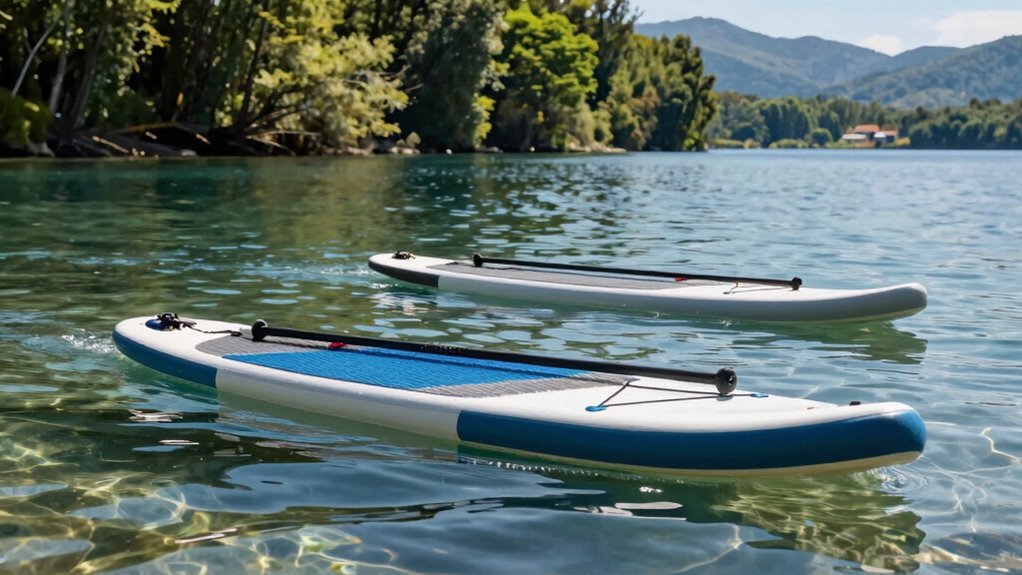
Choosing the right SUP length depends largely on the water conditions and your intended activity. Longer boards generally offer more board stability, making them ideal for flat water or beginner paddlers who prioritize balance. They also improve paddle efficiency, allowing you to cover distances more easily. For calm lakes or slow-moving rivers, a longer SUP—around 11-12 feet—is usually best. In contrast, shorter boards, around 9-10 feet, excel in choppier waters or surf, offering better maneuverability and control. If you’re into racing, opt for a longer, streamlined board to maximize glide. For recreational and fishing purposes in various conditions, select a length that balances stability and control suited to your skill level and activity. Proper length choice enhances your overall paddle experience.
How to Measure and Evaluate Your Perfect SUP Length

To find your perfect SUP length, start by measuring accurately each time to guarantee consistency. Think about your skill level and how you plan to use the board, as these factors influence the ideal length. Remember, testing different lengths and making small adjustments can help you find the most comfortable and efficient fit.
Measure Correctly Every Time
Getting the right SUP length starts with accurate measurement, as the perfect size can substantially impact your balance and paddling efficiency. To measure correctly, stand upright with your feet shoulder-width apart on a flat surface. Use a measuring tape or ruler to determine your height, then add 4 to 12 inches based on your intended use—longer boards for touring, shorter for stability. Confirm the board’s length aligns with your body size and paddling style. Proper measurement helps you find a board that offers ideal stability without sacrificing maneuverability, directly affecting your balance. It also enhances paddle efficiency, making each stroke more effective. Take your time to measure precisely; a small mistake can lead to a board that’s either too unstable or difficult to control.
Consider Skill Level and Use
Your skill level and intended use play a crucial role in determining the perfect SUP length. If you’re a beginner, a slightly longer board offers stability and easier balancing, ideal for flatwater paddling or calm lakes. More advanced paddlers might prefer a shorter, more maneuverable board for surfing or quick turns. Consider the board material, as some materials influence weight and durability, affecting handling based on your skill. Additionally, your paddle length should match your skill level and SUP size—longer paddles provide more leverage for beginners, while shorter paddles give better control for experienced paddlers. Think about whether you’ll mainly use the board for touring, racing, or casual paddling, as each use demands different lengths for peak performance.
Test and Adjust Length
Finding the perfect SUP length involves testing and evaluating how different sizes feel on the water. As you try various lengths, focus on board stability—how secure you feel standing—and paddling efficiency—how smoothly and quickly you move through the water. If the board feels wobbly or unstable, it’s likely too long or too short for your skill level and weight. Conversely, if you struggle with paddling or steering, you might need a different length to improve efficiency. Take time to paddle on different boards, paying attention to how each feels during turns and straight-line strokes. Adjust accordingly by trying a slightly different length until you find one that offers the best balance of stability and paddling ease, ensuring a confident and enjoyable experience.
Common Mistakes When Picking a SUP Size and How to Avoid Them

Choosing the wrong SUP size is a common mistake that can profoundly impact your experience on the water. When you pick a board that’s too short, you’ll struggle with stability and paddle efficiency, making it harder to stay balanced. Conversely, a board that’s too long can feel unwieldy and difficult to control, especially in tight or choppy conditions. Here are some mistakes to avoid:
Choosing the right SUP size ensures stability, control, and a more enjoyable paddling experience.
- Selecting a size based solely on height, ignoring weight and skill level
- Overlooking the importance of board stability for your comfort
- Ignoring paddle efficiency, which depends on proper board length and your paddling style
Tips for Testing and Adjusting Your SUP Length for Comfort and Control
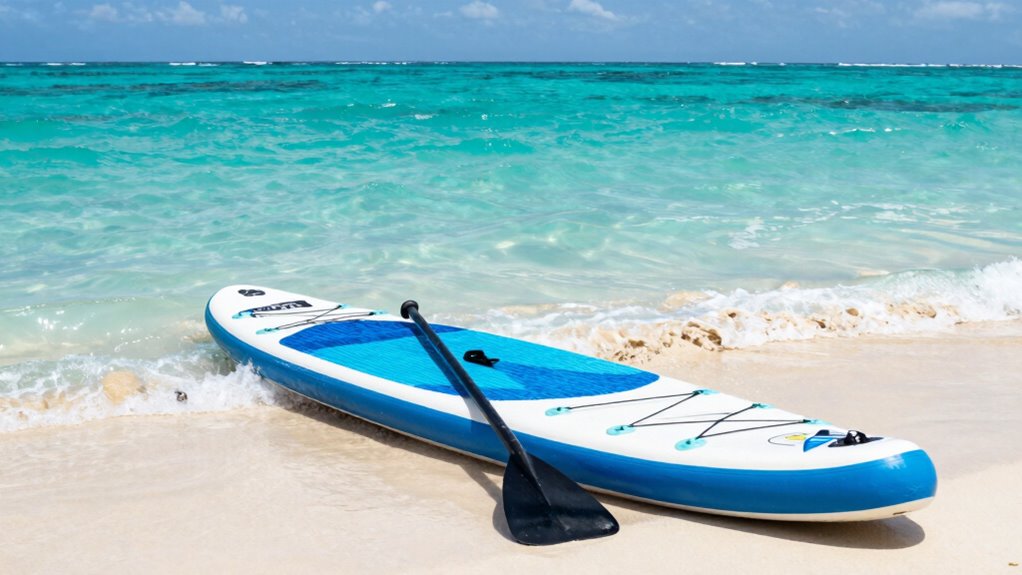
Testing and adjusting your SUP length is key to ensuring you’re comfortable and in control on the water. Start by considering your board design—some boards are built for stability, while others prioritize speed or maneuverability. A longer board generally offers more glide, but may feel less responsive, so test different lengths to find what suits your style. When testing, pay attention to how your paddle materials affect your control; lighter paddles make adjustments easier and help you gauge how the board responds to different lengths. Make small changes and paddle for a few minutes to assess comfort and control. Remember, the right length should feel natural without forcing your stance or paddling technique, giving you confidence on every stroke.
How the Wrong SUP Size Can Ruin Your Paddling Experience

Using a board that’s the wrong size can quickly turn your time on the water into a frustrating experience. An oversized or undersized SUP affects your balance, control, and confidence. You might struggle with stability, feeling like you’re constantly fighting the deck design, which can make paddling exhausting. Additionally, the wrong size limits your maneuverability, making turning and tracking difficult. The deck design plays a role here—if it’s too narrow or too wide for your skill level, it compounds the problem. Plus, limited color options often reflect the board’s suitability; dull or mismatched colors might hint at a less adaptable, poorly sized board. Picking the right size ensures better balance, control, and enjoyment, avoiding the pitfalls that come with a deck design that doesn’t match your paddling style.
Frequently Asked Questions
Can I Modify My SUP Length After Purchase?
Yes, you can modify your SUP length after purchase, but it’s not straightforward. Adjusting the length can impact board stability and your paddling technique. If you’re considering a modification, consult a professional to guarantee it’s done correctly. Keep in mind, altering the length may affect how stable your board feels and how efficiently you paddle, so weigh the benefits against potential drawbacks before making changes.
How Does SUP Width Influence Length Selection?
Your SUP width plays a key role in choosing the right length for your paddle setup and fin compatibility. A wider board requires a longer paddle for comfortable strokes, while narrower boards suit shorter paddles. Don’t worry if you’re unsure—measure your board’s width and consider your paddling style. This helps you select a length that guarantees ideal control, balance, and compatibility with your fin setup, making every paddle stroke smoother.
Is a Longer SUP Better for Advanced Paddlers?
A longer SUP isn’t necessarily better for advanced paddlers; it depends on your goals. Longer boards offer more paddling speed and glide, making them ideal for racing or covering long distances. However, they can reduce board stability, especially in choppy water. If you prioritize stability for tricks or casual paddling, a slightly shorter board might be better. Choose based on your skill level and what you want to achieve on the water.
What Are Signs My SUP Is the Wrong Length?
Like Goldilocks finding the perfect fit, you’ll notice signs your SUP is wrong for you. If you struggle to maintain balance or feel unstable, it’s too short. Conversely, if paddling feels sluggish or you lack control, it may be too long. An incorrect length affects your balance stability and paddling speed, making your experience frustrating. Pay attention to these cues to choose the right size for confident, smooth paddling.
How Does Storage Space Affect SUP Length Choice?
Storage space can influence your SUP length choice because a longer board may be harder to store in tight spaces, affecting your decision. If you lack ample storage, you might prefer a shorter SUP for easier storage and transport. Keep in mind, a longer board tends to offer better stability and paddling ease, but if storage is limited, balancing these benefits with practical concerns becomes essential.
Conclusion
So, there you have it—pick the wrong SUP length, and you’ll be the star of your own comedy show, flailing and wobbling like a newborn giraffe. But don’t worry, with these tips, you’ll be gliding smoothly in no time—probably. Just remember, choosing the right size isn’t rocket science, it’s paddleboarding. So go ahead, pick wisely, and enjoy the glorious, wobble-free ride you’ve earned. Happy paddling!