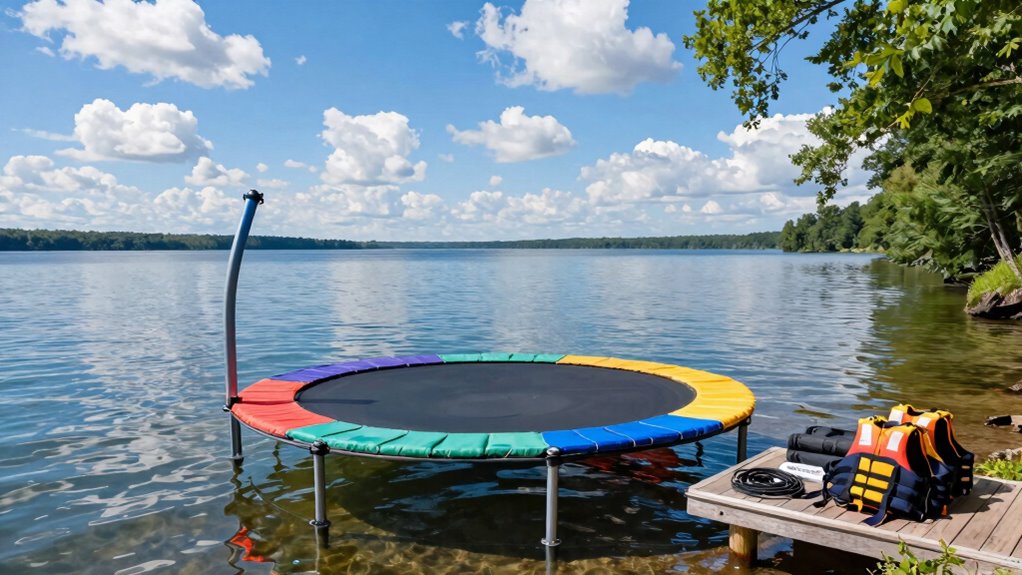

To prevent injuries on your lake water trampoline, always select a calm, clear, and deep area away from rocks, debris, and boat traffic. Securely anchor it using sturdy weights or screw-in anchors, and double-check all connections before each use. Regularly inspect equipment for damage and keep debris away. Avoid setup during bad weather or wildlife disturbances. Following these setup rules will help you create a safe, enjoyable trampoline experience—more safety tips await those who continue on.
Key Takeaways
- Ensure water is clear, calm, and at least 8-10 feet deep before installation.
- Properly anchor the trampoline with sturdy weights to prevent drifting and instability.
- Conduct pre-use inspections for damage, wear, and secure fittings to avoid equipment failure.
- Avoid using the trampoline during storms, high winds, or adverse weather conditions.
- Regularly check and remove debris, monitor water levels, and inspect environmental conditions for safety.
Why Proper Setup Is Critical for Water Trampoline Safety
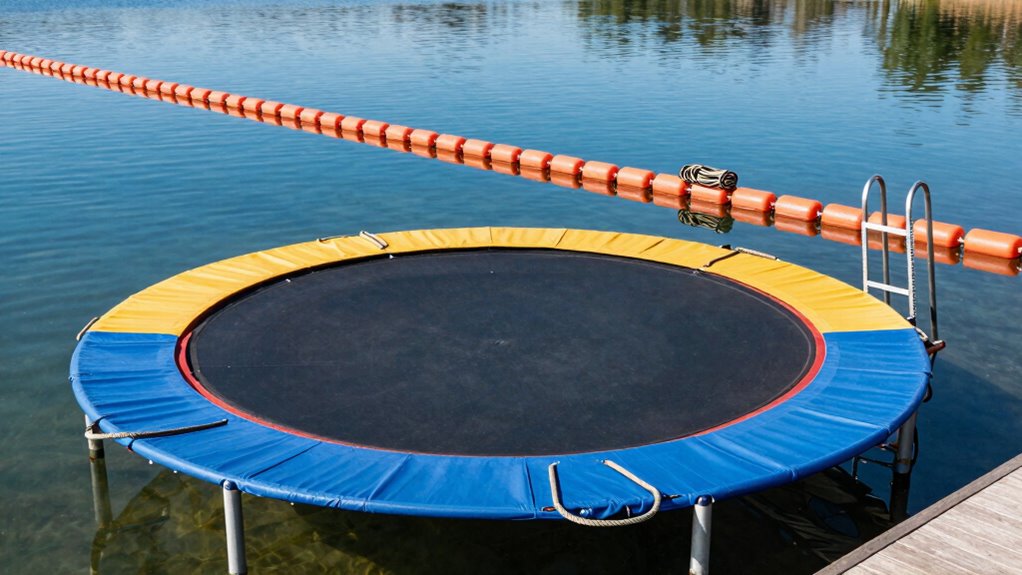
Proper setup is essential for ensuring water trampoline safety because even small mistakes can lead to serious accidents. First, you need to check the water quality; clear, calm water reduces the risk of injuries if falls occur. Poor water conditions, like algae or debris, can cause slips or cuts. Weather considerations are equally important—avoid setting up during storms, high winds, or heavy rain, which can destabilize the trampoline or cause unpredictable water movement. Ensuring your trampoline is securely anchored and placed in a safe, stable spot also minimizes risks. Taking these precautions helps create a safe environment, preventing accidents caused by environmental factors or water conditions that could compromise the trampoline’s stability or your safety.
How to Choose the Best Spot and Anchor Points
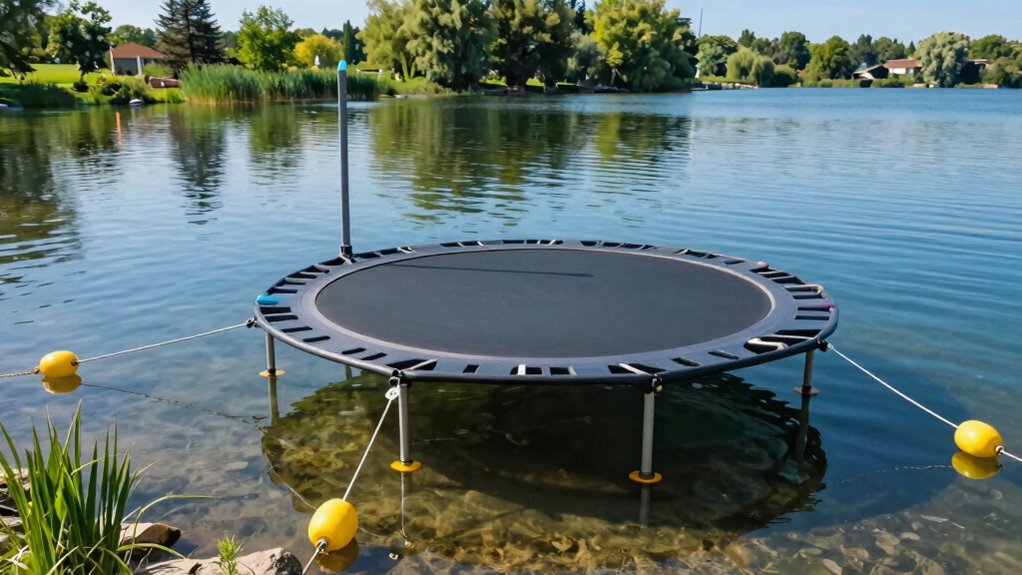
Choosing the right spot and anchor points for your water trampoline can markedly improve safety and stability. When choosing a location, look for a clear, open area free of rocks, debris, or boat traffic. The water should be deep enough to prevent injury if someone falls, ideally at least 8-10 feet. Avoid shallow or cluttered spots that could cause punctures or accidents. Anchor point selection is equally important; choose sturdy, secure points like heavy-duty anchors or submerged weights that won’t shift easily. Ensure the anchor is well-placed to keep the trampoline steady, even in windy conditions. Proper placement minimizes sway and movement, making the trampoline safer for everyone. Taking the time to choose an ideal location and anchor points helps prevent accidents and provides a safer, more enjoyable experience.
Step-by-Step Guide to Installing Your Water Trampoline

To guarantee your water trampoline is safe and stable, you need to focus on proper anchor placement and secure installation techniques. Carefully position the anchors to prevent drifting, and make sure all connections are tight and reliable. Following these steps will give you a solid foundation for safe, enjoyable use.
Proper Anchor Placement
Ensuring your water trampoline stays secure begins with precise anchor placement. Proper anchor placement maintains buoyancy balance, preventing tilting or drifting. Start by choosing a sturdy, stable spot with minimal current or wind influence. Drive anchors deep into the lakebed, ensuring they are secure and evenly spaced. Spread the anchor points to distribute tension equally, which keeps the trampoline stable and prevents shifting. Keep in mind that uneven anchor placement can disrupt buoyancy balance, risking injury. Use high-quality anchors designed for water use and double-check their stability regularly. Proper placement ensures your trampoline remains centered and safe for use, reducing the risk of accidents.
| Step | Tip |
|---|---|
| 1 | Select an even, calm water area |
| 2 | Use strong anchors suited for lakebed |
| 3 | Drive anchors deep into the substrate |
| 4 | Space anchors evenly around perimeter |
| 5 | Regularly inspect anchor stability |
Secure Installation Techniques
Installing your water trampoline correctly starts with following a clear, step-by-step process to guarantee safety and stability. Begin by selecting the appropriate anchor types, such as weighted anchors or screw-in anchors, suitable for your lake’s conditions. Use the right installation tools, like a sturdy rope, a wrench, and a hammer, to ensure secure setup. First, position the trampoline in your desired location, then attach the anchors firmly to the frame. Make sure the anchors are deeply embedded and taut to prevent shifting. Double-check all connections for stability, and ensure the trampoline remains level. Proper installation minimizes movement during use, reducing the risk of accidents. Taking these careful steps ensures your water trampoline is securely installed, providing a safe and enjoyable experience.
Safety Checks You Should Do Before Each Use
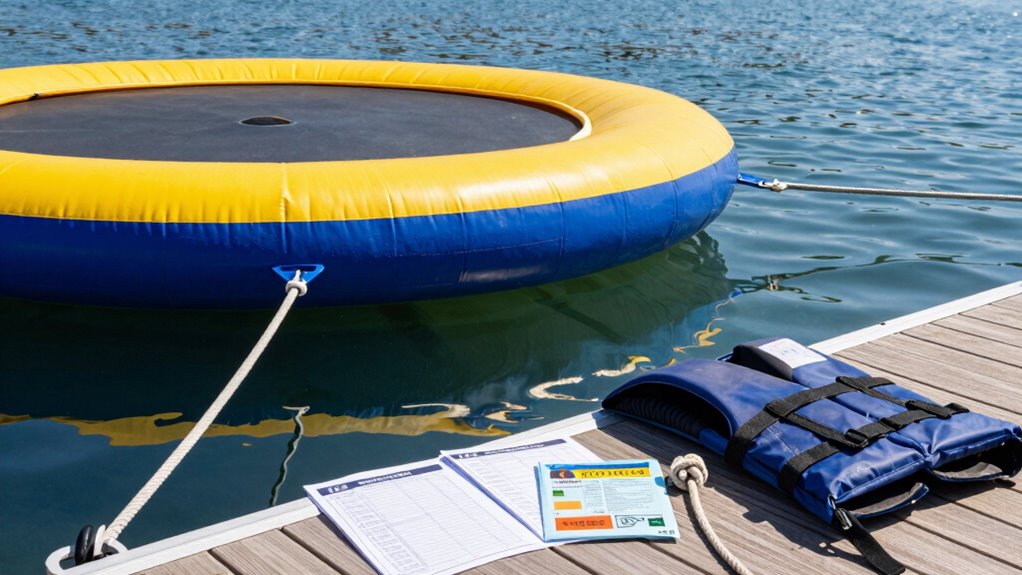
Before each use, make sure to inspect your equipment for any damage or wear. Check that the anchor is secure and stable to prevent drifting. Also, verify that all safety gear is in good condition and properly fitted for a safe experience.
Inspect Equipment Condition
Always check the trampoline’s equipment condition before each use to guarantee safety. Regular inspections help validate equipment durability and prevent accidents caused by wear and tear. Pay close attention to the condition of the springs, mat, and frame. Look for signs of rust, corrosion, or fraying that could weaken the structure. Keep in mind that inspection frequency depends on usage; more frequent use requires more frequent checks. Proper maintenance extends the lifespan of your trampoline and reduces injury risk. Here are key points to verify:
- Check for tears or holes in the jumping mat
- Inspect springs for rust or damage
- Assess the frame for cracks or corrosion
- Ensure all bolts and fittings are tight
Perform these checks diligently before every session.
Check Anchor Stability
Have you checked the stability of your trampoline’s anchor points lately? Anchor inspection is vital before each use to guarantee safety. Perform stability testing by gently tugging on the anchors to confirm they hold firm in the lakebed or ground. Look for signs of wear, corrosion, or loosening, and tighten or replace anchors if needed. Any movement or instability can cause the trampoline to shift unexpectedly, increasing injury risk. Make sure the anchor lines are secure and free of damage. If the anchors seem loose or compromised, do not use the trampoline until repairs are made. Regular anchor inspection and stability testing help prevent accidents caused by shifts or detachment, ensuring your trampoline stays safely in place during every use.
Verify Safety Gear
Are you confident that your safety gear is in top condition? Before each jump, inspect all safety equipment thoroughly. Check that life jackets are free of tears, mold, or damage, and ensure they fit properly. Confirm rescue plans are clear; everyone should know how to respond in an emergency. Make sure all harnesses and straps are secure and in good condition. Test communication devices, like whistles or radios, to verify they’re working. Properly stored safety gear prevents accidents and saves lives. Remember, well-maintained safety gear combined with a solid rescue plan creates a safer environment on the lake. Regularly verifying gear keeps everyone prepared and confident, reducing the risk of injuries during trampoline fun.
Common Setup Mistakes and How to Avoid Them
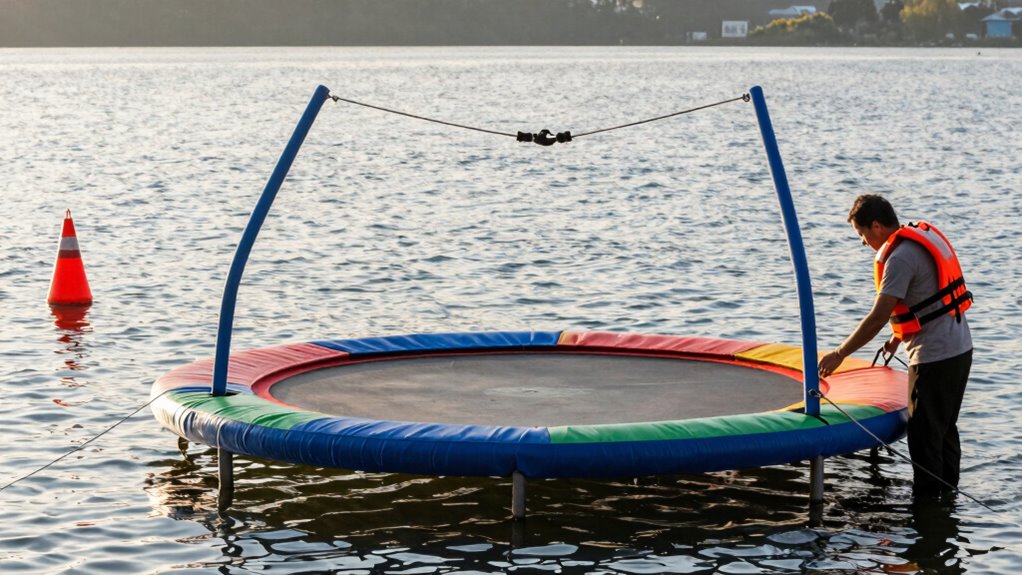
Many common setup mistakes on a lake water trampoline can compromise safety and enjoyment. One mistake is attempting a diy trampoline without proper knowledge or equipment, which can lead to unstable setups. Avoid falling for water trampoline myths that suggest quick fixes or unsafe anchoring methods—these can cause accidents. Guarantee the trampoline is securely anchored to prevent drifting or tipping, and double-check the frame and mat for damage or wear before use. Improper placement, such as near boat traffic or shallow areas, increases risk. Always follow manufacturer instructions and avoid shortcuts during installation. Correct setup is critical to safety, so take your time, verify each step, and don’t assume that shortcuts or myths will keep your water trampoline safe and fun for everyone.
Tips for Maintaining a Safe Water Trampoline Environment
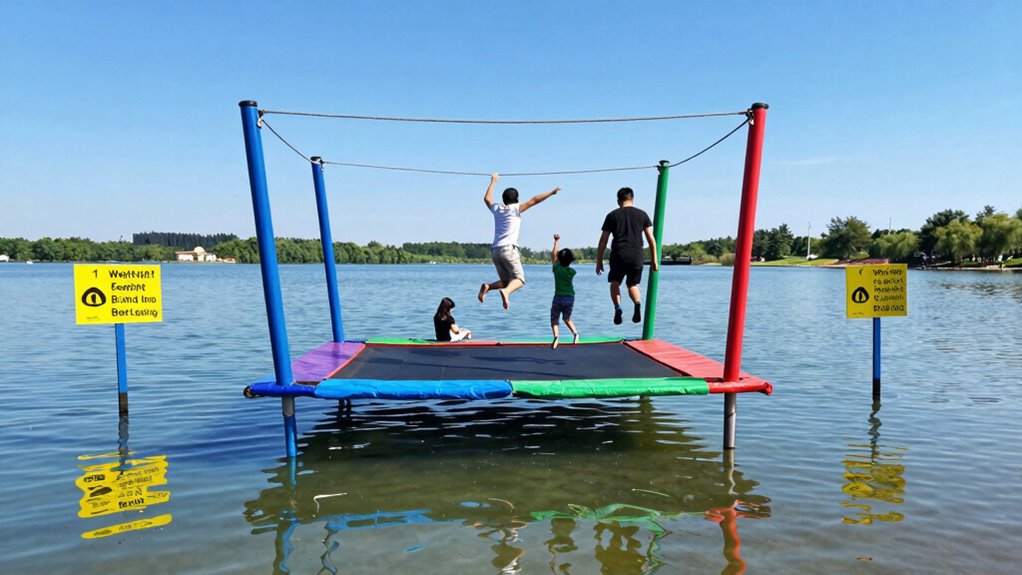
To maintain a safe water trampoline environment, you need to regularly inspect the equipment and surrounding area for hazards. Check the water temperature to ensure it’s not too cold or warm, which can affect comfort and safety. Keep an eye out for wildlife disturbances, as animals may pop up unexpectedly and cause accidents. Make sure the trampoline’s anchoring system is secure and free of tears or damage. Remove any debris, such as branches or trash, that could cause falls or damage the trampoline. Additionally, monitor water levels to ensure the trampoline stays stable and prevent drifting. Regular inspections help you spot potential issues early, keeping everyone safe and avoiding accidents caused by environmental factors or equipment failure.
Frequently Asked Questions
How Often Should I Inspect the Trampoline for Wear or Damage?
You should inspect your trampoline for wear and tear before each use, ensuring safety for everyone. Regular trampoline inspection helps catch damage early, preventing accidents. Look for frayed ropes, loose springs, or tears in the mat. After heavy use or storms, do a thorough check. Consistent inspection keeps the trampoline in good condition and minimizes injury risks, so make it a routine part of your safety checks.
What Safety Gear Should Users Wear When Jumping?
Think of safety gear as your shield on the trampoline. You should always wear a life jacket to stay afloat and a protective helmet to guard your head from potential impacts. These essentials help prevent injuries and keep you confident while jumping. Make sure everyone in the water uses these safety items, so your trampoline adventures stay fun and safe, like a well-guarded treasure chest.
Can Weather Conditions Affect Trampoline Safety and Setup?
Weather impact definitely affects trampoline safety and setup. Strong winds, rain, or storms can make jumping dangerous and damage the trampoline. You should make seasonal adjustments, like taking the trampoline down during storms or high winds and inspecting it regularly for wear caused by weather. Always check the forecast before jumping, and avoid using the trampoline in bad weather to prevent accidents and ensure safe fun.
How Do I Determine the Maximum Weight Limit for My Trampoline?
You should check your trampoline’s weight capacity label or manufacturer guidelines to determine the load limits. This info helps you avoid exceeding the maximum weight limit, which can compromise safety. If you can’t find the label, consider the size and material of the trampoline, and avoid adding more weight than it’s designed to handle. Staying within the recommended weight capacity keeps everyone safe and prevents damage.
Are There Age Restrictions for Water Trampoline Use?
You realize that age restrictions vary, but generally, kids under 6 should have supervised, gentle use to prevent accidents. As you watch children bounce, you notice that older kids, usually over 8 or 10, can handle more vigorous jumps with proper supervision. Remember, always follow specific manufacturer guidelines and guarantee supervision requirements are met. This keeps everyone safe, no matter their age, while enjoying the water.
Conclusion
By following these setup rules, you’ll keep safety at the forefront and turn your water trampoline into a splash of fun rather than a pool of trouble. Think of your setup as the sturdy ship anchoring your aquatic adventures—if it’s solid, your fun will stay afloat. Stay vigilant with regular checks and proper installation, and you’ll enjoy endless, worry-free days bouncing on the water, turning every jump into a safe and exhilarating voyage.