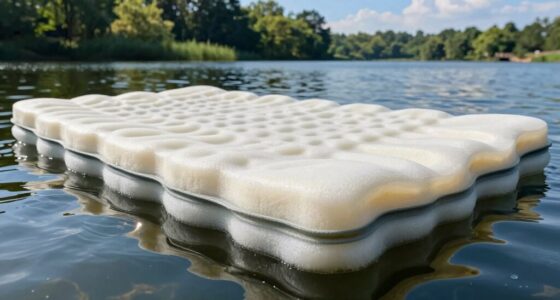
To design a safe lake water slide, start by measuring water depth at multiple points using a sturdy, waterproof measuring stick to guarantee at least 4-6 feet in the landing zone. Choose a gentle slope at the top that shifts into a steeper drop for thrill, balancing safety and excitement. Make certain the landing area has impact-absorbing surfaces and clear access pathways. For detailed tips on construction, materials, and legal considerations, keep exploring these essential safety elements.
Key Takeaways
- Measure water depth at multiple points along the slide path, especially at the bottom and landing zone, using waterproof tools.
- Select a gentle slope at the top and steeper sections for fun, ensuring safe angles for riders.
- Maintain a water depth of 4-6 feet in landing areas, with impact-absorbing surfaces and clear safety signage.
- Use durable, weather-resistant materials like HDPE or fiberglass for construction, and ensure proper anchoring.
- Obtain necessary permits, adhere to local regulations, and keep access routes clear for safety and compliance.
How to Measure and Set Water Depth for a Safe Lake Water Slide
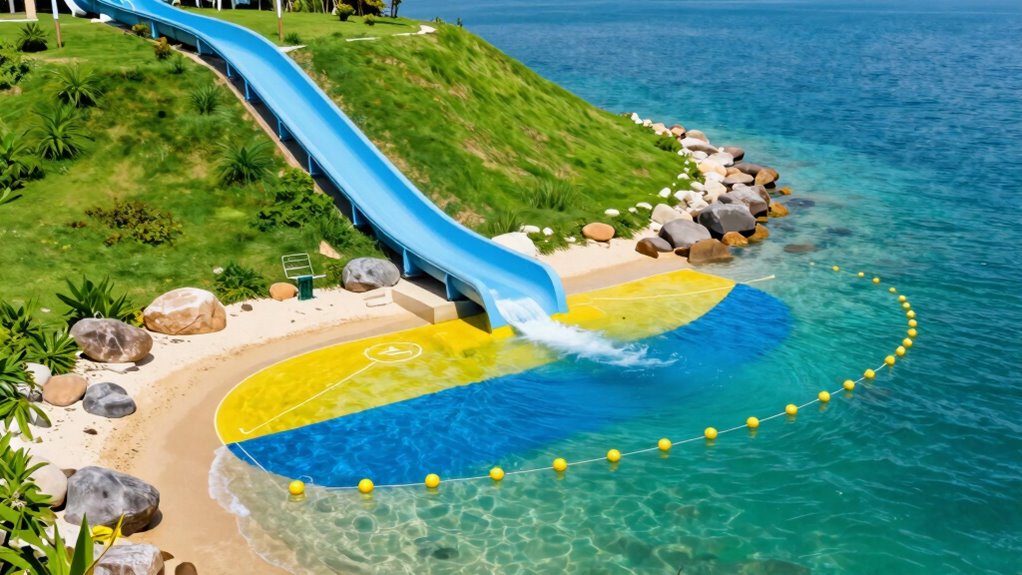
Ensuring the water depth is just right is essential for a safe lake water slide. To do this, you need to accurately measure the water depth using reliable measurement techniques. Start by using a sturdy pole or a weighted measuring stick to gauge the depth at various points along the slide’s path. Make sure to check the depth in multiple spots, especially at the bottom and along the landing zone. Use a waterproof tape measure or a marked pole for precision. Record your measurements carefully. The goal is to ensure the water is deep enough to cushion landings but not so deep that it causes hazards. Regularly reassess the water depth, especially after heavy rains or changes in water levels, to keep the slide safe.
How to Choose the Right Slope and Angles for Safety and Fun

Choosing the right slope and angles for your lake water slide is essential to balancing safety and fun. Start by selecting a sturdy slide material that can handle the water flow and weather conditions, ensuring durability. The slide’s angle should be steep enough to provide excitement but not so sharp that it causes injury. Generally, a gentle incline near the top progresses to a steeper drop, creating an exhilarating ride without sacrificing safety. Also, consider slide aesthetics—color, design, and smoothness—since they influence the overall appeal. A well-designed slope enhances the visual appeal and encourages safe riding. Remember, always test different angles to find the perfect balance that maximizes enjoyment while keeping everyone safe on the lake.
How to Design Safe Landing Zones to Prevent Accidents
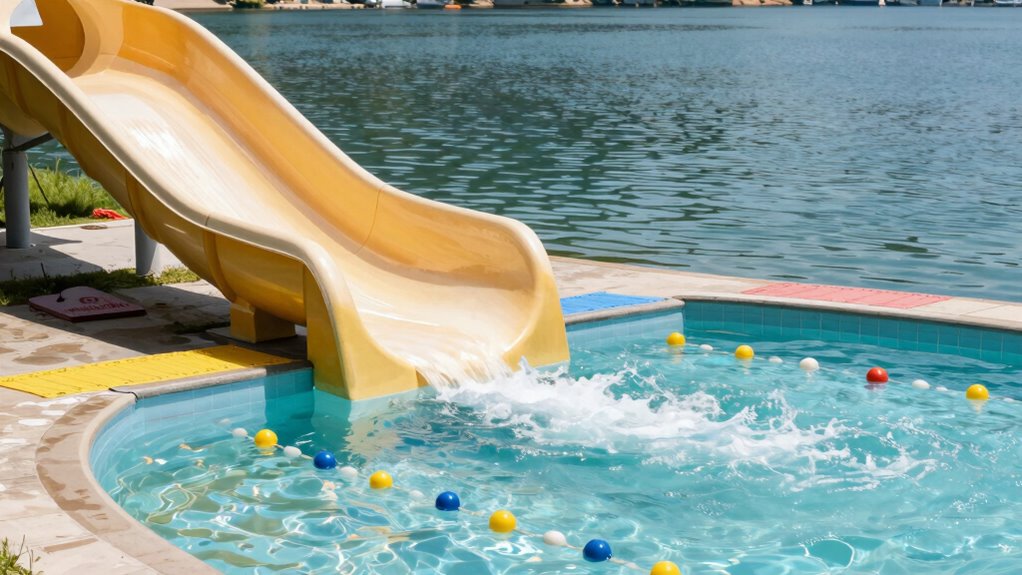
Have you considered how the landing zone can prevent accidents once riders reach the bottom of the slide? Proper design is vital. Clear safety signage guides users and alerts them to potential hazards, reducing confusion. Make certain the landing area has a smooth surface and sufficient depth to absorb impact. Keep emergency access routes unobstructed for quick response if needed. Use the following table to highlight key safety features:
| Feature | Purpose | Example |
|---|---|---|
| Safety Signage | Inform and warn riders | “Slow Down” or “No Diving” |
| Adequate Depth | Prevent injuries on impact | 4-6 feet in the landing zone |
| Emergency Access | Allow quick response to incidents | Clear pathways and signage |
Prioritize these elements to create a safe, accident-free landing zone.
What Materials and Construction Tips Ensure a Durable Lake Water Slide
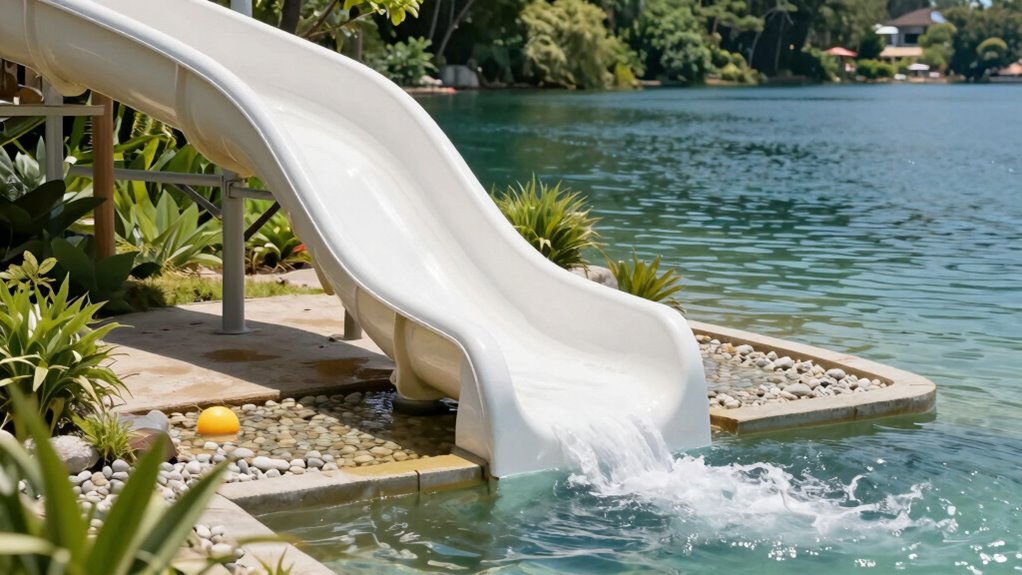
Selecting the right materials is essential for building a lake water slide that withstands the elements and frequent use. Use durable, weather-resistant materials like high-density polyethylene or reinforced fiberglass, which resist cracking and UV damage. These materials require minimal slide maintenance, saving you time and effort over the years. Proper construction techniques, such as securely anchoring the slide to prevent shifting and ensuring smooth, seamless surfaces, also boost longevity. Avoid cheap or flimsy materials that degrade quickly or pose safety risks. Regularly inspect your slide for signs of wear or damage, and perform necessary repairs promptly. Investing in quality materials and following proper construction tips will ensure your water slide remains safe, durable, and enjoyable season after season.
What Are the Legal Requirements and Permits Needed for Building Your Water Slide
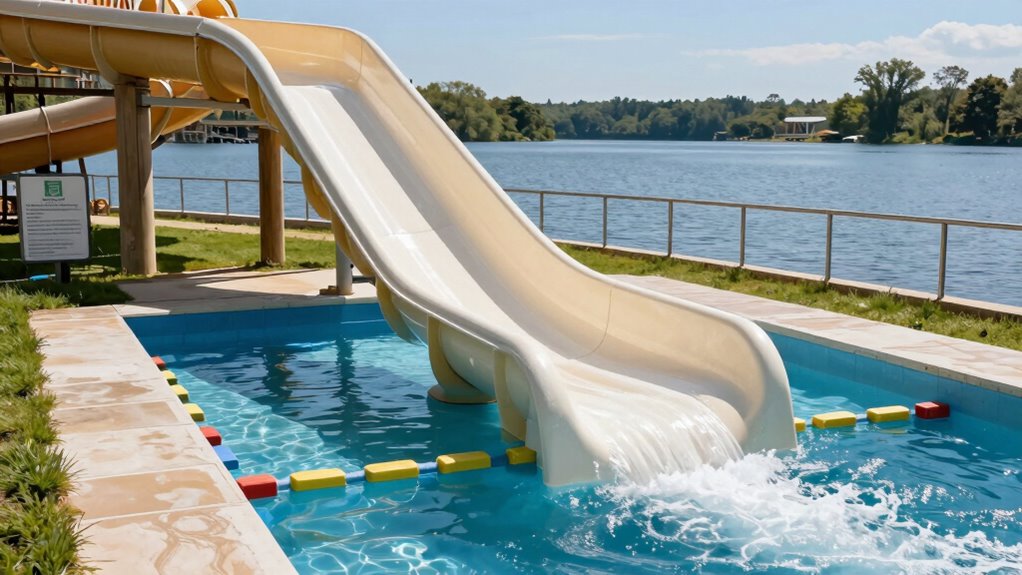
Before you start building your lake water slide, it’s vital to understand the legal requirements and permits involved. You’ll need to check local zoning restrictions to verify your project complies with land use rules. Additionally, insurance requirements are essential to protect yourself and others in case of accidents. Permits typically involve submitting plans and safety measures to authorities. Here’s a quick overview:
| Requirement | Description | Responsible Party |
|---|---|---|
| Zoning Restrictions | Confirm setback distances and usage limits | Local zoning office |
| Building Permits | Obtain approval for construction plans | City or county agency |
| Insurance Requirements | Secure liability coverage before construction | Insurance provider |
Understanding these requirements helps you avoid legal issues and guarantees your water slide is safe and compliant.
Frequently Asked Questions
How Can I Prevent Algae Buildup on My Lake Water Slide?
To prevent algae buildup on your lake water slide, regularly clean and scrub the slide with a brush and mild detergent. Use algae prevention treatments like copper sulfate or algaecides, but follow manufacturer instructions carefully. Maintain good water quality by controlling nutrient levels and reducing sunlight exposure to the slide area. Proper circulation and aeration also help keep algae at bay, ensuring a safe, clean slide for everyone to enjoy.
What Maintenance Routines Are Recommended for Longevity and Safety?
Did you know regular maintenance extends a water slide’s lifespan by up to 50%? To keep it safe and durable, follow consistent cleaning schedules and inspection protocols. Clean the slide regularly to prevent algae and grime buildup, and inspect for cracks or corrosion. Address any issues promptly to avoid accidents and costly repairs. Staying proactive with these routines guarantees your lake water slide remains fun, safe, and long-lasting for years to come.
How Does Weather Variability Affect Water Slide Safety?
Weather impact profoundly affects water slide safety, especially with seasonal variation. Heavy rain can weaken the slide’s structure or cause slippery surfaces, increasing risk of accidents. Windy conditions may make users lose control, while extreme heat can cause surface degradation. You should always monitor weather forecasts closely, postpone use during storms or high winds, and conduct regular inspections to guarantee safety despite changing weather conditions.
Can a Water Slide Be Customized for Different Lake Environments?
While you can certainly tailor a water slide to fit different lake environments, it’s wise to focus on material customization and design flexibility. These allow you to adapt the slide’s slope, height, and landing zones to match specific lake conditions, ensuring safety and enjoyment. By choosing the right materials and versatile designs, you create a fun, secure experience suited perfectly to each unique lake setting.
What Emergency Procedures Should Be in Place for Accidents?
You should have clear emergency response plans and safety protocols in place before anyone uses the water slide. Make sure trained staff are ready to act quickly, provide first aid if needed, and contact emergency services immediately. Keep rescue equipment nearby, such as life rings and first aid kits. Regularly practice safety drills with your team to ensure everyone knows their role during an emergency, keeping all users safe.
Conclusion
Building a safe lake water slide requires careful planning—measure depths accurately, choose the right slope, and design secure landing zones. Did you know that improperly designed slides can increase injury risk by up to 40%? By following safety guidelines and obtaining necessary permits, you can enjoy thrilling slides without worry. Prioritize safety and durability, and you’ll create a fun, memorable experience for everyone on the lake.