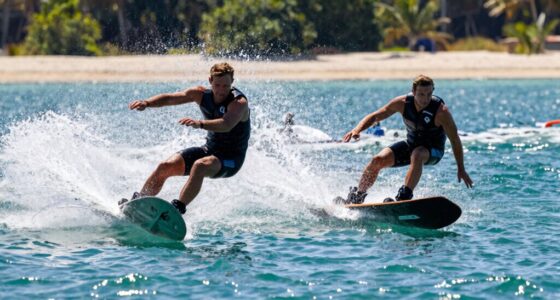
To get up on your kneeboard every time, start by finding a comfortable stance with knees slightly bent, body centered, and shoulders relaxed. Grip the handle shoulder-width apart firmly but relaxed, keeping tension on the rope. As the boat accelerates, gradually increase throttle, lean back slightly, and pull on the rope smoothly to lift your hips out of the water. Mastering these steps will boost your confidence—keep going to learn more tips!
Key Takeaways
- Find a stable stance with knees slightly bent, body centered, and proper alignment for balance.
- Hold the handle firmly with arms slightly bent, keeping it close to your hips for control.
- Maintain steady tension on the rope, focusing on keeping the handle close and relaxed grip.
- Gradually increase throttle while keeping your body relaxed and aligned during acceleration.
- Coordinate body movements with engine power, watching water pressure to smoothly lift onto the board.
How to Find Your Perfect Kneeboard Stance and Body Position
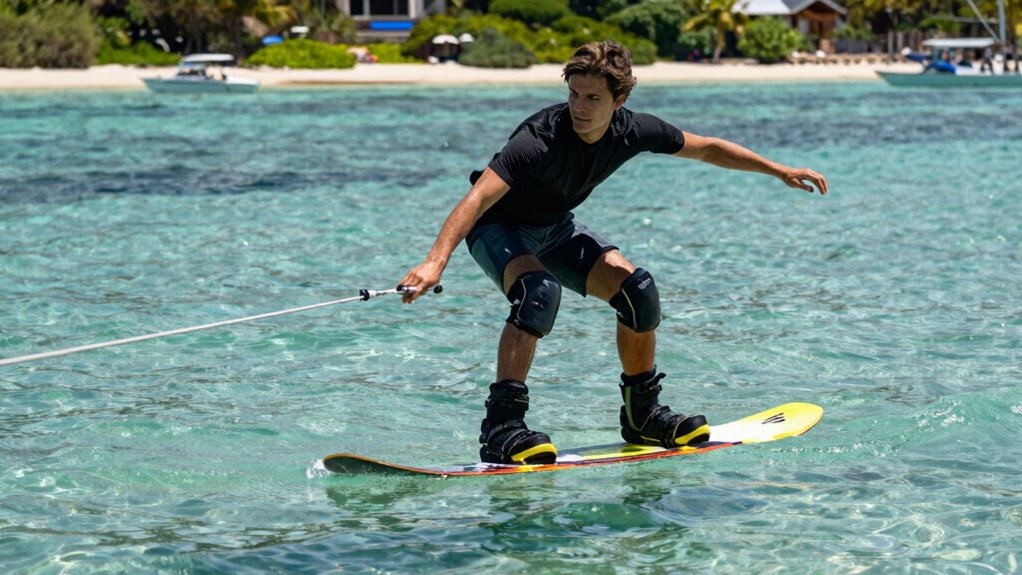
Finding the right kneeboard stance is essential for staying balanced and comfortable on the water. To achieve this, focus on stance adjustment until you feel stable and in control. Your knees should be bent slightly, with your body centered over the board. Proper body alignment is key; keep your head up, back straight, and shoulders relaxed. Adjust your stance by moving your knees closer together or farther apart to find the most comfortable width. Make sure your weight is distributed evenly, leaning slightly back to maintain control. Remember, a balanced stance helps you respond quickly to the boat’s movements and stay steady. Take the time to fine-tune your position, and soon you’ll feel confident and secure on your kneeboard.
How to Grip the Rope and Engage It for a Smooth Start
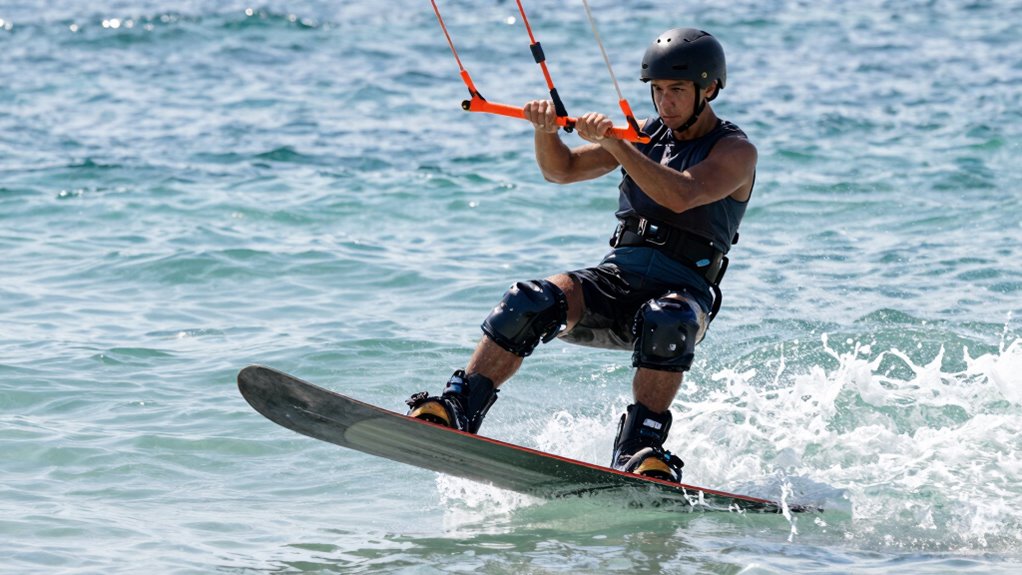
To guarantee a smooth start when kneeboarding, you need to grip the rope properly and engage it confidently. Proper hand placement is essential; position your hands shoulder-width apart, gripping the handle firmly but comfortably. Keep your arms slightly bent to maintain control and avoid tension build-up. Focus on rope tension control by keeping the handle close to your hips, which helps maintain steady tension as the boat accelerates. As the boat begins to move, stay relaxed and ensure your grip is firm enough to prevent slipping but loose enough to allow natural movement. A confident grip combined with active tension control sets the foundation for a smooth, controlled start, reducing the risk of losing your balance once you’re up on the kneeboard.
How to Thrust Smoothly and Get Up Every Time
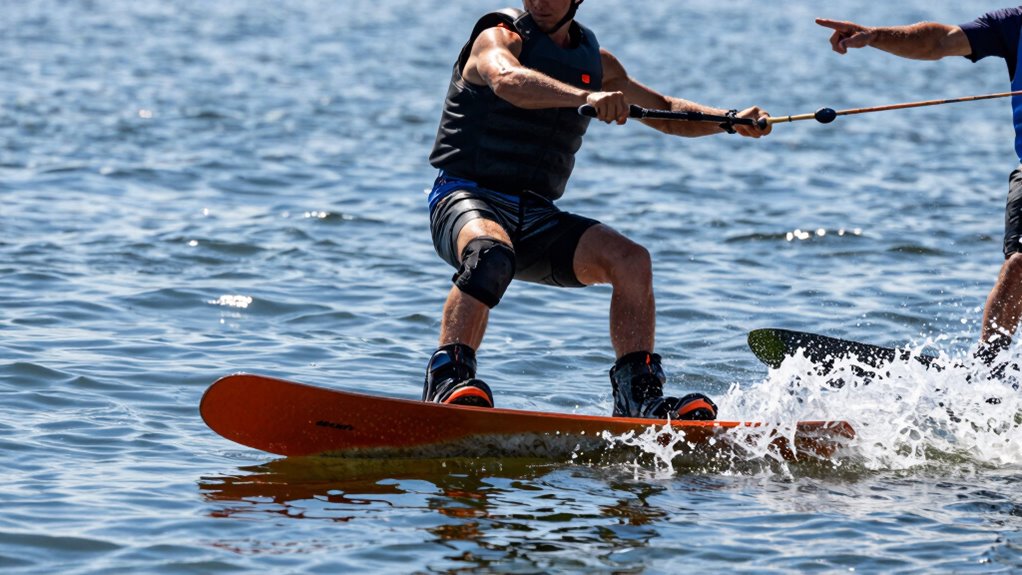
Mastering a smooth thrust is key to getting up on your kneeboard every time. To do this, you need to carefully control the engine throttle, gradually increasing power to build water pressure without jerking. As the water pressure rises, it helps lift you out of the water smoothly. Focus on these points:
Master a smooth thrust by gradually increasing throttle and maintaining relaxed body control.
- Gradually increase engine throttle for a steady acceleration
- Keep your body relaxed to absorb jolts
- Maintain a consistent pull on the rope during thrust
- Watch water pressure to gauge your lift
- Coordinate your body and engine power for a seamless transition
Frequently Asked Questions
What Should I Wear for Kneeboarding Beginners?
For kneeboarding beginners, you should wear comfortable, quick-drying swimwear or wetsuits for proper footwear, ensuring you stay protected and move freely. Don’t forget sun protection like a hat, sunglasses, and waterproof sunscreen to shield your skin from UV rays. Wearing a life jacket is essential for safety, and lightweight, moisture-wicking clothing helps you stay comfortable while you learn the basics.
How Do I Choose the Right Kneeboard Size?
To choose the right kneeboard size, consider your weight and skill level. Look for kneeboard size options that match your body, ensuring proper kneeboard fit for comfort and control. A smaller board is easier for beginners, while larger ones offer more stability. Test different sizes if possible, and always prioritize a proper fit to improve your kneeboarding experience and build confidence on the water.
Can I Kneeboard Alone or Do I Need a Spotter?
You can kneeboard solo once you’re comfortable with your balance and the water conditions, but a spotter is highly recommended for safety. Having a spotter isn’t just a spotter necessity; it helps you get up smoothly and ensures you’re safe if you fall or encounter difficulties. Always start with a spotter until you gain confidence, then try kneeboarding alone when you’re ready.
What Safety Gear Is Recommended for Beginners?
For water safety, always wear a life jacket designed for water sports, ensuring it fits snugly. Protective gear like a helmet can prevent head injuries, especially if you’re learning or in rough water. Consider wetsuits for warmth and extra protection, and keep a spotter nearby for added safety. This gear helps you stay safe, comfortable, and confident as you enjoy kneeboarding.
How Can I Improve My Balance on the Kneeboard?
Balance begins with better body basics. You can boost your balance by practicing balance exercises like one-legged stands or stability ball workouts. Core strengthening is essential, so incorporate planks and abdominal crunches into your routine. Focus on keeping your center of gravity steady while kneeboarding, and stay relaxed to improve control. Consistent practice of these techniques helps you stay balanced and confident on the water each time you hit the waves.
Conclusion
Mastering kneeboarding is like planting a seed—you need the right stance, grip, and thrust to grow confident on the water. Each step is a crucial root that anchors you, guiding you toward success. Remember, every fall is just watering your progress, and persistence will help you bloom. Keep practicing, stay patient, and soon you’ll find yourself gliding smoothly—trust in the process, and watch your skills flourish like a well-tended garden.