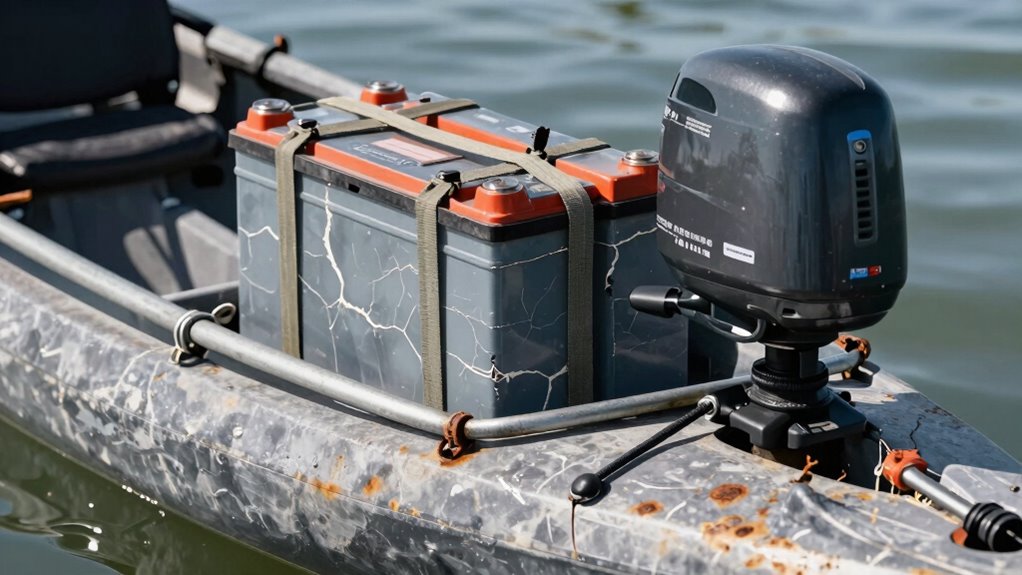

The biggest mistake you can make is choosing a battery that’s too small or too large for your kayak trolling motor. A small battery won’t last long enough, cutting your trip short and causing frustration. On the other hand, a large battery adds unnecessary weight, reducing maneuverability. Proper sizing guarantees longer trips and better efficiency. To avoid these pitfalls, consider your motor’s power needs and environmental factors—keep going to discover how to get it just right.

Get pool and patio gear delivered free — and shop member deals
- Fast, free delivery on millions of items
- Access to Prime Big Deal Days deals on October 6–7
- Prime Video, Amazon Music and more included
Key Takeaways
- Overestimating battery capacity adds unnecessary weight, reducing kayak maneuverability and efficiency.
- Underestimating capacity leads to insufficient power, causing trips to be cut short or system failures.
- Failing to match battery size with motor power and usage patterns results in poor performance.
- Ignoring environmental factors like water conditions and temperature can cause battery degradation and reduced lifespan.
- Neglecting regular maintenance and proper system setup diminishes battery life and overall trolling motor reliability.
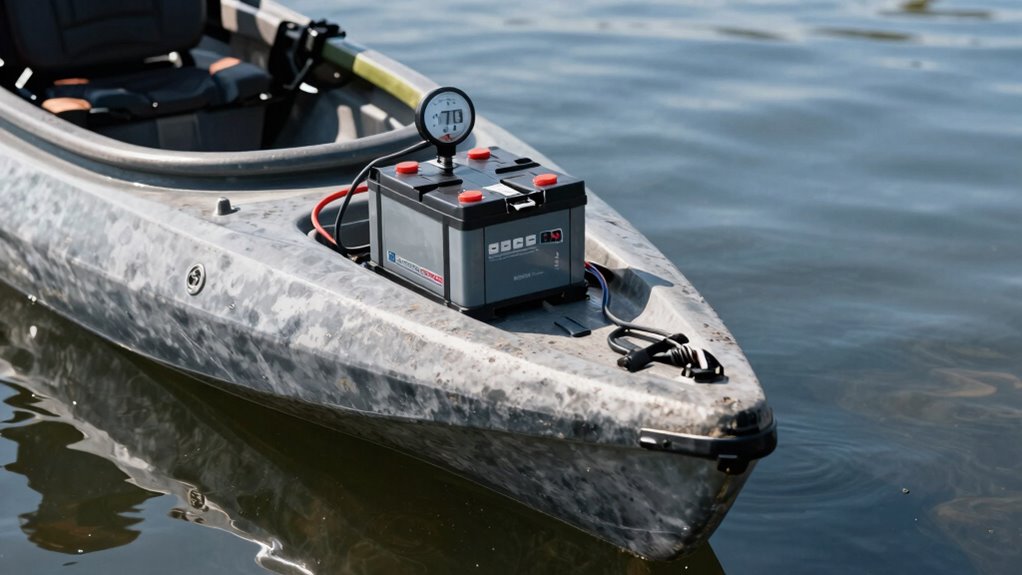
Choosing the wrong size battery for your kayak trolling motor can lead to frustrating setbacks on the water. When your battery isn’t matched properly to your motor’s power needs, you risk running out of juice too quickly or, conversely, carrying unnecessary weight that slows you down. This mistake often stems from focusing solely on the motor’s specifications without considering overall system efficiency. If you’re interested in long-term solutions, integrating solar power can help extend your battery life, allowing for more enjoyable and worry-free outings. However, even with solar power, proper battery maintenance remains crucial. Overlooking this aspect can cause your battery to degrade faster, reducing its capacity and overall lifespan.
Choosing the right size battery isn’t just about matching the motor’s horsepower; it’s about understanding your typical usage and environmental factors. A battery that’s too small will drain rapidly, forcing you to cut short your trip or scramble to find a power source. Too large, and you’ll carry excess weight that hampers your maneuverability and efficiency. It’s essential to calculate your average draw and select a battery with enough capacity—usually measured in amp-hours—to support extended trips. When you do this, you’ll also want to consider how solar power can supplement your power needs, especially if you spend multiple days on the water. Solar panels can trickle charge your battery during your trip, reducing the frequency of recharging and helping maintain optimal battery health. Understanding your battery’s capacity and usage patterns is key to avoiding common sizing mistakes. Additionally, being aware of system efficiency can help you optimize your entire setup for better performance. Properly sizing your battery also involves factoring in environmental conditions, such as temperature and water conditions, which can influence power consumption and battery performance. Recognizing how power consumption varies based on these factors can further refine your battery selection process. Moreover, selecting the right battery type can significantly impact longevity and performance in various environmental conditions.
Battery maintenance becomes even more critical when you use larger batteries or integrate renewable power sources. Regularly checking your battery’s charge level, clean terminals, and ensuring proper storage can extend its lifespan. If you neglect these steps, your battery may suffer from sulfate buildup or corrosion, which diminishes performance over time. Maintaining your setup also involves periodically inspecting your solar panels if you use them. Keeping them clean and properly aligned maximizes energy absorption, giving your battery a consistent boost. When both your battery and solar power system are well-maintained, you enjoy a reliable, efficient trolling setup, reducing the risk of sudden failures on the water.
In essence, avoiding the common battery sizing mistake involves a careful assessment of your motor’s power needs, incorporating renewable energy options like solar power, and committing to diligent battery maintenance. This approach ensures your kayak’s trolling motor performs optimally, giving you longer, more enjoyable trips without the hassle of unexpected power loss.
kayak trolling motor deep cycle battery
As an affiliate, we earn on qualifying purchases.
As an affiliate, we earn on qualifying purchases.
Frequently Asked Questions
How Often Should I Replace My Kayak Trolling Motor Battery?
You should replace your kayak trolling motor battery every 2 to 4 years, depending on its battery lifespan and your charging habits. Regularly charging the battery properly, avoiding deep discharges, and storing it in a cool, dry place can extend its life. Keep an eye on performance; if your battery struggles to hold a charge or the motor runs weak, it’s time for a replacement to guarantee reliable fishing trips.
What Are the Signs of an Underperforming Kayak Trolling Motor Battery?
You notice your kayak trolling motor struggles to maintain speed or doesn’t run as long as before. This indicates your battery may be underperforming. For example, if you’ve neglected proper charging habits or your battery is nearing the end of its lifespan, it will lose capacity. Signs include slow motor response, frequent recharging, and reduced runtime, signaling it’s time to think about a replacement or better charging routines to extend battery life.
Can I Use a Car Battery for My Kayak Trolling Motor?
You shouldn’t use a car battery for your kayak trolling motor because car batteries aren’t designed for deep cycle use and have a different battery capacity. Car batteries deliver short bursts of high power, which can damage your motor over time. Instead, opt for a deep cycle battery, specifically made for continuous, long-duration use. This guarantees your trolling motor performs reliably, lasts longer, and prevents potential damage to your setup.
How Does Battery Maintenance Affect Trolling Motor Performance?
Battery maintenance directly impacts your trolling motor’s performance. By following proper charging protocols, you guarantee the battery stays healthy and ready for use. Regularly recycling your battery helps prevent leaks and environmental harm, keeping your setup reliable. Neglecting maintenance leads to reduced battery life and diminished power, making your trolling motor less effective. Stay consistent with proper care to maximize performance and extend the lifespan of your battery and motor.
Are Lithium Batteries Better Than Lead-Acid for Kayak Trolling Motors?
Lithium batteries are better than lead-acid for kayak trolling motors because they offer greater lithium longevity, meaning they last longer and maintain performance over time. While the initial lead acid cost is lower, lithium batteries are more cost-effective in the long run due to their durability and lighter weight. Plus, they charge faster and perform better in varying conditions, making them a smarter choice for serious kayak anglers.
Conclusion
To avoid overestimating or underestimating your battery needs, assess your motor’s power, consider your fishing or cruising time, and choose a battery that balances capacity with weight. Don’t rush the decision—research, plan, and select wisely. Properly sizing your battery guarantees longer trips, reliable performance, and fewer surprises on the water. Remember, the right battery isn’t just about capacity; it’s about matching your needs, your motor, and your kayak for a smoother, more enjoyable experience.
Halloween Picks
halloween
As an affiliate, we earn on qualifying purchases.