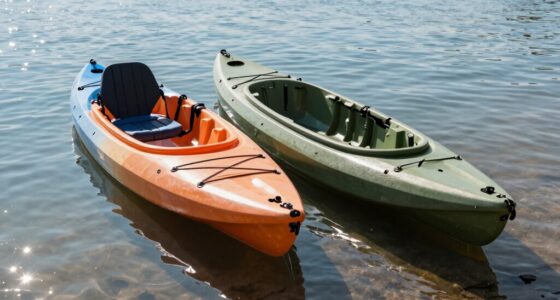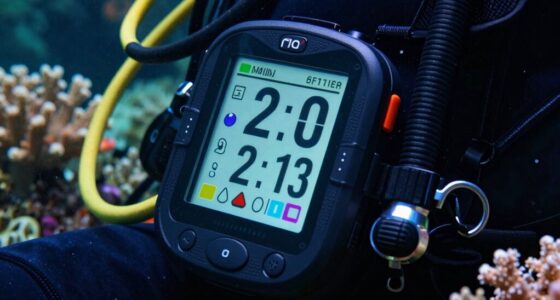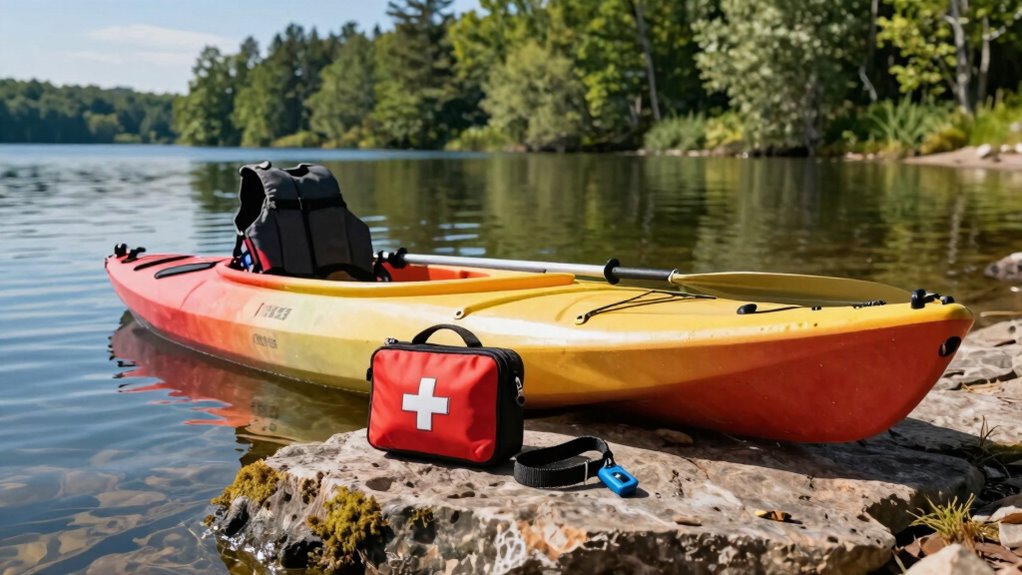
Beyond a life jacket, you need essential safety gear like a well-fitting helmet, signaling devices such as a whistle, and waterproof communication tools for emergencies. Pack a dry bag with first aid supplies, extra clothes, and emergency items. Using a paddle leash helps prevent losing your paddle and keeps control. Carrying advanced equipment like GPS or emergency beacons can boost safety in remote waters. Staying prepared with these items guarantees you’re ready for any situation—learn more to stay fully protected.
Key Takeaways
- Carry a whistle and waterproof signaling devices like flares or mirrors for emergency communication.
- Wear a properly fitted kayaking helmet made from durable, lightweight materials for head protection.
- Pack essential safety gear such as a waterproof flashlight, first aid kit, and navigation tools like GPS or emergency beacons.
- Use a paddle leash to maintain control, prevent paddle loss, and enhance kayak stability in rough waters.
- Conduct pre-paddle safety checks, review weather conditions, and inform someone of your paddling plan for added safety.
Essential Kayaking Safety Gear You Must Always Carry
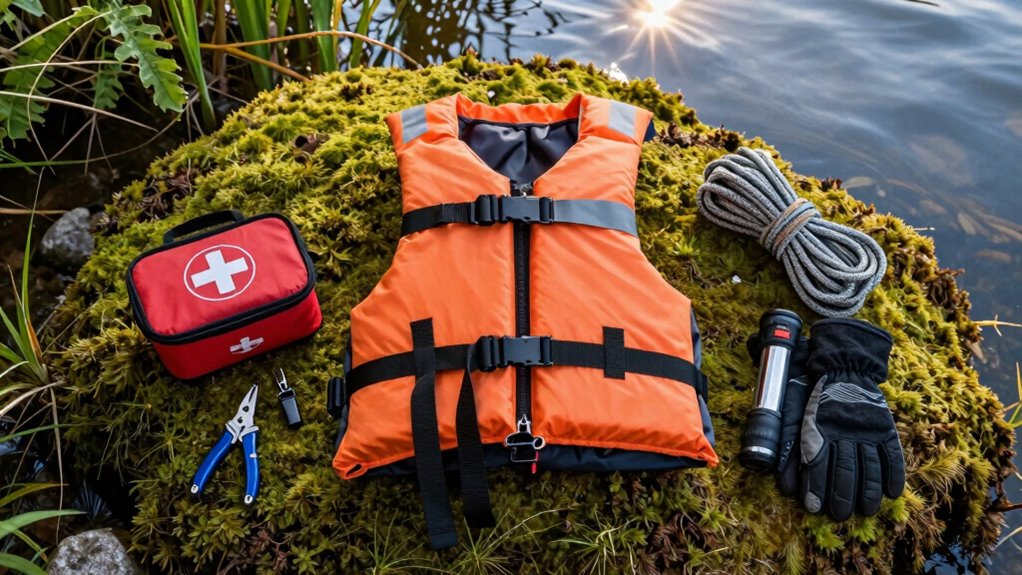
When kayaking, there are vital safety items you should always carry to protect yourself on the water. First, confirm your kayak is well-maintained, checking for any damage or leaks before heading out. Proper kayak maintenance helps prevent accidents caused by equipment failure. Additionally, weather awareness is essential—monitor forecasts and be prepared for sudden changes. Carry a waterproof map, a whistle for signaling, and a small first aid kit. A dry bag with extra clothing and a flashlight can be lifesavers if conditions shift unexpectedly. Staying alert to weather patterns allows you to adjust plans or head back early. These safety items, combined with vigilant weather awareness and regular kayak maintenance, keep you safe and ready for anything during your paddling adventure.
How to Choose the Right Kayaking Helmet for Safety
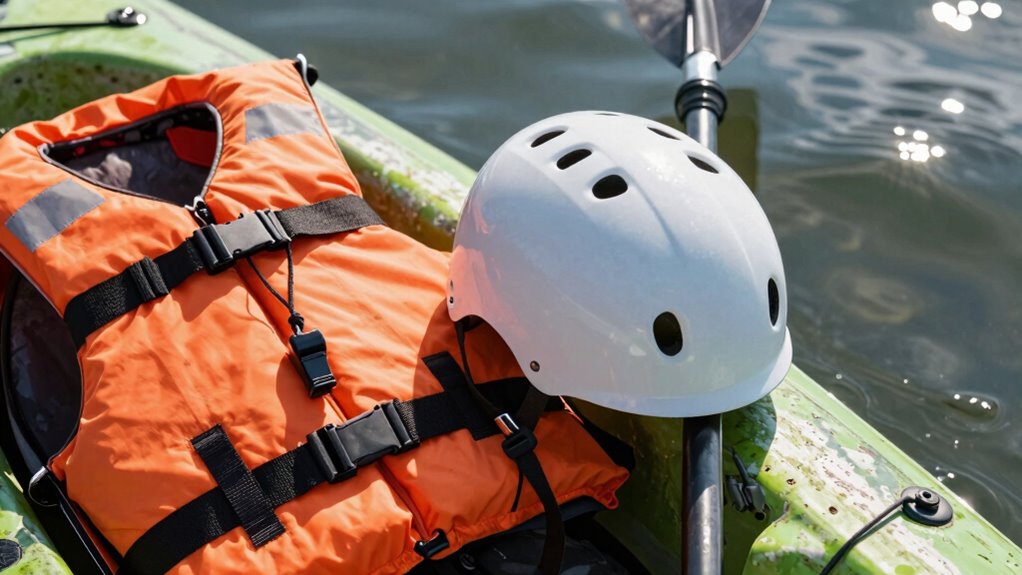
Choosing the right kayaking helmet is essential for your safety on the water, as it can protect your head from impacts with rocks, branches, or capsizing. Start by guaranteeing a proper helmet fit; it should sit snugly without causing discomfort or slipping during movement. A well-fitting helmet stays in place and provides consistent protection. When selecting helmet material, look for durable shells made from tough plastics like ABS or polycarbonate, which absorb impacts effectively. Foam padding inside adds comfort and shock absorption. Avoid helmets that are too tight or too loose, and prioritize lightweight, ventilated designs for longer trips. The right combination of helmet fit and quality materials ensures maximum safety, so take the time to try different options before making your choice.
Why Carry a Whistle and Signaling Devices for Emergency Situations
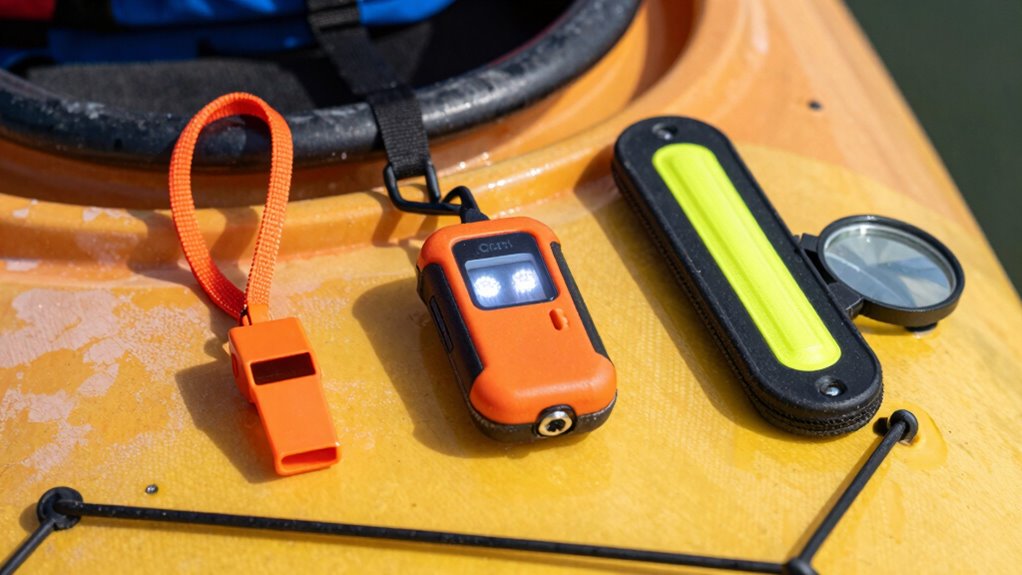
Carrying a whistle and signaling devices is vital because they can quickly attract attention when you’re in an emergency. Whistle alerts are simple yet effective tools to make your presence known to nearby boaters, rescuers, or other kayakers. Signaling devices, such as flares or reflective mirrors, enhance your visibility in low-light or foggy conditions. These tools are lightweight, easy to use, and reliable, providing a key edge when you need help fast. Having a whistle and signaling devices ensures you can communicate distress signals clearly and promptly, increasing your chances of rescue. Don’t rely solely on your voice—equip yourself with these compact, effective signaling options to stay safe on the water.
How to Pack a Dry Bag With Emergency Gear
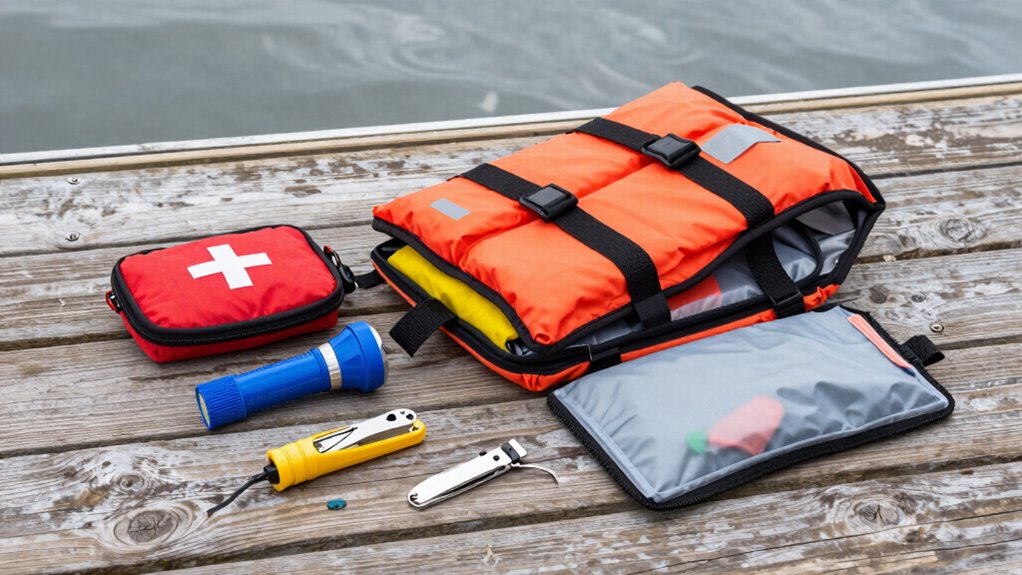
Packing a dry bag with emergency gear requires careful organization to guarantee all essential items stay dry and accessible. Start by prioritizing dry bag organization, grouping similar items together—first aid kit, signaling devices, and waterproof matches. Choose your emergency gear selection wisely, including compact, lightweight items that could be lifesavers in a pinch. Use waterproof containers or zip-lock bags within the dry bag to protect electronics, maps, and important documents. Place heavier items at the bottom to maintain balance, and keep frequently used tools near the top. Roll or fold gear tightly to maximize space and prevent leaks. Regularly check and update your dry bag contents to ensure everything remains functional and ready for any emergency situation on the water.
Why Using a Paddle Leash Matters for Your Safety
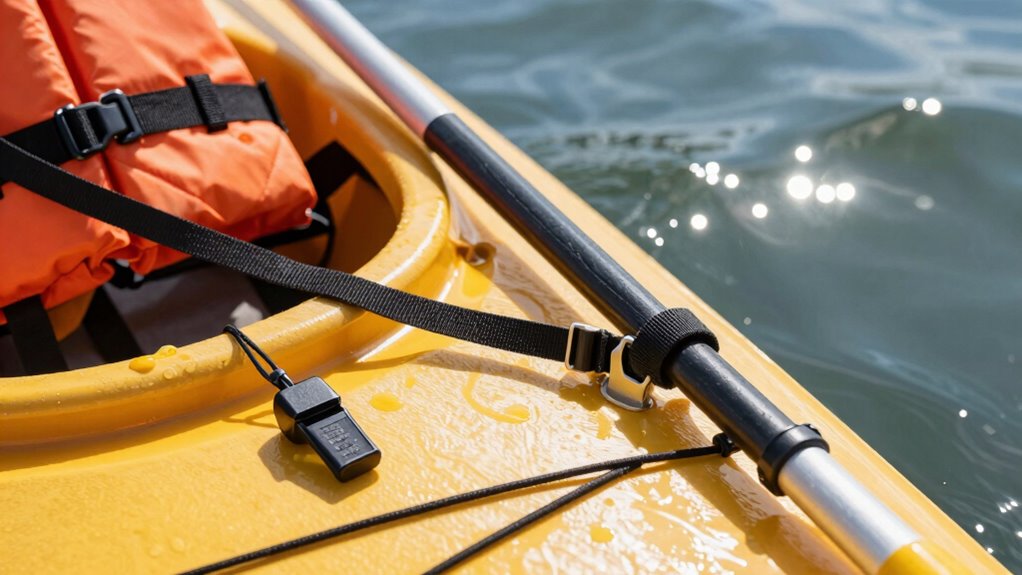
Using a paddle leash keeps your paddle secure and within reach, so you don’t risk losing it in rough water. It also gives you better control, helping you stay safe and steady on the water. Ultimately, a paddle leash is a simple tool that can prevent accidents before they happen.
Prevents Paddle Loss
When you’re paddling on the water, losing your paddle can happen in an instant, especially in rough conditions or if you accidentally slip. Using a paddle leash ensures paddle retention, so your paddle stays connected to your kayak. This simple gear organization tool prevents the hassle of searching for a lost paddle and keeps you moving smoothly. It also reduces the risk of injury or damage to your kayak if the paddle drifts away. A secure leash gives you peace of mind knowing your paddle is always within reach, even if you let go momentarily.
| Benefit | Why It Matters | How It Works |
|---|---|---|
| Paddle retention | Keeps your paddle close | Attaches to paddle and kayak |
| Gear organization | Reduces clutter | Keeps equipment in place |
| Safety enhancement | Prevents accidents | Avoids losing paddles in rough water |
| Convenience | Saves time hunting | Easy to clip on/off |
| Cost-effective | Affordable safety gear | Simple addition to gear |
Enhances Control and Safety
A paddle leash not only keeps your paddle secure but also enhances your overall control on the water. When your paddle stays connected, you maintain better kayak stability, especially in choppy conditions. This added control makes steering easier and reduces the risk of losing your paddle during sudden movements or strong currents. Using a leash prevents you from wasting time retrieving a lost paddle, keeping your focus on safe navigation. It also encourages mindful paddling, promoting smoother strokes and better balance. Overall, a paddle leash is a simple yet effective safety gear that boosts your confidence and control, making your kayaking experience safer and more enjoyable. It’s a small investment that markedly contributes to your safety and kayak stability on the water.
Advanced Safety Equipment Every Experienced Kayaker Should Know
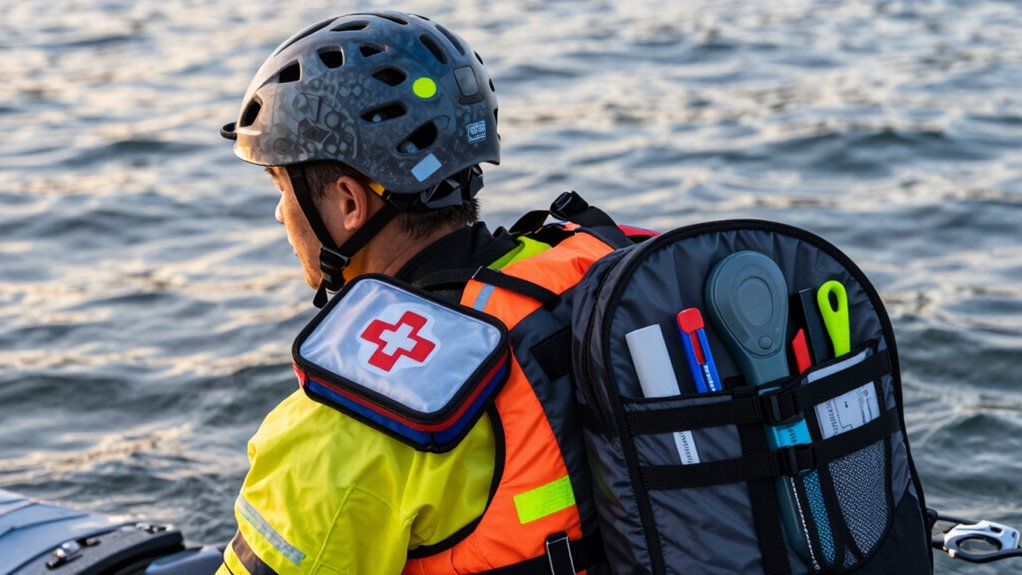
As an experienced kayaker, you should consider carrying advanced safety tools like emergency communication devices to stay connected in remote areas. Navigation and signaling tools help you find your way and alert others if you get lost or stranded. These essentials can make a vital difference in ensuring your safety on the water.
Emergency Communication Devices
Emergency communication devices are essential tools that can make all the difference if you find yourself in trouble on the water. A marine radio allows you to call for help directly, providing immediate contact with coast guards or nearby vessels. An emergency beacon, such as a Personal Locator Beacon (PLB), sends out distress signals to rescue agencies, even if you’re out of cell range. These devices are compact yet powerful, guaranteeing you’re prepared for unexpected situations. Here’s a quick comparison:
| Device | Purpose |
|---|---|
| Marine Radio | Real-time voice communication |
| Emergency Beacon | Sends distress signals via satellites |
Carrying both ensures you’re equipped for any emergency, increasing your safety and peace of mind during kayak adventures.
Navigation and Signaling Tools
Equipping your kayak with advanced navigation and signaling tools can substantially enhance your safety on the water. A GPS device helps you stay on course, track your route, and find your way back if you get lost. It’s especially useful in unfamiliar areas or poor visibility conditions. Marine radios enable you to communicate with other boaters, marinas, or emergency services quickly and clearly, providing a crucial line of contact in emergencies. Combining these tools ensures you’re prepared for unexpected situations, reducing panic and increasing your ability to respond effectively. Always carry a fully charged GPS and a waterproof marine radio, and familiarize yourself with their operation before heading out. These tools are indispensable for experienced kayakers looking to navigate confidently and signal for help when needed.
Creating a Complete Kayaking Safety Checklist Before You Paddle

Before you hit the water, it’s vital to create a thorough kayaking safety checklist to guarantee you’re prepared for any situation. Start by reviewing kayak safety protocols, including checking your gear, water conditions, and weather forecasts. Pack essential items like a whistle, waterproof flashlight, and a first aid kit. Follow paddling safety tips such as informing someone about your route and expected return time. Ensure your life jacket fits properly and is in good condition. Double-check your paddle, bilge pump, and communication devices. Don’t forget to bring extra clothing, sun protection, and plenty of water. A comprehensive safety checklist helps you stay vigilant, reduces risks, and makes your paddling experience safer and more enjoyable.
Frequently Asked Questions
What Are Some Common Mistakes Beginners Make With Safety Gear?
You often neglect proper gear storage, leading to damage or loss. Another mistake is not checking gear compatibility, which can cause equipment failure on the water. Beginners also tend to overlook securing all safety gear tightly, risking it coming loose. Always inspect your gear before paddling, store it properly, and confirm compatibility to stay safe. These habits help prevent accidents and ensure your gear functions correctly when you need it most.
How Often Should Safety Equipment Be Inspected or Replaced?
Think of safety equipment like a well-tuned engine—regular check-ups keep it running smoothly. You should inspect your gear before each trip, focusing on wear and tear. Follow the manufacturer’s maintenance schedule and replacement intervals, typically every 1-2 years for things like paddles and wetsuits. Swap out any damaged or outdated items immediately to guarantee your safety remains top priority on every adventure.
Can Safety Gear Be Customized for Different Water Conditions?
Yes, you can customize safety gear for different water conditions. Personalized equipment allows you to adapt gear like paddles, wetsuits, and throwing devices to specific environments, ensuring better performance and safety. For example, you might choose a wetsuit suited for cold water or add reflective markers for low visibility areas. By tailoring your safety gear to water condition adaptation, you enhance your safety and comfort during kayaking adventures.
What Additional Safety Gear Is Recommended for Overnight Kayaking Trips?
For overnight kayaking trips, you should carry a waterproof flashlight or headlamp for kayak navigation after dark, and a whistle or signaling device for emergency signaling. A GPS device or compass helps you stay on course, while a mirror can be used to attract attention if needed. Always have a fully charged cell phone in a waterproof case, and consider a small first aid kit to handle minor injuries.
How Does Weather Impact Safety Gear Requirements While Kayaking?
Weather hazards markedly influence your safety gear needs while kayaking. You should adapt your gear by including waterproof clothing, extra layers, and a weather radio to stay informed. In stormy or windy conditions, consider a spray skirt or windproof jacket. Being prepared for rapid weather changes ensures you stay dry, warm, and safe. Always check the forecast before heading out and carry gear that can adapt to evolving weather hazards.
Conclusion
Equipping yourself with the right safety gear transforms your kayak into a fortress on the water, shielding you from unforeseen storms. Think of your gear as a trusty compass guiding you through choppy waters and dark clouds. When you pack wisely and stay prepared, you become the captain steering through calm and storm alike. With each item secured, you’re crafting a safety net woven from confidence and caution—ready to catch you no matter what the waves throw your way.