
Finding the right inflatable dock pressure is key to safety and comfort. Start with the manufacturer’s recommended PSI, then adjust based on water conditions, boat weight, and how it feels underfoot. Avoid over or under-inflating, which can cause damage or instability. Keep an eye on environmental factors like temperature and weather, and regularly check your pressure with reliable gauges. Want to optimize your dock’s performance? Stay tuned for more tips on maintaining perfect stiffness.
Key Takeaways
- Start with manufacturer’s recommended PSI range and adjust gradually based on water conditions and user comfort.
- Use reliable pressure gauges and monitor pressure regularly to maintain optimal stiffness.
- Signs of incorrect pressure include sagging, instability (underinflation), or excessive stiffness and discomfort (overinflation).
- Overinflation can cause tears and reduce flexibility, while underinflation leads to sagging and instability.
- Environmental factors like temperature, water movement, and weather require frequent pressure checks and adjustments.
Why Finding the Right Inflatable Dock Stiffness Matters

Choosing the right inflatable dock stiffness is essential because it directly affects safety and usability. When your dock is properly stiff, it provides a stable platform that minimizes wobbling and shifting, reducing the risk of accidents. Dock safety depends heavily on the inflatable material’s ability to maintain the correct pressure, ensuring the surface remains firm yet flexible enough to absorb impact. If the dock is too soft, it becomes unstable, making it dangerous for people or equipment. Conversely, an overly stiff dock can be uncomfortable and harder to set up. Finding the right stiffness balances safety with practicality, ensuring your inflatable dock performs well in various conditions. Proper inflation tailored to the material guarantees a secure, reliable platform for all your water activities.
How to Determine the Correct Pressure for Your Inflatable Dock
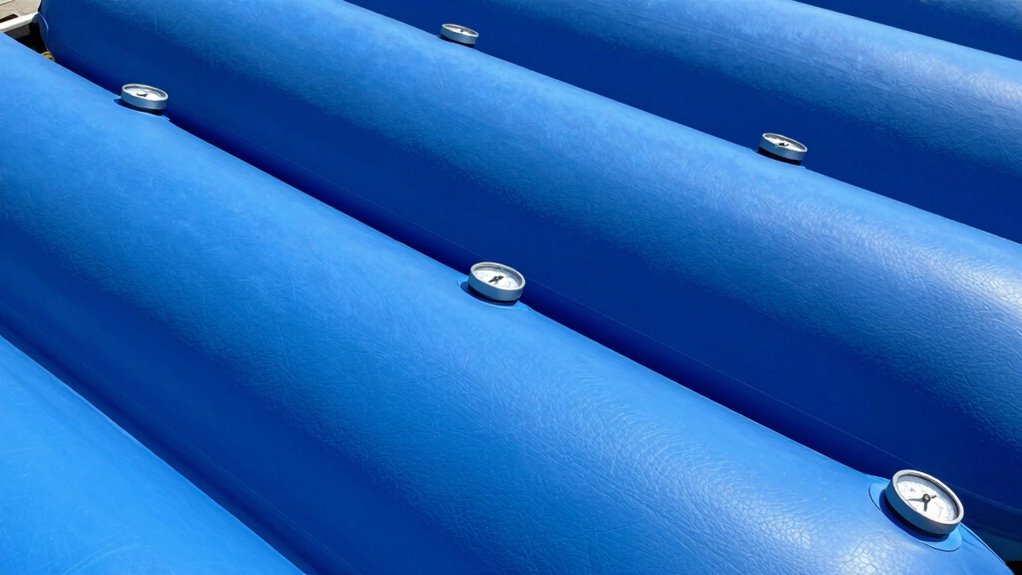
To find the right pressure for your inflatable dock, start with the manufacturer’s recommended range. You’ll need to modify the pressure based on water conditions, boat weight, and user comfort. Keep an eye on these factors to ensure your dock stays stable and safe.
Optimal Pressure Range
Determining the ideal pressure range for your inflatable dock is essential to ensure safety, stability, and longevity. Your dock’s material influences how much pressure it can safely handle without risking damage or deflation. Check the manufacturer’s recommended PSI range—exceeding this can compromise the dock’s integrity, while too little pressure leaves it unstable. To find the optimal range, start by inflating to the lower end and gradually increase, testing for firmness and responsiveness. Proper inflation safety means not over-pressurizing, which could cause material stress or rupture, or under-inflating, which results in a saggy, unstable platform. Staying within the recommended pressure range guarantees your dock performs reliably while maintaining its durability over time.
Adjusting for Conditions
Adjusting the pressure of your inflatable dock based on current conditions guarantees it remains safe and stable during use. Weather, water level, and usage frequency all influence the ideal pressure. When conditions change, you should reassess and modify the pressure accordingly. Keep these factors in mind:
- Temperature fluctuations affecting air pressure
- Increased load from boats or equipment
- Rough water conditions or high winds
- Seasonal changes impacting water levels
- Regularly following your maintenance checklist for safety
Signs Your Inflatable Dock Is Too Soft or Too Stiff

If your inflatable dock feels either too soft or too stiff, it’s a clear sign that the pressure isn’t right. When it’s too soft, the dock may sag, causing uneven dock aesthetics and making users feel unstable or uncomfortable. Conversely, if it’s too stiff, it can feel rigid underfoot, reducing user comfort and potentially creating an uninviting appearance. A soft dock might also bounce excessively, which can be unsettling for anyone using it. On the other hand, an overly stiff dock can be difficult to walk on and may not absorb impacts well. Paying attention to how it feels underfoot and how it looks can help you determine whether the pressure needs adjusting to optimize both dock aesthetics and user comfort.
How to Measure and Monitor Your Dock’s Pressure

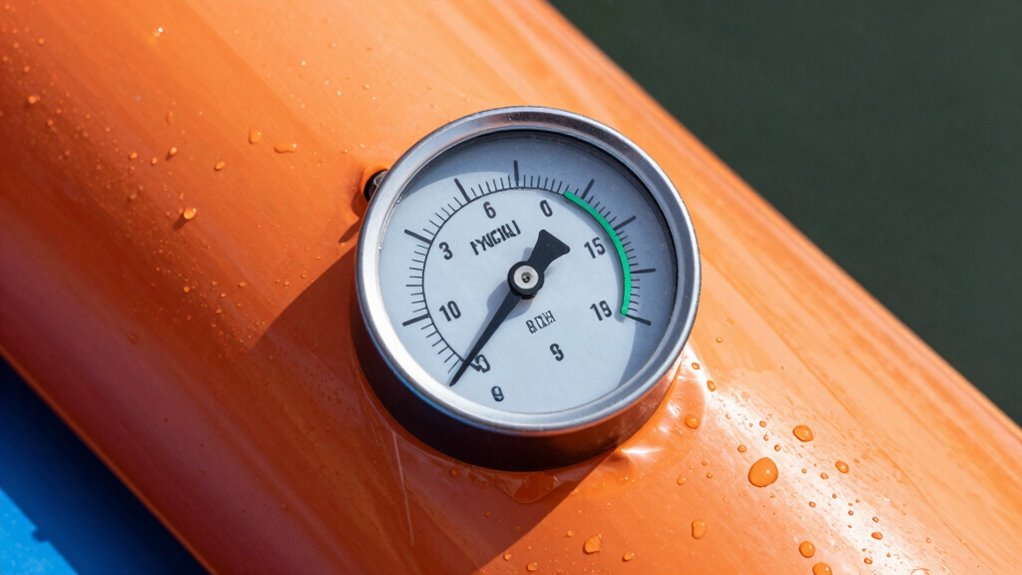
Wondering how to guarantee your inflatable dock maintains the perfect pressure? Regularly measuring and monitoring pressure is key to ensuring excellent inflatable dock durability. Use a reliable pressure gauge to get accurate readings and check for consistent performance. Keep these tips in mind:
- Calibrate your pressure gauge regularly for accurate results
- Check pressure levels before each use
- Maintain a stable environment to prevent pressure fluctuations
- Track pressure changes over time to spot leaks early
- Use a digital gauge for more precise readings
Monitoring your dock’s pressure helps prevent over-inflation or under-inflation, which can compromise durability. By staying vigilant, you ensure your dock remains safe, functional, and long-lasting, all while maximizing its stiffness for a smooth experience.
How Weather and Water Conditions Affect Dock Pressure
Weather and water conditions can substantially impact your inflatable dock’s pressure, often causing fluctuations that affect stability and safety. Weather influence includes temperature changes that cause the air inside the dock to expand or contract, leading to overinflation or deflation. Water conditions, such as waves, currents, or rising water levels, can exert extra pressure on the dock’s surface, requiring adjustments to maintain proper stiffness. Wind can also create uneven stress, pushing or pulling on the structure. These factors mean you need to regularly check your dock’s pressure, especially during extreme weather events or water condition changes. By staying alert to weather impact and water conditions, you ensure your inflatable dock remains safe, stable, and ready for use at all times.
Ideal Pressure Ranges for Different Dock Sizes and Uses
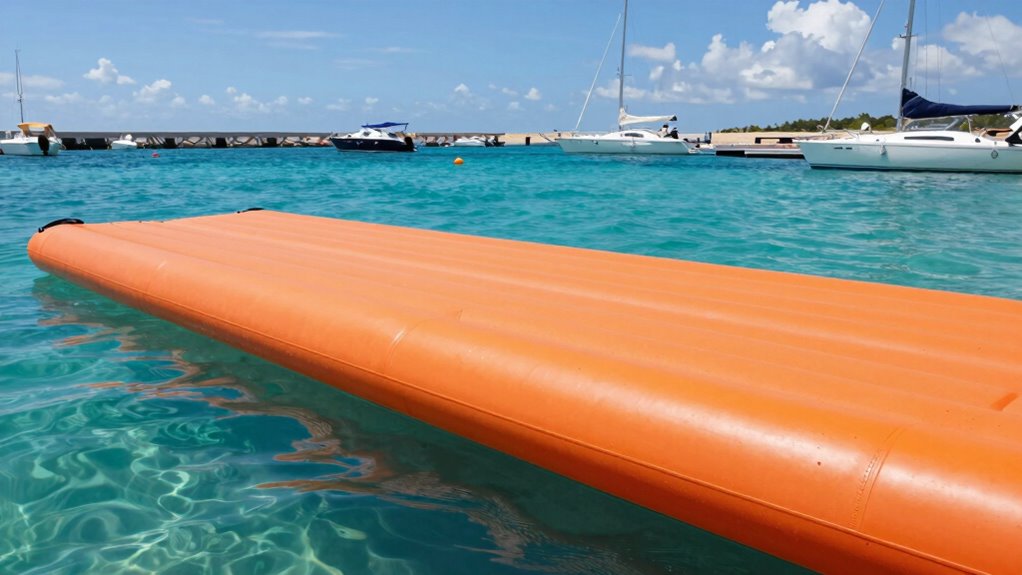
The right pressure for your inflatable dock depends on its size and intended use. Small docks for recreational activities often need lower pressures, while larger, commercial docks require higher, more stable pressures. Understanding these differences helps guarantee safety, stability, and ideal performance for your specific application.
Small vs. Large Docks
Choosing the right inflation pressure for your dock depends largely on its size and intended use. Small docks generally need less pressure to prevent damage, especially with delicate dock material, and to ensure safe inflation safety. Large docks, however, require more pressure for stability and to handle heavier loads.
Consider these points:
- Smaller docks benefit from lower pressure to avoid over-stressing the material
- Larger docks need higher pressure for firmness and load capacity
- Inflatable safety is key—avoid under or over-inflation
- Material type influences ideal pressure; some fabrics handle more stress
- Proper inflation prevents sagging and enhances durability
Adjust pressure accordingly to maintain stability, safety, and longevity, ensuring your dock performs effectively for its size and use.
Recreational vs. Commercial Use
Whether you’re using your inflatable dock for recreational fun or commercial purposes, selecting the right inflation pressure is essential for safety and performance. For recreational docks, lower pressure—around 2 to 3 PSI—is usually sufficient, enhancing comfort and ease of movement. Commercial docks, however, require higher pressure, typically 4 to 6 PSI, to support heavier loads and frequent usage. The dock material influences inflation techniques; thicker, more durable materials might need a gradual approach to avoid over-inflation. Proper inflation guarantees the dock remains firm yet flexible, preventing damage and maintaining stability. Always check manufacturer guidelines for ideal pressure ranges based on dock size and purpose. Consistent monitoring and proper inflation techniques will help optimize your inflatable dock’s performance for any use.
How to Adjust and Maintain Your Inflatable Dock’s Stiffness

Adjusting and maintaining your inflatable dock’s stiffness is essential for ensuring safety and ideal performance. Proper pressure guarantees the dock stays firm, stable, and resistant to wear. To do this, regularly check the air pressure using a reliable pump and gauge. Ensure your dock is properly anchored to prevent shifting, which can affect pressure and stability. Pay attention to material durability; over time, UV exposure and weather can weaken the material, so inspect for signs of wear. Adjust the pressure as needed based on usage and water conditions. Regularly clean the surface to prevent debris buildup that might affect pressure. Always follow the manufacturer’s guidelines for inflation and deflation to keep your dock in optimal shape.
- Monitor air levels routinely
- Use a high-quality pump and gauge
- Secure proper dock anchoring
- Inspect for material wear and tear
- Follow manufacturer inflation instructions
Common Mistakes That Cause Pressure Problems
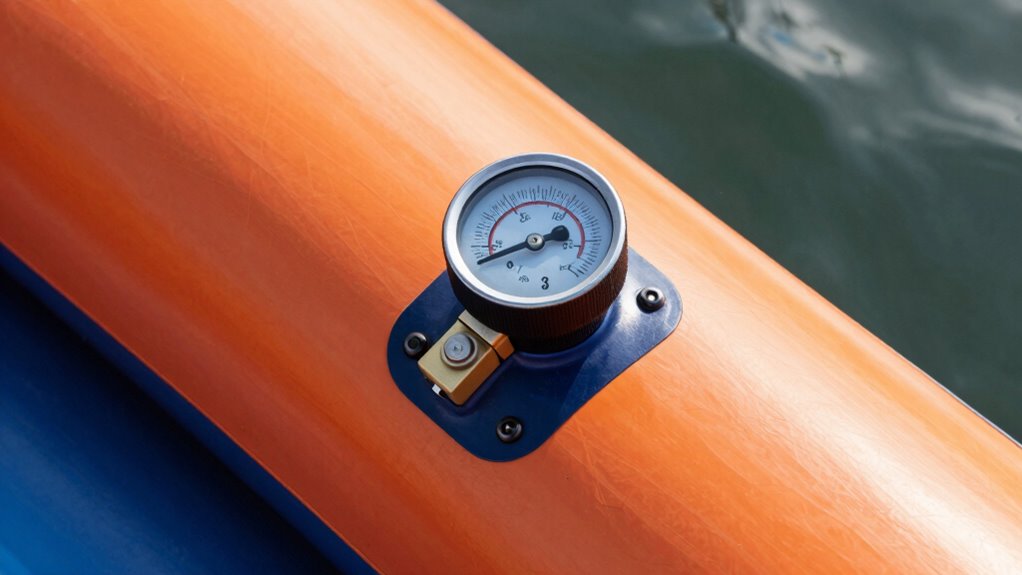
One common mistake is overinflating your dock, which can put unnecessary stress on the material. Ignoring the manufacturer’s recommended pressure levels often leads to pressure problems and potential damage. Make sure to follow the specs carefully to keep your dock functioning safely and effectively.
Overinflating the Dock
Overinflating the dock is a common mistake that can lead to pressure problems and damage. When you pump your inflatable dock beyond recommended levels, it stresses the dock material, increasing the risk of tears or punctures. Overinflation can also make the dock less flexible, affecting its ability to absorb shocks and handle waves. To avoid these issues, follow proper inflation tips and check your dock’s specific pressure guidelines. Remember, each dock model may have different ideal pressure levels, so don’t guess. Keeping the pressure just right ensures safety, longevity, and peak performance.
Here are some key points to keep in mind:
- Always refer to manufacturer specs for the right pressure
- Use a reliable pressure gauge
- Avoid over-pumping your dock
- Adjust pressure based on water conditions
- Regularly check your dock’s pressure for consistency
Ignoring Manufacturer Specs
Have you ever overlooked the manufacturer’s recommended pressure guidelines? Ignoring these specs can lead to serious issues. Manufacturer guidelines are based on pressure calibration tests that ensure your inflatable dock performs safely and efficiently. When you don’t follow these recommendations, you risk under- or overinflating, which can compromise the dock’s stability and durability. Relying on guesswork instead of the specified pressure calibration can cause uneven stiffness, making the dock unsafe for users and potentially damaging the material. Always check the manufacturer’s specs before inflating, and use a reliable gauge to confirm the correct pressure. Staying within the recommended range helps maintain the integrity of the dock, extending its lifespan and ensuring a safe, stable platform for everyone.
Best Tools and Accessories to Fine-Tune Your Dock’s Pressure

To guarantee your inflatable dock maintains peak pressure, investing in the right tools and accessories is essential. Proper inflation accessories help you achieve consistent pressure, no matter the dock material. Using a quality pump with a pressure gauge ensures accurate readings, preventing over- or under-inflation. A portable air compressor can make quick adjustments easier. Consider a flexible inflation hose for hard-to-reach valves, and a reliable valve adapter for compatibility with various pumps. A digital pressure gauge allows precise monitoring, helping you fine-tune your dock’s stiffness. These tools help you maintain ideal pressure, extending your dock’s lifespan and ensuring safety and stability at all times.
FAQs: Inflatable Dock Pressure and Stiffness Tips

Ensuring your inflatable dock maintains the right pressure is essential for safety and longevity, but it often raises questions. Proper pressure affects boat maintenance and how well your dock performs within its design. If it’s too soft, it won’t provide enough support, risking damage to boats and the dock itself. Too stiff, and it can cause unnecessary stress on materials. To find the ideal pressure, consider your dock’s design and intended use. Regularly check the pressure with a reliable gauge and adjust as needed. Remember, different dock designs may require specific pressure levels for maximum stiffness. Asking questions like “What’s the right pressure for my dock?” can help you maintain its lifespan and ensure safe boat handling.
Frequently Asked Questions
Can I Use a Standard Pump to Adjust My Inflatable Dock’s Pressure?
Yes, you can use a standard pump to adjust your inflatable dock’s pressure, but make sure it’s compatible with your dock’s valve type. Check the pump’s compatibility to guarantee it creates a proper seal. Use a pressure measurement device like a gauge to monitor the pressure accurately. This way, you’ll maintain the ideal stiffness, preventing damage or unsafe conditions while inflating or deflating your dock.
How Often Should I Check the Dock’s Pressure During Seasonal Use?
You should check your inflatable dock’s pressure regularly during seasonal use, ideally once a week. Seasonal maintenance is essential because pressure fluctuations can occur due to temperature changes and weather conditions. By monitoring the pressure consistently, you guarantee your dock stays at the best stiffness, preventing damage or instability. Use a reliable pump and gauge to maintain the correct pressure, ensuring safety and longevity throughout the season.
What Safety Precautions Should I Take When Inflating or Deflating the Dock?
Did you know improper inflation can cause accidents? To stay safe, always follow inflation safety guidelines and use a reliable pump. When inflating or deflating, wear gloves and eye protection, and keep the area clear of bystanders. During deflation, release pressure gradually to prevent sudden bursts. Always double-check the dock’s pressure before use, and never overinflate, as it weakens the material and risks injury.
Are There Specific Pressure Recommendations for Different Watercraft Types?
You should follow specific pressure recommendations based on your watercraft type to guarantee watercraft stability and ideal performance. For instance, larger boats may need higher pressure for firmness, while smaller crafts require less to maintain flexibility. Always check your dock’s manual for precise PSI values, and maintain inflation consistency to prevent uneven weight distribution. Proper pressure ensures safety, stability, and longevity of your inflatable dock and watercraft.
How Does Altitude Affect the Inflation Pressure Requirements?
Altitude considerably influences inflation pressure requirements because air pressure decreases with elevation, leading to pressure variability. You should make altitude adjustments by increasing the dock’s pressure by about 1 psi for every 1,000 feet gained. This guarantees your inflatable dock remains stiff and stable, preventing it from becoming too soft at higher altitudes. Staying aware of altitude effects helps you maintain ideal performance and safety regardless of your location.
Conclusion
Finding the perfect pressure for your inflatable dock is like tuning a musical instrument—you want harmony, not discord. By understanding how to measure, monitor, and adjust your dock’s stiffness, you’ll ensure smooth sailing and safe landings every time. Keep an eye on weather shifts and avoid common mistakes. With the right tools and a little attention, your dock will stand tall and true, prepared to serve as the sturdy foundation for your aquatic adventures.