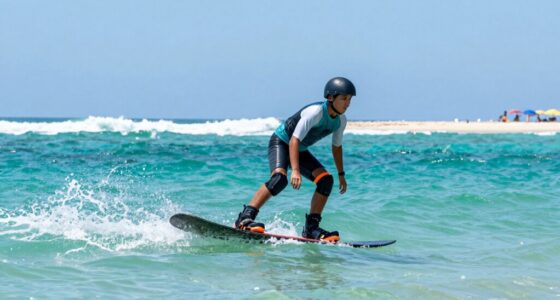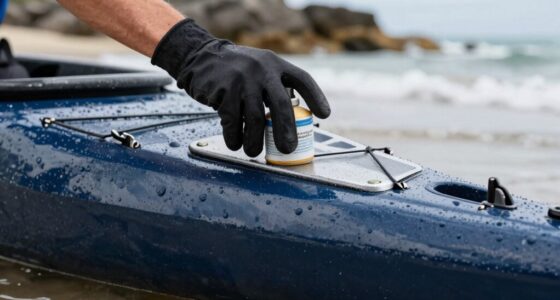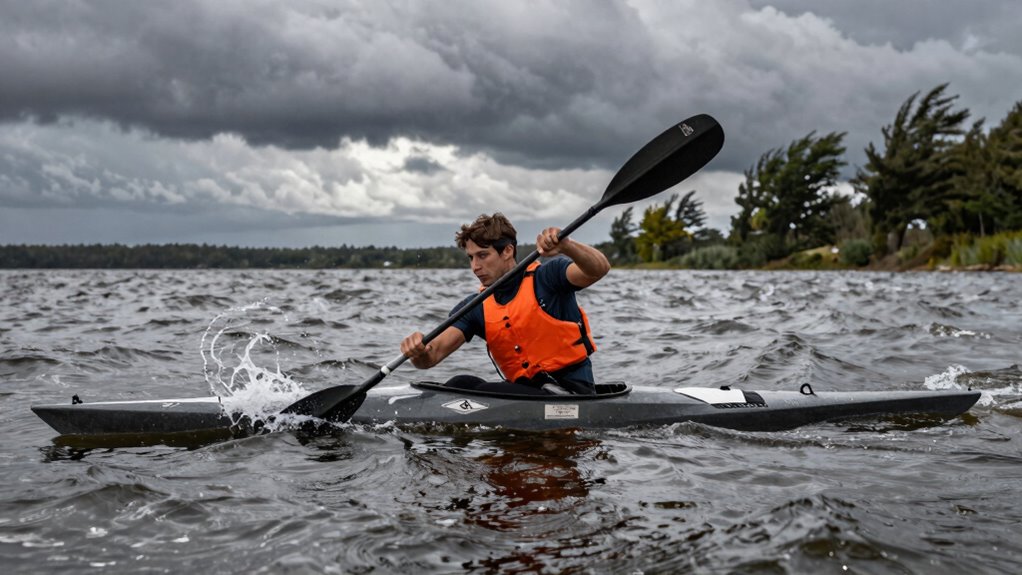

When conditions change mid-session, quickly assess the water and adjust your equipment and technique. Reposition your paddle for better grip, switch to a shorter paddle if needed, and make sure your life jacket fits snugly. Use a more stable stroke in choppy water and modify your paddling rhythm to conserve energy during strong currents. Stay alert, identify hazards early, and prioritize safety. Keep adapting your approach, and you’ll get better at handling unpredictable conditions—more tips await to boost your confidence.

Get pool and patio gear delivered free with Prime
- Fast, free delivery on millions of items
- Prime Video, Amazon Music and more included
- Member-only deals all year
Key Takeaways
- Continuously assess water conditions and adjust your paddling technique and equipment accordingly.
- Slow down and seek shelter when water becomes choppy or hazardous.
- Make quick gear modifications, like switching paddles or tightening safety gear, to maintain control.
- Stay alert to environmental cues and other watercraft to anticipate hazards early.
- Prioritize safety, retreat if necessary, and use signaling devices if in distress.
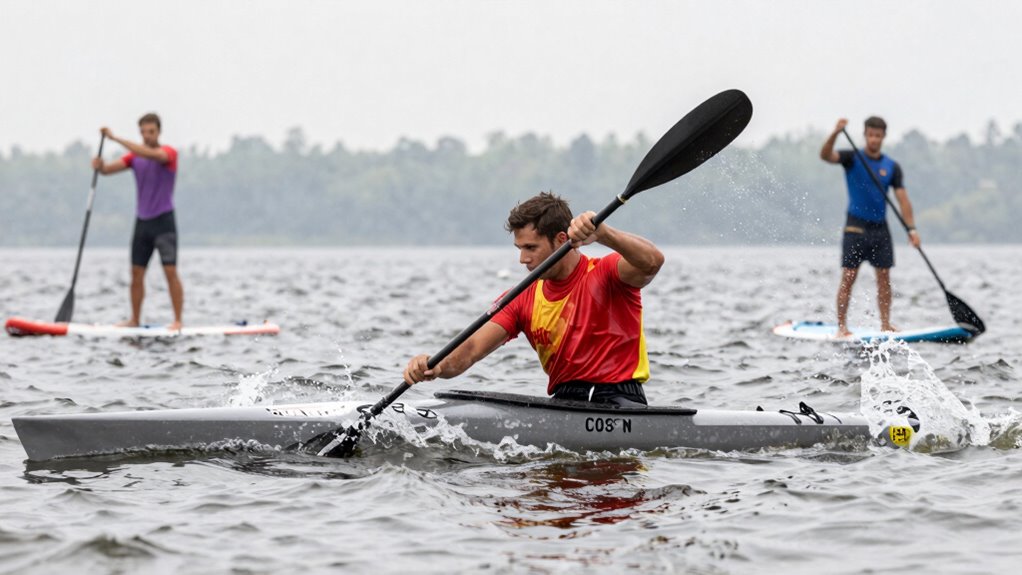
When the water conditions shift unexpectedly during your paddle session, adapting quickly can make all the difference between an enjoyable outing and a frustrating experience. Sudden changes like gusty winds, choppy waters, or shifting currents require you to think on your feet. The first step is to evaluate your equipment and make necessary adjustments. For example, if you notice the water becoming rough, consider repositioning your paddle to a more efficient grip or switching to a shorter paddle if the current is strong. These equipment adjustments help you maintain better control and conserve energy, especially when conditions aren’t ideal. It’s also wise to check your personal gear—ensure your life jacket fits snugly, and confirm that your leash is secure. Proper gear not only improves your performance but also enhances safety considerations, which should always be a top priority when water conditions change. Recognizing water condition changes early can help you respond more effectively and stay safe.
As soon as you sense the water turning treacherous, you need to shift your focus to safety considerations. If the wind picks up or waves grow larger, slow down and reassess your route. Avoid pushing into dangerous areas or rushing to reach your destination. Instead, look for sheltered spots or calmer waters nearby, and head in that direction. Keep a close eye on your surroundings, and stay alert for other watercraft or obstacles that may have become more hazardous. It’s crucial to remain calm and avoid panicking, as this can lead to poor decision-making or fatigue. If conditions worsen, don’t hesitate to call for help or signal your distress. Using your whistle or signaling device can alert others nearby that you need assistance. Remember, your safety always comes first, so knowing when to retreat or seek help is an essential part of paddling smarter. Being aware of changing water conditions can help you anticipate potential hazards before they escalate. Additionally, practicing water safety protocols can prepare you to respond more effectively in unpredictable situations. Developing a water condition assessment routine can also give you a critical edge in managing unpredictable environments.
Throughout your session, stay flexible and ready to adapt your paddling technique. When the water gets choppy, a more stable and low-angle stroke can help you stay balanced. If the current intensifies, modify your paddling rhythm to conserve energy and keep control. Listening to your instincts and paying attention to water conditions can guide you in making smarter choices on the fly. By combining quick equipment adjustments with a focus on safety considerations, you’ll navigate changing conditions more confidently. This proactive approach not only keeps you safe but also allows you to enjoy your paddle session to the fullest, even when the water throws unexpected challenges your way.
As an affiliate, we earn on qualifying purchases.
Frequently Asked Questions
What Safety Gear Should I Carry for Changing Conditions?
You should carry a reliable emergency kit, including a whistle, first aid supplies, and a waterproof flashlight, to stay prepared for changing conditions. Additionally, bring navigation tools like a compass, GPS device, or map to help you stay on course if visibility drops. These safety gear items guarantee you can respond quickly to emergencies and navigate safely, no matter how the weather or water conditions shift during your paddle.
How Can I Quickly Assess New Weather Patterns While Paddling?
To quickly assess new weather patterns while paddling, stay alert to changing sky colors, wind shifts, and cloud formations—these are key signs of weather awareness. Keep an eye on the terrain, noting if water conditions are becoming rough or if wind is strengthening. Adjust your paddling technique and route accordingly, ensuring safety. Staying attentive and adaptable helps you respond swiftly to weather changes and navigate safely through different conditions.
What Signs Indicate I Should Change My Paddling Technique?
If you notice your paddle strokes feeling less efficient, it’s time for paddle adjustments and technique modifications. Signs include increased fatigue, inconsistent speed, or struggling against wind or currents. When you feel your form breaking down or your boat veering off course, adapt your paddling style by shortening or lengthening strokes, adjusting your grip, or changing your body posture. These quick paddle adjustments help maintain control and conserve energy in changing conditions.
How Do I Manage Fatigue When Conditions Worsen Unexpectedly?
When conditions worsen unexpectedly, you manage fatigue by conserving energy and staying hydrated. Focus on pacing yourself, easing into less demanding strokes, and maintaining steady breathing. Use hydration strategies like sipping water frequently, and avoid overexertion to prevent exhaustion. Recognize early signs of fatigue, adjust your pace accordingly, and prioritize rest when needed. This approach helps you stay strong, adaptable, and safe despite changing conditions.
What Are the Best Ways to Communicate With My Team During Sudden Changes?
You should establish clear emergency signals with your team beforehand, so everyone knows how to respond quickly. Use reliable communication devices like waterproof radios or whistles to relay urgent updates or instructions. When conditions change suddenly, stay calm, and use your signals to alert your team immediately. Keep communication concise, and make certain everyone understands the plan, so you can coordinate effectively and stay safe in unpredictable situations.
Conclusion
Remember, adapting your paddle technique as conditions shift can boost both performance and safety. According to recent studies, paddlers who adjust their strategies mid-session are 30% more likely to avoid fatigue and injury. So, stay alert to changes, trust your instincts, and don’t hesitate to modify your approach. Flexibility is key—paddle smarter, not harder, to make the most of every session and enjoy the water longer.
Halloween Picks
halloween
As an affiliate, we earn on qualifying purchases.