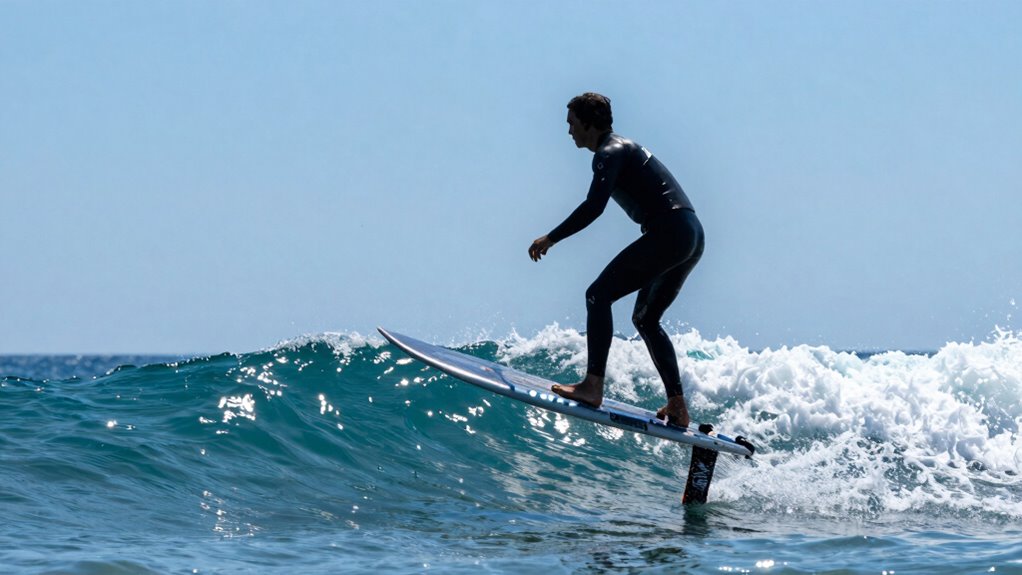
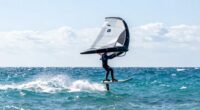
Foil boards feel stable or scary based on their design, your skill level, and water conditions. Stable boards often have wide footprints, low centers of gravity, and gentle edges, making them easier for beginners. Unpredictable boards might have sharp edges, excessive rocker, or narrow shapes that catch water unexpectedly. Your experience also plays a big role; as you improve your balance and technique, riding becomes more confident. Explore further to discover tips on choosing and maintaining gear that boosts stability.
Key Takeaways
- Stability depends on board design features like wide footprint, low center of gravity, and lightweight materials such as carbon fiber.
- Unstable boards often have narrow, sharp-edged, or excessively rocker shapes that catch water and cause unpredictable movements.
- Rider skill level, correct stance, and proper gear setup significantly influence stability and confidence on the water.
- Regular gear maintenance and understanding environmental conditions help prevent equipment malfunctions that lead to scary moments.
- Confidence-building techniques and targeted balance exercises improve stability and make foil riding safer and more enjoyable.
Why Does My Foil Board Feel Unstable, and How Can I Fix It?
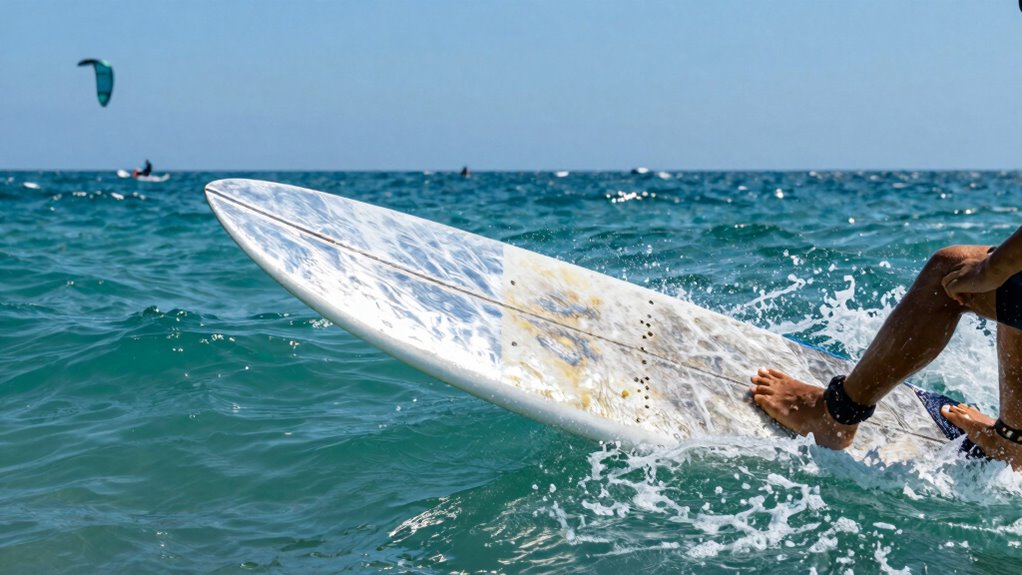
Feeling unstable on your foil board often comes down to balance and technique issues. One key factor is the foil board materials; lightweight, durable materials like carbon fiber or epoxy provide better stability by reducing vibrations and improving responsiveness. Additionally, your rider weight distribution plays a vital role. If your weight isn’t centered or evenly distributed, the board can feel wobbly or unpredictable. To fix this, focus on keeping your weight over the center of the board and adjusting your stance as needed. Practice maintaining a steady, balanced posture, especially during takeoff and while riding. Properly understanding your board’s materials and consciously managing your weight distribution will considerably improve stability and boost your confidence on the water.
Design Features That Make a Foil Board Stable for Beginners
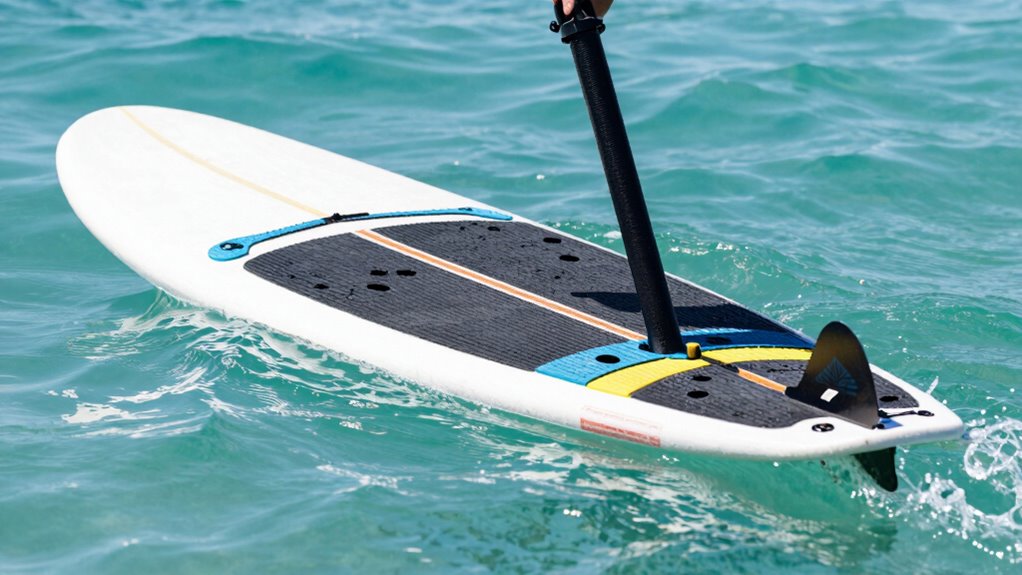
A wider footprint on your foil board helps you stay balanced and confident as you learn. It provides more stability, making it easier to control your movements. Additionally, a low center of gravity keeps the board steady, reducing wobbling and enhancing your overall confidence.
Wide Footprint Design
A wide footprint design enhances stability by providing a larger and more balanced base for beginners. This increases the board width, making it easier to stay centered and maintain control. As you ride, your foot placement becomes more forgiving, reducing the chances of losing balance. Imagine standing on a platform that’s broader than usual; it feels steadier and more secure. Here’s what a wide footprint offers:
- Enhanced balance through increased board width
- Improved foot placement options for better control
- Reduced wobbling during initial rides
- Greater confidence to experiment and progress
With this design, you’ll find it easier to stay centered, especially when starting out, making your foil experience smoother and less intimidating.
Low Center of Gravity
A low center of gravity is a key feature that makes a foil board more stable for beginners. By lowering the center of mass, the board becomes less likely to tip over, giving you better balance. This is achieved through strategic weight distribution, such as placing heavier components closer to the board’s bottom or center. When your weight is centered and low, it reduces the chances of wobbling or sudden shifts that can cause falls. This stability allows you to focus on mastering control and riding techniques without feeling overwhelmed. A well-designed foil board with a low center of gravity helps you feel more secure on the water, making it easier to stay balanced and confident as you learn.
What Design Elements Can Make a Foil Board Feel Scary or Unpredictable?
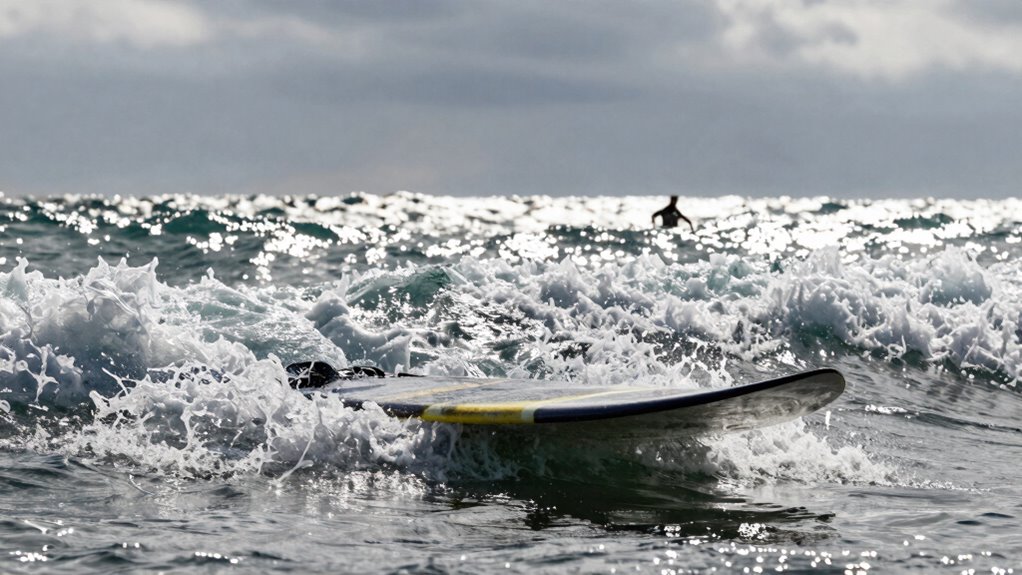
A wide nose and tail can make your foil board feel less responsive and harder to control. Excessive rocker or camber might cause unexpected lifts or drops, catching you off guard. Sharp or unstable edges can also make rides unpredictable and increase the risk of falls.
Wide Nose and Tail
Have you ever felt uneasy on a foil board with a wide nose and tail? The broad surface can make it feel less responsive, especially at speed. Here are 4 reasons why:
- The wide nose creates more surface area, making the board prone to catching waves unexpectedly.
- The wide tail adds stability but can feel sluggish when turning sharply.
- Excessive width can cause the board to feel bulky, reducing maneuverability.
- The larger surface can make balancing tricky on choppy water, increasing the risk of wobbling.
While a wide nose and tail boost stability, they can also make your ride feel unpredictable if you’re not used to the extra surface area. Adjusting your stance helps, but beware of the initial feeling of unpredictability.
Excessive Rocker or Camber
Excessive rocker or camber can make a foil board feel unpredictable because these design elements influence how the board responds to turns and bumps. Too much excessive rocker means the nose and tail lift easily, making it harder to maintain stability at higher speeds or choppy conditions. Excessive camber, on the other hand, creates a more aggressive flex profile that can cause sudden, jerky movements if you’re not precise with your weight distribution. Both features can lead to feeling out of control, especially if you’re still gaining confidence or riding in challenging conditions. When choosing a foil board, be mindful of excessive rocker or camber, as these elements can compromise stability and make your ride feel more intimidating than it really is.
Sharp or Unstable Edges
Sharp or unstable edges on a foil board can make your ride feel unpredictable and intimidating. These edges can catch water unexpectedly, causing sudden twists or jerks. Here are some design elements that contribute to this feeling:
- Razor-sharp edges that slice through water, increasing the risk of catching and losing control.
- Unstable edges that wobble or flex under pressure, making stability hard to maintain.
- Aggressive rail design with pointed corners that can dig into the water or your feet.
- Thin or tapered edges that lack surface area, making them prone to instability at high speeds.
These features can turn an exciting ride into a nerve-wracking experience, especially if you’re unfamiliar with handling such sharp or unstable edges.
How Rider Skill Level Affects Your Foil Board Stability

As you progress from beginner to advanced, your skill level directly impacts how stable you feel on a foil board. With more rider experience, you develop better balance techniques, which help you stay centered and reduce wobbling. Beginners often struggle with stability because they haven’t yet mastered weight distribution or how to anticipate the board’s movements. As you gain confidence and practice, you learn to make small adjustments that keep the board steady, even in choppy conditions. Advanced riders can more easily control their body position and respond quickly to changes, making the ride feel smoother and safer. Your ability to stay balanced directly influences how secure and stable you feel, regardless of the board’s design or conditions.
Tips for Choosing a Foil Board That Boosts Your Confidence
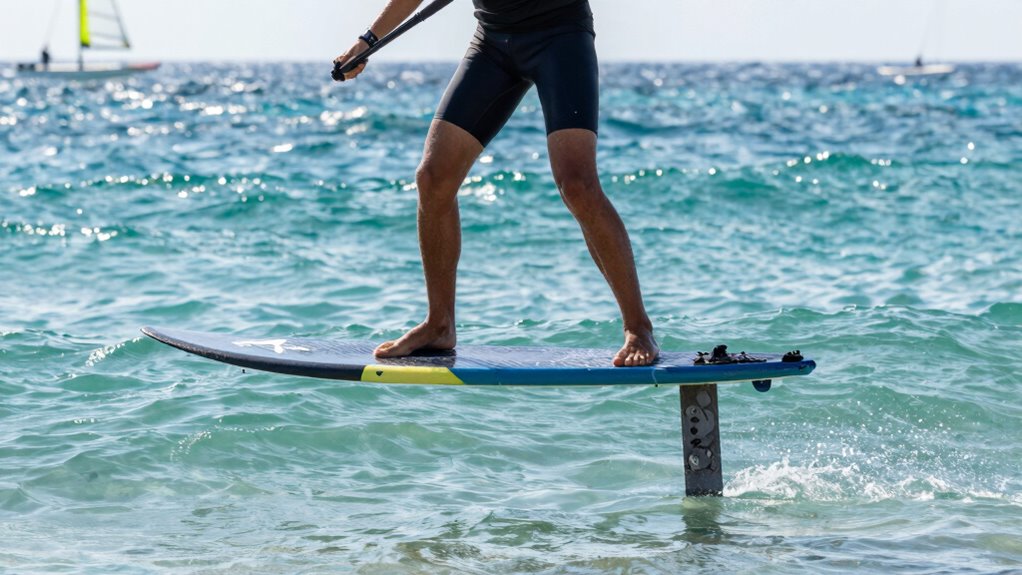
Choosing the right foil board can substantially boost your confidence on the water, especially if you’re still developing your skills. To do this, consider these tips:
Selecting the right foil board boosts confidence and accelerates your progress on the water.
- Select foil board materials like lightweight composites for easier handling and responsiveness.
- Match the board size to your rider weight considerations—heavier riders need larger boards for stability.
- Opt for a board with a wider, thicker profile to increase balance and confidence.
- Look for beginner-friendly shapes that are less twitchy and more forgiving during early rides.
Troubleshooting Common Stability Problems on Your Foil Board

Stability issues are common when you’re learning to ride a foil board, but they can often be addressed with simple adjustments and techniques. If you experience balance issues, check your equipment maintenance—ensure your straps are secure and your fins are properly attached. Sometimes, uneven or loose gear can throw off your center of gravity. Practice shifting your weight gently and focus on keeping a low, steady stance to improve balance. Adjust your foil setup if needed, lowering it slightly can enhance steadiness. Also, inspect your board for any damage or debris that might affect performance. Regular maintenance helps prevent unexpected issues and keeps your gear performing *preferably*. With these tweaks, you’ll find it easier to stay balanced and build confidence on your foil board.
Frequently Asked Questions
How Does Wind Speed Influence Foil Board Stability?
Higher wind speeds can make your foil board less stable, especially when turbulence and gusts hit unexpectedly. As gust intensity increases, you’ll feel more control difficulty, risking sudden shifts or loss of balance. Wind turbulence creates unpredictable air currents, challenging your ability to stay steady. To stay safe, adjust your riding style or gear when wind speeds pick up, and always remain alert to gusts and changing conditions.
Can Different Water Conditions Affect Foil Board Balance?
Water conditions can totally make or break your foil board balance. Imagine trying to stay steady on a slick, glassy lake; it’s much easier than battling choppy, murky waters. Water temperature affects buoyancy, making it harder to control if it’s cold or warm. Water clarity also plays a role—clear water helps you see obstacles and plan your moves, while murky water can throw off your balance and cause unexpected surprises.
What Role Does Foil Size Play in Board Stability?
Your foil size greatly influences board stability. A larger foil provides more lift and surface area, making it easier to balance and control, especially for beginners. Conversely, smaller foils offer less stability but allow for quicker turns and maneuverability. When choosing a foil size, consider your skill level and riding conditions. Larger foils enhance stability, helping you feel more confident, while smaller ones demand more skill but offer greater agility.
Are There Specific Safety Gear Recommendations for Beginners?
For beginners, safety gear is essential. Always wear a helmet to protect your head from falls or collisions, and prioritize a wetsuit to keep you warm and buoyant. These gear pieces enhance your safety safety safety safety safety safety safety safety safety safety safety safety safety safety safety safety safety safety safety safety safety safety safety safety safety safety safety safety safety safety safety safety safety safety safety safety safety safety safety safety safety safety safety safety safety safety safety safety safety safety safety safety safety safety safety safety safety safety safety safety safety safety safety safety safety safety safety safety safety safety safety safety safety safety safety safety safety safety safety safety safety safety safety safety safety safety safety safety safety safety safety safety safety safety safety safety safety safety safety safety safety safety safety safety safety safety safety safety safety safety safety safety safety safety safety safety safety safety safety safety safety safety safety safety safety safety safety safety safety safety safety safety safety safety safety safety safety safety safety safety safety safety safety safety safety safety safety safety safety safety safety safety safety safety safety safety safety safety safety safety safety safety safety safety safety safety safety safety safety safety safety safety safety safety safety safety safety safety safety safety safety safety safety safety safety safety safety safety safety safety safety safety safety safety safety safety safety safety safety, so always gear up properly.
How Do Tide Changes Impact Foil Board Handling?
Tide fluctuation considerably impacts your foil board handling by changing the water level and surface conditions. As the tide rises, the water becomes deeper, making it easier to maintain stability and control. Conversely, during low tide, shallower water can cause your board to hit the bottom or become unstable. Always check tide charts before heading out, and adjust your riding style accordingly to stay safe and confident.
Conclusion
Think of your foil board as a dance partner—you need to find the rhythm and trust your moves. When I first started, I felt unstable until I realized small adjustments made a big difference. With patience and the right board, you’ll glide smoothly and confidently. Remember, even the best surfers fell a hundred times before mastering the wave. Keep practicing, stay patient, and you’ll soon be riding with balance and control, just like a pro.