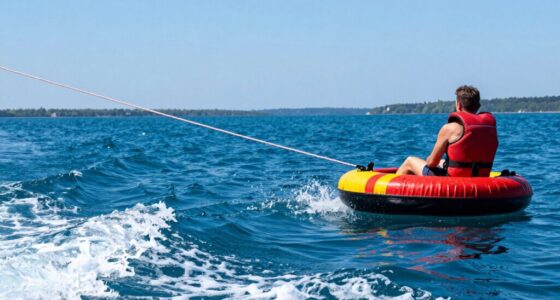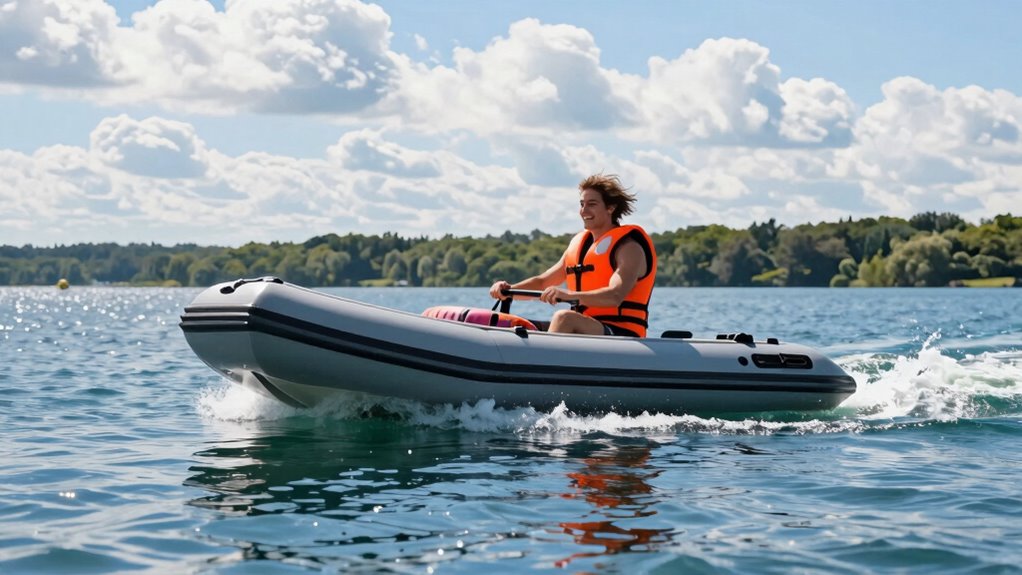
To match boat speed to rider skill for tubing, start with a moderate pace and adjust based on water conditions and rider comfort. Beginners and kids need slower speeds to stay safe and confident, while experienced tubers can handle a bit more. Keep clear communication and watch for signs of fatigue or instability. Regularly check your boat and gear for safety. If you want to learn how to fine-tune your speed for the perfect ride, keep exploring these tips.
Key Takeaways
- Start with a moderate speed and adjust based on rider experience and water conditions.
- Communicate clearly with riders about speed changes, using verbal and visual cues.
- For beginners or kids, keep speeds slow to build confidence and ensure safety.
- Increase speed gradually for experienced tubers, monitoring their comfort and stability.
- Always consider rider weight and comfort, slowing down for heavier or uneasy riders to maintain control.
How to Find the Safe Boat Speed for Tubing
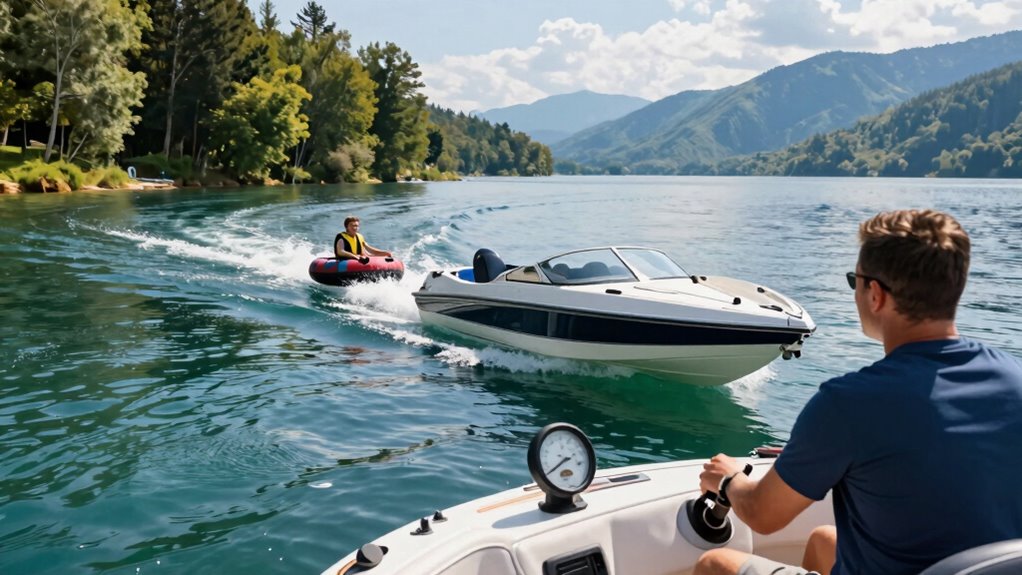
To find the safe boat speed for tubing, you need to contemplate several key factors. First, check local boating regulations, which often specify speed limits for tubing areas to ensure safety. Next, consider the safety equipment on board, like life jackets and throw ropes, as they influence how cautious you should be. A slower speed reduces the risk of accidents and makes it easier to maintain control. Keep in mind that excessive speed can make tubing dangerous, especially for beginners or children. Always start with a moderate pace and adjust based on water conditions, rider experience, and safety guidelines. Staying within regulated speeds and using proper safety equipment helps you create a safer, more enjoyable tubing experience for everyone involved.
Assess Water Currents and Wave Conditions First
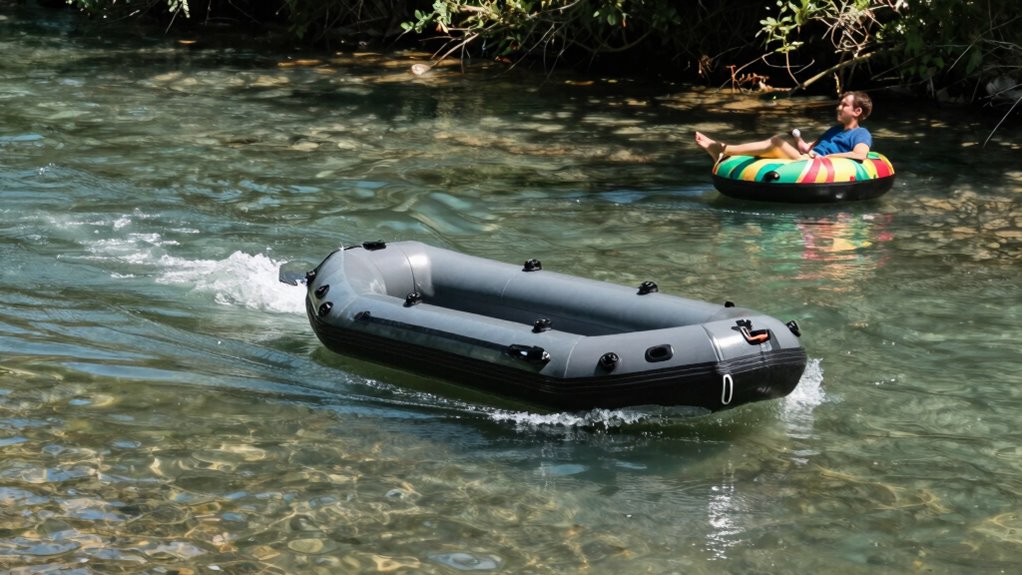
Before setting your boat speed, check the water flow speed to understand how fast the current is moving. Observe the wave height and pattern to identify potential hazards or smooth areas. Also, determine the direction of water currents to plan your route and maintain control.
Check Water Flow Speed
Evaluating water currents and wave conditions is essential before you start tubing, as these factors directly impact your safety and enjoyment. To check water flow speed, observe how quickly the water moves past a fixed point or use a flow meter if available. Pay attention to the current strength, as stronger currents can make controlling your tube more difficult and increase the risk of accidents. Test the water flow near the launch area and along your planned route to gauge consistency. If the current is swift or unpredictable, consider opting for a quieter section of the waterway or postponing your trip. Understanding the water flow helps you determine a safe boat speed and ensures a fun, safe tubing experience.
Observe Wave Height and Pattern
Observing wave height and pattern helps you understand water conditions that can affect your tubing safety. Notice how the wave pattern forms—steady, choppy, or irregular—as it indicates water turbulence levels. Calm, uniform waves suggest stable conditions, while irregular or large waves signal increased turbulence, which can make tubing difficult to control. Larger wave heights can also cause sudden jolts or unpredictable movements, increasing risk. Pay attention to how waves break and roll; steep or crashing waves often mean high turbulence. By evaluating these patterns, you can better judge whether conditions are suitable for tubing at your current speed. Staying alert to changes in wave behavior ensures you adapt your speed accordingly, keeping everyone safe on the water.
Identify Water Currents Direction
How can you tell which way the water currents are moving? Start with a simple direction assessment: look for visible clues like floating debris, ripples, or foam lines. Watch how these indicators drift over time; they reveal the water current’s flow. Pay attention to the shoreline or structures, as they often influence current direction. You can also observe the movement of waves near the surface—waves tend to align with the current. Conducting a water current and wave pattern assessment before tubing helps you understand the flow and avoid surprises. Knowing the water current’s direction assures you can adjust your boat speed accordingly, maintaining safety and control while tubing. Accurate assessment prevents unexpected drift and keeps your ride enjoyable.
How Rider Experience Affects Your Ideal Tubing Speed
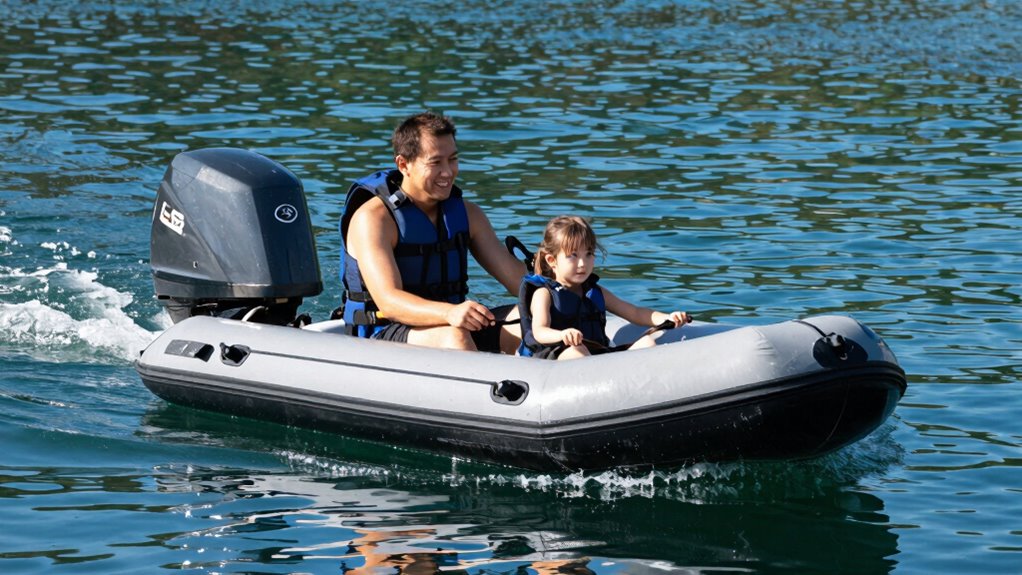
Your tubing speed should match the rider’s skill level and comfort. Beginners often need a slower pace to stay safe and confident, while experienced riders can handle a bit more speed. Adjusting your boat speed based on rider experience helps guarantee everyone has a fun and safe ride.
Skill Level Considerations
Experience plays a critical role in determining the ideal tubing speed for a safe and enjoyable ride. If you’re new to tubing, you’ll want to keep the boat speed moderate to prevent rider fatigue and maintain control. As your skills improve, you can gradually increase speed, but always stay attentive to how the rider handles the ride. Proper equipment maintenance also influences safe speeds; well-maintained tubes and ropes reduce the risk of accidents caused by equipment failure. Less experienced riders may tire quickly or feel overwhelmed at higher speeds, so it’s essential to adjust accordingly. Monitoring rider comfort and fatigue levels ensures safety and fun. Remember, faster isn’t always better—matching your skill level and equipment condition creates a safer, more enjoyable experience for everyone.
Confidence and Comfort
Ever notice how a rider’s confidence and comfort can influence the ideal tubing speed? When riders feel secure, they’re more willing to try slightly faster speeds, but if they’re uneasy, slower speeds promote confidence building and comfort enhancement. To help improve their experience, focus on gradual speed adjustments that match their comfort level.
- Gradually increase speed as confidence grows, avoiding sudden jumps
- Use clear communication to reassure first-time or nervous riders
- Select smooth water conditions to promote a sense of safety and ease
Experience-Based Adjustments
Rider experience plays a crucial role in determining the appropriate tubing speed. A seasoned rider can handle higher speeds safely, but always prioritize safety equipment and emergency procedures. Less experienced riders need slower speeds to maintain control and avoid accidents. Adjust your boat speed based on their comfort level and skill, ensuring they have proper life jackets and safety gear. Before starting, review emergency procedures with the rider so they know how to respond if they fall or if an emergency arises. Remember, even experienced riders can be caught off guard; staying vigilant and adjusting speed accordingly minimizes risk. Clear communication about safe speeds and safety measures helps create a fun, secure tubing experience tailored to each rider’s skill level.
How Rider Weight and Comfort Impact Speed Choices
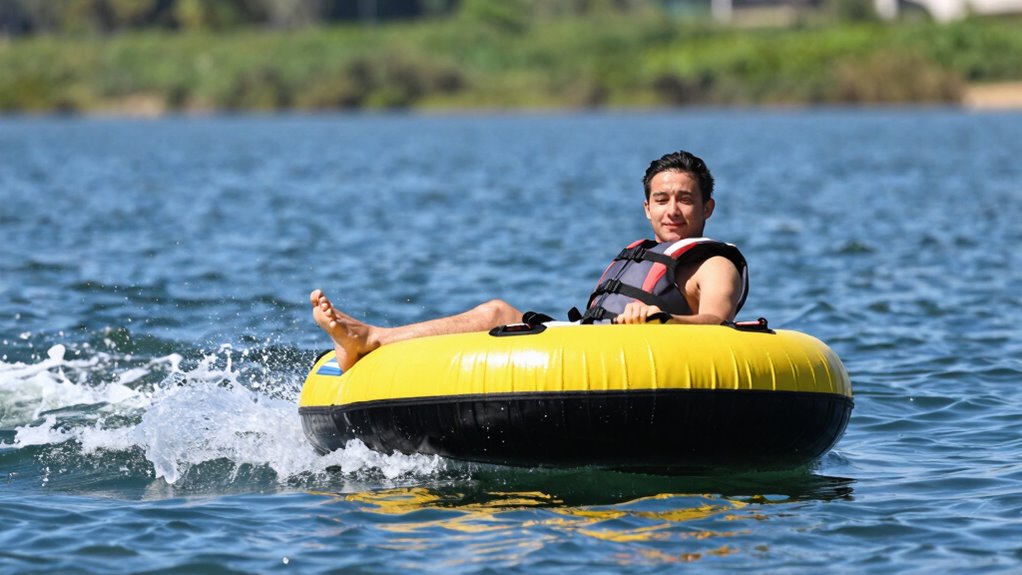
Your weight and comfort level play a significant role in determining the safest and most enjoyable tubing speed. Heavier riders often need slower speeds to stay safe and comfortable, while lighter riders can handle higher speeds without risk. Comfort levels influence how secure and relaxed a rider feels at different speeds. If a rider feels unstable or uneasy, it’s best to reduce the speed to improve stability. Additionally, comfort impacts how long someone can enjoy tubing without fatigue or discomfort.
Your weight and comfort level determine the safest, most enjoyable tubing speeds for you.
- Heavier riders may prefer slower speeds for better control
- Comfort levels can limit or expand safe speed ranges
- Adjusting speed based on weight and comfort enhances safety and fun
Adjusting Your Boat Speed Based on Water and Rider Factors

Adjusting your boat speed based on water conditions and rider factors is essential for safe and enjoyable tubing. Water surface tension, current, and wave height can influence how your rider experiences the ride, so slow down in choppy or crowded waters. Proper boat maintenance guarantees your boat runs smoothly and responds accurately to speed adjustments, reducing risks. Equipment selection also matters; choose the right tow rope length and handle setup to help riders stay comfortable and secure at various speeds. By paying attention to water conditions and rider feedback, you can adapt your speed proactively, creating a safer, more fun tubing experience. Always check your boat’s condition before heading out to ensure it operates reliably at different speeds, enhancing overall safety.
Tips for Communicating Speed Changes for a Safe Ride

Clear communication about speed changes keeps everyone safe and comfortable during tubing. Use effective communication techniques like verbal cues, hand signals, or radio communication to alert your rider before adjusting speed. Incorporate visual cues, such as pointing or waving, to reinforce the message. Make sure your signals are clear and consistent to prevent confusion. Always check in with your rider periodically to ensure they’re comfortable and aware of upcoming changes. When slowing down or speeding up, give ample warning to allow the rider to prepare. These simple steps help maintain a safe, enjoyable experience for everyone.
Effective communication of speed changes ensures safety and enjoyment during tubing trips.
- Use distinct hand signals or gestures for different speed adjustments
- Confirm understanding with a quick verbal check-in
- Keep visual cues consistent and visible at all times
Common Mistakes That Make Tubing Unsafe
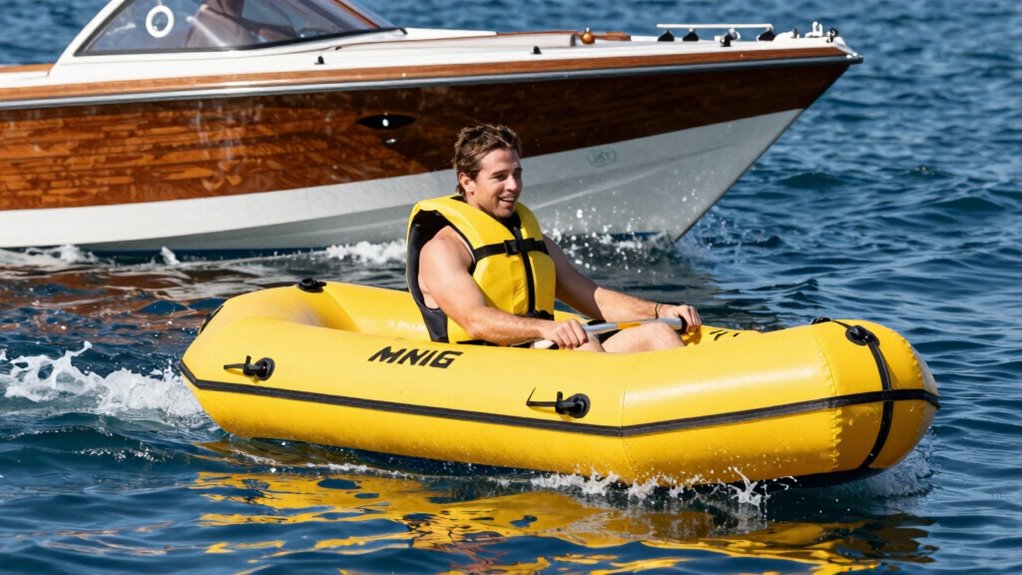
One of the most common mistakes that can make tubing unsafe is failing to communicate effectively with the rider about speed changes or upcoming hazards. Poor communication can lead to sudden jolts or loss of control, especially if the rider isn’t prepared. Additionally, neglecting equipment maintenance can cause sudden failures, increasing risk during high speeds or rough water. Ignoring weather forecasting also poses dangers; unexpected storms or high winds can make conditions unpredictable. Always check your gear for tears or loose parts before hitting the water, and stay informed about weather updates. By maintaining your equipment and paying attention to weather reports, you reduce the chances of accidents, ensuring a safer and more enjoyable tubing experience for everyone involved.
Tools and Techniques to Keep Your Tubing Speed Steady and Safe
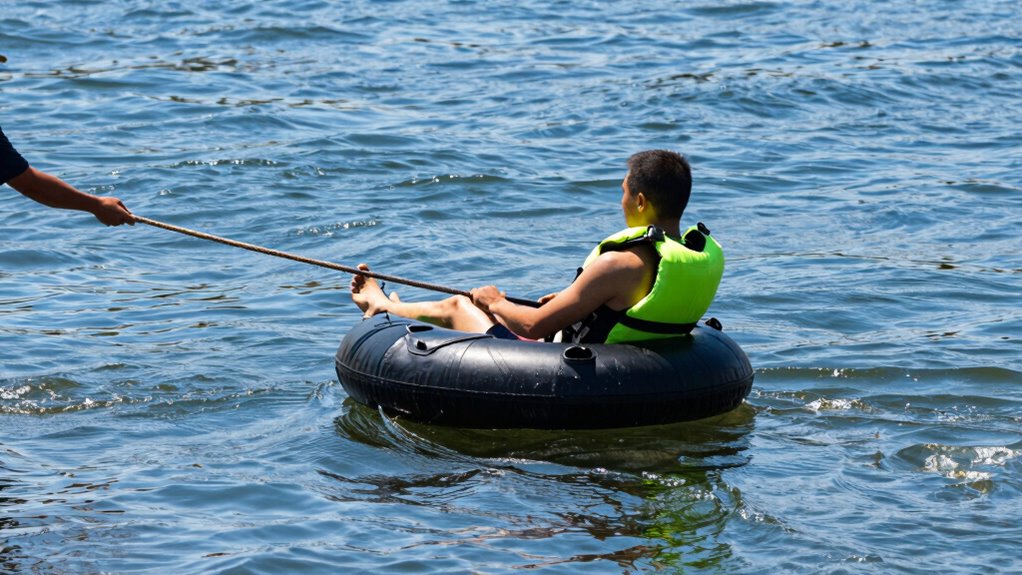
To keep your tubing speed steady and safe, using the right tools and techniques is essential. Regular boat maintenance ensures your equipment operates smoothly, reducing unexpected speed fluctuations. Using proper safety equipment, like a reliable tow harness and life jackets, helps you stay in control. Implementing a tow rope with adjustable length allows for fine-tuning speed based on rider skill. Additionally, employing a speed control device or a throttle limiter can help maintain consistent pace. Always check your boat’s engine and propeller to prevent sudden speed changes. Keeping safety gear accessible and in good condition enhances overall safety. These tools and techniques work together to create a stable, controlled tubing experience, minimizing risks and ensuring everyone stays safe on the water.
Best Practices for Beginners, Kids, and Advanced Tubers
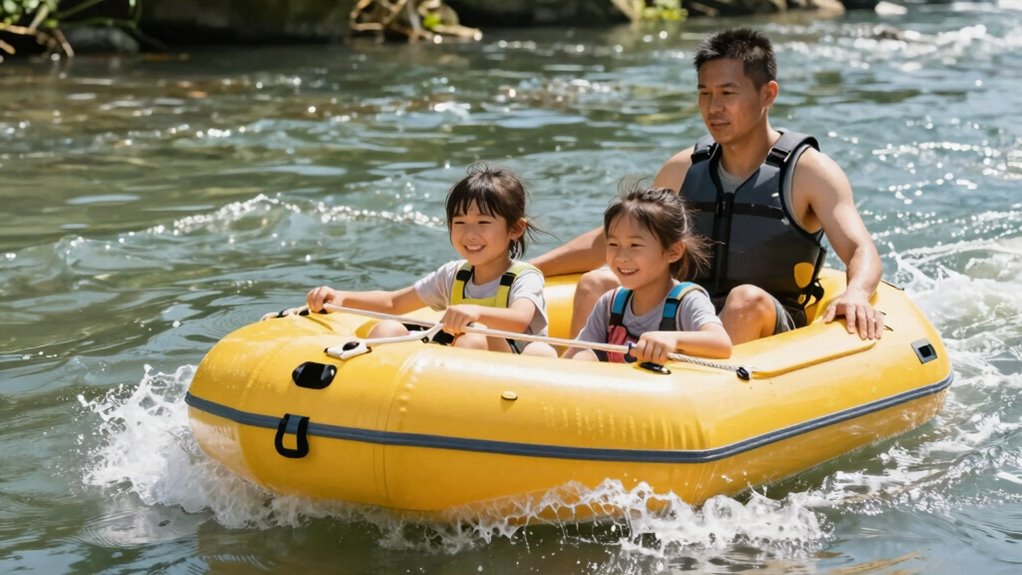
Whether you’re just starting out or guiding experienced tubers, understanding the different needs of beginners, kids, and advanced riders is key to safe and enjoyable tubing. For beginners and kids, prioritize helmet safety and ensure their helmets fit snugly without discomfort. Always double-check that their life jackets fit properly—neither too loose nor too tight—to provide maximum flotation and comfort. Keep speeds moderate to build confidence and prevent falls. For advanced tubers, you can increase speed gradually, but still emphasize helmet safety and proper life jacket fit as essential safety measures. Tailor your instructions based on skill level, and regularly remind everyone of safety gear importance. Adjusting speed appropriately helps everyone enjoy the ride while staying safe.
Frequently Asked Questions
How Can I Tell if My Boat Speed Is Too Fast for Safety?
You can tell if your boat speed is too fast for safety by watching the boat wake and water turbulence. If the wake is large and choppy, or if turbulence causes the water to splash excessively, you’re likely going too fast. These conditions make tubing dangerous, increasing the risk of falls or injuries. Slow down until the wake is smooth and water calmer, ensuring a safer, more enjoyable experience for everyone.
What Signs Indicate a Rider Is Uncomfortable at Current Speed?
You’ll notice signs of rider discomfort, like tense muscles, holding on too tightly, or trying to lean away. Watch for rider communication cues like waving their arms for help, shouting, or unsteady movements. If they seem nervous or hesitant, slow down and check in with them. Clear communication and observing their body language help you gauge if the current speed feels safe or needs adjusting.
How Does Weather Change Affect Safe Tubing Speeds?
Weather changes can turn your tubing adventure into a wild rollercoaster. When wind conditions pick up, it’s vital to slow down because choppy water and gusts make high speeds dangerous. Water temperature also matters—colder water can affect rider comfort and control. Always check the weather forecast, reduce your boat speed if conditions worsen, and keep safety your top priority to guarantee everyone has fun without risking mishaps.
Are There Recommended Speed Limits for Different Water Bodies?
You should follow water body regulations and pay attention to speed zone signage. Different water bodies often have specific speed limits to ensure safety, especially in crowded or sensitive areas. Always observe posted signs, and when in doubt, keep your speed moderate. This helps protect tubers and other water users, and makes sure you’re complying with local rules, making your tubing experience safer and more enjoyable for everyone involved.
How Do I Adjust Speed Safely When Riding With Multiple Tubers?
Think of towing multiple tubers like conducting an orchestra—you need clear cues. To adjust speed safely, use simple communication signals like hand gestures or voice commands to coordinate with your riders. Keep a steady pace, around 15-20 mph, and vary it based on their comfort levels and skill. Smooth towing techniques prevent sudden jolts, ensuring everyone stays safe and enjoys the ride.
Conclusion
Keeping your tubing safe means matching your boat speed to the rider’s skill and water conditions. Did you know that accidents decrease by up to 50% when speeds are appropriately adjusted? Stay attentive to water currents, rider comfort, and clear communication, especially for beginners and kids. By following these tips, you guarantee a fun, safe experience for everyone on the water. Remember, a cautious approach makes all the difference in preventing injuries and enjoying tubing to the fullest.