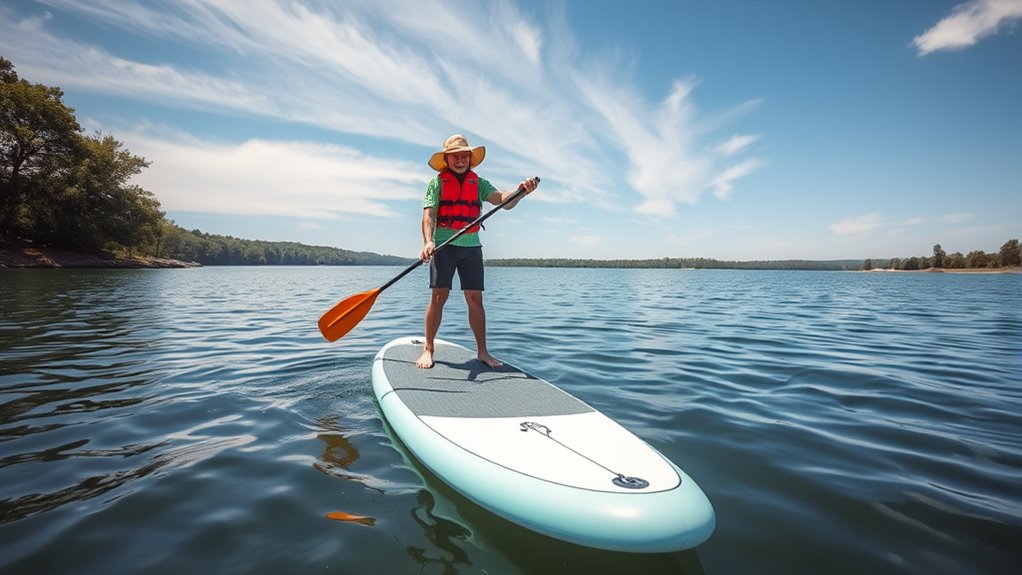

To get started with stand-up paddleboarding, focus on safety first by wearing a life jacket, checking weather conditions, and using signaling devices. Choose a stable inflatable board suitable for beginners, and learn basic paddling techniques like balanced stance and smooth strokes. Practice mounting and dismounting in shallow water to build confidence. Keep an eye out for obstacles and follow local regulations. Keep exploring to discover more tips that make your paddleboarding experience enjoyable and safe.
Key Takeaways
- Wear a life jacket and carry signaling devices for safety while paddleboarding.
- Choose a stable, recreational inflatable paddleboard suitable for beginners.
- Maintain proper stance with feet shoulder-width apart and use smooth paddling techniques.
- Check weather conditions and stay within designated, safe paddling areas.
- Carry waterproof communication devices and inspect equipment before each trip.
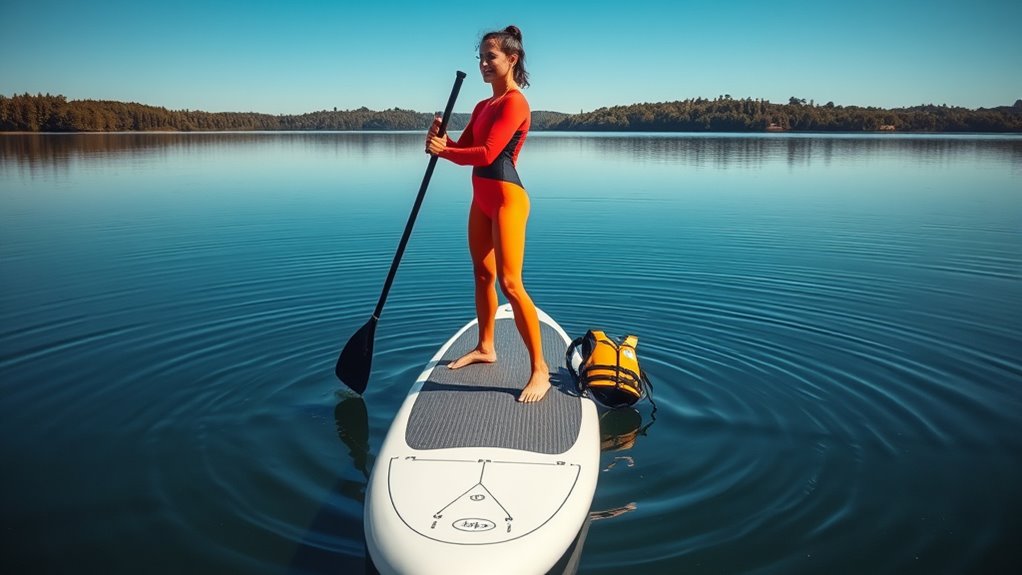
Stand-up paddleboarding (SUP) is a fun and accessible water activity that combines balance, stability, and core strength. Whether you’re paddling on a calm lake or exploring the coastline, mastering the basics starts with understanding paddleboard safety and choosing the right equipment. Safety should always be your top priority, so before hitting the water, familiarize yourself with local regulations, weather conditions, and potential hazards. Checking the weather forecast is *vital*—strong winds or storms can make paddleboarding dangerous. Always wear a life jacket, even if you’re a confident swimmer, and consider bringing a whistle or signaling device for emergencies. Learning how to fall safely and getting comfortable with self-rescue techniques will boost your confidence and keep you safe.
Prioritize safety, check weather, wear a life jacket, and learn self-rescue techniques for a fun, safe paddleboarding experience.
When it comes to choosing equipment, selecting the right paddleboard is key. Recreational paddleboards are generally wider and more stable, making them ideal for beginners. Inflatable boards are lightweight, easy to transport, and durable, which makes them popular among many paddlers. Hardboards tend to offer better performance and speed but are less portable. Think about where you’ll be paddling—flat water, surf, or rivers—and select a board suited for those conditions. The paddle itself should be adjustable and lightweight, allowing you to customize the length for your height and comfort. A good paddle improves your efficiency and reduces fatigue, so invest in quality gear.
Proper paddleboard safety also involves understanding how to handle your equipment. Always inspect your board and paddle before each trip for damage or loose parts. Practice mounting and dismounting your board in shallow water until you feel confident. When paddling, maintain a balanced stance—feet shoulder-width apart and knees slightly bent—to improve stability. Keep your paddle blade fully submerged in the water, and use smooth, even strokes to propel forward. Be mindful of your surroundings, watching for boats, swimmers, or obstacles. Staying within designated areas and avoiding busy waterways reduces the risks involved. Carry a waterproof phone case or communication device, so you can call for help if needed. Additionally, recent advances in robotics technology are being incorporated into safety equipment, enhancing security during paddling excursions.
Choosing the right equipment and understanding paddleboard safety are foundational steps to enjoy your time on the water safely. With proper gear, a cautious approach, and awareness of your environment, you’ll build confidence and have a fantastic paddleboarding experience. Remember, practice makes perfect—so start slow, stay safe, and have fun exploring the water on your paddleboard.
Frequently Asked Questions
What Are the Best Safety Gear Options for Beginners?
For beginners, the best safety gear includes a well-fitting life jacket or personal flotation device (PFD) and a leash to keep you connected to your paddleboard. Add safety apparel like a sun-protective hat and sunglasses for sun protection. Essential paddleboard accessories include a whistle for signaling and a waterproof bag for valuables. Always prioritize safety gear to guarantee a secure and enjoyable paddling experience on the water.
How Do Weather Conditions Affect Paddleboarding Safety?
Imagine weather conditions as the mood of the sea—calm days invite smooth paddling, but stormy weather can turn your day into a wild ride. Wind impact plays a huge role, making paddling harder and risking capsizes. Always check the forecast for weather safety; strong winds or storms can be dangerous. Being aware helps you avoid risky situations, ensuring your paddleboarding experience stays fun and safe.
Can Stand-Up Paddleboarding Be Done in Saltwater or Just Freshwater?
You can absolutely paddleboard in both saltwater and freshwater. Saltwater adventures offer unique experiences, like exploring coastal bays and ocean shores, but you should rinse your board afterward to prevent salt buildup. Freshwater options, such as lakes and rivers, are often calmer and easier for beginners. No matter which you choose, always check the weather and water conditions, and wear a life jacket for safety.
What Are Common Beginner Mistakes to Avoid?
Imagine trying to walk on a tightrope—your balance issues can make paddling tricky. To avoid this, focus on maintaining a steady stance and engaging your core. Many beginners lean too far forward or back, causing instability. Proper paddle technique, like using smooth strokes and keeping the paddle vertical, helps maintain balance. Practice patience, stay relaxed, and you’ll find yourself standing steady in no time, turning challenges into confidence.
How Do I Transport My Paddleboard to Different Locations?
To transport your paddleboard, you should use proper transportation accessories like a roof rack, paddleboard straps, or a padded bag. Secure your board firmly to prevent damage during transit, and consider paddleboard storage options like carrying handles or specialized racks. Always check for stability before hitting the road. Using these accessories makes moving your paddleboard easier, safer, and guarantees it stays in great condition for your next adventure.
Conclusion
Now that you’ve got the basics down, you’re ready to set sail on your stand-up paddleboarding adventure. Think of it as stepping onto a calm lake at dawn, where each stroke is a gentle ripple spreading outward. With practice, you’ll glide smoothly like a leaf drifting on water, discovering the serenity and thrill of this sport. So, grab your board and embrace the journey—your floating adventure awaits just beyond the horizon.