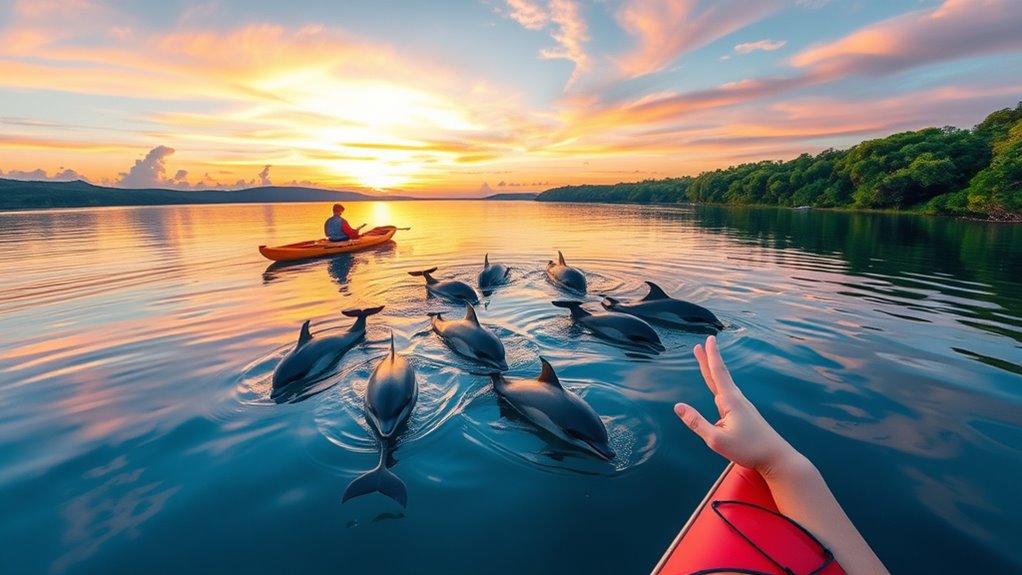

When floating near wildlife, it’s essential to stay at a respectful distance and move quietly to avoid causing stress or disturbance. Refrain from feeding animals, as this can disrupt their natural behaviors and health. Always dispose of your waste properly to prevent habitat pollution. Remember, responsible actions protect the animals and their environment. If you want to learn more about how your behavior can positively influence wildlife, keep exploring these important principles.
Key Takeaways
- Keep a safe distance using binoculars or zoom lenses to avoid disturbing wildlife.
- Move slowly and quietly to prevent startling animals and causing stress.
- Do not feed or attempt to interact with wildlife to maintain natural behaviors.
- Avoid littering and carry out all waste to protect habitats and animal health.
- Follow all conservation guidelines and promote respectful, responsible tourism practices.
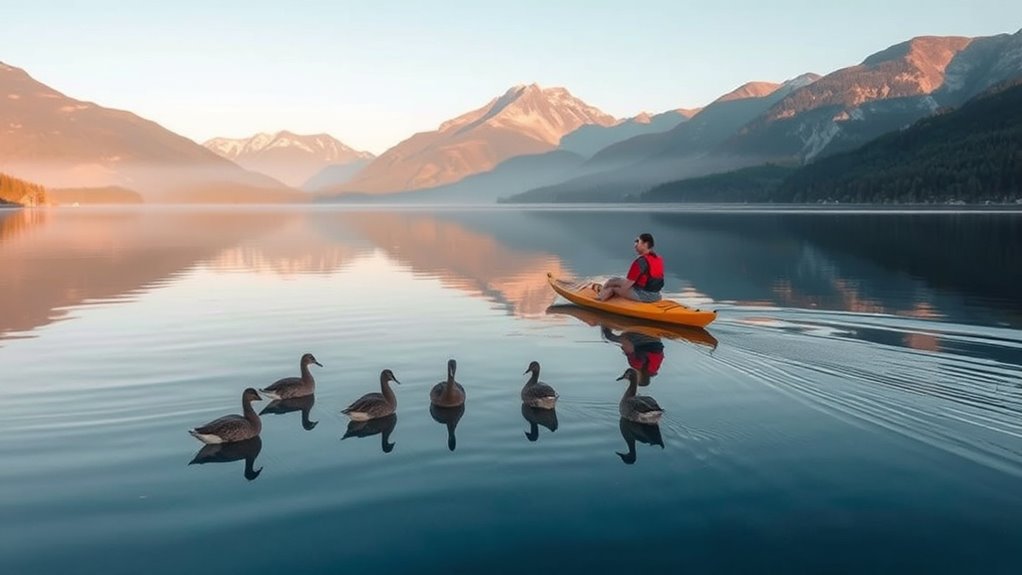
Ever wondered how your actions can impact wildlife? When you’re floating near animals in their natural habitat, every move you make can either support or harm their well-being. Practicing responsible tourism is vital, as it helps guarantee that your presence doesn’t disrupt their environment or behavior. By understanding how to behave ethically around wildlife, you contribute to wildlife conservation efforts that protect these species for future generations.
Your actions near wildlife can support or harm their well-being—practice responsible tourism to protect their future.
One of the most important things you can do is keep a respectful distance from animals. Approaching too closely can cause stress, panic, or even aggressive behavior in wildlife. Use binoculars or zoom lenses to observe from afar, allowing animals to go about their day undisturbed. Remember, getting too close isn’t just invasive; it can also be dangerous for you and the animals involved. Staying back shows that you respect their space and helps prevent accidental injuries or disturbances.
Another key aspect is avoiding sudden movements or loud noises. Wildlife is highly sensitive to sounds and vibrations, which can startle or scare them away from their habitats. When floating near animals, move slowly and deliberately, maintaining a calm demeanor. This minimizes stress and allows animals to continue their natural routines without feeling threatened. Your quiet presence can even encourage some animals to become more comfortable with human observers, fostering a respectful coexistence rooted in responsible tourism. Additionally, understanding wildlife behavior can help you anticipate how animals might react to your presence and adjust your actions accordingly.
It’s also essential to refrain from feeding wildlife. While it might seem harmless or even helpful, feeding can alter animals’ natural behaviors and diets, leading to dependency on humans or health issues. Instead, enjoy observing their natural foraging and hunting habits. If you’re in an organized tour, follow the guidelines provided, as many operators are trained in wildlife conservation principles. Supporting responsible tourism ensures that your sightseeing activities don’t inadvertently harm the ecosystems you’re visiting.
Lastly, avoid littering or leaving any trace of your visit. Trash can be ingested by animals or cause environmental pollution, which damages habitats and threatens wildlife health. Carry reusable containers and dispose of waste properly. Every small action counts when it comes to wildlife conservation, and your conscientious behavior can inspire others to follow suit. By respecting these principles, you help preserve the delicate balance of ecosystems and promote ethical interactions with wildlife.
In essence, your behavior while floating near wildlife shapes the impact you leave behind. By practicing responsible tourism—keeping your distance, moving quietly, refraining from feeding, and preserving the environment—you guarantee that your adventure is both memorable and respectful. Your mindful approach fosters a safer, healthier environment for animals and supports ongoing conservation efforts that protect the planet’s precious biodiversity.
Frequently Asked Questions
Is It Safe to Feed Wildlife While Floating Nearby?
No, it’s not safe to feed wildlife while floating nearby. Feeding regulations are in place to protect animals and prevent wildlife disturbance. When you feed wildlife, you disrupt their natural behaviors, making them dependent on humans and potentially aggressive. Always follow local guidelines, avoid giving food, and keep a respectful distance. This guarantees both your safety and the well-being of the animals, preserving their natural habitat and behaviors.
Can I Take Photographs Without Disturbing the Animals?
You can take photographs without disturbing animals by using proper equipment like long lenses and quiet cameras. Focus on ethical photography by maintaining a respectful distance and avoiding sudden movements. Be patient and move slowly to capture natural behavior without intruding. Remember, your goal is to respect wildlife’s space while getting great shots. Prioritize their well-being over getting the perfect shot, ensuring your photography remains responsible and environmentally conscious.
What Should I Do if Wildlife Approaches My Boat?
Imagine you’ve entered a quiet dance, and suddenly, the wildlife leads. If wildlife approaches your boat, remain calm and steady; don’t startle or chase them. Keep your distance to prevent wildlife disturbance and guarantee boat safety. Gently slow down, avoid sudden movements, and let them decide how close they want to get. Respect their space, and you’ll keep both them and your boat safe in this natural rhythm.
Are There Specific Times to Avoid Wildlife Areas?
You should avoid wildlife areas during peak times like seasonal migration periods when animals are most active or vulnerable. Also, steer clear of restricted zones designated to protect wildlife habitats. By planning your trips around these times and zones, you minimize disturbance to animals, help preserve their natural behaviors, and make certain your activities remain ethical and environmentally responsible. Always check local guidelines for specific seasonal or zone restrictions before heading out.
How Do Weather Conditions Affect Wildlife Behavior?
Oh, weather’s just a tiny detail, right? Wrong! Rain, wind, or heat dramatically shift wildlife behavior, so you better stay alert. Harsh conditions can push animals out of their natural habitat preservation zones or make them more vulnerable to pollution impact awareness. When you float, remember that weather impacts their activity patterns—so respect their space, avoid disturbing them, and be mindful of how your presence might disrupt their delicate balance.
Conclusion
Remember, respecting wildlife isn’t just about avoiding harm—it’s about understanding that many animals thrive best when humans keep their distance. Some believe that observing animals closely can stress them out or disrupt their natural behaviors. So, next time you’re near wildlife, stay ethical: keep a safe distance, avoid feeding them, and let nature unfold naturally. By doing so, you guarantee their well-being and preserve the integrity of their habitat for generations to come.