
Proper net tension in beach volleyball is the key to longer rallies and better gameplay. When you keep the net just tight enough, it creates a predictable bounce and stable environment, encouraging longer exchanges. Too loose, and the ball sags, shortening rallies; too tight, and it’s stiff, making play less smooth. Mastering the right tension can improve your game, and if you continue exploring, you’ll discover how to fine-tune that tension for peak performance.
Key Takeaways
- Proper net tension enhances ball rebound consistency, leading to longer, more predictable rallies.
- Maintaining optimal tension prevents net sagging, allowing the ball to pass smoothly and extend rally duration.
- Regularly checking and adjusting net tension ensures uniformity and prevents slack that shortens exchanges.
- Using tension tools for precise adjustments helps achieve the ideal tension for prolonged, engaging rallies.
- Consistent net tension maintains game fairness and prolongs rallies by providing a stable, responsive net environment.
How Net Tension Affects Your Beach Volleyball Game

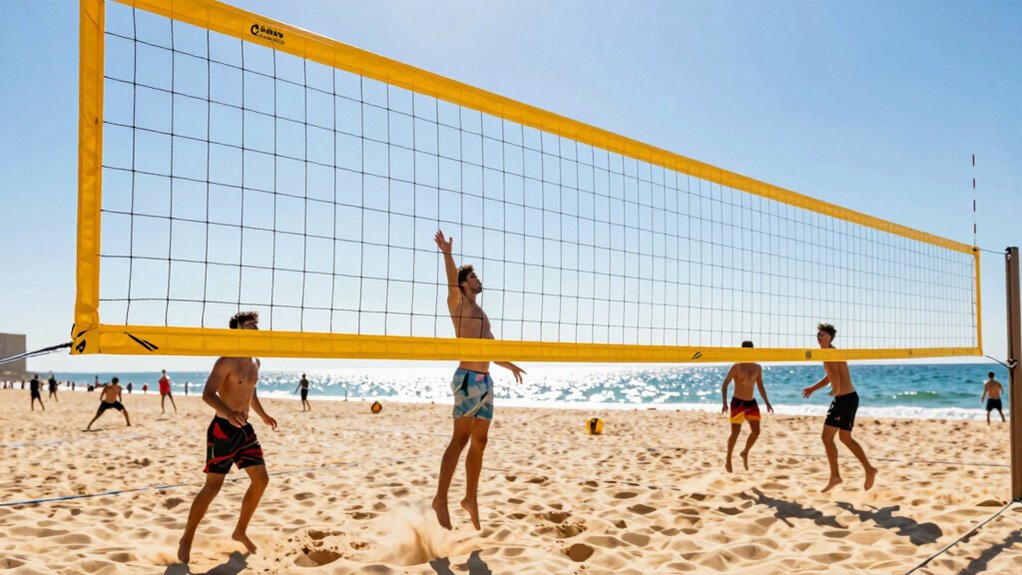
Net tension plays a crucial role in how your beach volleyball game unfolds. When the net’s tension is just right, it maintains ideal net elasticity, allowing the ball to pass smoothly and predictably. If the tension is too loose, the net becomes saggy, making it easier for opponents to score points or interfere with plays. On the other hand, excessive tension can make the net stiff, reducing its elasticity and causing unexpected ball bounces or frustrating rallies. Maintaining tension consistency is key to fair, competitive play. A well-tensioned net ensures the game flows smoothly, helping players anticipate ball contact and improve their skills. Proper net tension creates a balanced environment where rallies last longer, and every point feels fair and exciting.
How Net Tension Changes Ball Bounce and Rally Length
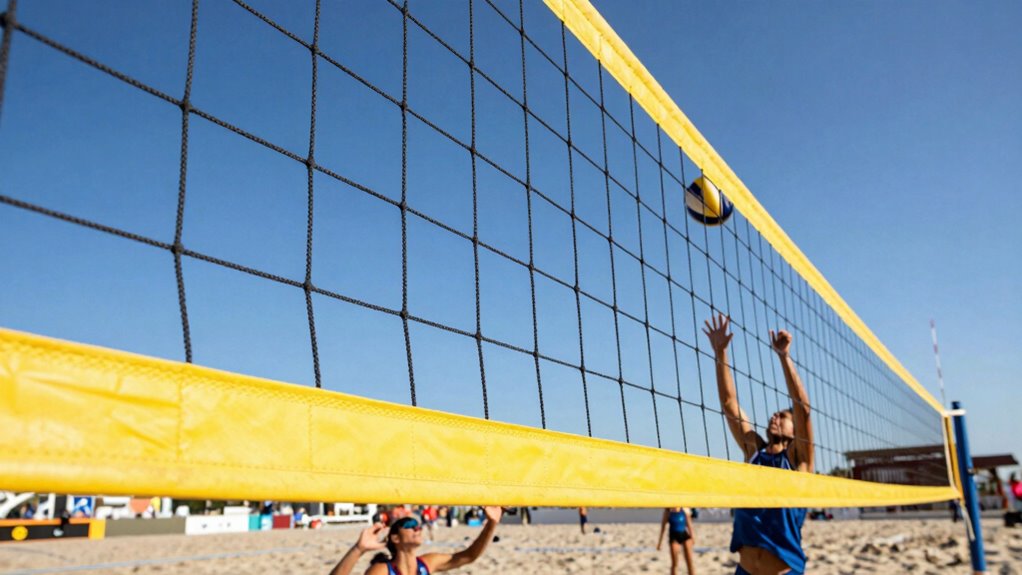
When the net becomes stiffer, it changes how the ball bounces off it, often making rallies last longer. You’ll notice the ball rebounds differently, affecting your timing and shot choices. Understanding these changes helps you adapt your play and keep rallies going.
Increased Net Stiffness
As net tension increases, the net becomes stiffer, which directly affects how the ball responds upon contact. A stiffer net resists deformation, leading to a more consistent bounce and longer rallies. The net material plays a role, as stronger, more elastic fibers maintain tension better, enhancing stiffness. Net color doesn’t impact stiffness but can influence visibility and player focus. Higher net stiffness results in:
- Reduced ball sagging through the net
- More predictable ball rebounds
- Longer exchanges due to less ball loss
- Increased difficulty in net surface deformation
- Improved tension retention over time
Altered Ball Rebound
Higher net tension directly influences how the ball rebounds during play, often resulting in a more predictable and consistent bounce. When the net’s elasticity is increased, it absorbs less energy upon impact, causing the ball to rebound with greater force. This altered ball rebound can extend rallies by making the ball’s trajectory more reliable, reducing unexpected drops or unpredictable bounces. Conversely, a less tense net absorbs more energy, dampening the ball’s rebound and potentially shortening rallies. By adjusting net tension, you change the net’s elastic properties, directly impacting how the ball responds after contact. This control over ball rebound makes rallies longer and more engaging, as players can anticipate ball behavior more accurately and adjust their plays accordingly.
Extended Rally Durations
Adjusting net tension directly impacts how long rallies last by influencing the ball’s bounce. When the net is firmer, it creates a more consistent and controlled bounce, allowing players to anticipate ball reactions better. A less tense net absorbs more impact, resulting in a softer rebound that can extend rally duration. This variation in net firmness affects how the ball interacts during play, making rallies longer or shorter depending on tension levels.
- Firmer nets produce a predictable ball bounce, encouraging longer rallies
- Softer nets dampen the bounce, leading to shorter exchanges
- Adjusting tension can fine-tune rally length for different skill levels
- Increased net tension often results in more aggressive, extended rallies
- Proper net tension optimizes ball bounce for a balanced game
Common Mistakes When Tuning Your Volleyball Net and How to Fix Them
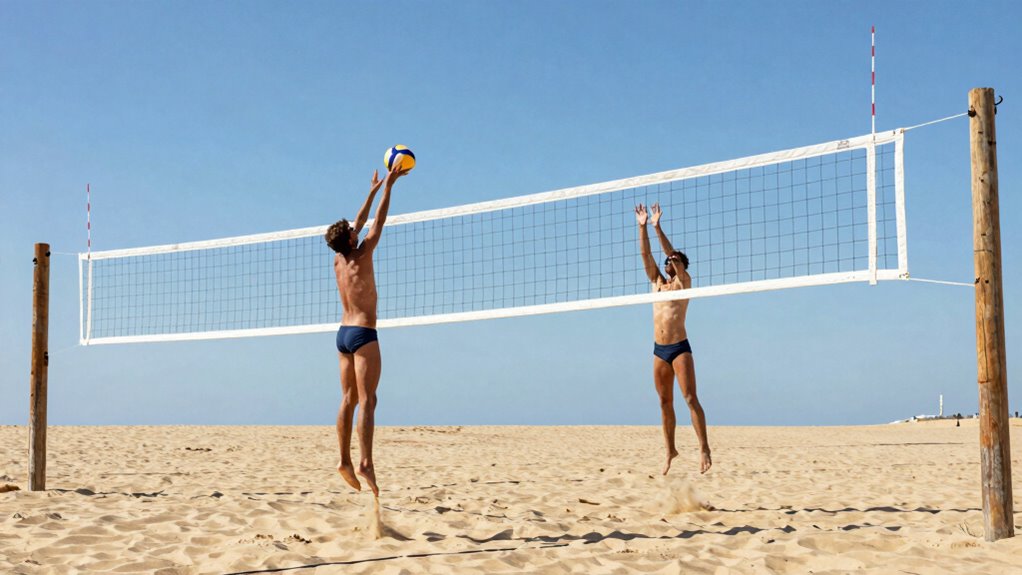
One common mistake when tuning your volleyball net is not checking the proper height before tightening the cables. If you skip this step, you risk ending up with too much net slack or an overly tight net, which can affect gameplay. Use a tension gauge to ensure the net is at the correct tension, not just visually inspecting it. Relying solely on visual cues can lead to inconsistent tension, so a tension gauge provides precise measurements. Over-tightening can cause the net to be too stiff, reducing playability, while too little tension results in excessive slack, making rallies shorter. Always verify the net height first, then adjust the tension carefully, checking with the gauge to maintain ideal tension and consistent net height.
How to Adjust Volleyball Net Tension for Better Play
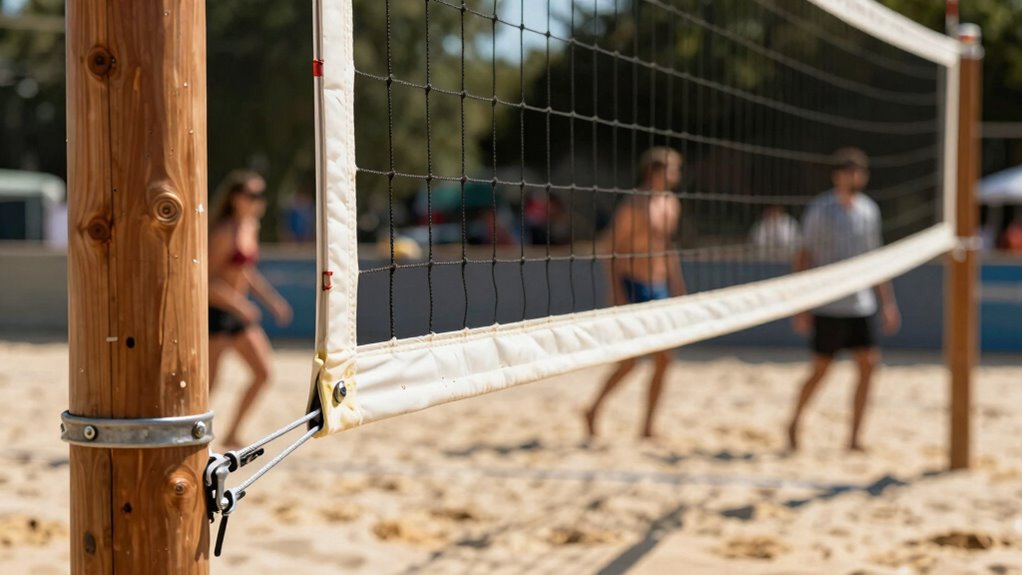
To guarantee ideal gameplay, you need to set your volleyball net tension correctly. First, check the net material to ensure it’s in good condition, as worn or frayed nets won’t hold tension properly. Use tension tools like a tension meter or specialized ratchets to measure and adjust the net’s tightness accurately. Keep these tips in mind:
- Attach tension tools securely to the net’s anchor points
- Gradually tighten or loosen using a ratchet or wrench
- Aim for uniform tension across the entire net
- Avoid over-tightening, which can damage the net material
- Check tension periodically during play or after weather changes
Proper tension improves ball control and rally length, making your beach volleyball matches more enjoyable and competitive.
What’s the Right Net Tension for Your Skill Level?
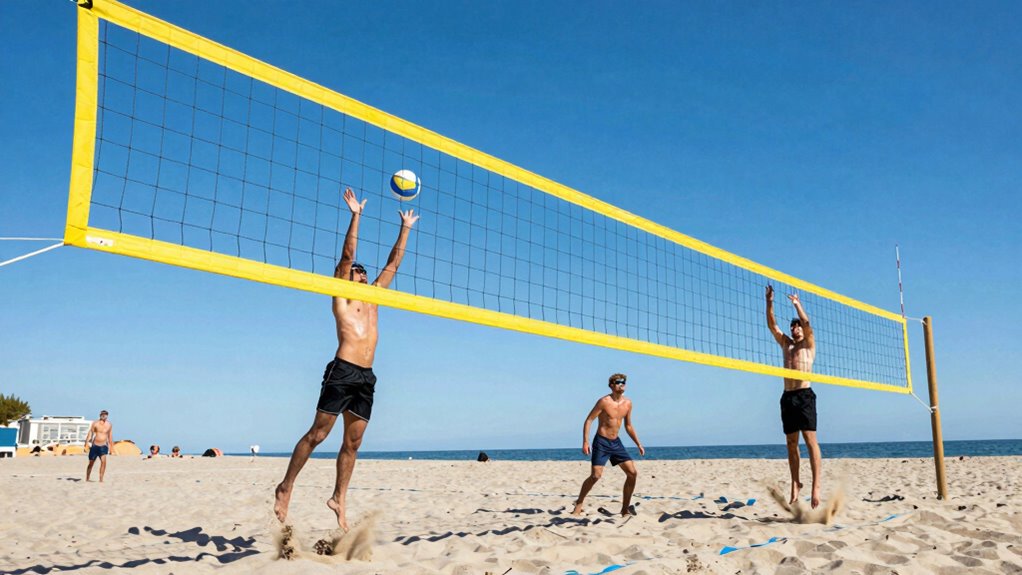
Finding the right net tension depends on your skill level, whether you’re just starting out or playing at a higher level. Beginners should keep the net slightly looser to make rallying easier, while advanced players prefer a tighter net for better control. Adjusting tension appropriately can improve your game and guarantee consistent play.
Adjusting Tension for Beginners
As a beginner, getting the net tension right can feel tricky, but it’s essential for developing proper technique and enjoying the game. Start with a moderate tension—your net should have some net slackness but not sagging. Use tension tools like a tension gauge or a simple ruler to check consistency. Adjust the tension by tightening or loosening the tension cords or clips, ensuring the net remains firm but not overly tight. Keep these tips in mind:
- Maintain a slight net slackness to allow for better ball control
- Use tension tools for accurate measurement
- Focus on even tension across the entire net
- Avoid overtightening, which can make rallies harder
- Regularly recheck tension before each game session
Proper tension ensures a balanced game and helps you improve faster.
Advanced Tension Techniques
Refining net tension beyond the basics involves tailoring it to your specific skill level and playing style. For advanced players, precise string tension and cable tightening are key to optimizing rally length. Higher tension results in a tighter net, which can improve control and consistency, especially during powerful spikes. Use a tension gauge to measure string tension accurately, ensuring it matches your preferred feel. When adjusting, focus on cable tightening to achieve uniform tension across the net’s length, avoiding sagging or unevenness. Too tight, and rallies might become harder; too loose, and it won’t sustain longer volleys. Fine-tuning these elements allows you to customize the net’s responsiveness, giving you better control and prolonging rallies for a more competitive game.
Troubleshooting Tension Problems to Keep Rallies Going

When tension in your beach volleyball net is too loose or too tight, it can disrupt rallies and frustrate players. To troubleshoot tension problems, check for excessive net slack or overly tight sections. Use tension tools to adjust the net height and tension evenly, preventing uneven slack. Here are some tips:
- Regularly inspect for net slack and tighten as needed
- Use tension tools for precise adjustments
- Avoid over-tightening, which can cause damage
- Ensure tension is consistent across the entire net
- Recheck tension after each game or weather change
Proper tension maintains a fair, playable net, making rallies longer and more enjoyable. Staying attentive to net slack and using the right tension tools helps you quickly address tension issues, keeping the game smooth.
Frequently Asked Questions
How Often Should I Check and Adjust Net Tension During Play?
You should check and adjust net tension regularly during play, ideally every 15 to 20 minutes. This helps with net tension maintenance and ensures consistent equipment calibration. Keep an eye on the net’s height and sag, making small adjustments as needed. Frequent checks prevent the net from loosening or tightening too much, which can affect gameplay. Staying attentive to tension helps prolong rallies and keeps the game fair.
Does Net Tension Differ Between Outdoor and Indoor Volleyball Courts?
Yes, net tension can differ between outdoor and indoor courts because of factors like net material and weather conditions. Outdoor nets often face wind and humidity, which affect tension consistency, so you may need to check and adjust more frequently. Indoor nets, with stable conditions, usually maintain tension longer. Always verify your net material suits the environment for suitable tension and consistent play.
What Tools Are Best for Measuring Net Tension Accurately?
Oh, the glamorous world of tension measurement—who knew calibrating a net could be so thrilling? You’ll want a reliable tension gauge or a digital force meter for precise net calibration. These tools provide accurate tension measurement, ensuring your net isn’t too slack or tight. Trust me, investing in quality equipment guarantees longer rallies and keeps your game at peak performance, all while elevating your status as a volleyball virtuoso.
Can Improper Net Tension Cause Injuries or Equipment Damage?
Improper net tension can definitely cause injuries or equipment damage. When the net isn’t tight enough, it may sag, leading to net slippage during play, which increases the risk of players tripping or colliding. Excessive tension can stress the net and its supports, causing damage over time. Maintaining proper tension prevents sagging and slippage, ensuring safer, more durable equipment and reducing injury risks during intense rallies.
How Does Net Tension Influence Referee Calls and Game Fairness?
Think of the net as the referee’s silent judge; proper tension guarantees fairness. When tension is consistent, net sag stays minimal, and calls become clearer, reducing disputes. If the net sags too much, it can cause confusion, leading to missed or incorrect calls. Maintaining proper tension keeps gameplay fair and smooth, making it easier for referees to judge net contact accurately and uphold the integrity of every rally.
Conclusion
By mastering net tension, you can extend rallies and improve your overall game. Imagine you’re at a tournament, and a simple tweak in tension allows you to execute that perfect dink or spike, keeping the ball in play longer. Just like a player who adjusted the net and suddenly saw a surge in successful rallies, you too can fine-tune your net to create more exciting, competitive matches. Small changes make a big difference—start experimenting today!