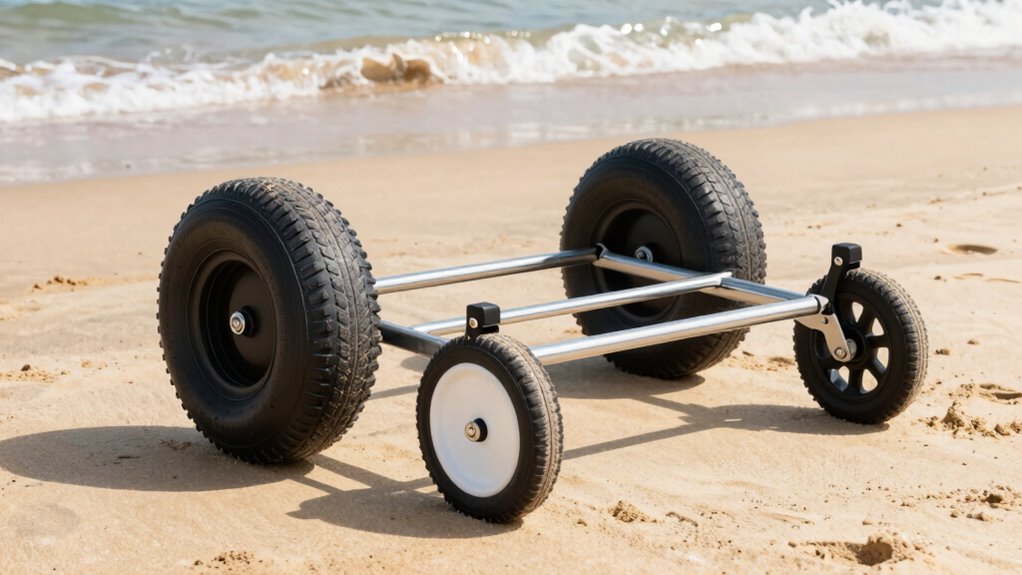

For sandy beaches, balloon tires generally move better because their larger diameter floats over loose sand and absorbs shocks more effectively. Hard wheels are more durable on packed or rocky surfaces but tend to sink into soft, deep sand, making them harder to push. The choice depends on your terrain — if you’re dealing with soft sand often, balloon tires win. To discover which option suits your beach adventures best, keep exploring the details below.
Key Takeaways
- Balloon tires provide better flotation and smoother movement over loose, soft sand compared to hard wheels.
- Hard wheels perform well on packed or rocky surfaces but sink more in soft, wet sand.
- Larger diameter balloon tires distribute weight more effectively, reducing sinking and aiding mobility on sandy terrain.
- Proper tire inflation enhances traction and shock absorption, improving overall movement over sand.
- For sandy beaches, balloon tires generally move more easily and efficiently than hard wheels.
How to Choose the Best Kayak Cart for Sandy Beaches
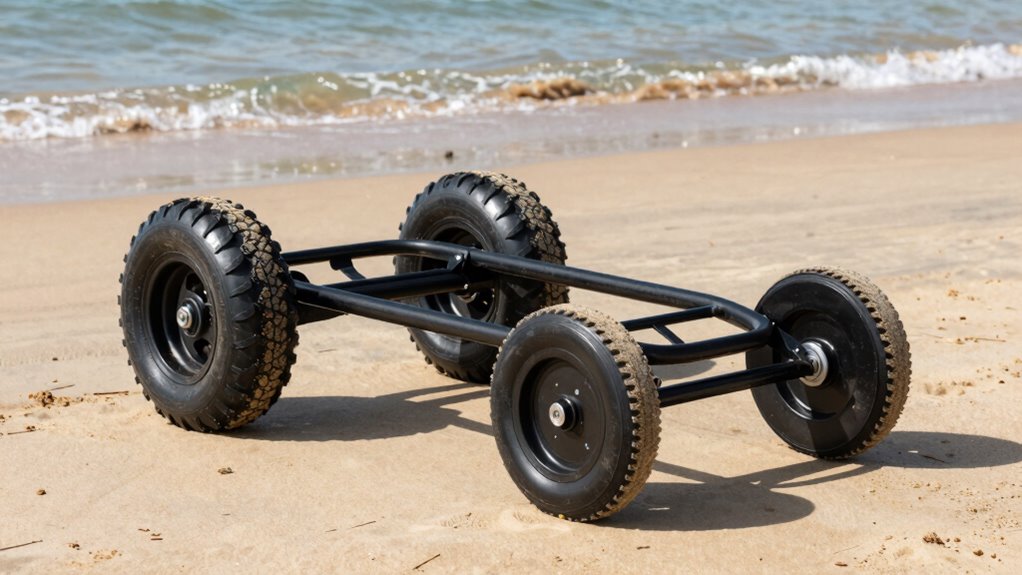
When selecting a kayak cart for sandy beaches, it’s vital to take into account how well it handles loose, uneven surfaces. A good cart makes transporting your kayak easier, especially when considering kayak storage options and accessing paddle accessories. Look for a cart with sturdy, wide wheels designed for sand, such as balloon tires or large hard wheels, which distribute weight and prevent sinking. Make sure the frame is durable enough to support your kayak’s weight and resistant to corrosion from saltwater. Easy maneuverability is key, so choose a lightweight, adjustable cart that fits your kayak’s hull shape. By prioritizing these features, you’ll find a cart that moves smoothly over sand, simplifies transporting gear, and keeps your paddling essentials within reach.
What Factors Matter Most When Picking a Kayak Cart for the Beach
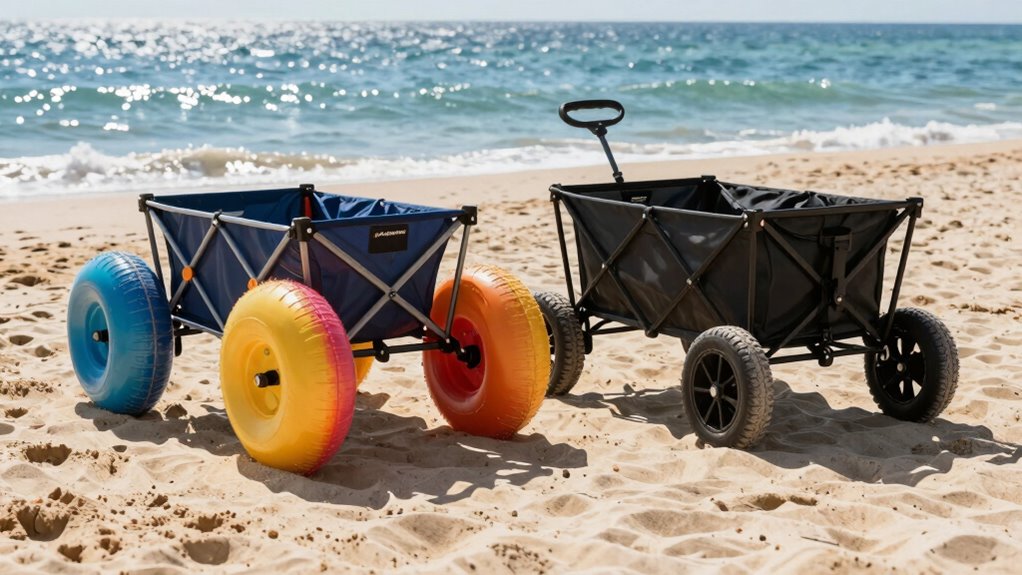
When choosing a kayak cart for the beach, you should focus on tire durability and grip to handle sandy terrain confidently. Ease of maneuverability is essential for transporting your kayak smoothly, especially over uneven surfaces. Additionally, consider the cart’s weight and how easily it stores, so it doesn’t become a hassle after your trip.
Tire Durability and Grip
Choosing the right kayak cart for the beach hinges considerably on tire durability and grip, as these factors directly affect how well the cart handles sandy terrain. Durable tires resist tire punctures, reducing the risk of breakdowns when steering through rough sand. Good grip prevents slippage, especially on loose or wet surfaces. When evaluating options, consider these key aspects:
- Tire Material: Rubber or foam tires tend to be more resistant to punctures and provide reliable grip.
- Tread Pattern: Deep treads improve traction and minimize grip slippage on uneven surfaces.
- Tire Size: Larger tires roll more smoothly over sand, reducing strain and maintaining consistent grip.
Prioritizing these factors ensures your cart moves efficiently, avoiding hassles and keeping your kayak secure.
Ease of Maneuverability
Ease of maneuverability is essential for a kayak cart on the beach because it determines how easily you can transport your kayak across shifting sands. Factors like tire inflation and wheel size substantially impact this. Properly inflated tires reduce resistance, making pushing less tiring. Larger wheels roll over uneven surfaces more smoothly, enhancing control. Here’s a quick comparison:
| Feature | Balloon Tires | Hard Wheels |
|---|---|---|
| Tire Inflation | Adjustable, can be optimized for sand | Fixed, less adaptable |
| Wheel Size | Larger for better sand traversal | Smaller, less effective on sand |
| Maneuverability | Easier with proper inflation & size | Less maneuverable on loose sand |
Choosing the right combination improves your ability to steer and control your kayak effortlessly.
Cart Weight and Storage
Selecting a kayak cart for the beach means paying close attention to its weight and how it fits into your storage options. A lighter cart is easier to carry and maneuver, especially over soft sand. Consider these key factors:
- Cart weight: A lightweight cart reduces fatigue during transport.
- Storage capacity: Ensure it can hold your kayak and gear securely.
- Foldability or compact design: A cart that folds or compresses easily saves space in your vehicle or storage area.
Choosing a cart with an ideal balance between weight and storage capacity helps streamline your beach trips. If it’s too heavy, you’ll struggle with transport; if it lacks enough capacity, you’ll need extra gear. Focus on these aspects to find the best fit for your needs.
Which Moves Better on Sand: Balloon Tires or Hard Wheels?

When it comes to moving your kayak cart across sandy surfaces, balloon tires generally outperform hard wheels. Their larger wheel size helps distribute weight more evenly, reducing sinkage and making it easier to glide over loose sand. Proper tire inflation is essential; overinflated tires can become rigid, decreasing their ability to absorb shocks and navigate soft terrain. Conversely, underinflated balloons can improve traction but may cause instability or make maneuvering tougher. Balloon tires with the right tire inflation provide better shock absorption and floatation, allowing you to move smoothly without excessive effort. Hard wheels, with smaller diameter and less flexibility, tend to sink or get stuck in soft sand, making your trek more strenuous. For sandy terrain, prioritizing balloon tires with appropriate tire inflation is your best bet.
Hard Wheels for Kayak Carts: Benefits for Beach Use
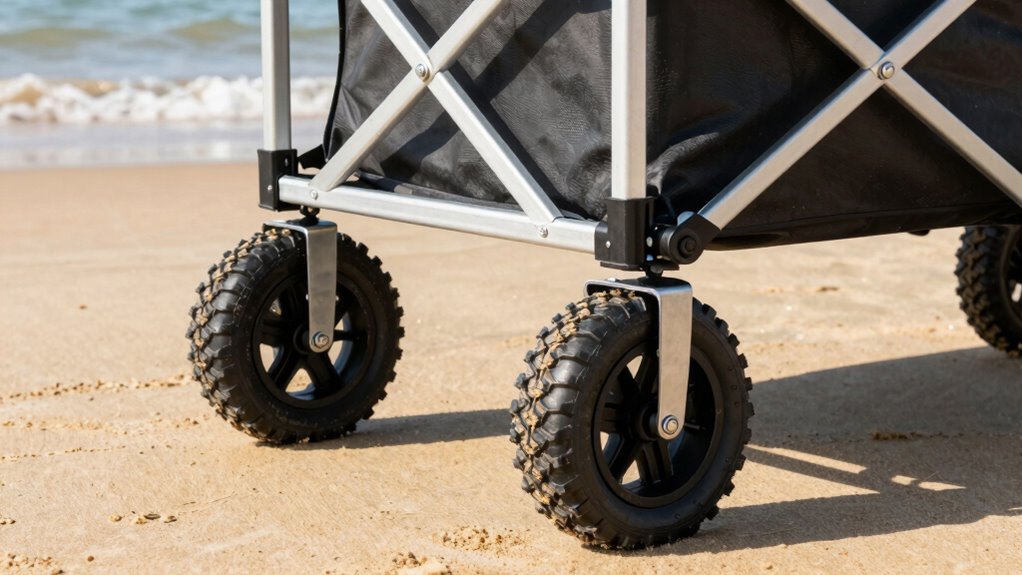
Hard wheels on kayak carts can be a practical choice for beach use, especially on firm, packed sand or dry, firm surfaces. They’re reliable for quick transport and reduce maintenance compared to balloons. Here are some benefits:
- Durability: Hard wheels withstand rough terrain and resist punctures, keeping your kayak moving smoothly.
- Efficiency: They roll easily over compact surfaces, making it faster to reach the water.
- Beach safety: Using hard wheels helps you stay alert to tide schedules and avoid unexpected high tides or soft sand patches that could slow you down.
Keep in mind, hard wheels work best on stable, dry surfaces, so always plan your route and check tide schedules to ensure safe, effective transport on the beach.
How to Use Balloon Tires Effectively on Soft Sand
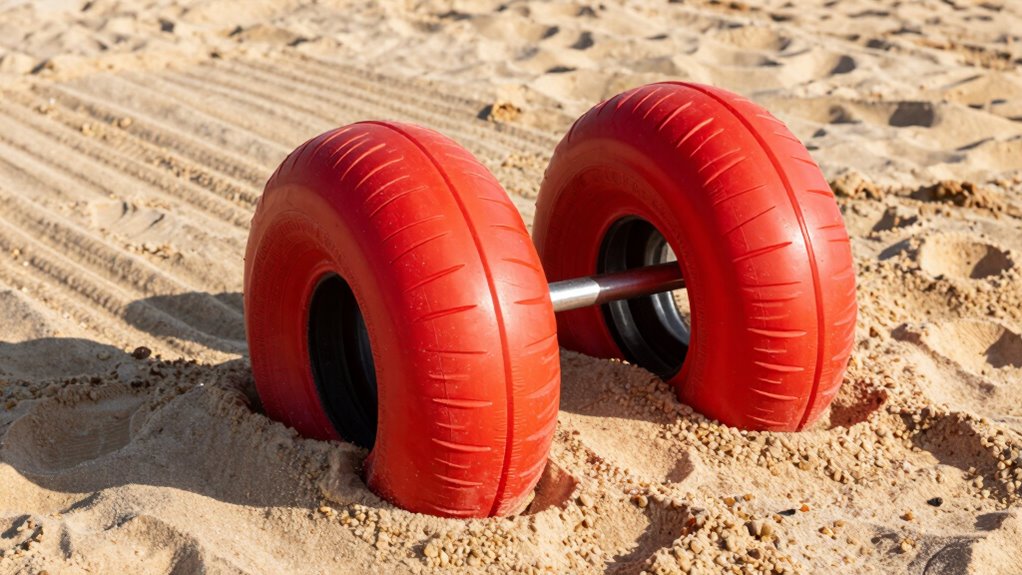
To move your kayak smoothly over soft, loose sand, balloon tires are your best option because their air-filled design provides better flotation. To maximize their effectiveness, make sure your tires are properly inflated—neither too soft nor too hard. Avoid sharp objects like shells or glass that can puncture the tires, especially when passing near beach umbrellas or areas with debris. Adjust your pace to maintain balance, especially when carrying extra gear such as sunscreen lotions or beach accessories. Use a steady, even pressure to prevent sinking or getting stuck.
| Tip | Benefit |
|---|---|
| Keep tires properly inflated | Better flotation and control |
| Avoid sharp objects | Prevent punctures |
| Distribute weight evenly | Easier movement |
| Move at a steady pace | Prevent sinking |
| Clear path of debris | Minimize puncture risk |
Tips to Maintain and Extend the Life of Your Kayak Cart on Sand
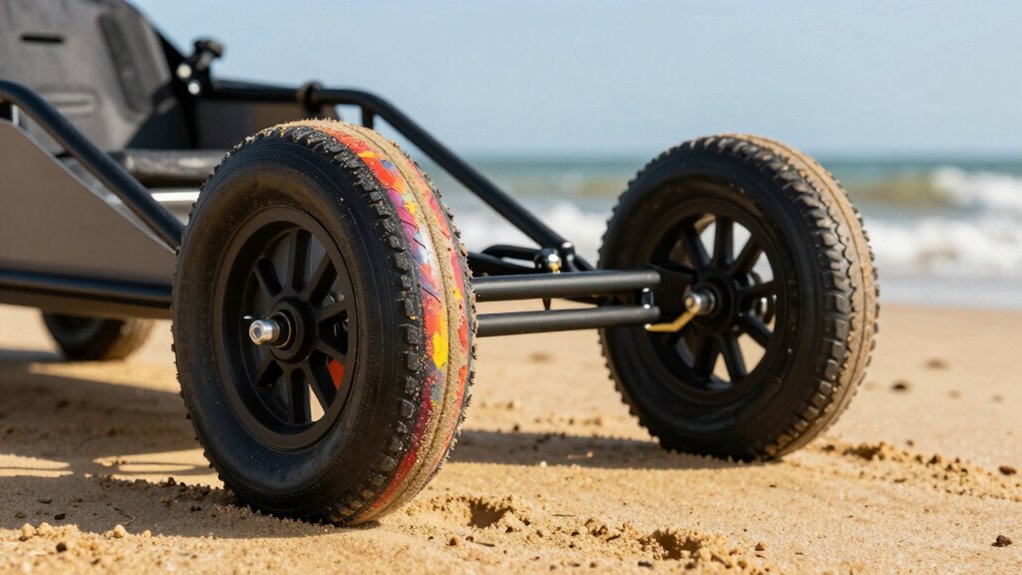
Keeping your kayak cart in good condition helps it handle soft sand more effectively and lasts longer. Regular maintenance prevents wear and keeps your gear ready for beach days. Here are three tips:
Regular maintenance extends your kayak cart’s lifespan and improves performance on soft sand.
- Clean your cart after each use to remove sand and debris, especially around wheels and axles.
- Lubricate moving parts periodically to keep them functioning smoothly, making it easier to transport your kayak and accessories like a kayak paddle or beach umbrella.
- Check for loose bolts or damage before each trip. Tighten or repair as needed to prevent breakdowns on the sand.
Testing Kayak Carts on Different Types of Beach Sand
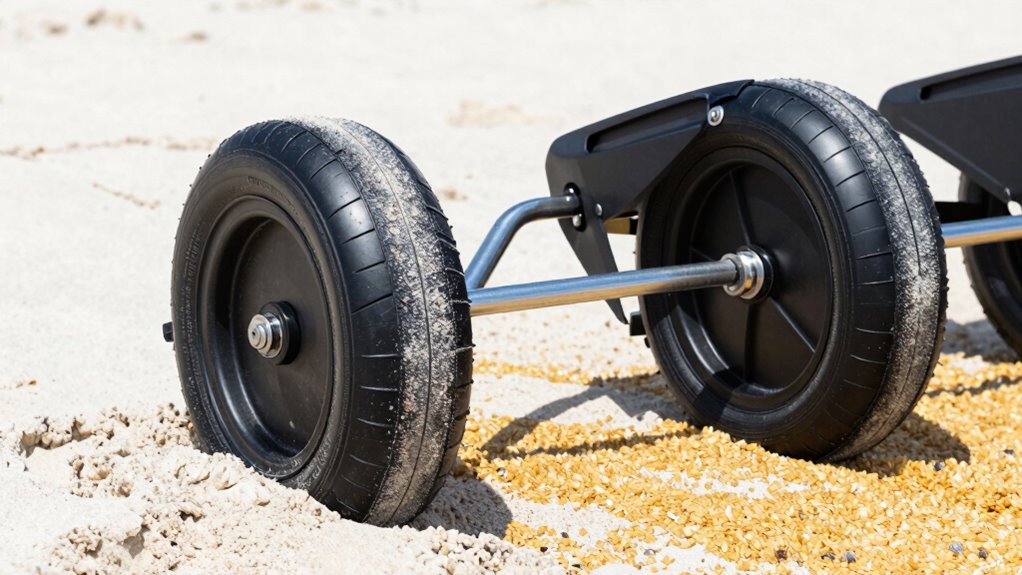
Have you ever wondered how your kayak cart performs across different beach sands? Testing your cart on various sand types reveals much about its suitability for your adventures. Firm, packed sand makes hauling fishing equipment and camping gear easier, while loose, soft sand challenges your cart’s wheels. Balloon tires typically excel on softer surfaces, providing better floatation and reducing effort. Hard wheels might struggle, sinking or slipping in deep sand. By actively testing in multiple conditions—such as dry, damp, or compacted sand—you’ll see which cart moves smoothly and which bogs down. This helps you select the best option for your beach trips, ensuring your fishing equipment and camping gear stay secure and accessible. Proper testing guarantees your kayak cart performs reliably, no matter the sand type.
How to Decide Which Kayak Cart Is Right for Your Beach Adventures

Choosing the right kayak cart depends on matching it to your beach terrain, so consider how well it handles different sand types. You’ll also want a lightweight, portable option that’s easy to carry, especially if you’re hiking a distance. finally, look for a durable cart that’s simple to maintain and withstands regular use on sandy shores.
Terrain Compatibility
Selecting the right kayak cart depends largely on the terrain you’ll encounter at the beach. For sandy beaches, balloon tires excel because they distribute weight better and handle loose sand more easily. Hard wheels are better suited for packed or rocky surfaces. To choose wisely:
- Check tire pressure—higher pressure suits smooth surfaces, while lower pressure offers better traction on soft terrain.
- Consider cart suspension—models with suspension absorb shocks, improving stability on uneven ground.
- Match tire type to terrain—balloon tires for sand and soft surfaces, hard wheels for firm, smooth paths.
Understanding these factors helps prevent frustration and assures smooth transport. Properly adjusting tire pressure and selecting a cart with appropriate suspension can make all the difference in navigating your beach adventures comfortably.
Weight and Portability
When deciding which kayak cart is best for your beach trips, weight and portability should be top considerations. The material weight of the cart greatly impacts how easy it is to carry and store. Lightweight options, often made from aluminum or composite materials, reduce fatigue and make transport effortless. Additionally, a folding design enhances portability, allowing you to collapse the cart into a compact size for quick storage in your car or gear bag. If you frequently move your kayak over long distances or have limited storage space, prioritize a lightweight cart with a simple folding mechanism. This ensures that your setup remains manageable and convenient, so you can focus on enjoying your beach adventure without unnecessary hassle.
Durability and Maintenance
Since your kayak cart will be exposed to sand, water, and salt, durability is essential for long-lasting performance. To guarantee your cart withstands the elements, consider these factors:
- Tire punctures: Balloon tires are less prone to punctures on rough terrain, while hard wheels are more vulnerable but easier to repair.
- Rust resistance: Look for carts with rust-resistant frames and hardware to prevent corrosion from saltwater exposure.
- Maintenance needs: Regularly inspect and clean your cart, especially moving parts, to keep it functioning smoothly and extend its lifespan.
Choosing a cart with durable materials and rust-resistant coatings minimizes maintenance and replacement costs, making your beach adventures hassle-free.
Comparing Durability and Performance: Balloon Tires vs. Hard Wheels
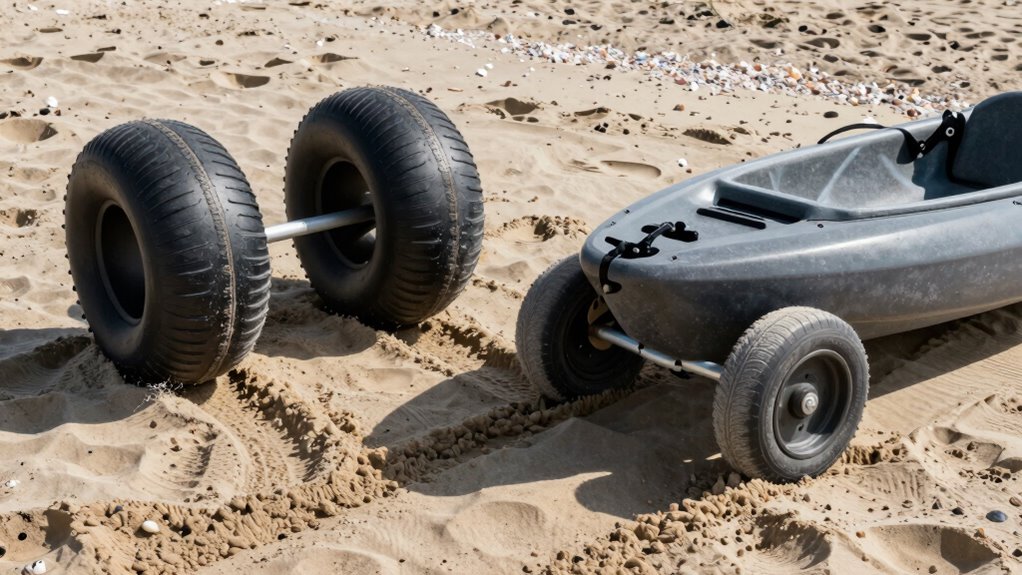
Balloon tires and hard wheels each bring distinct advantages and challenges when it comes to durability and performance on sand. Balloon tires provide better flotation, reducing the risk of tire puncture and offering smoother rides over uneven surfaces. However, they may wear faster and require more frequent maintenance. Hard wheels are durable and resistant to punctures but can sink into soft sand, decreasing efficiency. Proper wheel alignment is vital for both types to prevent uneven wear. Consider this comparison:
| Feature | Balloon Tires | Hard Wheels |
|---|---|---|
| Durability | Less resistant to tire puncture | More resistant to tire puncture |
| Performance | Better flotation on sand | Less effective in soft sand |
| Maintenance | Requires more frequent checks | Less maintenance needed |
Common Mistakes to Avoid When Using Kayak Carts on Sand
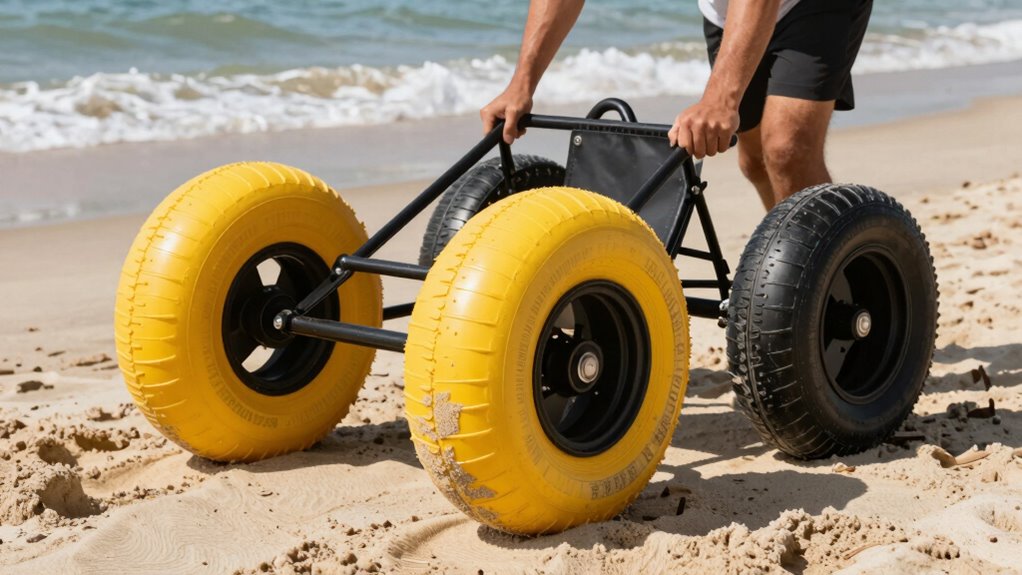
Using a kayak cart on soft sand can seem straightforward, but many paddlers make simple mistakes that hinder their effort and damage the cart. First, avoid overloading the cart, which puts unnecessary strain on the tires and frame—especially important for urban transportation where terrain varies. Second, don’t forget to secure your kayak properly; loose straps can cause instability on uneven sand. Third, resist the urge to push the cart straight through deep areas; instead, use kayak paddling techniques to navigate around soft spots. These mistakes can make moving your kayak unnecessarily difficult and wear down your cart faster. Knowing how to properly utilize your cart on sand ensures smoother transport and prolongs its lifespan, no matter the terrain or your urban adventures.
Frequently Asked Questions
How Do Tire Pressure Adjustments Affect Cart Performance on Different Sands?
Adjusting your tire pressure directly impacts sand mobility and cart performance. When you increase tire pressure, the tires become firmer, which helps the cart roll more easily on hard-packed sand. Lowering tire pressure creates a larger surface area, improving grip and stability on soft, loose sand. Find the right balance based on your sand conditions, and you’ll experience smoother, less strenuous transport of your kayak.
Are There Specific Kayak Cart Sizes Optimized for Various Boat Types?
You should choose a kayak cart size suited to your boat’s dimensions for ideal kayak storage and cart durability. Smaller carts work well for compact kayaks, while larger ones provide better support for sit-on-top or tandem kayaks. Proper sizing ensures the cart supports your boat securely, reducing strain and wear. This tailored fit enhances durability and makes transporting your kayak easier across various terrains, especially on sandy beaches.
What Safety Features Should I Look for in a Beach Kayak Cart?
Did you know that over 80% of beach accidents involve unstable equipment? When choosing a kayak cart, prioritize safety features like sturdy construction and reliable cart stability to prevent tipping. Look for features such as wide wheelbases, secure straps, and rubber-coated frames. These elements guarantee beach safety by keeping your kayak steady and easy to transport on sand, reducing the risk of accidents and making your beach outings safer and more enjoyable.
Can Balloon Tires Handle Rocky or Uneven Beach Terrains Effectively?
Balloon tires can handle rocky or uneven beach terrains better than hard wheels, offering a smoother ride. They absorb shocks, making it easier for you to transport your kayak over rough surfaces. Plus, with a beach umbrella and sunscreen storage, you stay comfortable and protected while moving across challenging terrains. Just make sure your cart’s balloon tires are properly inflated for ideal performance, and you’ll navigate rocky beaches with less effort.
How Does Weight Distribution Impact Cart Mobility on Soft Versus Firm Sand?
Your weight distribution is the secret weapon for cart mobility on sand. If you place your load unevenly, it’s like trying to walk a tightrope—your tires lose grip and your cart stalls. For soft sand, keep the weight centered to maximize tire grip and prevent sinking. On firm sand, a balanced load helps distribute pressure, making your cart glide smoothly. Proper weight balance transforms your effort into effortless movement.
Conclusion
Choosing between balloon tires and hard wheels depends on your beach adventures. If you want to conquer soft, powdery sand with ease, balloon tires are your best bet—they glide like a magic carpet. Hard wheels shine on firmer surfaces, offering durability and speed. Ultimately, pick the cart that matches your terrain, so your kayak moves smoother than a dolphin slicing through water. Get the right cart, and your beach trips will be unstoppable!