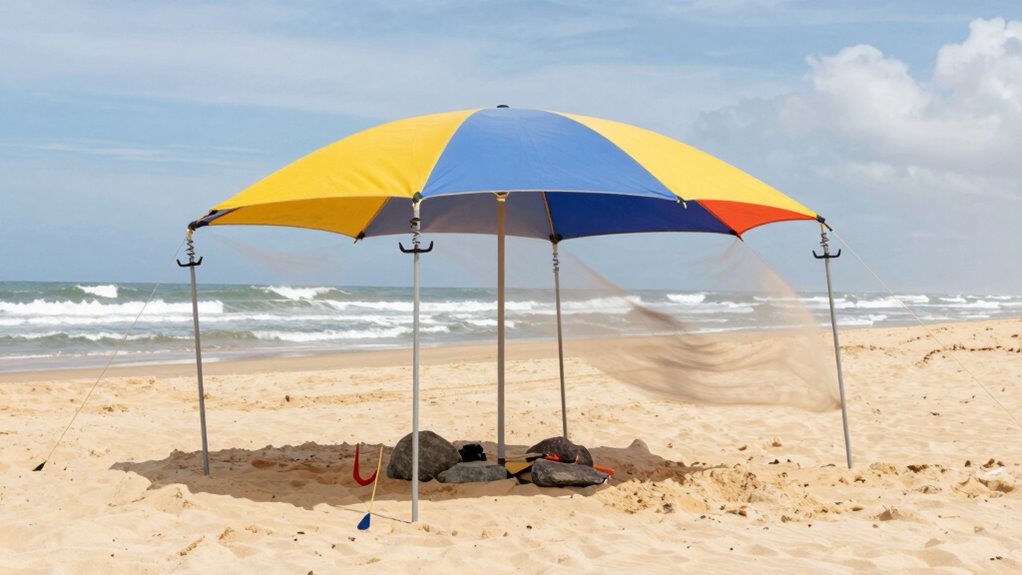

On gusty days, secure your beach sun shelter by choosing a stable spot behind natural windbreaks like dunes or rocks, and position it with the wind at your back. Use strong steel stakes driven at a 45-degree angle, and reinforce with heavy sandbags on corners and edges. Add extra weights and regularly tighten guy lines to prevent shifting. For more tips on keeping your shelter sturdy and safe, keep exploring how to master anchoring tricks.
Key Takeaways
- Select stable, level spots behind natural windbreaks like dunes or vegetation to reduce gust impact.
- Drive stakes at a 45-degree angle into firm sand for maximum hold and use multiple anchors per side.
- Reinforce stakes with sandbags or heavy objects placed over or at the shelter corners for added weight.
- Regularly check and tighten guy lines and re-anchor as wind conditions change throughout the day.
- Use durable, wind-resistant fabrics and incorporate extra weights to enhance overall shelter stability.
Why Windy Days Make Setting Up Your Beach Shelter Difficult
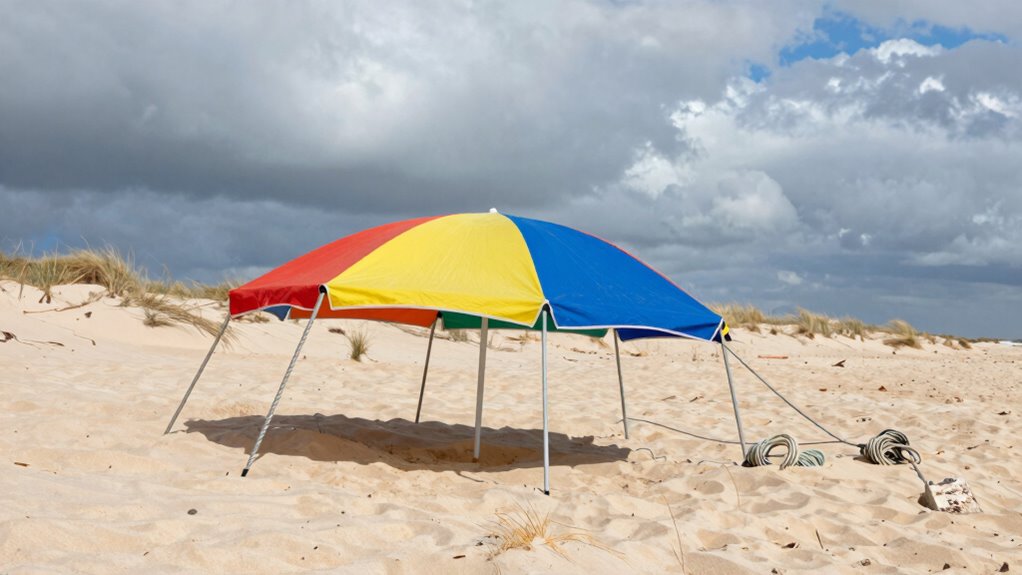
Windy days can turn setting up your beach shelter into a frustrating challenge. Strong gusts make it hard to stake down your shelter securely, often causing it to shift or topple. Plus, if you’re aiming to create a relaxing beach decor vibe, wind can undo your efforts quickly. It’s helpful to check tide charts before arriving, as high tides can increase wind exposure or flood your setup area. Windy conditions demand extra precautions, like choosing sheltered spots or using heavier anchors. Without proper planning, gusts can turn your peaceful day into a constant battle against your shelter. Being aware of wind patterns and tide timings helps you set up more effectively, giving your beach escape a better chance to stay steady despite the gusts.
How to Find the Best Spot on the Beach for Shelter Stability
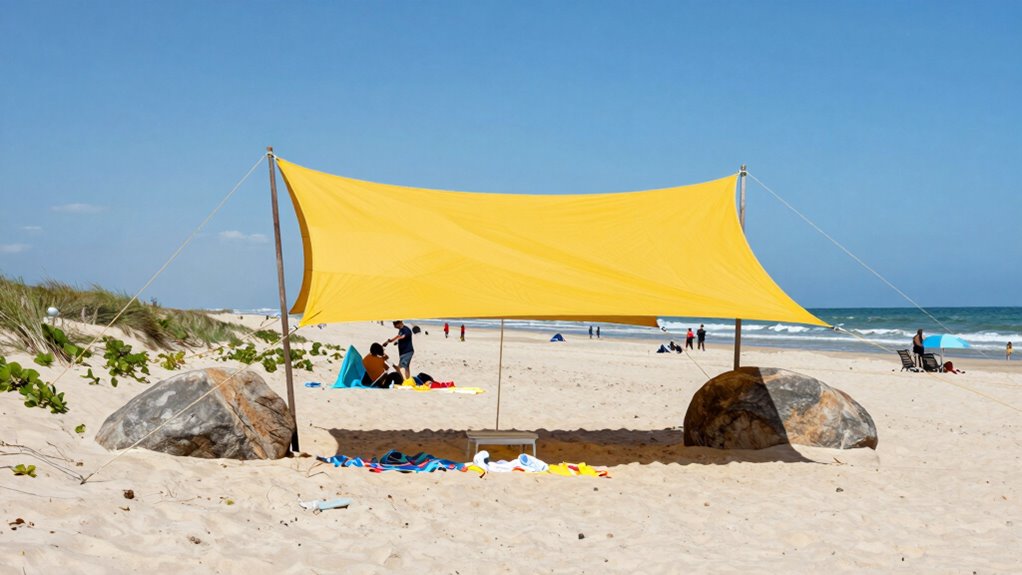
To make certain your beach shelter stays steady, you need to choose the right spot carefully. Start by observing the beach terrain; look for areas with firm, level ground free of loose sand or rocks that could shift under wind pressure. Avoid low-lying spots prone to flooding or erosion, as these can undermine your shelter’s stability. Consider how the sun exposure will affect your setup—aim for a location that provides adequate shade during peak hours but isn’t directly exposed to gusty wind corridors. Check for nearby natural windbreaks like dunes, rocks, or clusters of vegetation, which can offer additional protection. By selecting a spot with stable terrain and ideal sun exposure, you set yourself up for a more secure, comfortable shelter even on gusty days.
Which Anchors Work Best in Gusty Conditions?

When dealing with gusty conditions, choosing the right anchors is crucial for keeping your beach shelter secure. In windy patterns, some anchor materials outperform others. Heavy-duty stakes made of steel or aluminum are best for strong gusts, providing better grip and durability. Sand anchors or screw-in anchors work well if the wind is intermittent but may struggle in sustained gusts. The key is selecting anchors suited to your wind patterns and ground type. Use the following table to compare options:
| Anchor Material | Effectiveness in Gusty Conditions |
|---|---|
| Steel Stakes | Very effective, durable |
| Aluminum Stakes | Good, lightweight alternative |
| Sand Anchors | Moderate, best in light gusts |
| Screw-in Anchors | Effective if properly installed |
| Plastic Stakes | Least effective in strong gusts |
Matching anchor materials to wind patterns ensures your shelter stays put.
How to Secure Your Shelter With Stakes and Sandbags
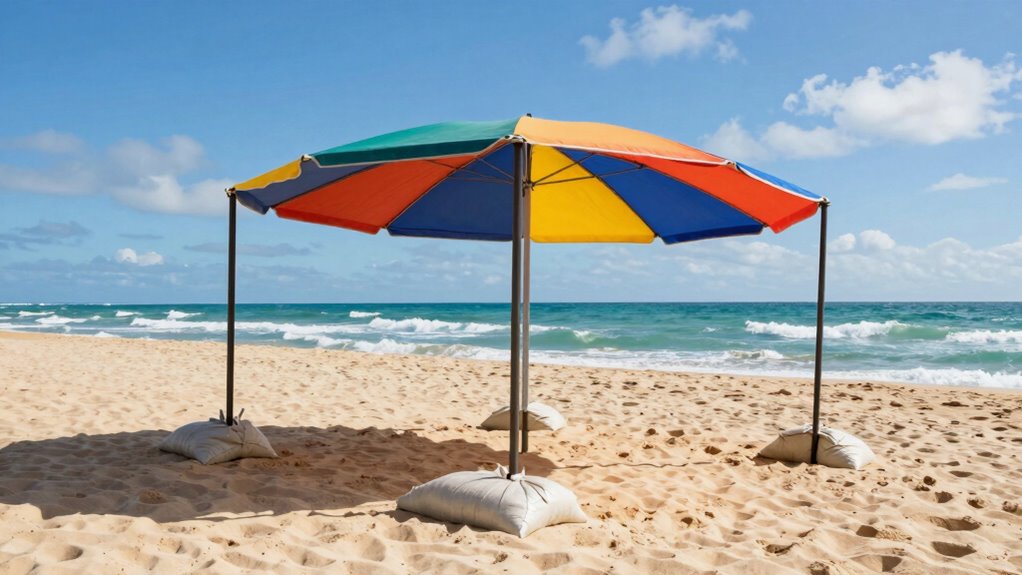
Securing your beach shelter effectively requires a combination of stakes and sandbags to withstand shifting conditions. Start by selecting solid anchor points around your shelter’s perimeter. Drive stakes deep into the sand at a 45-degree angle for maximum hold, ensuring they’re firmly embedded and not loose. Use multiple stakes along each side to distribute tension evenly, which enhances shelter stability. Sandbags are essential as added weight; place them over stakes or at the corners to prevent lifting in gusty winds. Position sandbags strategically to balance the shelter’s weight and avoid tipping. Always check that stakes are tight and sandbags are secure. Combining these methods creates a reliable anchor system that keeps your shelter steady, even during strong gusts.
Adding Extra Weights to Keep Your Shelter Stable
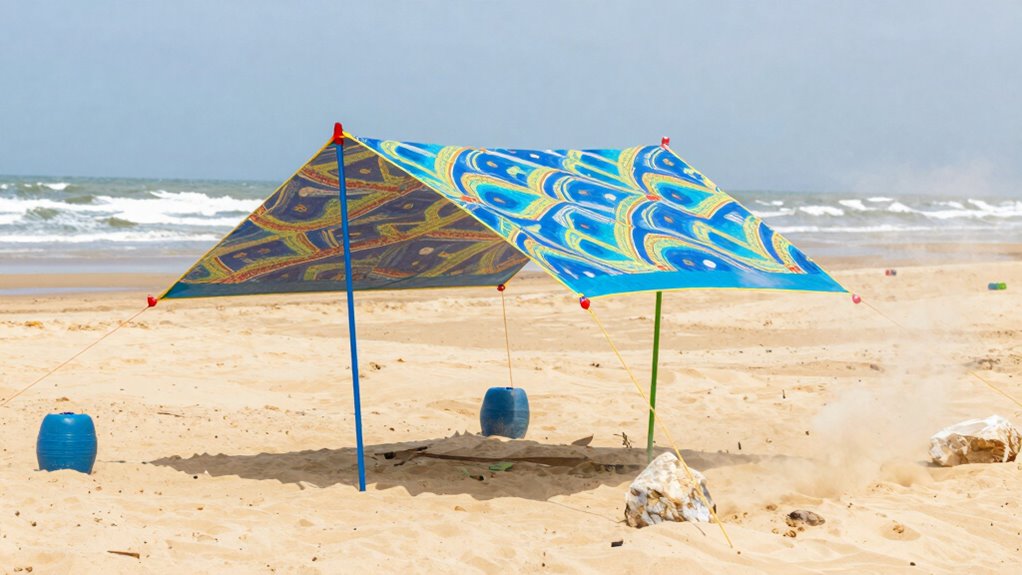
Adding extra weights can make your beach shelter much more stable, especially when wind picks up. You can use sandbags effectively by placing them on the shelter’s legs or edges, preventing movement. Alternatively, securing your shelter with heavy objects like coolers or beach chairs provides extra support when stakes alone aren’t enough.
Use Sandbags Effectively
Sandbags are a simple and effective way to keep your beach sun shelter stable, especially in windy conditions. Proper sandbag placement guarantees the shelter resists gusts and maintains balance. Focus on distributing weight evenly by placing sandbags at key points like corners and along the edges. To maximize their effectiveness, consider these tips:
- Position sandbags low and close to the shelter’s legs or frame
- Distribute weight evenly across all sides
- Use multiple sandbags for better stability
- Avoid stacking sandbags on top of each other
- Adjust placement as wind conditions change
Secure With Heavy Objects
To keep your beach sun shelter even more stable, consider using heavy objects as additional weights. Proper weight distribution ensures your shelter stays put in gusty conditions. Select anchor materials like rocks, water bottles, or even beach bags filled with sand. Place these weights strategically at the shelter’s corners and along the sides to prevent shifting. Here’s a quick guide:
| Heavy Object | Best For | Placement Tips |
|---|---|---|
| Rocks | Heavy, durable | Anchor the edges securely |
| Water bottles | Reusable, adjustable | Use as additional corner weights |
| Beach bags | Versatile, portable | Distribute evenly for balance |
Using these materials helps stabilize your shelter efficiently, especially when wind picks up.
Tips for Positioning and Arranging Your Shelter to Reduce Wind
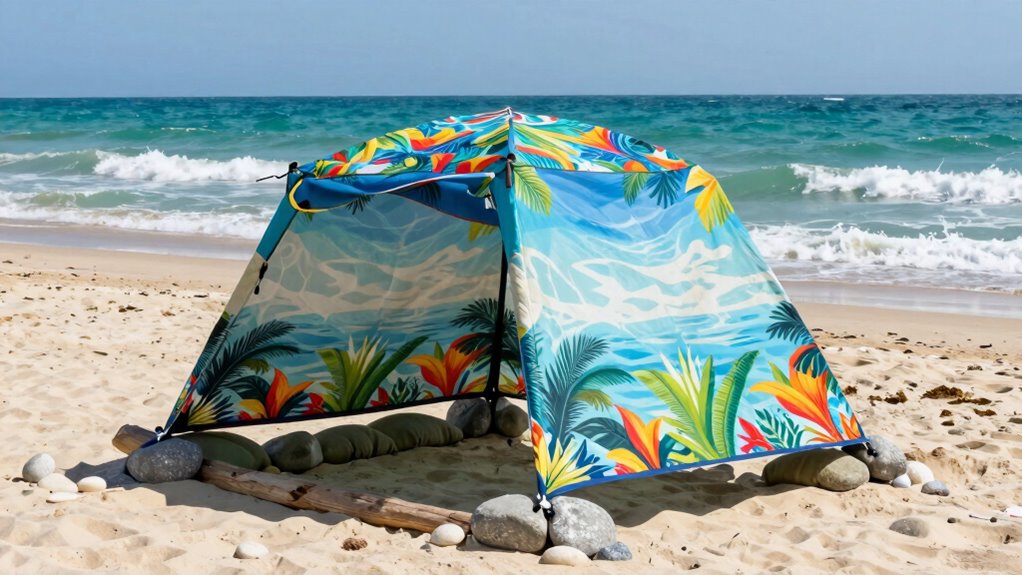
To minimize wind interference, start by choosing a location that naturally shields your shelter, like behind dunes or bushes. Use these natural barriers to block gusts and keep your setup stable. Additionally, secure your shelter with heavy weights and ensure it’s positioned in a way that faces away from prevailing winds.
Choose Wind-Resistant Locations
When selecting a location for your beach sun shelter, it’s crucial to take into account how the wind naturally flows across the area. Look for spots that offer some protection, like areas behind shoreline vegetation or nearby dunes, which can block or deflect gusts. Avoid open, flat spaces where wind hits directly. Position your shelter perpendicular to prevailing winds to minimize exposure. Consider the following:
- Place your shelter behind shoreline vegetation for natural windbreaks
- Use nearby dunes as barriers to reduce gusts
- Avoid open, flat stretches with no natural cover
- Set up near larger rocks or natural formations
- Keep away from loose sand or debris that can be blown around
Choosing wind-resistant locations ensures a more comfortable day and less hassle securing your shelter.
Use Natural Wind Barriers
Utilizing natural wind barriers is one of the most effective ways to protect your beach shelter from gusts. Beach vegetation, such as tall grasses, shrubs, or clusters of trees, can break up wind flow and reduce its force. Position your shelter near these natural barriers to minimize exposure. Look for areas shielded by dunes or dense beach vegetation, which act as buffers against strong gusts. When setting up, face the shelter away from prevailing winds and align it to maximize the protection provided by natural features. Avoid open, flat spaces where wind hits unobstructed. By strategically placing your shelter near natural wind barriers, you’ll create a more stable, comfortable environment and lessen the need for excessive anchoring or additional reinforcement.
Secure With Heavy Weights
Have you considered how heavy weights can keep your beach shelter stable against strong gusts? Proper weight distribution is key to preventing tipping or shifting. Use a variety of anchor types like sandbags, water jugs, or sturdy rocks to add stability. Position weights at each corner and along the sides to evenly distribute the force of the wind. Secure your shelter by:
- Placing heavy weights directly over anchor points
- Using multiple weights for better stability
- Ensuring weights are heavy enough for gusty conditions
- Combining weights with secure tie-downs
- Adjusting weight placement as wind conditions change
When and How to Reinforce Anchors During Your Day at the Beach
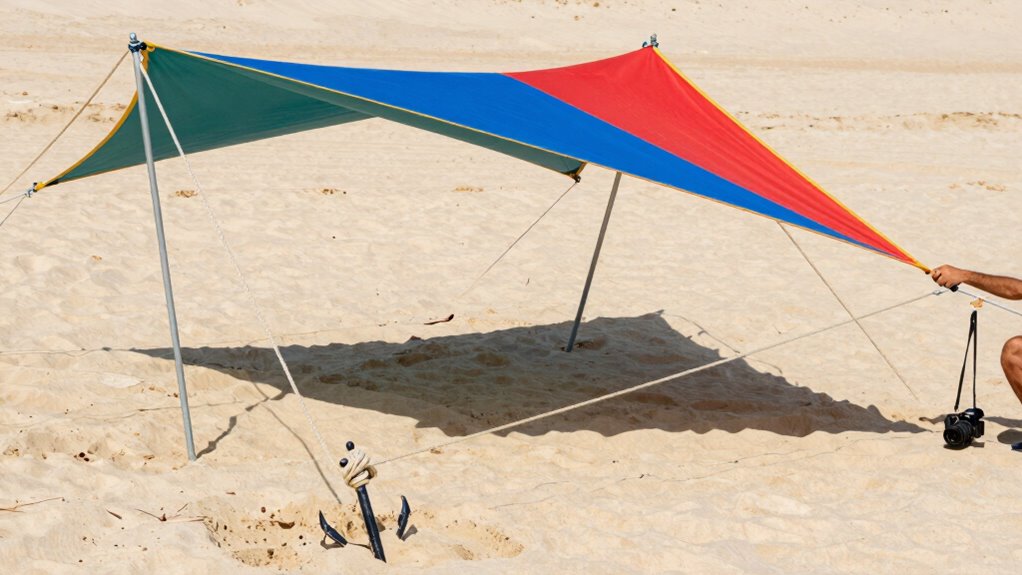
As the day progresses, strong gusts or shifting sands can loosen your anchors, making it essential to monitor and reinforce them regularly. Keep an eye on your shelter’s stability, especially if the wind impact increases. If you notice your anchors starting to shift or pull free, don’t wait—re-anchor immediately. To reinforce, add extra weight or secure the stakes deeper into the sand. Using additional guy lines or tying knots closer to the ground can also improve stability. It’s best to reinforce anchors whenever you see signs of movement or if the wind picks up suddenly. Regular checks throughout the day prevent your shelter from shifting or collapsing, ensuring you stay protected and comfortable despite gusty conditions.
Common Mistakes That Make Your Shelter Fall or Shift
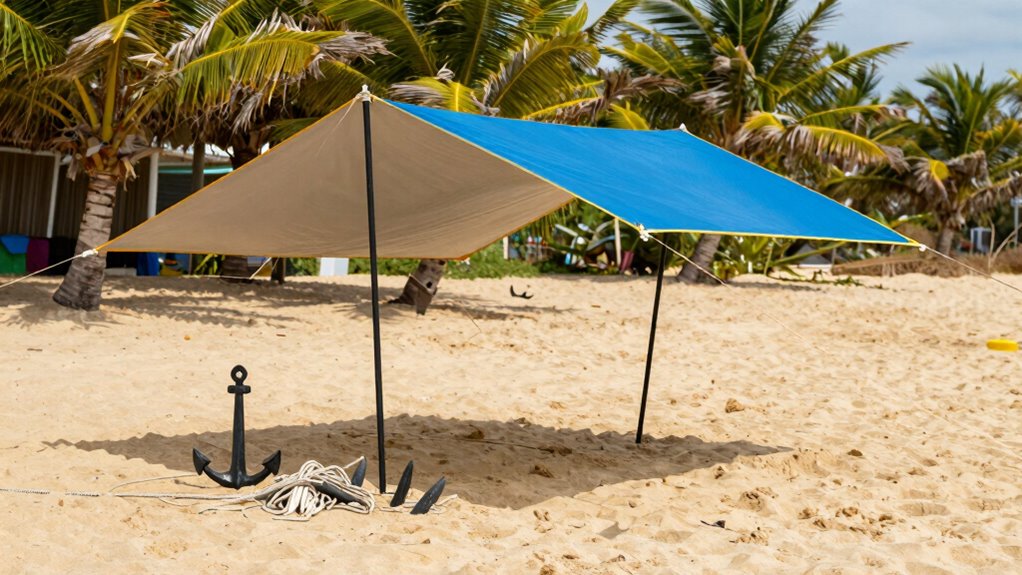
One of the most common reasons beach shelters shift or fall is improper anchoring. Poorly secured stakes or ignoring tent ventilation can lead to instability, especially in gusty conditions. Additionally, using fabric with low durability increases the risk of tears, making your shelter more vulnerable. Avoid these mistakes:
Proper anchoring and ventilation are key to preventing beach shelter collapse.
- Not checking that stakes are driven deep enough into firm ground
- Failing to tighten guy lines properly
- Overlooking proper tent ventilation, causing pressure buildup
- Using weak or worn fabric that can’t withstand wind
- Neglecting to adjust anchors as wind speed changes
Final Tips for Staying Secure and Comfortable in Windy Conditions
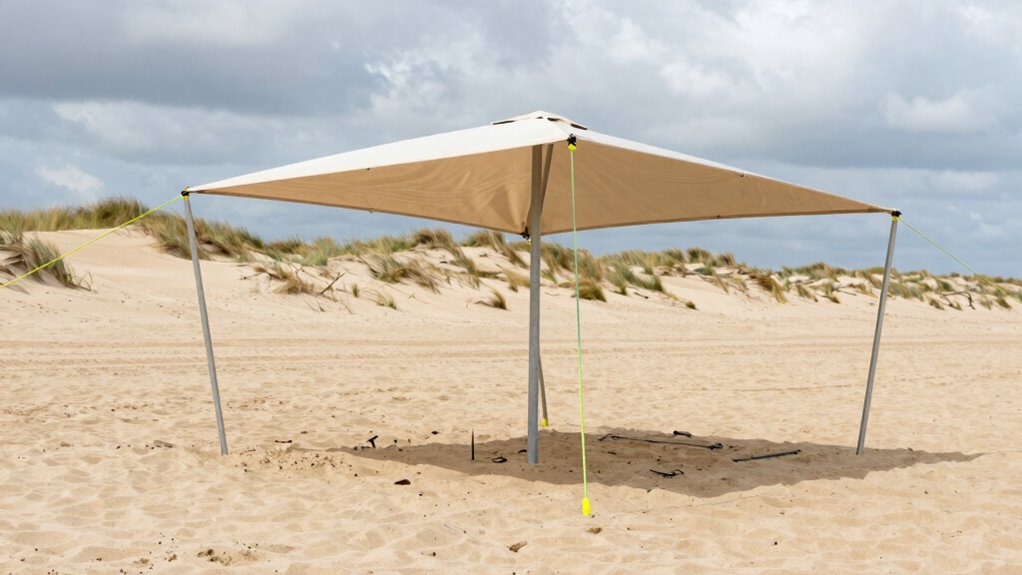
To stay secure and comfortable in windy conditions, you need to proactively adapt your shelter setup. Choose weather resistant fabrics that withstand gusts without tearing or flapping excessively. Guarantee your shelter offers ample UV protection, shielding you from harmful rays while remaining sturdy. Secure your shelter with heavy-duty stakes and consider adding extra anchors, such as sandbags or weighted bags, to prevent shifting. Position your shelter with the wind at its back, minimizing pressure on the fabric and supports. Regularly check and tighten guy lines and stakes as the wind picks up. By using durable, weather resistant materials and reinforcing anchors, you’ll maintain stability, stay protected from the sun, and enjoy your beach day comfortably—even in gusty weather.
Frequently Asked Questions
What Are the Safest Types of Anchors for Sandy Beaches?
For sandy beaches, the safest types of anchors are sand anchors made from durable materials like plastic or metal. Sand anchors, such as screw-in or spike anchors, are designed to grip the loose sand effectively. You should choose anchor materials that are sturdy and resistant to corrosion, ensuring your sun shelter stays secure even in gusty conditions. Always check the anchor’s holding power before setting up to prevent any accidents.
How Can I Tell if My Shelter Is Secured Enough?
Did you know that improper anchoring can cause shelters to shift or collapse? You can tell if your shelter is secure by checking for minimal stake movement and ensuring the stakes are deeply embedded, ideally at least 12 inches into the sand. Gently tug on each stake to test stability. If there’s noticeable movement, reposition the stakes and deepen them for better hold, especially on gusty days.
Are There Specific Weather Conditions That Make Anchoring Impossible?
Yes, certain weather conditions make anchoring impossible. If wind speeds exceed 30-40 mph, storm conditions, or if a hurricane or tornado is forecasted, it’s best to avoid setting up your shelter. Strong gusts can easily dislodge anchors, putting you and others at risk. Always check local weather updates before heading to the beach, and if storm conditions are imminent, take down your shelter safely and promptly.
Can Natural Barriers Improve Shelter Stability in Gusty Winds?
Natural barriers like dunes or rocks act like a shield, improving your shelter’s stability in gusty winds. I once set up near a rocky outcrop, and it was like anchoring behind a fortress—wildlife interference was minimal, and tidal influences didn’t shake the shelter. These features break wind flow and reduce movement, giving your setup extra support. So, choosing natural barriers can be a game-changer on windy days.
How Often Should I Check and Adjust My Anchors During the Day?
You should check and adjust your anchors regularly throughout the day, especially when wind conditions change. Keep up with anchor inspection by visually inspecting them every hour or two and during gusts. Use wind monitoring tools or simply observe the surroundings for increasing wind strength. If you notice the shelter shifting or anchors loosening, tighten or reposition them promptly to maintain stability and prevent collapse.
Conclusion
Now that you know how to anchor your beach shelter in gusty conditions, are you ready to enjoy a worry-free day by the sea? With proper spot selection, sturdy anchors, and smart positioning, you can stay protected and comfortable no matter the wind. Don’t let gusts ruin your beach day—use these tricks and keep your shelter secure. After all, isn’t a relaxing beach experience worth a little extra effort?