In shallow water zones, algae and aquatic plants work together to keep the ecosystem balanced. You’ll see algae provide a essential food source and oxygen through photosynthesis, while plants stabilize sediments and filter pollutants. Both compete for nutrients, preventing overgrowth that could harm aquatic life. Their presence promotes water clarity and supports biodiversity. To discover how these plants and algae help sustain healthy aquatic environments, continue exploring their powerful roles.

Get pool and patio gear delivered free with Prime
- Fast, free delivery on millions of items
- Prime Video, Amazon Music and more included
- Member-only deals all year
Key Takeaways
- Algae and aquatic plants provide essential primary productivity, supporting food webs in shallow water ecosystems.
- They stabilize sediments and improve water clarity through sediment filtration and root anchoring.
- Aquatic plants compete with algae for nutrients, helping prevent excessive algal blooms.
- Both algae and plants offer habitat, shelter, and breeding grounds for diverse aquatic species.
- Their balanced growth maintains ecosystem stability, resilience, and overall water quality in shallow zones.
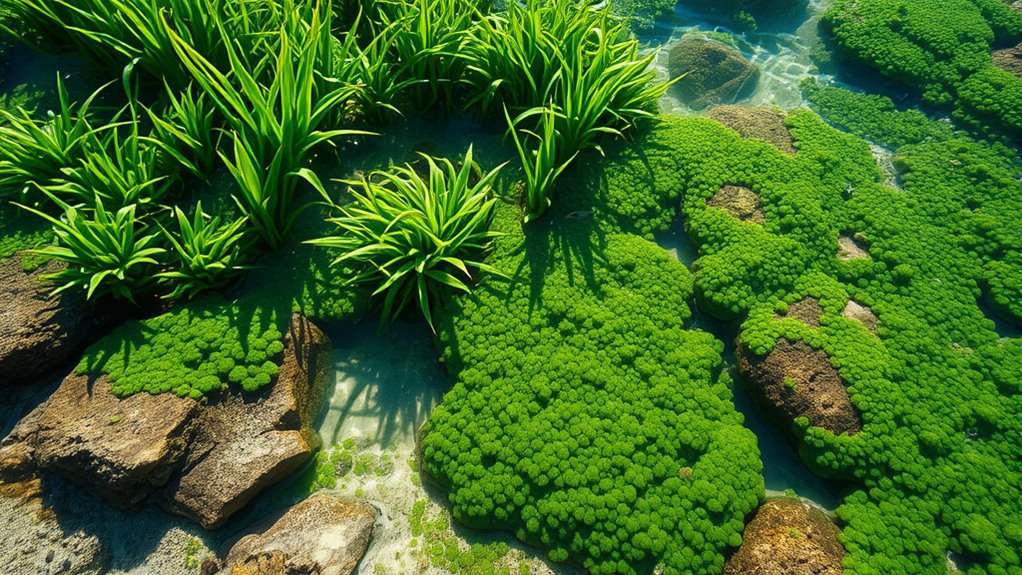
Shallow water zones are vibrant ecosystems where algae and aquatic plants thrive, playing essential roles in maintaining water quality and supporting aquatic life. As you observe these environments, you’ll notice how algae growth patterns significantly influence the health and stability of the ecosystem. Algae tend to proliferate in response to sunlight, nutrient availability, and water temperature, often forming dense mats or spreading across surfaces. These growth patterns are *crucial* because they can either sustain or threaten the balance within the habitat. When nutrients are abundant, algae may grow excessively, leading to algal blooms that reduce oxygen levels and harm aquatic organisms. Conversely, balanced algae growth supports food webs by providing energy and habitat for small invertebrates and juvenile fish.
Algae growth patterns are vital for ecosystem health and balance in shallow water zones.
You’ll find that aquatic plant biodiversity in shallow zones is equally *vital*. These plants, which include submerged, emergent, and floating species, contribute to water clarity by stabilizing sediments and filtering pollutants. Their diversity ensures resilience against environmental changes, as different plants adapt to varying conditions such as light levels, water flow, and nutrient concentrations. The presence of a wide range of aquatic plants fosters a complex habitat that supports numerous species, from tiny invertebrates to larger fish. This biodiversity also helps regulate algae growth; healthy plant populations compete with algae for nutrients, preventing overgrowth and maintaining water quality.
As you explore these zones, you’ll see how the interaction between algae and aquatic plants shapes the ecosystem. Algae provide a primary food source for many aquatic creatures, especially during early growth stages, while aquatic plants offer shelter and breeding grounds. Their coexistence creates a dynamic balance: algae quickly respond to changes in nutrient levels, sometimes forming blooms, while plants help absorb excess nutrients, keeping the system in check. Managing this balance is *significantly* important because disturbances, like pollution or invasive species, can skew algae growth patterns and diminish aquatic plant biodiversity, leading to degraded water quality and loss of habitat complexity.
Understanding these processes allows you to appreciate how each component contributes to the overall health of shallow water zones. By monitoring algae growth patterns and promoting diverse aquatic plant communities, you help *ensure* these ecosystems remain productive and resilient. Maintaining this delicate balance benefits not only the aquatic organisms but also the larger environment, including the humans who rely on clean water and healthy ecosystems for recreation, fishing, and water resources. Your awareness and actions can support sustainable management practices that preserve the vibrant life within these shallow water habitats.
As an affiliate, we earn on qualifying purchases.
Frequently Asked Questions
How Do Algae and Aquatic Plants Impact Water Oxygen Levels?
Algae oxygenation and aquatic plant respiration play vital roles in water oxygen levels. During the day, algae photosynthesize, releasing oxygen into the water, which supports aquatic life. Aquatic plants respire constantly, consuming oxygen but also producing some. However, at night, both algae and plants switch to respiration, reducing oxygen levels. Your understanding of these processes helps you appreciate how they balance oxygen availability in shallow water zones.
What Are the Best Methods for Controlling Invasive Aquatic Plants?
You can outsmart invasive aquatic plants by combining biological control and mechanical removal, which is like wielding a double-edged sword against stubborn invaders. Introduce natural predators or competitors to keep the plants in check, while mechanically removing dense infestations with rakes, harvesters, or dredging. This dual approach effectively curtails invasive spread, restores native ecosystems, and prevents these relentless invaders from taking over your water bodies entirely.
How Do Algae Blooms Affect Aquatic Ecosystems?
Algae blooms cause significant harm to aquatic ecosystems by blocking sunlight, which hampers aquatic plant growth and reduces oxygen levels, leading to fish kills. These blooms often result from nutrient runoff and warm temperatures. To prevent algae blooms, use algae prevention methods like reducing fertilizer use, controlling stormwater runoff, and promoting natural filtration. Addressing these causes helps maintain a healthy, balanced ecosystem and prevents the negative impacts of excessive algae.
Can Aquatic Plants Help Reduce Water Pollution Naturally?
Yes, aquatic plants can help reduce water pollution naturally through processes like algae filtration and aquatic plant restoration. By absorbing excess nutrients, these plants prevent harmful algae blooms, improving water clarity and quality. You can support this natural process by planting native aquatic vegetation, which stabilizes sediments and filters pollutants. This eco-friendly approach enhances ecosystem health and promotes cleaner, healthier water bodies without relying on chemical treatments.
What Are the Economic Benefits of Healthy Shallow Water Zones?
Imagine vibrant shorelines teeming with life—your local economy flourishes. Healthy shallow water zones boost the economic impact through increased tourism, fishing, and recreational activities. You enjoy picturesque scenery, attracting visitors and creating jobs. These zones also support sustainable livelihoods, encouraging local businesses to thrive. The more vibrant your water habitats, the more you benefit economically—turning natural beauty into a powerful, ongoing source of prosperity for your community.
Conclusion
You now see how algae and aquatic plants play crucial roles in shallow water zones, supporting ecosystems and maintaining water quality. By understanding their importance, you realize that a healthy environment depends on their balance. Remember, “A rising tide lifts all boats”—protecting these plants benefits everyone. So, stay mindful of their value and work to preserve these essential underwater habitats for future generations.
Fall Picks
fall essentials
As an affiliate, we earn on qualifying purchases.