
TL;DR

Get pool and patio gear delivered free with Prime
- Fast, free delivery on millions of items
- Prime Video, Amazon Music and more included
- Member-only deals all year
Rice hulls are a lightweight gardening material used in potting mixes, beds, compost and as mulch. Extension and university research cited by Grow Organic points to benefits such as improved drainage and air space from some processed hulls, but results depend on the product and growing mix. Plain hulls are not a complete fertilizer, and no single application rate suits every garden.
Rice hulls can improve drainage and air space in some container mixes and serve as a light soil cover, but their performance depends on how they were processed and what else is in the growing medium, according to a Grow Organic guide drawing on extension and horticultural research. The guide stresses that hulls are not a complete fertilizer and that one recipe or application rate cannot be assumed to work for every crop and garden.
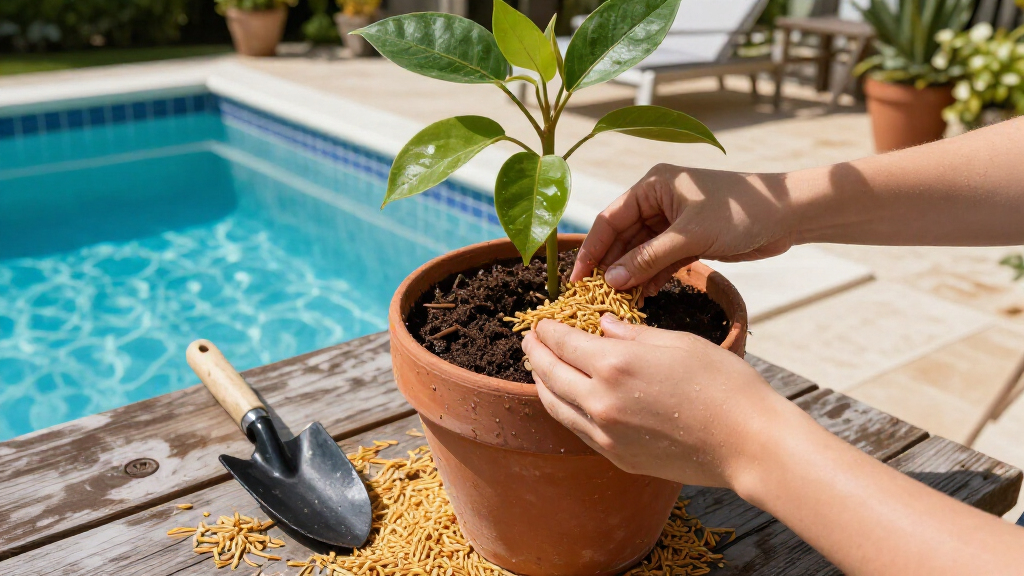
Rice hulls, also called rice husks, are the outer coverings removed from rice grains during milling. Gardeners use them in potting mixes, garden beds, compost and as mulch. In a container mix, whole parboiled hulls can create spaces that allow air and water to move. Purdue Extension reports that parboiled hulls can increase drainage and air-filled pore space in peat-based media, making them a possible perlite substitute in suitable formulations.
The guide distinguishes among raw, parboiled, composted and carbonized hulls. Fresh hulls may contain viable rice seeds, while Purdue Extension says parboiling helps eliminate viable seeds. Composted hulls break into smaller particles and can contribute water-holding capacity, according to the University of Arkansas; that role differs from whole hulls used to increase air space. Research on carbonized hulls describes drainage and porosity in the material studied, but does not establish that all products behave the same way.
For use in containers, the guide recommends treating processed hulls as one ingredient among others, such as peat, coir, bark or compost, and following product directions or a tested recipe. As a surface cover, parboiled hulls have suppressed bittercress and liverwort in USDA research on nursery containers. The result does not establish control of all weeds or remove existing weeds. Because hulls are lightweight, they can also move in wind or under irrigation.
Choosing the Right Hull for the Job
The practical difference between hull products matters because they do not all serve the same purpose. Whole hulls can add pore space, while composted hulls may contribute finer particles that hold water. Substituting one for another without considering the rest of the mix can change how the growing medium drains and holds moisture.
The guide also cautions against treating hulls as a shortcut for plant nutrition. Plain hulls can add carbon-containing organic matter as they break down, but they do not provide complete nutrition. Gardeners should base fertilizer decisions on crop needs and soil or growing-media tests rather than relying on hulls as the main nutrient source. The findings matter most to people adjusting container mixes or considering a lightweight mulch, where product type and growing conditions can affect results.
parboiled rice hulls for potting mix
As an affiliate, we earn on qualifying purchases.
As an affiliate, we earn on qualifying purchases.
How Processing Changes Rice Hulls
Rice hulls are a byproduct of milling, but the material sold for gardening may have undergone additional processing. Raw hulls are unprocessed; parboiled hulls have been treated with heat; carbonized hulls have been heated under conditions that form char. These are distinct from rice husk ash, which the guide does not recommend as a general garden amendment because the sources reviewed do not establish a universal benefit or home-garden application rate.
The cited research mainly concerns container growing media. Results in potting mixes may not transfer directly to garden beds, and performance depends on the ingredients, crop and application. For that reason, the guide does not give a universal mixing percentage. It advises gardeners to consider the goal—such as more air space or a surface cover—and consult product directions or a tested formulation.
“Parboiling helps eliminate viable rice and weed seed.”
— Purdue Extension, as summarized in the Grow Organic guide
Where the Evidence Has Limits
The supplied guide does not provide a single mixing rate, mulch depth or application schedule that applies across crops and settings. Much of the research it cites concerns container media, so outcomes in garden beds may differ. The USDA weed-suppression findings concern bittercress and liverwort in nursery containers; they do not show that rice hull mulch controls every weed or works equally well in exposed gardens.
Product chemistry and performance can also vary, particularly for carbonized hulls. The sources summarized do not establish a universal pH or benefit for every carbonized product, nor a general home-garden recommendation for rice husk ash. Gardeners should check product information and avoid assuming that results for one processed material apply to another.
Check the Product and Growing Mix
Before using hulls, gardeners should identify whether the product is raw, parboiled, composted or carbonized and match it to the intended use. For containers, follow the manufacturer’s directions or a tested recipe suited to the crop. For beds, assess the soil and the specific drainage or structure problem rather than treating hulls as a universal fix.
After application, observe how the mix drains and whether surface hulls remain in place, especially after watering or wind. Use soil or growing-media testing to guide fertilizer decisions. The cited research and guide offer use cases, but they do not establish one rate or outcome for every product and garden.
Key Questions
Do rice hulls improve drainage?
Some processed hulls can. Purdue Extension reports that parboiled hulls can increase drainage and air-filled pore space in peat-based media. The result depends on the complete mix and should not be assumed for every hull product or garden soil.
Can rice hulls replace perlite?
Parboiled hulls may serve as a perlite alternative in suitable formulations, according to the guide’s summary of Purdue Extension information. They are not a universal one-for-one substitute; use a tested mix or product directions.
Are rice hulls a fertilizer?
No. Plain rice hulls are mainly a growing-media or soil amendment. They can add carbon-containing organic matter as they break down, but they do not supply complete plant nutrition.
Can rice hulls be used as mulch?
Yes. Parboiled hulls have suppressed bittercress and liverwort in USDA research on nursery containers, but that does not guarantee control of other weeds. Hulls are light and may blow or wash away, so check them after wind or irrigation.
Should I use raw rice hulls in a potting mix?
Do not assume raw hulls perform like processed horticultural products. Fresh hulls may contain viable rice seeds; Purdue Extension says parboiling helps eliminate them. Check the product’s processing and follow its directions.
Source: rss
Fall Picks
fall essentials
As an affiliate, we earn on qualifying purchases.