TL;DR

Get pool and patio gear delivered free with Prime
- Fast, free delivery on millions of items
- Prime Video, Amazon Music and more included
- Member-only deals all year
A House Beautiful report recommends wiping up acidic spills promptly, using cleaners made for stone and checking granite’s seal with a water test. It suggests resealing at least yearly, with more frequent attention for heavily used counters, though the source does not provide independent product testing or a universal schedule for every stone.
House Beautiful has published granite-countertop care guidance that recommends prompt spill cleanup, stone-safe cleaners and periodic resealing to reduce the risk of stains and surface damage. The advice matters to homeowners because granite is porous and its protective seal can wear down with kitchen use, but the article’s specific product recommendations are not independent endorsements.
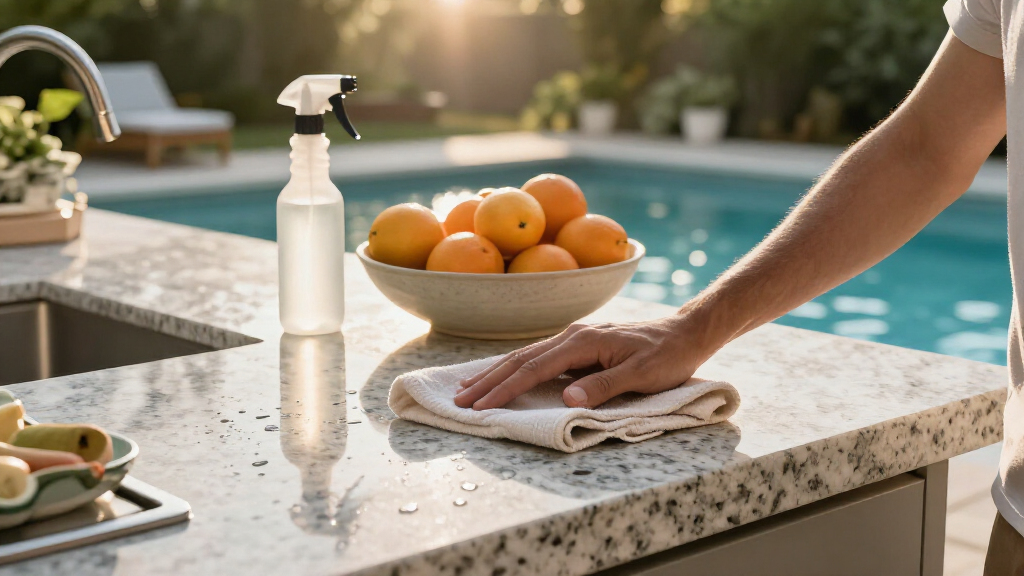
For routine care, the report advises wiping counters with a soft cloth and cleaning up vinegar, wine and coffee quickly, particularly on light-colored stone. It cautions against harsh chemicals and says glass cleaners containing ammonia may dull the surface. Instead, it recommends products labeled for granite or other stone. The source highlights Weiman cleaners, but does not compare them with competing products or cite independent testing.
For longer-term protection, the article advises resealing the countertop at least once a year, and considering six-month intervals in a heavily used kitchen. Its suggested check is to sprinkle water on the surface and wait about 15 minutes: water remaining on top indicates the seal is intact, while water that sinks in and leaves dark spots suggests resealing may be due.
The report says homeowners can hire a professional or apply a penetrating sealer themselves, following the product’s directions. Its example method calls for an even application, a five-minute wait before wiping off excess, and four to six hours of drying; a second coat is described as optional for added protection. The article also advises giving extra attention to edges, sink lips and high-use areas, and says honed finishes may need more frequent resealing than glossy ones.
Protecting Stone From Daily Wear
Care affects both the appearance and practical durability of a kitchen surface. Quick spill cleanup and suitable cleaners can help limit marks or dulling, while maintaining the seal can reduce how readily liquids are absorbed into porous stone. Heavy cookware should also be set down gently, the report says, because countertop edges and corners are more vulnerable to chips.
The guidance offers homeowners a basic maintenance routine rather than a guarantee against damage. Granite type, finish, installation and patterns of use can differ, so the water test and suggested calendar should be treated as general guidance. Checking the surface regularly may help owners recognize when protection appears to be wearing away.
As an affiliate, we earn on qualifying purchases.
How Granite Sealing Works
Granite is a natural stone with pores, and the report says countertops generally receive a protective seal before installation. That layer slows the absorption of stains but gradually wears with everyday kitchen use. Cleaning and sealing serve different purposes: cleaning removes soil and spills, while sealing is intended to reduce absorption.
House Beautiful frames care in two stages: routine cleaning and periodic protection. Its product examples are Weiman-branded, and the source material includes promotional language about those products. It provides no independent laboratory results, comparison with other sealers, or expert interview supporting the product claims.
Limits of the Care Guidance
The source does not give a publication date, identify an independent stone-care expert, or provide comparative evidence for the named products. It is also unclear whether the annual resealing schedule applies equally to every granite variety and finish; the report itself says honed stone and heavily used areas may need more frequent attention.
The water test is presented as a practical indicator, not a laboratory assessment of a countertop’s condition. Owners should check the instructions for their specific stone and sealer, and ask an installer or stone-care professional if the surface’s finish or treatment is unknown. The source does not quantify how much sealing reduces staining or how long a particular product’s protection lasts.
A Practical Countertop Check
The report sets out no upcoming study or product announcement. For homeowners following its advice, the next steps are to wipe spills promptly, choose a cleaner labeled for stone and periodically check whether water remains on the countertop or darkens it. If resealing appears necessary, follow the sealer label’s application and drying instructions, including any guidance on food-preparation surfaces.
Because stone and existing treatments vary, owners uncertain about the material or its finish can consult the installer or a qualified stone-care professional before applying a new product. The report’s annual interval is a general recommendation, not a confirmed requirement for every countertop.
Key Questions
How often should granite countertops be resealed?
House Beautiful recommends at least once a year, with six-month intervals worth considering for heavily used kitchens. The right schedule may vary with the stone, finish and use.
How can I check whether my granite needs resealing?
The report suggests sprinkling water on the surface and waiting about 15 minutes. Water that remains on top suggests the seal is intact; dark spots where water has soaked in suggest resealing may be due.
What should I use to clean granite?
The report recommends a soft cloth and a cleaner formulated for stone. It cautions that some glass cleaners contain ammonia, which may dull stone, and advises checking product labels.
Which spills should be wiped up quickly?
Wipe up acidic liquids such as vinegar, wine and coffee promptly, the report says. Light-colored stone may be especially susceptible to visible marks.
Do granite edges need special attention?
Yes. The report says edges and corners are more vulnerable to chips and may wear faster than flat surfaces. It recommends setting heavy cookware down gently and giving edges extra attention when sealing.
Source: rss
Fall Picks
fall essentials
As an affiliate, we earn on qualifying purchases.