TL;DR

Get pool and patio gear delivered free — and shop member deals
- Fast, free delivery on millions of items
- Access to Prime Big Deal Days deals on October 6–7
- Prime Video, Amazon Music and more included
A Gardening Know How report recommends October lawn care tailored to whether grass is cool-season or warm-season. Suggested tasks include aerating, repairing or overseeding cool-season lawns, applying an appropriate fall fertilizer, lightly mulching leaves and treating warm-season lawns for winter weeds during a limited window.
Gardening Know How has published an October lawn-care guide advising homeowners to match fall work to their turfgrass type, with tasks including aeration, lawn repair and weed prevention. The report says October can support root growth and repair for cool-season grasses, while warm-season grasses are slowing toward dormancy and may need attention to winter weeds.
The report identifies cool-season grasses such as fescue, bluegrass and ryegrass as actively growing through fall in many areas. It recommends aerating to create openings in compacted soil, allowing air and moisture to reach roots. A garden fork can be used for small areas; a lawn aerator is another option. The article says improved soil structure can also help drainage, though the results depend on the lawn and its soil.
For cool-season lawns with bare patches, the report recommends checking whether grubs may be responsible, loosening the surface soil, spreading a suitable grass seed and keeping the area moist as seed germinates. October may offer useful conditions in many regions, with warm soil and cooler air, but local weather and grass varieties matter. If the lawn is thin overall, the article also suggests overseeding, following the seed product’s directions and checking whether fertilizer is already included.
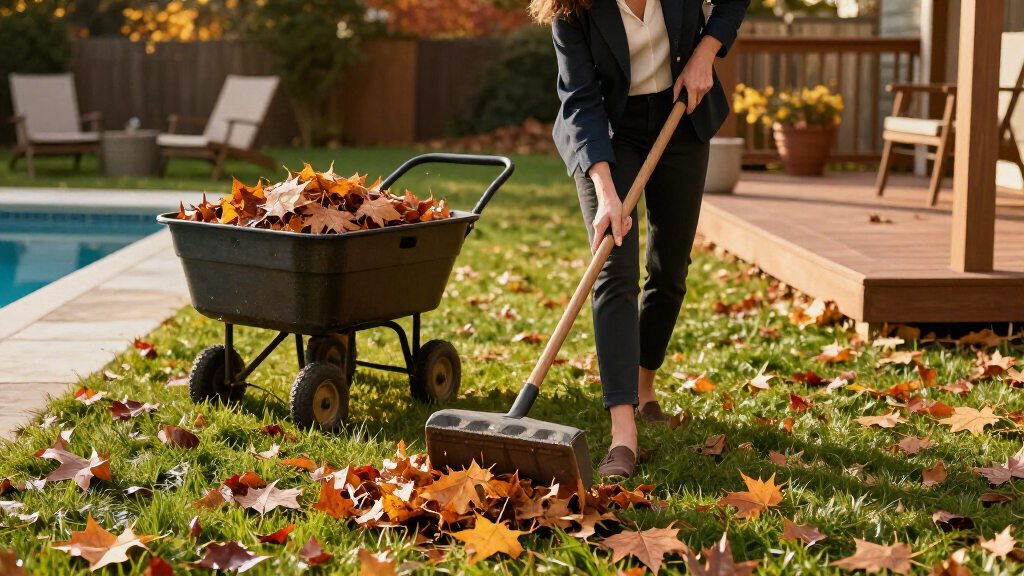
Fall fertilizer is presented specifically for cool-season grass, which can continue growing before winter dormancy. The report recommends using a product intended for fall application, following label instructions and avoiding over-application. For lawns of either grass type, it suggests mowing fallen leaves into small pieces and leaving a light layer to break down. Thick piles should be removed or spread out so they do not cover and smother grass. For warm-season lawns, it says the first half of October may be a window to apply a pre-emergent herbicide against winter weeds, subject to product directions and weather.
Fall Work Can Shape Spring Recovery
The advice matters because October is not the same lawn-care window everywhere. Cool-season turf may still be growing, making fall a time for seeding, root support and recovery from summer stress. Warm-season turf, by contrast, is slowing down, so the report emphasizes a different concern: preventing winter weeds before the grass becomes dormant.
Following the right seasonal tasks may help lawns enter winter in better condition, but the article’s promise of a lush lawn next summer is an expectation, not a guaranteed result. Outcomes also depend on factors such as local climate, soil, shade, watering, pests and the grass variety. Matching tasks to the lawn can help homeowners avoid applying a treatment at the wrong time or using a product unsuited to their grass.
lawn aerator for cool-season grass
As an affiliate, we earn on qualifying purchases.
As an affiliate, we earn on qualifying purchases.
Grass Type Sets October Priorities
The report divides lawns into two broad categories. Cool-season grasses, including fescue, bluegrass and ryegrass, can continue growing in fall and may establish roots before winter dormancy. Warm-season grasses, including Bermuda, St. Augustine and zoysia, generally slow their growth in October as dormancy approaches. These are broad seasonal patterns; local temperatures and growing conditions can shift the calendar.
The article also frames October as a chance to address damage from summer heat, drought and activity such as foot traffic or dog play. Its five suggested tasks are aeration, repair or overseeding, fall fertilizing for cool-season lawns, light leaf mulching, and pre-emergent weed control for warm-season lawns. It says homeowners need not complete every task, and recommends checking product labels for application instructions.
“If you only do one fall lawn-care job, make it aerating your lawn.”
— Gardening Know How report
Local Conditions Affect the Advice
The report does not provide a location-specific schedule, and the right timing varies by climate, grass type and weather. It does not identify a single fertilizer or herbicide that is suitable for every lawn. Homeowners should confirm the product is labeled for their turfgrass and intended use, and follow the label’s application and safety directions.
The guide describes possible benefits of fall care but does not report measured results or guarantee a particular lawn condition next summer. It also does not establish that every bare patch is caused by the same problem; pests, soil conditions, drought and other issues may require different responses. The suggested grub check is a preliminary step, not a diagnosis.
Check Turf and Product Timing
Homeowners considering the advice should first identify whether their lawn is cool-season or warm-season grass, then inspect its condition and check local forecasts. For seeding, fertilizing and weed control, the next step is to read the product label and confirm that its timing and use fit the grass and local conditions. Any follow-up work, including watering new seed, should reflect the product directions and weather.
The report offers no later update or scheduled milestone. Results will become clearer as lawns move through winter dormancy and resume growth next season; until then, the article’s recommendations remain general seasonal guidance rather than a prediction for any individual yard.
Key Questions
What October lawn task does the report prioritize?
Gardening Know How prioritizes aeration, saying it can help air and moisture reach the soil. Whether it is the best task for a particular lawn depends on its condition and local needs.
Should every lawn be fertilized in October?
No. The report recommends fall fertilizing for cool-season grass, not as a blanket instruction for all lawns. Check the fertilizer label and whether a seed mix already includes fertilizer.
Can I leave fallen leaves on the lawn?
The report says leaves can be mowed into small pieces and left as a light layer. Thick clumps should be spread out or removed so they do not smother grass.
When should I repair bare spots?
The article says October can be suitable for seeding bare patches in many cool-season lawns, where soil remains warm enough for germination. Keep seeded soil moist as directed, and investigate possible causes such as grubs before treating the patch.
Is October weed treatment right for all grass types?
No. The report discusses a limited early-October pre-emergent treatment window for warm-season lawns. Product suitability and timing vary, so follow the label and check local conditions.
Source: rss
Halloween Picks
halloween
As an affiliate, we earn on qualifying purchases.