TL;DR

Get pool and patio gear delivered free — and shop member deals
- Fast, free delivery on millions of items
- Access to Prime Big Deal Days deals on October 6–7
- Prime Video, Amazon Music and more included
Amateur Gardening published Chris Collins’ advice on Oct. 2, 2026, for propagating herbs from cuttings, including semi-ripe shoots from thyme, sage and rosemary. The guide outlines how to prepare and root cuttings and notes that basil, coriander and parsley may also root in water; results depend on moisture, drainage and growing conditions.
Amateur Gardening published advice on October 2, 2026, explaining how gardeners can make new thyme, sage and rosemary plants from semi-ripe cuttings rather than buying additional plants. The seasonal method uses shoots with this year’s growth and a small section of older stem, and the article says suitable material is available through mid-autumn.
Gardening contributor Chris Collins recommends choosing healthy shoots that are not damaged, unusually vigorous or atypical for the plant. He favors shoots with a more horizontal growth habit and short spaces between their leaves. The cutting should be about 10 to 15 centimetres (4 to 6 inches) long, with the cut made just below a leaf node. Collins advises removing roughly one-third to one-half of the foliage before planting.
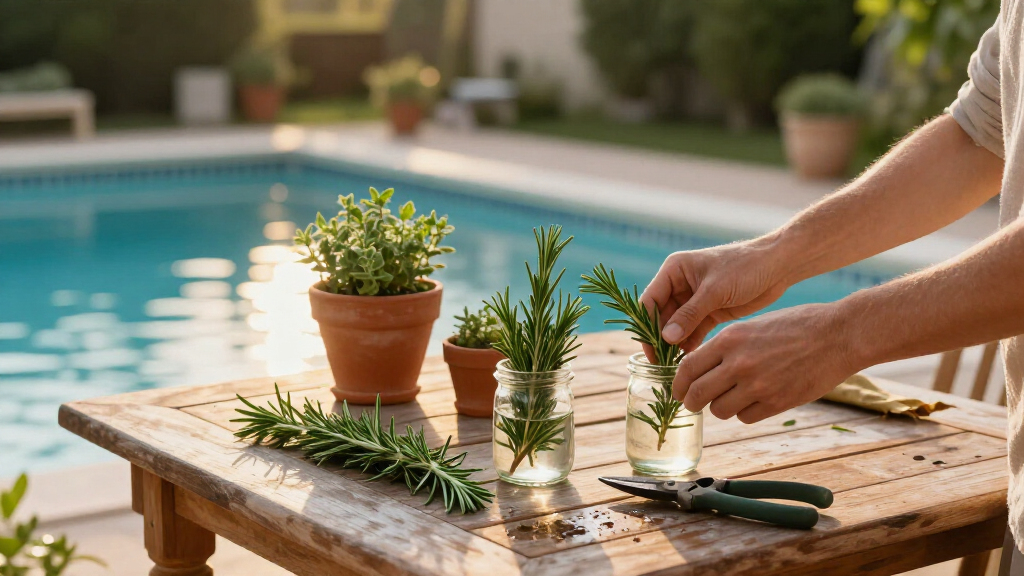
The prepared cuttings go into containers filled with a free-draining medium. Collins describes a mix of 50% peat-free potting compost and 50% silver sand, followed by watering and allowing the excess to drain. He recommends placing the containers in a greenhouse or propagator for some warmth. A clear plastic bag secured over a pot can also help maintain humidity; sticks can keep the bag from resting on the cutting. The bag should be opened from time to time to release excess moisture.
The article links failed cuttings with poor drainage or overwatering, which can cause them to rot. For plants including basil, coriander and parsley, Collins says leftover sprigs can instead be placed in water. He advises waiting a week or two for roots to form before potting those cuttings into peat-free compost. He also says they can be kept growing in water for a period if the water is changed regularly.
A Low-Cost Way to Multiply Herbs
Taking cuttings offers gardeners a way to expand an existing herb collection without purchasing another plant. It can also provide additional plants for cooking and garden use, although the guide does not quantify likely success rates, savings or how many cuttings a gardener should expect to root.
The instructions matter most for the practical details that affect rooting: selecting suitable stems, limiting foliage, and balancing moisture with drainage. A plastic bag can serve as a basic alternative to a propagator, making the method accessible to gardeners without specialized equipment. The advice is a gardening guide, not a guarantee that every cutting will take.
As an affiliate, we earn on qualifying purchases.
Seasonal Shoots and Rooting Methods
Collins describes these as semi-ripe cuttings: they come from growth made during the current year and retain a portion of the previous season’s growth at the base, called a heel. The source says this kind of material can be found on suitable herb plants until mid-autumn. It identifies thyme, sage and rosemary as the best candidates for this approach.
The article also offers a separate approach for sprigs of basil, coriander and parsley. Rather than placing these directly into the compost-and-sand mixture, it says they can be rooted in water. The methods are not presented as interchangeable for every herb, and the article gives no detailed comparison of rooting times or success rates by plant variety.
“I love growing my own herbs – they look good, smell great and add flavour to so many dishes.”
— Chris Collins, Amateur Gardening
Rooting Success Is Not Guaranteed
The article does not report a measured success rate, give a precise temperature range, or state how long semi-ripe thyme, sage and rosemary cuttings typically take to root. Results may depend on plant condition and growing conditions, but the source does not provide a quantified assessment of those factors. Its one-to-two-week estimate applies to roots forming on water-rooted sprigs of basil, coriander and parsley, not to all the semi-ripe cuttings discussed.
It is also not clear how much money an individual gardener might save, since the article gives no costs for compost, containers or other materials. The source describes a way to propagate herbs without buying extra plants, but does not claim that the process has no costs or that every cutting will grow successfully.
Monitor Moisture and Root Growth
Gardeners following the advice can place prepared cuttings in a warm, light growing space and check that the medium stays moist but not waterlogged. Those using a plastic bag should air it periodically and keep it off the foliage. The article does not specify a fixed date for checking semi-ripe cuttings or transplanting them, so readers will need to watch for root development rather than rely on a stated timetable.
For water-rooted basil, coriander and parsley, Collins advises waiting a week or two for roots and then potting the sprigs into peat-free compost, or changing the water regularly if keeping them in water. The source points readers to Garden Organic for further organic gardening advice and to Amateur Gardening for additional articles; it does not announce a follow-up test or new guidance.
Key Questions
Which herbs does the guide recommend for semi-ripe cuttings?
Thyme, sage and rosemary are named as suitable herbs for this method. The article says the relevant semi-ripe material is available until mid-autumn.
How long should a semi-ripe cutting be?
Chris Collins recommends cutting shoots to about 10 to 15 centimetres (4 to 6 inches), making the cut just below a leaf node, then removing one-third to one-half of the foliage.
Can I root herb cuttings without a propagator?
Yes. The guide suggests covering the pot with a clear plastic bag secured with an elastic band. Use sticks to keep the bag from touching the cutting, place it in a warm, light spot out of direct sunlight, and open it occasionally to release excess moisture.
Can herbs be rooted in water instead of compost?
The article says leftover sprigs of basil, coriander and parsley can be placed in water. It recommends waiting a week or two for roots before potting them into peat-free compost; changing the water regularly is advised if keeping them in water.
Why might herb cuttings fail?
Collins identifies inadequate drainage and overwatering as potential causes of rot. He advises keeping the growing medium moist but not waterlogged. The article does not provide a success rate or guarantee that every cutting will root.
Source: rss
Halloween Picks
halloween
As an affiliate, we earn on qualifying purchases.