TL;DR
Experts recommend specific pruning methods to improve tomato plant health and increase yields. This report details proven practices and ongoing debates among horticulturists.
Experts agree that proper pruning of tomato plants can lead to healthier growth and larger yields. Recent advice from horticultural specialists highlights specific pruning techniques that gardeners can implement immediately to improve their harvests.
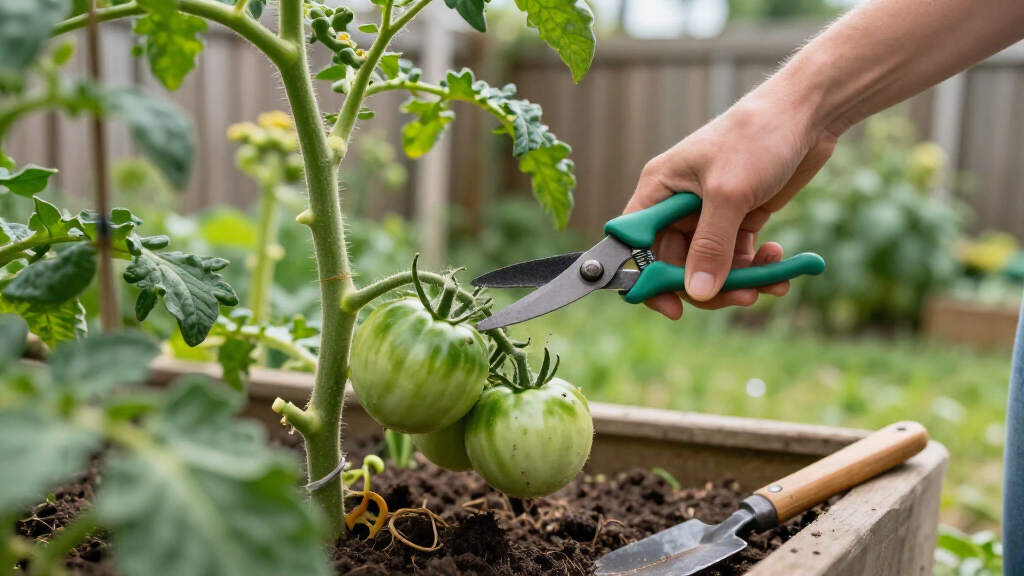
According to horticulturists, removing certain suckers and lower leaves from tomato plants can reduce disease risk and improve airflow, which promotes healthier growth. The recommended practices include pruning side shoots (suckers) that develop in the leaf axils, especially on indeterminate varieties, and removing lower leaves that touch the soil.
These techniques are supported by research from plant scientists, who state that pruning can increase fruit size and overall yield by redirecting the plant’s energy toward fruit production. Experts from the University of California Cooperative Extension and other institutions emphasize that consistent pruning throughout the growing season is key for optimal results.
However, some claims about pruning’s impact on yield size and plant health are still under discussion, with ongoing studies examining the extent of benefits and best timing for pruning. Gardeners are advised to follow proven methods and stay updated on new research findings.
Why Proper Tomato Pruning Can Transform Your Garden
Effective pruning techniques can significantly improve tomato plant health by reducing disease susceptibility and encouraging better airflow, which is especially important in humid climates. Larger harvests benefit both home gardeners and commercial growers, making pruning a valuable skill. Additionally, understanding the science behind pruning helps gardeners avoid common mistakes that can damage plants or reduce yields.
As an affiliate, we earn on qualifying purchases.
Recent Advances and Ongoing Research in Tomato Pruning
Tomato pruning has long been a standard practice among gardeners, but recent research has provided clearer guidelines on which methods are most effective. Studies from agricultural research stations have shown that removing suckers on indeterminate varieties can increase fruit size and yield, while also helping prevent fungal diseases.
Despite widespread advice, some growers still debate the timing and extent of pruning, with ongoing trials exploring optimal practices for different climates and tomato varieties. The advice from experts now emphasizes consistency and careful removal of specific plant parts to maximize benefits.
“Pruning is a proven method to improve airflow and reduce disease, which directly correlates with healthier plants and bigger harvests.”
— Dr. Lisa Martinez, horticultural researcher
What Aspects of Tomato Pruning Still Need Clarification?
While the benefits of pruning are well-supported, there is still debate over the optimal timing and extent of pruning for different tomato varieties and growing conditions. Researchers are continuing to study how pruning impacts disease resistance and fruit quality across diverse environments. It is not yet clear whether certain pruning techniques are universally superior or if adjustments are needed based on climate and plant type.
Future Research and Practical Guidelines for Tomato Pruning
Researchers plan to conduct further trials to refine pruning schedules and techniques tailored to specific climates and tomato varieties. Gardeners should stay informed through extension services and horticultural publications to adapt practices as new findings emerge. In the meantime, applying proven methods such as removing suckers and lower leaves remains the best approach for improving plant health and yields.
Key Questions
When is the best time to prune tomato plants?
Most experts recommend pruning during the early to mid-growth stages, typically when suckers are small and before the plants become too dense. Ongoing research continues to refine the ideal timing for different conditions.
How much of the plant should I prune?
Guidelines suggest removing side shoots (suckers) that develop between the main stem and branches, especially on indeterminate varieties, and trimming lower leaves touching the soil. Over-pruning can harm the plant, so moderation is advised.
Does pruning increase the size of the tomatoes?
Many studies and expert opinions indicate that pruning can lead to larger fruits by redirecting the plant’s energy toward fruit development. However, results can vary based on plant variety and environmental factors.
Are there risks associated with pruning?
Improper pruning can stress the plant or create entry points for diseases. Careful, correct techniques and sanitation are essential to avoid harming the plant or reducing yields.
Will pruning prevent all tomato diseases?
Pruning helps reduce disease risk by improving airflow, but it does not eliminate all problems. Combining pruning with other practices like crop rotation and disease-resistant varieties offers the best protection.
Source: rss