Cloudy pool water often begins with one overlooked issue, like an imbalance in your chemical levels, algae growth, or filtration problems. These issues are easy to miss but can escalate quickly, leading to cloudiness. When sanitizer or chlorine levels drop, algae can grow unnoticed, and poor filtration lets particles build up. Addressing these root problems early keeps your water clear. Keep exploring to uncover more ways to maintain sparkling pool water.

Get pool and patio gear delivered free — and shop member deals
- Fast, free delivery on millions of items
- Access to Prime Big Deal Days deals on October 6–7
- Prime Video, Amazon Music and more included
Key Takeaways
- Algae growth often begins unnoticed, quickly leading to cloudiness if not promptly addressed.
- Chemical imbalances can cause mineral and metal precipitates, clouding the water.
- Inadequate filtration allows particles to accumulate, initiating cloudiness.
- Poor circulation prevents even distribution of chemicals, enabling localized cloud formation.
- Overlooking routine maintenance and testing allows minor issues to escalate into cloudy water.
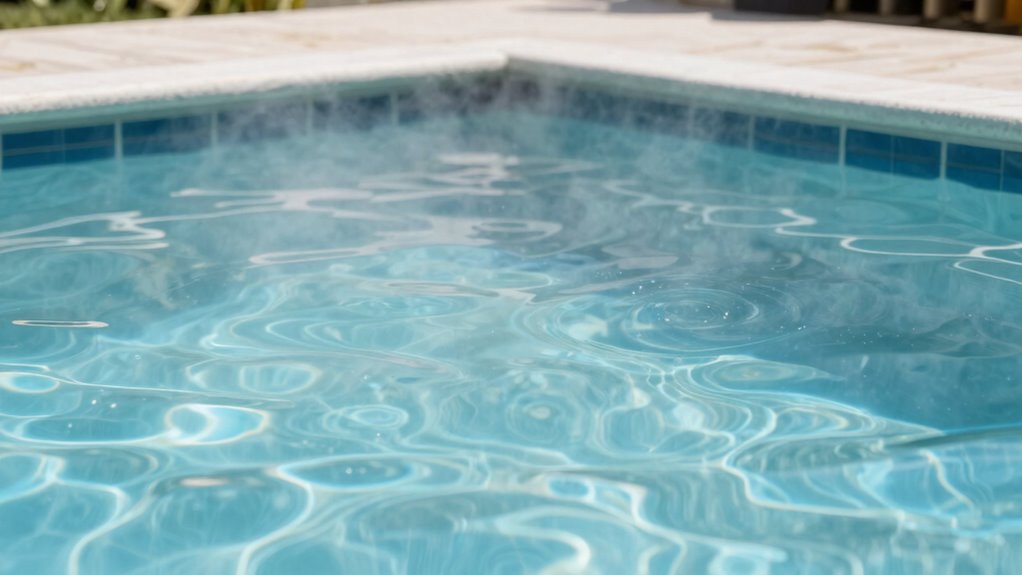
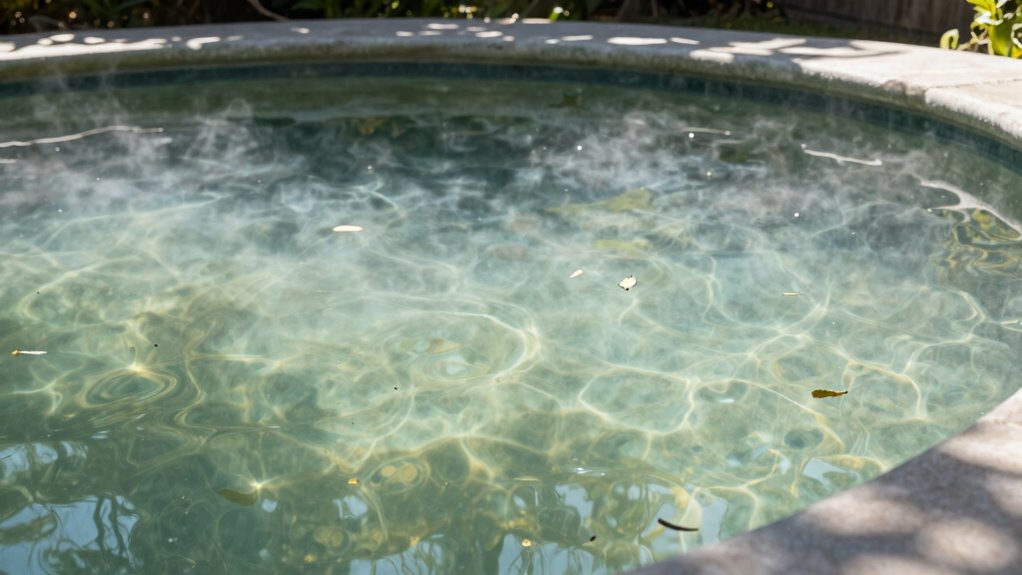
Cloudy pool water can be frustrating, especially when you can’t pinpoint the cause. Often, it’s the result of a simple, overlooked issue that snowballs into a murky mess. One of the most common culprits is algae buildup, which might not be immediately visible but can quickly turn your water cloudy if left unchecked. Algae thrive in warm, sunny conditions and can spread rapidly, especially if your chlorine levels are too low or if the pool isn’t properly sanitized. When algae begin to grow, they release organic matter into the water, creating particles that scatter light and give your pool that dull, opaque appearance. Regular brushing and shocking the pool can usually control algae, but neglecting these steps can lead to persistent cloudiness.
Another often underestimated cause is a chemical imbalance. Pools rely on the right balance of pH, alkalinity, and sanitizer levels to keep the water clear and safe for swimming. When these chemicals are out of sync, it creates an environment where particles and contaminants aren’t properly neutralized or filtered out. For example, if your pH is too high or too low, it can cause minerals and metals in the water to precipitate, forming tiny particles that suspend in the water and contribute to cloudiness. Similarly, inadequate chlorine levels or improper sanitizer use allow bacteria and organic matter to accumulate, further clouding the water and making maintenance more challenging. Chemical balance is crucial for maintaining clarity and preventing issues before they escalate.
Many pool owners overlook the importance of testing and adjusting chemical levels regularly. Just because the water looks clear one day doesn’t mean it’s chemically balanced. Often, a simple test kit can reveal a hidden imbalance that’s silently causing your pool to turn opaque. Once you identify and correct the chemical levels—by adding chlorine, adjusting pH, or balancing alkalinity—you’ll often see a noticeable improvement in water clarity. But don’t forget, chemical imbalances can also work in tandem with algae growth, creating conditions that further cloud the water and complicate maintenance. Proper filtration and circulation are also critical components of maintaining water clarity, ensuring that contaminants are effectively removed from the pool. Regular testing and adjustment are essential to keep your water sparkling and free of cloudiness.
In many cases, addressing the root problem involves a combination of proper chemical maintenance and routine cleaning. Brushing the walls, vacuuming debris, and ensuring your filtration system is functioning correctly are essential steps. When you stay vigilant about chemical levels and prevent algae buildup, you markedly reduce the chances of your pool water turning cloudy. Recognizing that these common, often overlooked issues are the starting point can save you time, money, and the frustration of swimming in murky water.
As an affiliate, we earn on qualifying purchases.
Frequently Asked Questions
Can High Mineral Levels Cause Cloudy Pool Water?
Yes, high mineral levels can cause cloudy pool water. Mineral buildup from excessive water hardness creates cloudiness by forming deposits on the pool’s surfaces and particles suspended in the water. When mineral levels are too high, they interfere with proper filtration and chemical balance, making the water appear murky. Regular testing and balancing of water hardness and mineral levels help prevent cloudiness caused by these mineral-related issues.
How Does Pool Cover Use Affect Water Clarity?
Pool cover use can substantially affect water clarity if you neglect cover maintenance, as debris accumulation underneath can introduce dirt, algae, and other contaminants into your pool. Regularly cleaning and inspecting your cover prevents debris buildup, reducing the chances of cloudiness. A well-maintained cover minimizes debris entering the water, helping to keep it clear and clean. Consistent cover upkeep is essential for maintaining ideal water clarity and avoiding cloudy pool water caused by overlooked debris.
Is Algae Bloom Always Linked to Cloudiness?
Algae blooms often cause cloudiness, but they’re not the only culprit. Poor water filtration and lack of algae prevention can also lead to murky water. If you skip regular filtration, nutrients build up, encouraging algae growth. To keep your water clear, you need to maintain proper filtration and consistently apply algae prevention treatments. This way, you reduce the chances of algae bloom and keep your pool sparkling clean.
Can Weather Changes Impact Pool Water Clarity?
Ever wonder how weather changes can impact your pool’s clarity? They definitely can. Sudden shifts in weather patterns, like rain or wind, stir up debris and introduce contaminants, making water cloudy. Plus, increased water evaporation during hot or windy days can concentrate minerals and chemicals, leading to cloudiness. So yes, weather fluctuations play a significant role in your pool’s appearance, often catching you off guard when you least expect it.
What Role Does pH Imbalance Play in Cloudiness?
A pH imbalance causes cloudiness by disrupting the chemical balance of your pool water. When pH fluctuates, it affects the effectiveness of chlorine and other disinfectants, leading to algae growth and suspended particles. This imbalance reduces water clarity, making it appear cloudy. Regularly testing and adjusting your pH levels helps maintain proper chemical balance, preventing cloudiness and keeping your pool clear and inviting.
Conclusion
Remember, cloudy pool water often begins with a small oversight—like neglecting proper filtration or failing to balance chemicals. Don’t let this tiny crack in your maintenance routine turn your paradise into a murky mystery. By staying vigilant and addressing issues early, you keep your pool sparkling and inviting, like a clear blue mirror reflecting your summer memories. Keep watch, stay proactive, and let your pool be the invigorating oasis it’s meant to be.
Evergreen bestsellers Picks
bestsellers
As an affiliate, we earn on qualifying purchases.