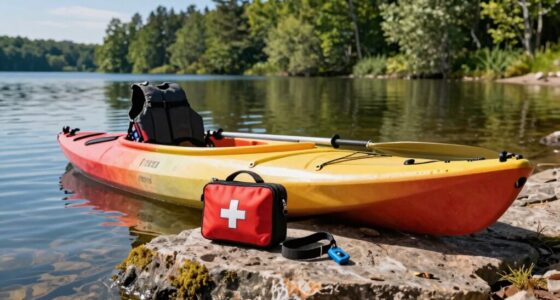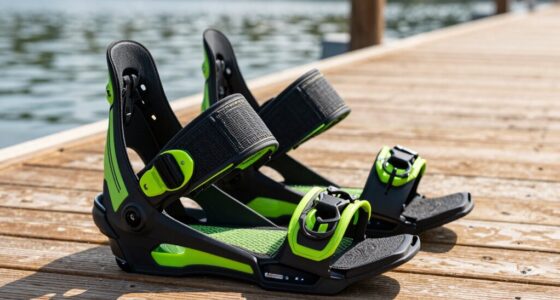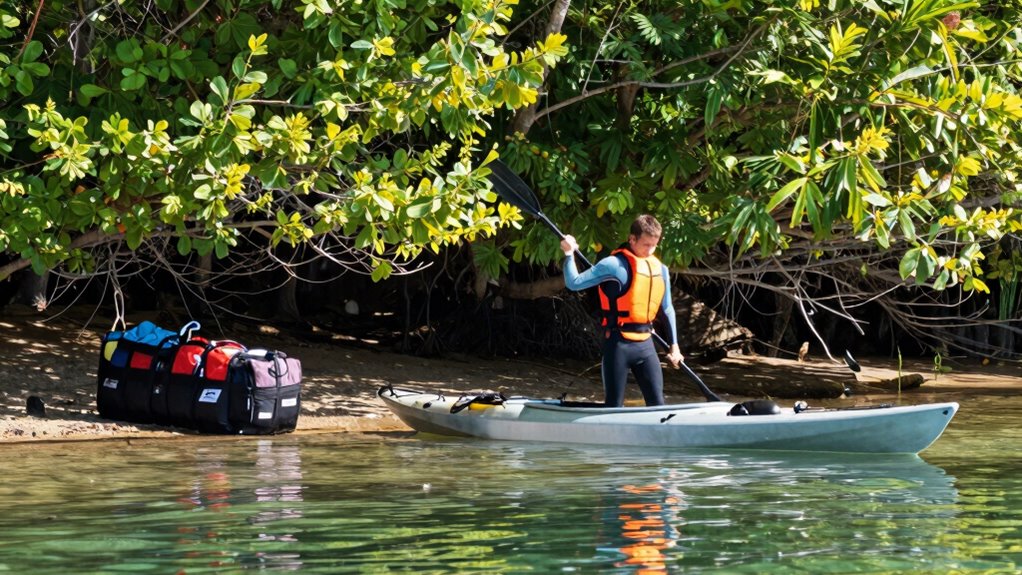

To make your kayak or board sessions smoother, start with a thorough launch routine. Double-check your gear, ensuring your paddle and personal flotation device are secure and within reach. Inspect your kayak for damage, and review your plan beforehand. Approach with purpose, slide into the water carefully, and push off gently. Maintain balance, stay alert, and establish a consistent routine. Keep these tips in mind, and you’ll boost confidence and safety on the water each time. Explore more for expert tips and techniques.

Get pool and patio gear delivered free — and shop member deals
- Fast, free delivery on millions of items
- Access to Prime Big Deal Days deals on October 6–7
- Prime Video, Amazon Music and more included
Key Takeaways
- Double-check all gear and safety equipment before approaching the water.
- Approach the kayak confidently, ensuring stability and proper positioning for a smooth launch.
- Use gentle, controlled movements when sliding or lifting the kayak into the water.
- Maintain steady balance and keep essentials like paddle within reach during entry.
- Perform routine safety and technique checks to build confidence and prevent mishaps.

Launching your kayak smoothly sets the tone for a successful session on the water. Before you even step onto the dock or beach, you want to make sure your gear preparation is complete. This means double-checking that your paddle is securely stored, your life jacket is within reach, and any other essential equipment, like a bilge pump or waterproof bag, is ready to go. Proper gear prep saves you from scrambling last minute and helps you focus on enjoying your time on the water. Once your gear is sorted, it’s time to perform safety checks. Confirm that your kayak is free of damage or cracks, and ensure your hatch covers are tightly sealed if you have any. Check your paddle for any signs of wear and make sure it’s the right length for your height and paddling style. Wearing your personal flotation device, or PFD, is non-negotiable, so put it on early to avoid forgetting in the rush to launch. Take a moment to review your route or plan, especially if you’re heading into unfamiliar waters, and inform someone about your float plan for added safety.
When you approach the launch site, approach with purpose and confidence. Position your kayak properly, making sure it’s stable and accessible from the water’s edge. If you’re launching from a dock, slide the kayak gently into the water, holding onto the sides to keep it steady. On a sandy or grassy shore, lift and carry the kayak carefully, avoiding dragging it across rough surfaces that could cause damage. As you get into the water, use your paddle to push off gently, keeping your balance steady and your movements controlled. Remember, the smoother your launch, the easier it is to get into a comfortable paddling rhythm and avoid unnecessary wobbling or tipping. Keep your paddle within arm’s reach for quick access once you’re afloat, and stay alert for other boaters or obstacles. Establishing a proper launch routine helps you stay organized and confident before hitting the water. Paying attention to equipment safety checks can prevent potential issues during your session and ensure your gear performs well. Additionally, practicing your launch techniques regularly can improve your confidence and efficiency, especially in challenging conditions. Being familiar with kayak handling and maneuvering can also contribute to smoother launches and safer watercraft control.
Throughout the process, maintaining focus on safety checks is vital. Confirm your equipment is secure, your PFD is properly fitted, and your surroundings are safe before you fully commit to paddling away. A well-prepared launch routine minimizes surprises and makes your entire kayaking experience more enjoyable. When you start your session with confidence, you set yourself up for a relaxing, safe, and productive day on the water. It’s all about establishing good habits—preparing your gear thoroughly and performing safety checks—so your launch feels effortless and your time on the water is filled with enjoyment.
As an affiliate, we earn on qualifying purchases.
Frequently Asked Questions
How Early Should I Arrive Before My Kayak Session?
You should arrive at least 30 minutes before your kayak session. This gives you enough time to practice launching techniques, ensuring a smooth start. Use this time to check your paddle selection, making sure it’s the right length and type for your session. Arriving early helps you relax, prepare your gear, and get comfortable with the water, so your session begins seamlessly and safely.
What Weather Conditions Are Best for Launching?
You should launch when weather conditions are calm, with minimal wind impact, and storm preparedness is in check. Avoid launching during strong winds or storms, as these can make paddling difficult and unsafe. Look for clear skies, gentle breezes, and stable weather forecasts. Calm water and light winds help you stay steady and safe, ensuring your session is enjoyable rather than risky. Always check local weather updates before heading out.
How Do I Handle Equipment Repairs On-Site?
Like a trusty knight with a smartphone, you handle equipment repairs on-site by staying calm and prepared. For equipment maintenance, carry a repair kit with essentials like patches, glue, and screws. When emergency repairs pop up, quickly assess the damage and make temporary fixes to keep your session going. Stay resourceful, keep your tools handy, and remember, a little improvisation can save the day on the water.
What Safety Gear Is Essential During Launch?
You should always wear a life vest and helmets during launch to guarantee safety. A life vest keeps you afloat if you fall into the water unexpectedly, while helmets protect your head from potential impacts with the boat, paddle, or other objects. Check that your gear fits properly and is in good condition before launching. Prioritizing this safety gear helps prevent injuries and makes your session more enjoyable and secure.
How Can I Improve My Balance During Launch?
Think of your body as a ship steadying itself before setting sail. To improve your balance during launch, focus on balance exercises like single-leg stands and core strengthening routines. These actions build stability, helping you remain upright even when the water’s choppy. Incorporate these practices regularly, and you’ll find yourself launching with confidence, like a captain confidently guiding their vessel through unpredictable seas.
Conclusion
By mastering this launch routine, you’ll glide onto the water like a well-oiled boat, smooth and confident. Think of it as your secret recipe, turning chaos into calm and making every kayak session feel like a breeze. With each launch, you’ll build a rhythm that’s as natural as the tide, transforming your outings into effortless adventures. So, gear up, stay steady, and let the water carry you into endless, enjoyable journeys ahead.
Fall Picks
fall essentials
As an affiliate, we earn on qualifying purchases.