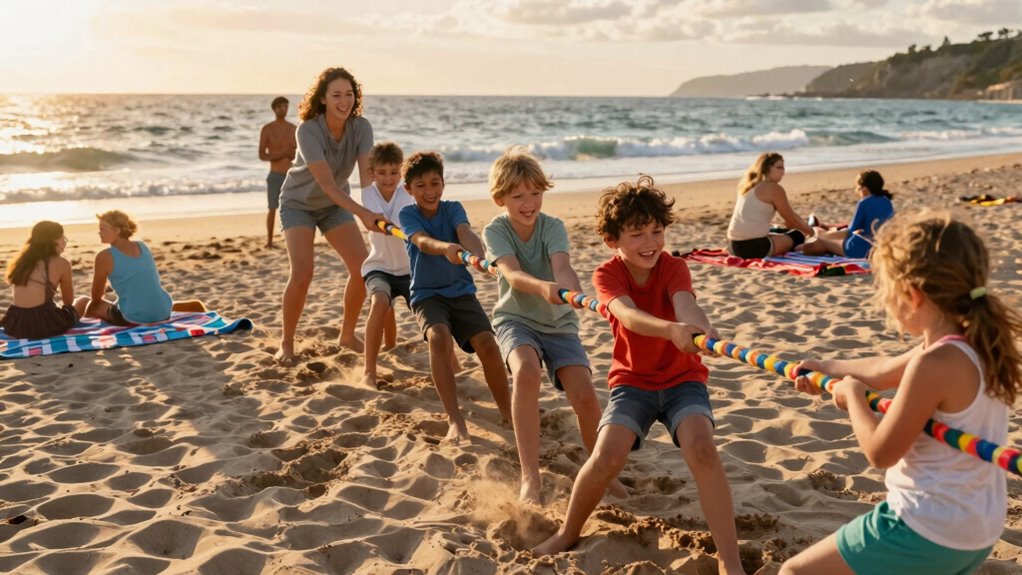

You’ll find that cooperative beach games often beat competitive ones because they promote teamwork, safety, and respect for the environment. When you work together, you support each other and create a more inclusive, fun atmosphere. These games reduce risks too, encouraging careful behavior and environmental care. Plus, they help build stronger social bonds and teach valuable conservation lessons. Keep exploring, and you’ll discover how these games foster memorable, meaningful experiences while benefiting everyone involved.
Key Takeaways
- Cooperative games foster teamwork and collective success, often leading to more meaningful and memorable experiences.
- They promote beach safety by encouraging careful pacing and mutual watchfulness, reducing accidents.
- These games have a lower environmental impact, involving fewer props and less disturbance to wildlife.
- They enhance social bonds, trust, and inclusivity, creating a relaxed, friendly atmosphere.
- Cooperative play educates participants about conservation, biodiversity, and responsible resource use.

When you head to the beach with friends or family, cooperative beach games are a fantastic way to build teamwork and have fun together. These games encourage everyone to work toward a common goal, fostering a sense of unity that competitive games sometimes lack. Unlike games where only one person or team wins, cooperative activities focus on collective success, which can lead to more inclusive and less stressful experiences. As you play, you naturally learn to communicate better, share responsibilities, and support each other, making the day more memorable and meaningful.
One reason cooperative beach games often beat competitive ones is that they promote beach safety. When everyone is working together, there’s less risk of accidents caused by rushing or aggressive behavior. For example, in a game like a relay race, players are encouraged to look out for each other’s safety, helping their teammates avoid obstacles or dangerous areas. This heightened awareness naturally encourages players to stay alert and considerate of the environment and each other. Additionally, cooperative games tend to be slower-paced, giving participants more time to think and react carefully, reducing the chances of injuries or mishaps.
Cooperative beach games promote safety by encouraging teamwork, careful pacing, and awareness of surroundings.
Environmental impact is another crucial factor where cooperative beach games shine. These activities usually involve less physical impact on the environment since they often require fewer props, less movement across fragile dunes, and less noise that could disturb local wildlife. For example, a game like a group scavenger hunt promotes exploration without damaging plant life or disturbing nesting areas. Because everyone is working together, there’s also a greater emphasis on respecting the beach environment, learning about local ecosystems, and minimizing waste. This shared responsibility can foster a stronger sense of environmental stewardship, encouraging players to leave the beach cleaner and more preserved for others. Recognizing the importance of biodiversity in these efforts can deepen participants’ appreciation for the natural world. Incorporating environmentally conscious practices into these games can further enhance their positive impact. Additionally, engaging in these activities can inspire a lifelong appreciation for conservation and sustainable use of natural resources. Moreover, these cooperative activities can serve as a platform for educating participants about the importance of ecosystem health, making the experience both fun and educational.
Furthermore, cooperative games tend to foster positive social interactions that can last beyond the beach day. When everyone works as a team, you build trust and friendships that make future visits more enjoyable. They also reduce feelings of exclusion or failure that sometimes come with competitive games, where losing can dampen spirits. Instead, the focus is on having fun together, which boosts everyone’s mood and promotes a more relaxed, friendly atmosphere. This sense of community can inspire participants to continue practicing teamwork and environmental awareness in other areas of life.
In the end, cooperative beach games offer a more inclusive, safe, and environmentally conscious way to enjoy the sand and surf. They help you connect with others, protect the natural beauty of the beach, and create experiences rooted in teamwork rather than rivalry. That’s why sometimes, these games are simply better than their competitive counterparts.
As an affiliate, we earn on qualifying purchases.
Frequently Asked Questions
How Do Cooperative Beach Games Improve Team Communication?
You improve team communication in cooperative beach games by working closely together, which naturally fosters team bonding and trust building. As you coordinate actions and share strategies, you learn to listen actively and express ideas clearly. This shared experience encourages openness, reduces misunderstandings, and strengthens your ability to collaborate effectively. Ultimately, these games create a fun environment where trust and communication grow, making your team more cohesive and responsive both on and off the beach.
Are Cooperative Games Suitable for All Age Groups?
Yes, cooperative beach games are suitable for all age groups. You can enjoy activities like beach trivia, which challenges everyone’s knowledge, or sandcastle building, encouraging teamwork and creativity. These games foster inclusivity, ensuring everyone participates and has fun. Whether you’re with kids, teens, or adults, cooperative games promote bonding and cooperation, making your beach day enjoyable and memorable for everyone involved.
What Are the Key Benefits of Cooperation Over Competition?
The key benefits of cooperation over competition lie in building team synergy and fostering shared goals. When you work together, you create a sense of unity that boosts morale and enhances problem-solving. This collective effort encourages trust and open communication, leading to stronger bonds. Ultimately, cooperation transforms individual efforts into a powerful force, making challenges easier to overcome and creating a more enjoyable, meaningful experience for everyone involved.
Can Cooperative Games Be Adapted for Large Groups?
Yes, you can adapt cooperative games for large groups by considering group dynamics and modifying rules to include everyone. You might break the group into smaller teams working together, or create relay-style activities that promote communication and teamwork. Adjusting the game’s complexity and guaranteeing inclusive participation helps maintain engagement. Proper game adaptation encourages collaboration, strengthens bonds, and ensures everyone feels involved and motivated, regardless of group size.
How Do Cooperative Games Promote Inclusivity at the Beach?
Think of a cooperative game as a woven net, where every knot symbolizes inclusion. You’re encouraged to join group participation, breaking down barriers and welcoming everyone. As you work together, social bonding strengthens, making the experience more meaningful. This unity guarantees everyone feels valued, regardless of skill or age. By embracing cooperation, you create a beach environment where inclusivity flourishes, turning fun into a shared journey rather than a competition.
Conclusion
So, next time you hit the beach, why not try a cooperative game instead of the usual competition? You’ll find it’s not just about winning—it’s about building connections, sharing laughs, and creating memories. Isn’t that what makes beach days truly special? Sometimes, working together can bring more joy than battling for first place. So, are you ready to swap rivalry for teamwork and see how much more fun cooperative games can be?