UV damage can cause inflatable gear to wear out sooner than expected because UV rays break down the material’s chemical bonds, leading to cracks, brittleness, and loss of elasticity. Without proper protection, these signs of deterioration appear faster, weakening the structure and increasing the chances of tears or leaks. Continuous exposure accelerates this process, shortening the gear’s lifespan. If you want to discover more about protecting your inflatable gear from UV damage, keep exploring.
Key Takeaways
- Continuous UV exposure accelerates chemical bond breakdown, leading to faster material deterioration.
- Insufficient or degraded UV inhibitors reduce the inflatable’s resistance to sun damage.
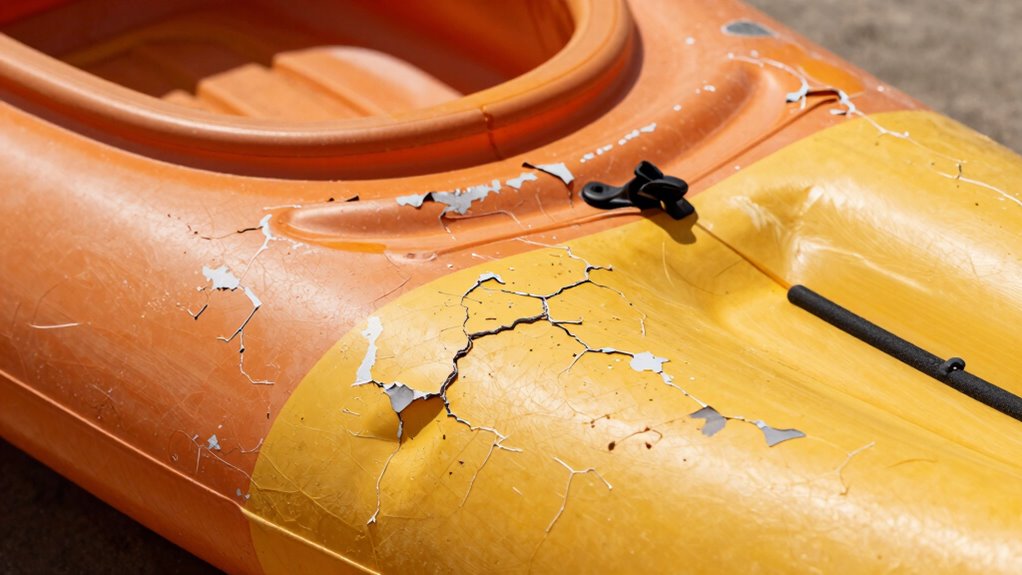
- Surface cracks from UV rays weaken the material, increasing risk of tears and early failure.
- Improper storage in direct sunlight accelerates UV-induced aging beyond expected lifespan.
- Lack of regular maintenance or protective coatings accelerates UV-related material degradation.
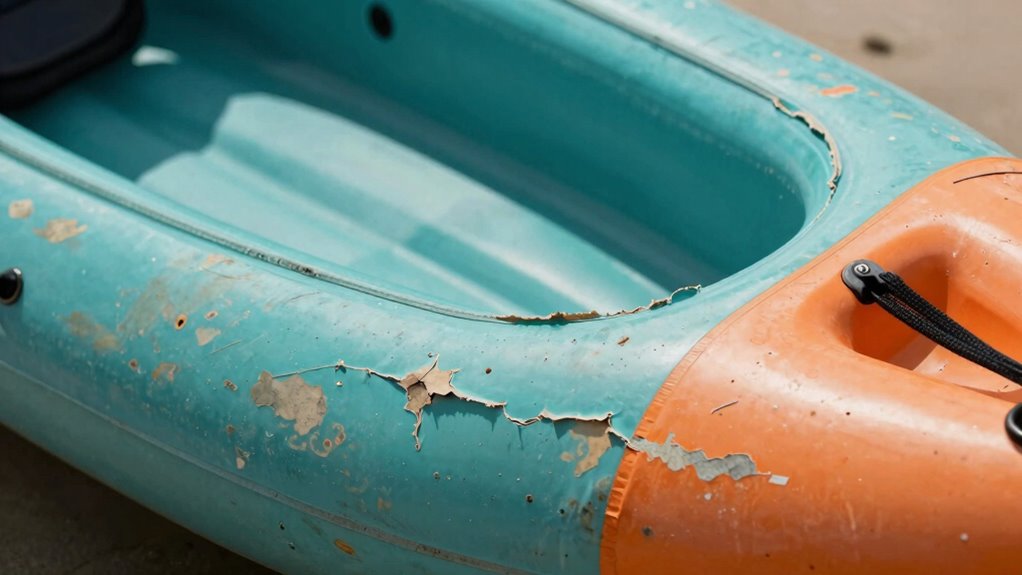
Ultraviolet (UV) radiation from the sun can noticeably weaken inflatable gear over time, leading to cracks, brittleness, and reduced lifespan. This is because UV rays penetrate the surface of the material, breaking down its chemical bonds and causing gradual deterioration. If you’re using inflatables outdoors without proper UV protection, you’re practically inviting premature material degradation. The sun’s rays accelerate the aging process, making your gear more vulnerable to tears and leaks long before its expected lifespan.
UV rays weaken inflatable gear, causing cracks, brittleness, and a shorter lifespan over time.
To combat this, many manufacturers incorporate UV inhibitors into their materials, which help block or absorb harmful UV rays. However, even with these protections, continuous exposure without additional care can still cause damage. When UV protection isn’t sufficient or applied properly, the material’s structural integrity diminishes faster. Over time, this results in a brittle, cracked surface that’s much more prone to failure. If you notice small cracks or a stiff feel in your inflatable gear, it’s a sign that UV damage is taking its toll, and the material may be nearing the end of its useful life.
The key to prolonging the life of your inflatable gear is to understand that UV exposure isn’t just a surface issue—it leads to ongoing material degradation. As the material weakens, it loses elasticity and becomes more susceptible to punctures. This process is often unnoticed until a minor tear becomes a significant leak, forcing you to replace the gear prematurely. Using UV protective coatings or covers can greatly slow down this process. When not in use, storing your inflatables in shaded areas or indoors can reduce direct sunlight exposure, further preventing UV-related damage. Recognizing the mechanisms of UV damage can help you implement better protective strategies.
You should also inspect your gear regularly and clean it using mild soap and water—harsh chemicals can strip away protective coatings and worsen material degradation. Applying UV protectant sprays periodically can add an extra layer of defense, helping your inflatable withstand the sun’s rays longer. Remember, the more exposed your gear is to UV radiation, the faster the material’s strength deteriorates. So, taking simple precautions becomes crucial if you want to maximize durability. Additionally, understanding UV damage mechanisms can help you better protect your gear from long-term harm. Recognizing that material degradation is a gradual process underscores the importance of proactive maintenance.

FLATED UV Guard UV Protectant Spray & Cleaner for Inflatable Truck Toppers, Rafts, SUPs, Boats & Plastic Trim
✔ CLEAN + PROTECT IN ONE STEP Removes dirt, grime, and buildup while leaving behind a durable UV-protective…
As an affiliate, we earn on qualifying purchases.
As an affiliate, we earn on qualifying purchases.
Frequently Asked Questions
Can UV Damage Be Completely Prevented With Protective Coatings?
Protective coatings and UV shielding greatly reduce UV damage, but they can’t completely prevent it. You should regularly apply UV-resistant coatings to your inflatable gear and make sure they’re in good condition. Using UV-protective covers or storing gear away from direct sunlight also helps. While these measures extend your inflatable’s lifespan, no solution guarantees total protection, so routine maintenance remains essential for maximum durability.
How Does Altitude Affect UV Damage to Inflatable Gear?
Think of inflatable gear as a shielded explorer. At higher altitudes, UV rays are like relentless explorers penetrating deeper, increasing UV penetration. Altitude effects mean more intense UV exposure, which accelerates damage. You’ll notice that as you ascend, UV damage happens faster because the thinner atmosphere offers less protection. So, at higher elevations, your gear is more vulnerable, and protective measures become even more essential to prevent early deterioration.
Are There Specific Brands More Resistant to UV Damage?
Some brands are more resistant to UV damage due to their focus on brand durability and UV resistance. You’ll find that reputable outdoor gear brands like Sea to Summit, Toughbuilt, and Coleman invest in UV-resistant materials and coatings to extend their inflatable gear’s lifespan. When shopping, check for products labeled with UV protection or designed specifically for prolonged sun exposure, ensuring your inflatable gear stays durable and lasts longer in harsh sunlight.
Does Water Exposure Influence UV Deterioration of Inflatables?
Did you know that water exposure can accelerate UV deterioration in inflatables by up to 50%? Water absorption weakens the material, making it more vulnerable to UV rays. When inflatables aren’t made from UV resistant materials, water can seep in, causing faster damage. To prolong their life, always rinse your gear after water use and choose products specifically designed with UV resistant materials for better protection.
How Often Should Inflatable Gear Be Inspected for UV Damage?
You should inspect your inflatable gear regularly, ideally before and after each use, especially if it’s exposed to sun. Follow the sun exposure guidelines to prevent UV damage, and check for cracks, discoloration, or weak spots. UV resistant coatings can help extend its lifespan, but frequent inspections guarantee you spot early signs of deterioration. This proactive approach keeps your gear safe and prolongs its usability.

Newport UV Resistant Inflatable Dinghy Boat Cover, Grey, 10-11-Feet
UV resistant heavy duty 600D Polyester provides protection from the suns damaging UV rays
As an affiliate, we earn on qualifying purchases.
As an affiliate, we earn on qualifying purchases.
Conclusion
By understanding how UV damage accelerates the deterioration of inflatable gear, you can take proactive steps to extend its lifespan. Applying UV protectants and storing gear properly are simple yet effective measures. While some might think these efforts are unnecessary, investing in preventive care saves you money and hassle in the long run. Ultimately, protecting your inflatable gear from UV damage guarantees it remains safe, functional, and ready for your next adventure.

STAR BRITE Ultimate Paddlesports Cleaner & Protectant – Kayak, Canoe, Paddleboard UV Protective Spray – Fiberglass, Kevlar, Plastic Compatible – 22 OZ (096022)
ULTIMATE CLEANING POWER – Spray on, wipe off to remove grime, dirt, salt deposits and more from your…
As an affiliate, we earn on qualifying purchases.
As an affiliate, we earn on qualifying purchases.
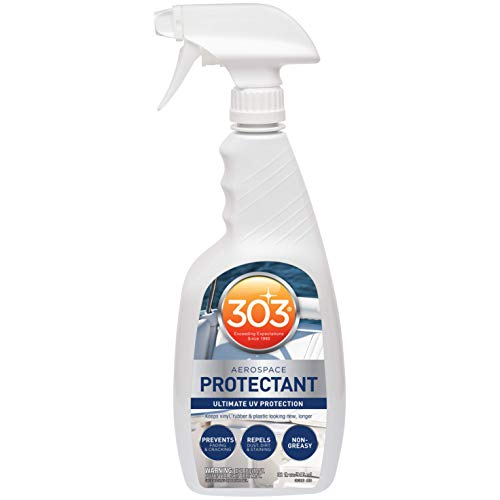
303 Products Marine Aerospace Protectant Spray, UV Protection for Boat Vinyl & Surfaces – Repels Dust, Dirt & Staining, Matte Finish, Restores Like-New Appearance, 32 oz
Ultimate Protection – 303 Marine Aerospace Protectant Provides Superior Protection Against The Sun'S Damaging Uv Rays. This Protector…
As an affiliate, we earn on qualifying purchases.
As an affiliate, we earn on qualifying purchases.