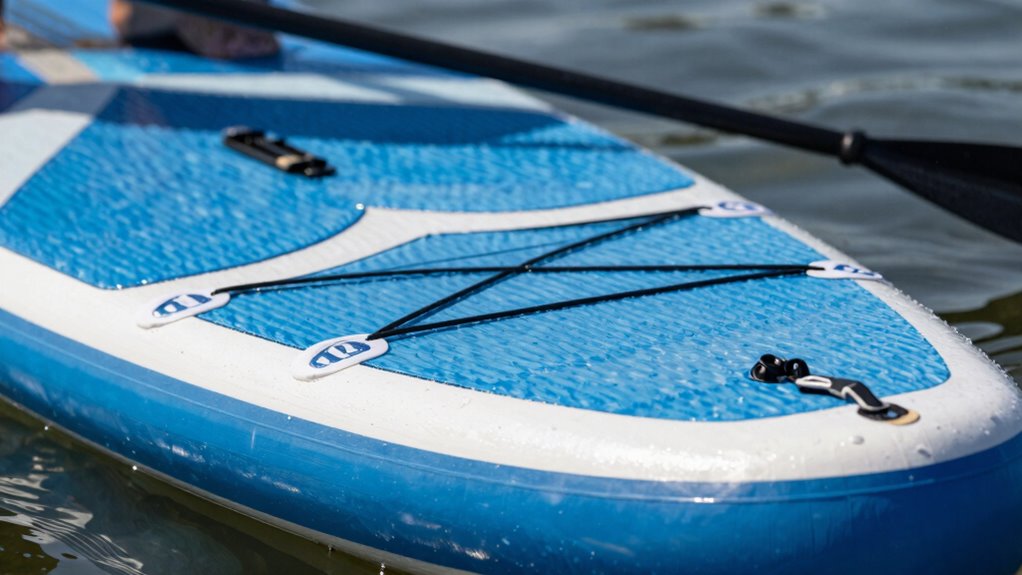

Your inflatable SUP’s thickness affects stability more than you think because even small increases boost buoyancy and help you stay balanced, especially in rough water or for beginners. But thickness alone isn’t enough; deck material quality and correct inflation pressure also play essential roles. When these factors work together, your board becomes more responsive and secure. Keep exploring to see how all these elements combine to give you the best stability on the water.

Get pool and patio gear delivered free with Prime
- Fast, free delivery on millions of items
- Prime Video, Amazon Music and more included
- Member-only deals all year
Key Takeaways
- Thicker boards increase buoyancy, providing better support and stability on the water.
- The impact of thickness on stability is amplified when combined with proper deck material and construction.
- Increasing thickness alone doesn’t ensure stability without the right inflation pressure and deck rigidity.
- Thicker SUPs are more stable in rough waters, but only if the deck material maintains rigidity.
- The balance of thickness, deck quality, and inflation pressure determines overall stability more than thickness alone.

When choosing an inflatable stand-up paddleboard (SUP), understanding how thickness influences stability is essential. The thickness of your SUP directly impacts how well it balances on the water, and small changes can make a big difference. One key factor is the deck material, which affects the overall rigidity and feel of the board. Thicker boards tend to have more buoyancy, but it’s not just about volume—how the deck is constructed also plays a role. A sturdy, high-quality deck material can help maintain stability by preventing flex and wobbling, especially when you’re paddling in choppy conditions or performing advanced maneuvers. Thinner decks might be lighter, but they often sacrifice some stability because they flex more under pressure, making you feel less secure.
Inflation pressure is another critical element that influences stability alongside thickness. When you inflate your SUP to the recommended pressure, you optimize its rigidity. Higher inflation pressure generally results in a firmer board, which better resists flexing and provides a more stable platform. However, overinflating can damage the deck material or make the board uncomfortable to paddle, so it’s crucial to stick within the manufacturer’s guidelines. Conversely, underinflating your SUP leaves it softer and more flexible, decreasing stability and making it feel less solid beneath your feet. The right balance between thickness and inflation pressure creates a stable, responsive surface, allowing you to paddle confidently.
The combination of thickness, deck material, and inflation pressure shapes how your SUP reacts on the water. Thicker boards with high-quality decks and proper inflation pressure tend to be more stable, especially for beginners or those tackling rougher waters. But it’s also important to recognize that increasing thickness alone isn’t a magic fix—if the deck material isn’t designed for rigidity or if the inflation pressure isn’t optimized, your board’s stability suffers. You want a thoughtfully constructed board that balances these factors, giving you a stable yet manageable platform. So, when selecting your inflatable SUP, pay close attention to the deck material and recommended inflation pressure, as these elements work together with thickness to influence your overall stability more than you might initially think.
inflatable SUP thickness stability
As an affiliate, we earn on qualifying purchases.
As an affiliate, we earn on qualifying purchases.
Frequently Asked Questions
How Does Temperature Affect Inflatable SUP Thickness?
Temperature impacts your inflatable SUP thickness because colder air compresses more, reducing the board’s size and stability, while warmer air expands, increasing thickness and firmness. You should consider material durability, as colder temperatures can make the material more brittle, risking damage. Proper inflation techniques, like using a reliable pump and monitoring pressure, help maintain ideal thickness regardless of temperature changes, ensuring your board stays stable and durable on the water.
Can Pressure Adjustments Improve Stability on Different Water Types?
Adjusting pressure can boost your inflatable SUP’s stability across various water types, but don’t forget to take into account material durability and storage. Higher pressure firms up the board, making it more stable on choppy water, yet risks stress on the material. Conversely, lower pressure offers flexibility but less stability. Proper storage guarantees your SUP maintains its pressure and durability, so you can confidently paddle whether on calm lakes or rough seas.
Does the Board’s Shape Influence How Thickness Impacts Stability?
Yes, the board’s shape influences how thickness impacts stability. A board with more curvature tends to offer better stability even if it’s thinner, because the curvature helps distribute your weight more evenly. Material flexibility also plays a role; flexible materials adapt better to your movements, enhancing stability. So, both board curvature and material flexibility work together, making the thickness less of a limiting factor for stability than you might expect.
How Often Should I Check and Adjust SUP Pressure for Stability?
You should check and adjust your SUP pressure before each paddle session to guarantee ideal stability. Regular pump maintenance, like inspecting the valve and pump for leaks, helps maintain consistent pressure. Also, follow proper storage precautions by deflating and storing your board in a cool, dry place when not in use, which prevents pressure loss over time. Keeping these habits ensures your board stays stable and ready whenever you want to paddle.
Are Thicker Inflatable SUPS Better for Beginners?
Thicker inflatable SUPs are like sturdy shields, offering better stability for beginners. They often feature durable materials that withstand bumps and scrapes, making your learning curve smoother. Plus, their increased thickness enhances color visibility in the water, keeping you safer. So, if you’re just starting out, a thicker SUP can boost your confidence, provide extra durability, and make you more visible—key factors for a safe, enjoyable paddleboarding experience.
Conclusion
Just like a ship’s hull size influences its voyage, the thickness of your inflatable SUP subtly guides your stability on the water. Don’t overlook this hidden factor—your balance, confidence, and adventure depend on it. Think of it as the secret ingredient in your paddleboarding journey, quietly shaping your experience with every stroke. So next time you choose your board, remember: a little extra thickness can make all the difference between a wobbly wobble and smooth sailing.
Halloween Picks
halloween
As an affiliate, we earn on qualifying purchases.