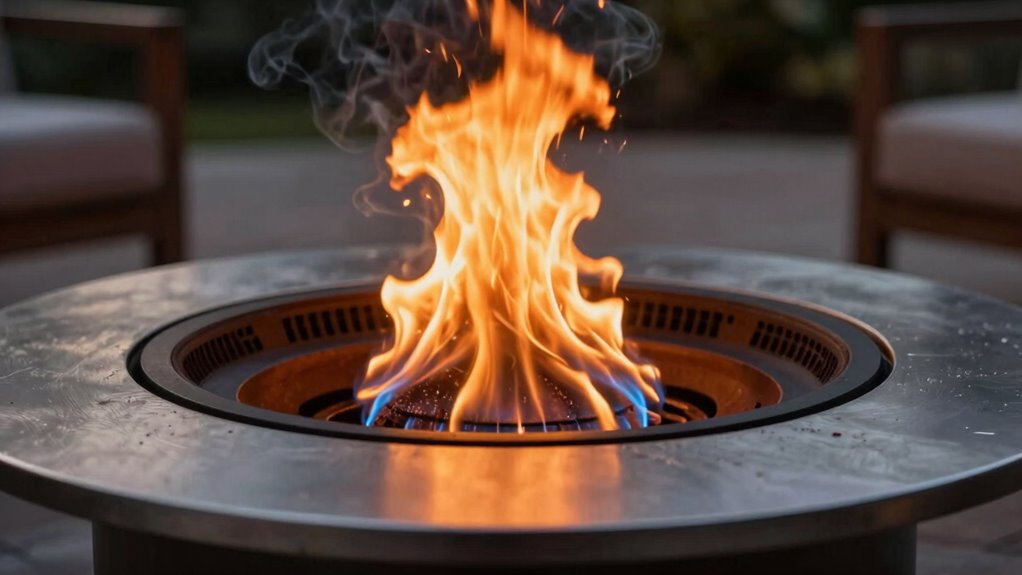

A smokeless fire pit works through secondary combustion, which burns off unburned gases and smoke particles from the initial fire. It relies on design features like a chimney and air inlets to provide proper airflow, igniting these gases and reducing smoke emissions. This process creates cleaner, warmer fires with less ash. To learn about how specific parts and airflow improve secondary burn, and how to troubleshoot issues, keep exploring this fascinating technology.
Key Takeaways
- Secondary burn occurs when hot gases and unburned particles rise to a secondary combustion zone, igniting again for cleaner flames.
- Proper airflow and chimney design direct gases upward, promoting complete combustion and reducing smoke emissions.
- Air inlets supply oxygen, supporting secondary combustion of volatile gases and minimizing soot and smoke.
- Well-designed fire pits maximize heat recycling and efficiency by burning off leftover gases before they escape.
- Using seasoned hardwood and maintaining airflow components enhances secondary burn and results in a smokeless fire.
What Makes a Fire Pit Smokeless?
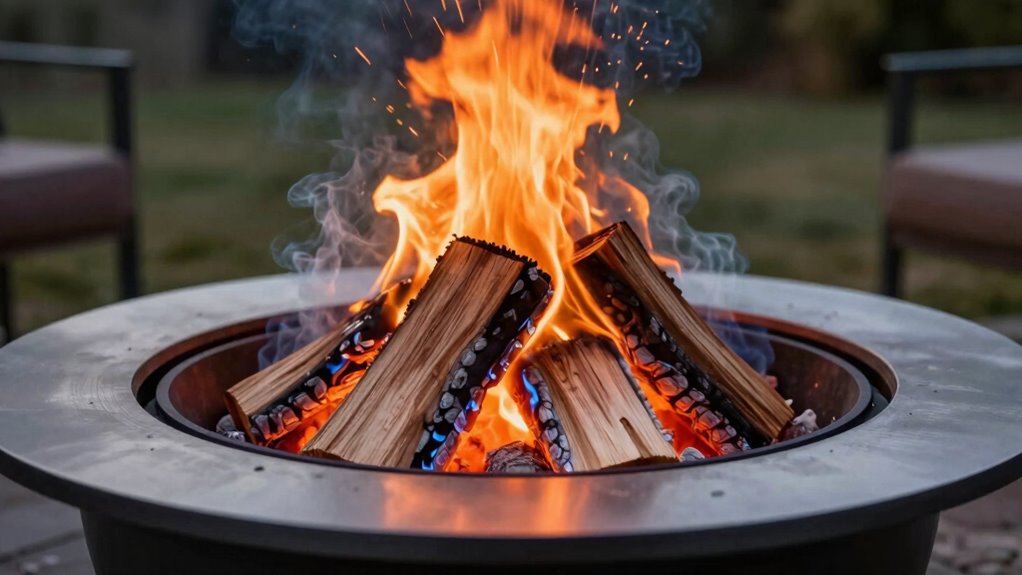
A fire pit is considered smokeless when it produces minimal to no visible smoke during use, often due to its design and the materials it burns. Proper wood seasoning plays a key role; well-seasoned wood has less moisture, which reduces smoke and promotes cleaner burning. Additionally, the chimney design of a smokeless fire pit is engineered to optimize airflow, ensuring that combustion is more complete and smoke is minimized. The chimney helps draw air efficiently through the fire, encouraging secondary combustion of smoke particles. When combined, these factors ensure you enjoy a cleaner, more efficient fire with less smoke and fewer pollutants. By choosing well-seasoned wood and a fire pit with a smart chimney design, you can considerably reduce smoke and enhance your overall experience.
How Does Secondary Burn Work in Smokeless Fire Pits?
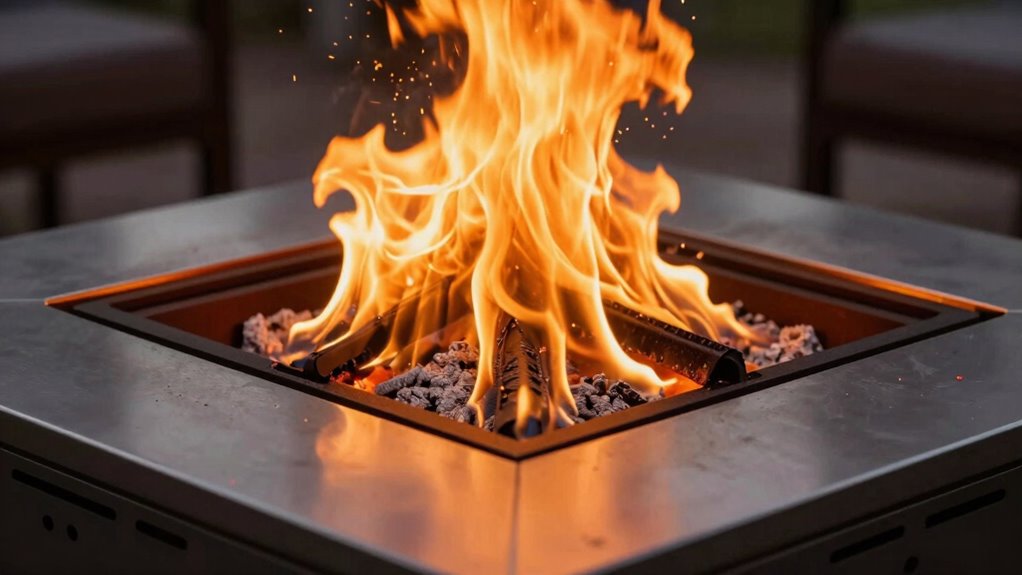
Secondary burn in smokeless fire pits relies on controlled combustion air flow to ignite remaining gases and particles. This process improves heat recycle efficiency and reduces smoke, making your fire cleaner and more efficient. Understanding how these elements work together helps you get the most out of your smokeless fire pit.
Combustion Air Flow
Understanding how combustion air flows in a smokeless fire pit is vital to grasping how the secondary burn works. Proper airflow ensures efficient fuel combustion, reduces smoke, and maintains spark control. When air enters, it feeds oxygen to the burning wood or charcoal, promoting complete combustion. This process involves three essential aspects:
- Air Intake Design – engineered vents direct fresh air to the fire, boosting secondary burn.
- Ash Removal – airflow helps ash to fall away, preventing blockage and maintaining steady oxygen flow.
- Spark Control – consistent airflow minimizes sparks escaping, making the fire safer and cleaner.
Heat Recycle Efficiency
The key to a smokeless fire pit’s efficiency lies in how well it recycles heat through secondary combustion. This process heats the air and gases rising from the fire, igniting unburned particles and reducing smoke. The effectiveness of heat recycle depends on the design, which optimizes airflow and maximizes combustion of different fuel types like wood or charcoal. When secondary burn works efficiently, it not only produces more heat but also minimizes emissions. Your fire pit’s safety features, such as sturdy construction and proper ventilation, ensure the heat cycle remains controlled, preventing dangerous buildup. By improving heat recycle efficiency, you enjoy a hotter, cleaner fire while maintaining safe operation, making your experience more enjoyable and environmentally friendly.
Smoke Reduction Process
Ever wonder how smokeless fire pits dramatically reduce smoke? It’s all about the smoke reduction process, especially secondary burn. This process involves burning the smoke gases that rise from the main fire, which reduces harmful emissions and improves fire pit safety. When you light the fire, the secondary burn kicks in by:
- Heating the fire gases to a high temperature, ensuring complete combustion
- Releasing less smoke and creating a cleaner, more enjoyable outdoor ambiance
- Minimizing smoke emissions, so you can enjoy your fire without irritating your eyes or lungs
This efficient process not only enhances your outdoor experience but also promotes safer fire pit use. Secondary burn technology ensures your fire pit stays cleaner and safer, making outdoor gatherings more enjoyable and smoke-free.
Understanding Combustion: How Secondary Burn Reduces Smoke
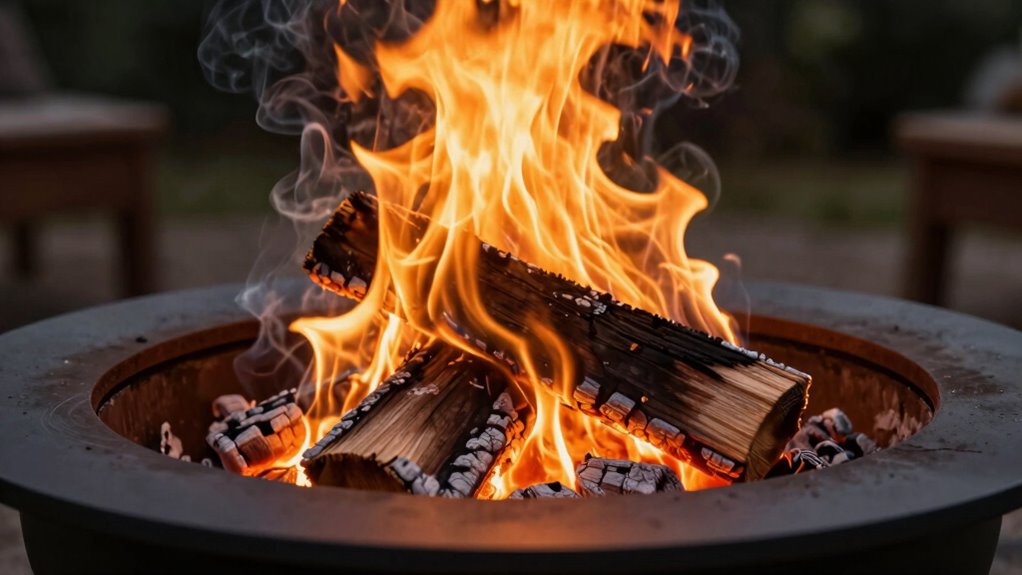
Secondary burn in smokeless fire pits works by igniting the unburned gases and particles that rise from the initial combustion. This process helps burn off excess smoke and reduces soot buildup, making your fire cleaner and more efficient. When secondary burn occurs, the heat from the flames causes leftover gases to ignite, which improves ash removal because less unburned material stays in the ashes. Additionally, this process enhances fuel efficiency by ensuring more of the wood or fuel is fully burned, giving you longer-lasting fires with less waste. You’ll notice fewer smoke clouds and less residue, making your experience more enjoyable and eco-friendly. Understanding how secondary burn works helps you maximize your fire pit’s performance while minimizing smoke and ash accumulation.
What Parts Enable Secondary Burn in Fire Pits?
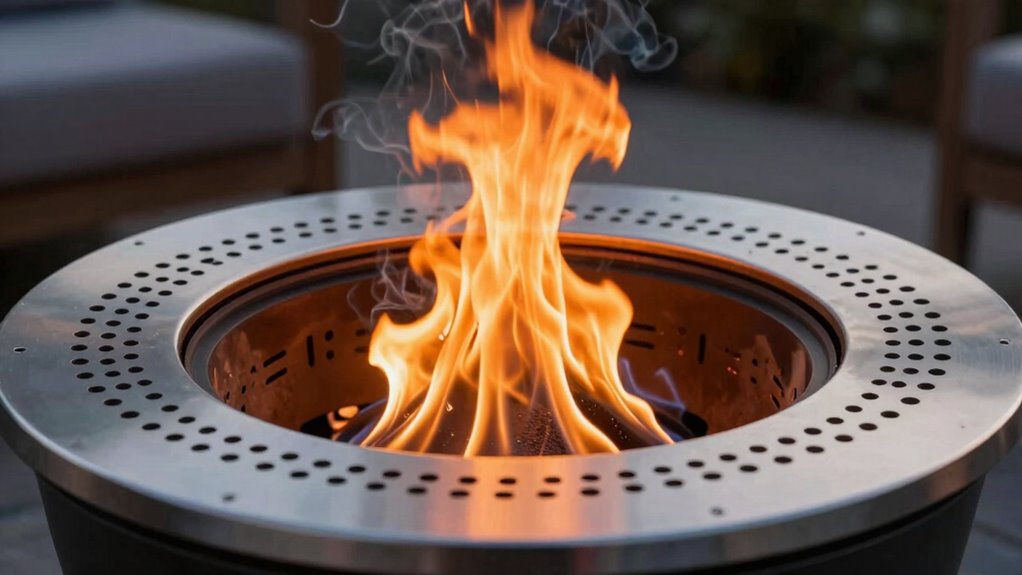
Multiple components work together to enable secondary burn in fire pits. First, the chimney design plays a vital role by directing hot gases upward, allowing unburned gases to mix with oxygen and ignite again. Second, the fuel type influences secondary burn efficiency; certain fuels produce more volatile gases that facilitate re-combustion. Third, the placement of air inlets ensures proper airflow, helping gases reach ignition temperatures. These parts work in harmony, guaranteeing that smoke particles are burned off rather than released into the air. By optimizing chimney design, selecting the right fuel type, and controlling airflow, your fire pit can achieve a smokeless, cleaner burn, making your experience more enjoyable and environmentally friendly.
How Does Airflow Improve Secondary Burn Efficiency?
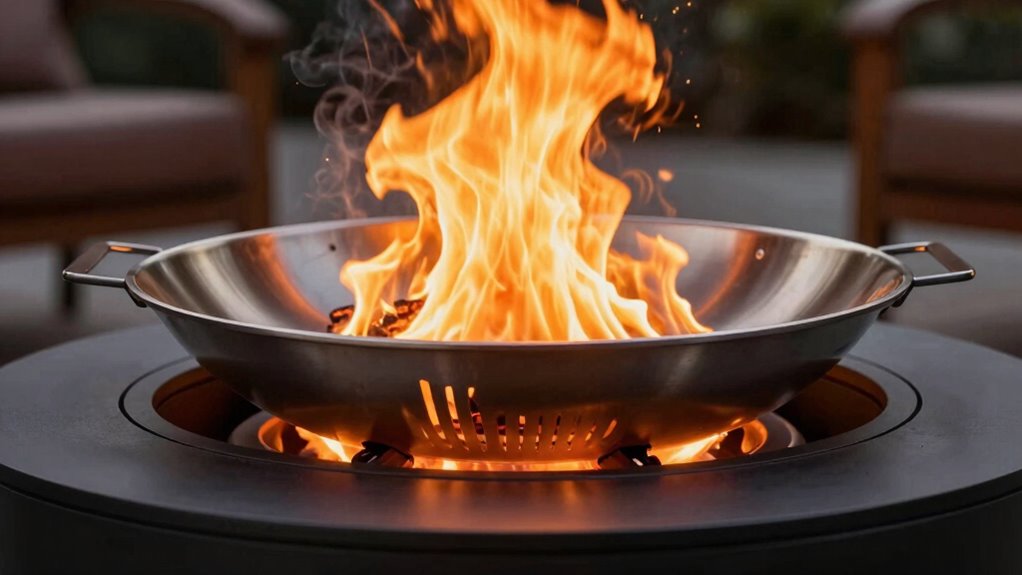
Proper airflow enhances circulation dynamics, ensuring oxygen reaches the combustion zone effectively. When oxygen supply is optimized, it fuels the secondary burn, making it more complete. As a result, your fire burns cleaner and more efficiently, reducing smoke and increasing heat output.
Airflow Circulation Dynamics
Airflow circulation plays a crucial role in enhancing secondary burn efficiency in smokeless fire pits. Proper airflow patterns ensure fresh air reaches the combustion zones, promoting complete combustion and reducing smoke. When airflow moves effectively, it maintains ideal temperatures and ignites unburned gases. To maximize this process, consider these key points:
- Consistent airflow sustains the movement of gases within the combustion zones.
- Directed airflow helps oxygen reach all areas, preventing dead spots.
- Balanced circulation maintains steady temperatures, supporting secondary burn.
Oxygen Supply Optimization
Have you ever wondered how airflow enhances the secondary burn in smokeless fire pits? It all comes down to ventilation design and oxygen regulation. Proper airflow ensures that fresh oxygen reaches the combustion chamber, fueling the secondary burn. By optimizing ventilation, you control how much oxygen enters the pit, preventing smoldering and promoting cleaner, more efficient combustion. Good ventilation design creates a steady, controlled flow of air that maintains the right oxygen levels for secondary combustion without excess airflow that could cool the fire or produce smoke. Oxygen regulation is key—adjusting airflow allows you to fine-tune the burn process, maximizing heat output and minimizing smoke. When airflow is properly managed, your smokeless fire pit operates at peak efficiency, delivering cleaner and longer-lasting fires.
Combustion Completeness Enhancement
When airflow is optimized, it directly enhances the completeness of combustion in your smokeless fire pit. Proper airflow ensures that your fuel types burn more efficiently, reducing smoke and emissions. To achieve this, focus on these key points:
- Adjust vents or air intakes to supply enough oxygen for complete combustion.
- Use well-seasoned wood or clean fuel types to promote cleaner burning and better secondary burn.
- Maintain proper fire safety by avoiding overloading the fire pit, which can restrict airflow.
Enhanced airflow improves secondary burn efficiency by ensuring that unburned gases are fully combusted, minimizing smoke and maximizing heat. This not only improves your fire’s performance but also promotes safer, cleaner fire safety practices. Proper airflow management is vital for a smokeless experience.
Benefits of Secondary Burn: Cleaner, Warmer Fires
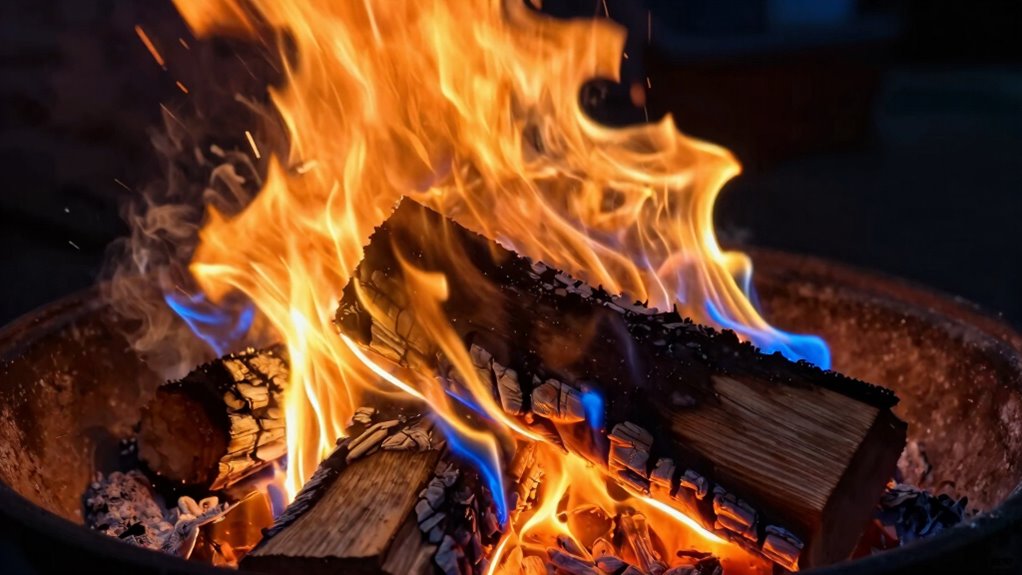
Secondary burning in smokeless fire pits enhances the overall experience by producing cleaner, more efficient flames. This process results in less smoke and ash, making your fires more enjoyable and environmentally friendly. With secondary burn, you’ll notice warmer fires that radiate heat longer, perfect for cozy nights. Different wood types, such as hardwoods, burn more efficiently during secondary combustion, maximizing heat output. Fire pit designs that incorporate secondary burn features help you get the most from your wood, reducing waste and emissions.
| Wood Types | Fire Pit Designs |
|---|---|
| Hardwood (oak, hickory) | Airtight, airflow-controlled units |
| Softwood (pine) | Elevated secondary combustion chambers |
| Mixed woods | Insulated, efficient airflow systems |
| Reclaimed wood | Optimized for complete burn |
Common Myths About Smokeless Fire Pits
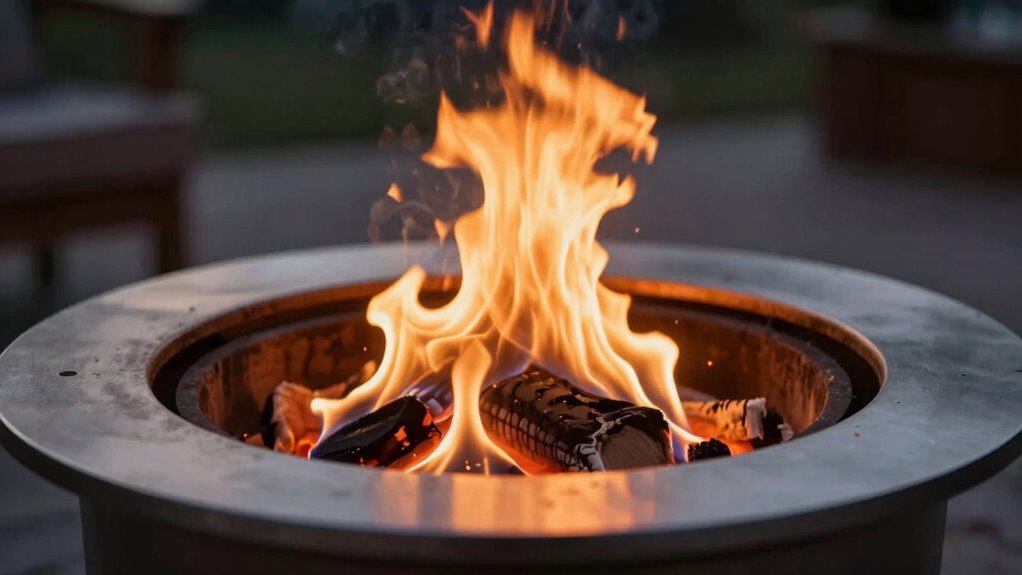
Many people believe smokeless fire pits eliminate all smoke and odors completely, but that’s a common misconception. While they considerably reduce smoke, some emissions may still occur depending on factors like fuel types and fire pit safety. Here are three myths to clarify:
1. Myth: Smokeless fire pits produce no smoke at all.
In reality, they minimize smoke but can’t eliminate it entirely, especially with improper fuel types or poor ventilation.
2. Myth: Any fuel is suitable for smokeless fire pits.
Using the wrong fuel can hinder secondary burn and compromise fire pit safety; stick to recommended fuel types.
3. Myth: Once you buy a smokeless fire pit, no maintenance is needed.
Proper cleaning and adherence to safety guidelines ensure peak performance and longevity.
Understanding these myths helps you enjoy your fire safely and effectively.
Troubleshooting Secondary Burn Problems?
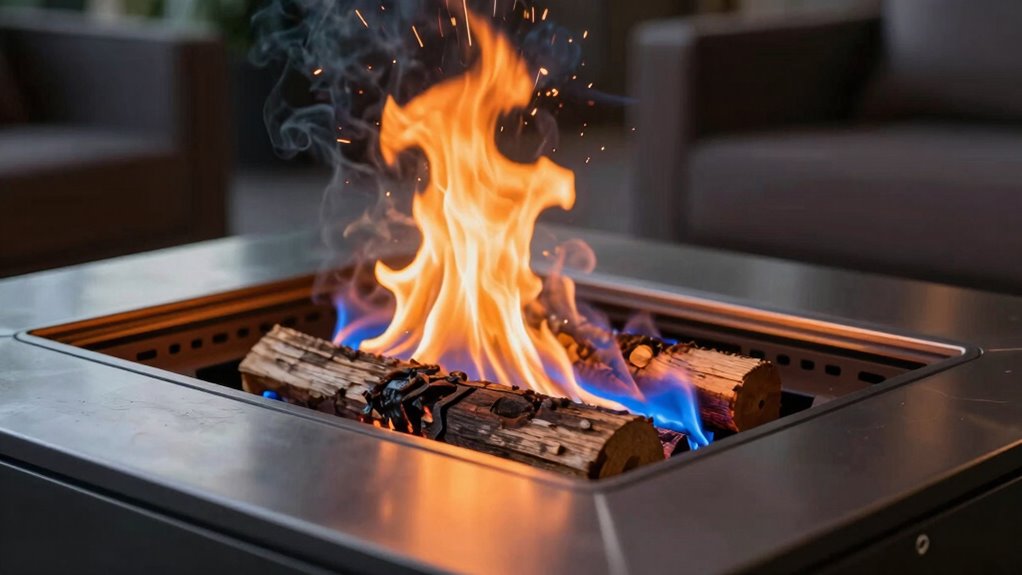
If your smokeless fire pit isn’t producing the secondary burn you expect, it’s often due to issues with airflow or fuel combustion. First, check your wood types; hardwoods like oak or hickory burn more efficiently and produce cleaner flames, aiding secondary combustion. Softwoods such as pine can create more smoke and disrupt airflow. Also, review your ignition methods—using proper kindling and ensuring the fire is well-established helps maintain steady heat and airflow. Poorly ignited fires or uneven burning can hinder secondary burn. Make sure your air vents are clear and functioning correctly, as restricted airflow reduces the oxygen needed for secondary combustion. Adjust your wood placement and ignition technique to optimize airflow, ensuring your fire pit produces a cleaner, hotter secondary burn.
Frequently Asked Questions
Are Smokeless Fire Pits Suitable for Outdoor or Indoor Use?
Smokeless fire pits are suitable for outdoor use primarily because good ventilation requirements are essential for safety and ideal operation. They’re designed to handle compatible fuels like hardwood or specially formulated pellets; using incompatible fuels can cause smoke or hazards. While some models claim indoor use, it’s best to use them outdoors where airflow is sufficient, ensuring proper secondary burn and minimizing risks associated with poor ventilation.
How Long Does a Typical Secondary Burn Cycle Last?
Think of your fire as a well-choreographed dance. The secondary burn cycle typically lasts about 10 to 20 minutes, depending on the fire pit’s design and fuel load. During this dance, secondary burn duration keeps the flames lively and clean. The cycle length varies with factors like airflow and wood type, but you’ll generally see this efficient, smoke-reducing phase lasting around 10 to 20 minutes, ensuring a cleaner, more enjoyable experience.
Can Secondary Burn Features Be Added to Existing Fire Pits?
Yes, you can add secondary burn upgrades to existing fire pits through fire pit modifications. Many kits and accessories are designed for easy installation, allowing you to enhance airflow and combustion. By choosing the right secondary burn features, you improve efficiency and reduce smoke. Just confirm the modifications are compatible with your fire pit model, and follow the manufacturer’s instructions for safe, effective secondary burn upgrades.
Do Smokeless Fire Pits Require Special Fuel Types?
No, smokeless fire pits usually don’t require special fuel types. You can typically use alternative fuels like dry seasoned wood or charcoal, which help improve burn efficiency. These fuels burn cleaner and produce less smoke because the secondary burn process maximizes heat output and reduces emissions. Just make certain your fuel is dry and suitable for your specific fire pit, and you’ll enjoy a cleaner, more efficient fire every time.
Are There Safety Concerns With Secondary Burn Technology?
You should definitely consider safety concerns with secondary burn technology; it’s not just a minor detail, but a vital factor. Fire safety is paramount, and ensuring proper ventilation is key to preventing dangerous fumes or smoke buildup. When used correctly, secondary burn systems are safe, but neglecting ventilation concerns can lead to hazards. Always follow manufacturer guidelines to enjoy your fire pit safely and responsibly, avoiding potential risks.
Conclusion
By understanding how secondary burn works, you can enjoy cleaner, warmer fires with less smoke. Proper airflow and design make all the difference, turning a simple fire pit into a smokeless experience. Remember, “A little knowledge goes a long way,” so keep these tips in mind. With the right setup, you’ll light up your evenings confidently, knowing you’re making smarter, cleaner choices for your outdoor space.