
To avoid overcorrecting with your smart pool monitor, focus on tracking trends rather than reacting to single measurements. Adjust chemicals gradually, and always verify sensor accuracy before making changes. Prioritize balancing pH and sanitizer levels together for stable water quality. Monitoring data consistently helps you catch early shifts, preventing problems. Keep in mind that minor fluctuations are normal—learning to interpret these signals wisely can save you time and money. If you want to master this process, keep exploring.

Get pool and patio gear delivered free with Prime
- Fast, free delivery on millions of items
- Prime Video, Amazon Music and more included
- Member-only deals all year
Key Takeaways
- Review data trends regularly and focus on gradual adjustments rather than reacting to single readings.
- Prioritize maintaining stable pH and sanitizer levels based on consistent, trend-based information.
- Verify sensor calibration before making chemical changes to ensure data accuracy.
- Make small, incremental chemical adjustments instead of large corrections to prevent swings.
- Seek professional help when persistent issues or unusual fluctuations indicate potential water chemistry problems.
smart pool water chemistry monitor
As an affiliate, we earn on qualifying purchases.
As an affiliate, we earn on qualifying purchases.
How Do Smart Pool Monitors Work and What Data Do They Show?
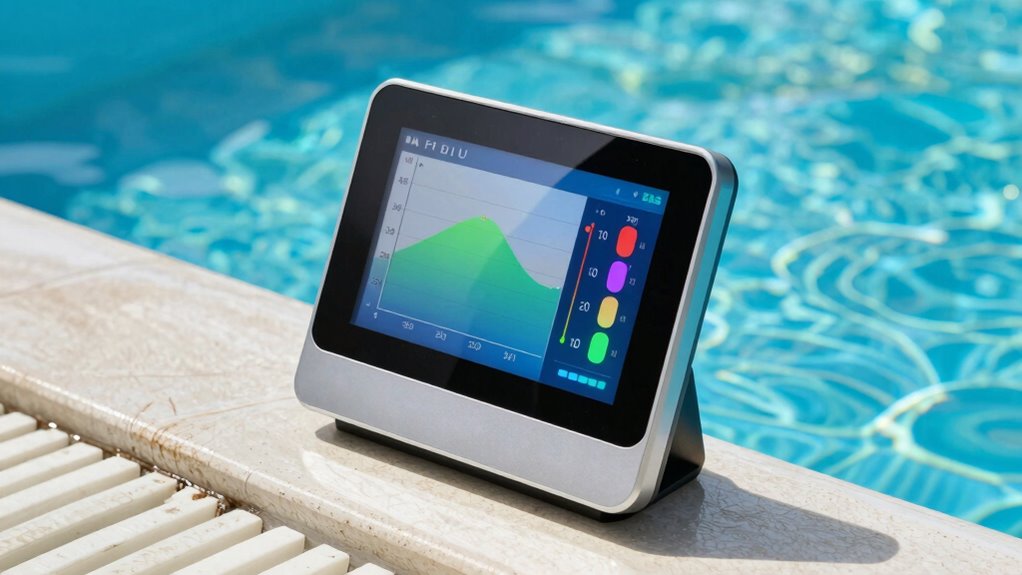
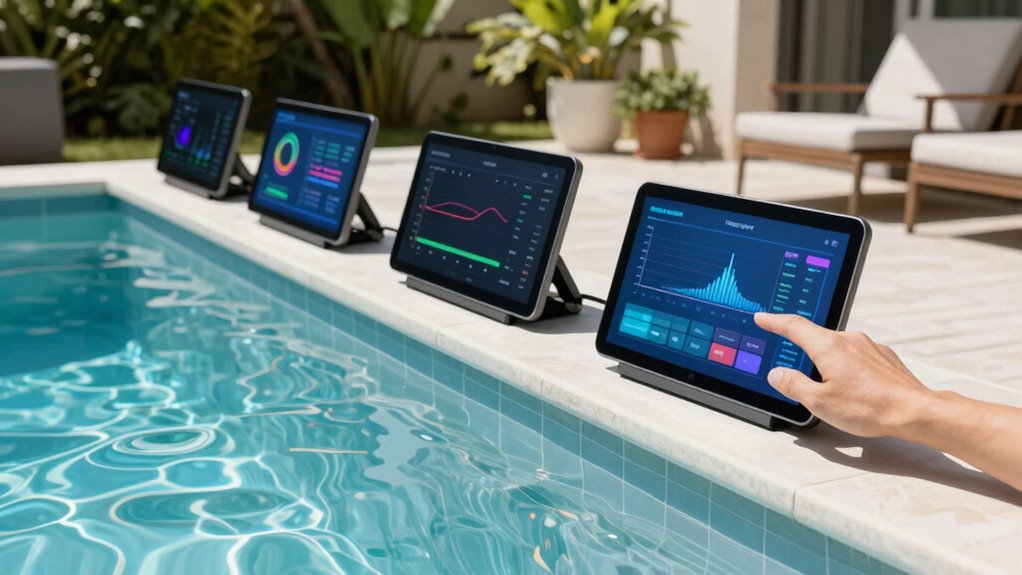
Smart pool monitors work by continuously analyzing water quality through sensors that measure parameters like pH, chlorine levels, temperature, and alkalinity. Sensor accuracy is vital here because precise readings ensure reliable data, helping you maintain ideal water conditions. These sensors send real-time data to the monitor, which interprets the information to give you clear, actionable insights. By accurately capturing fluctuations in water chemistry, the device helps prevent issues like algae growth or skin irritation. Data interpretation involves translating raw sensor readings into understandable metrics, often displayed on a user-friendly app or panel. This way, you can easily see if adjustments are needed, making water management more straightforward while avoiding guesswork and overcorrecting.
Setting Water Chemistry Targets Without Overcorrecting
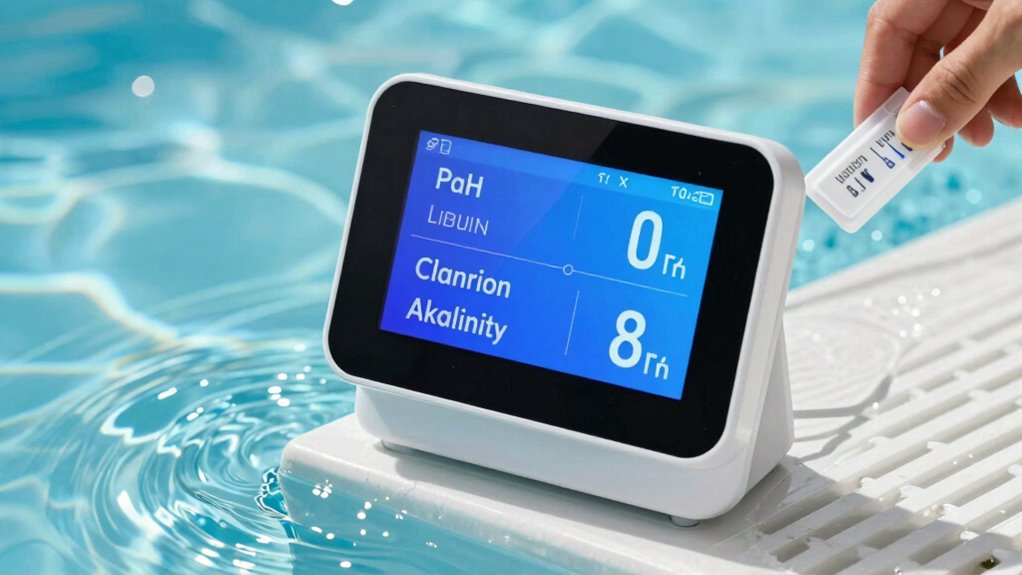
To keep your pool water balanced, set realistic chemistry targets based on your monitor’s data. Regularly track trends so you can spot changes early and avoid overcorrecting. Remember, reactive adjustments can cause more harm than good, so take your time with each correction.
Set Realistic Targets
Setting water chemistry targets requires a careful balance; aiming too high or too low can lead to unnecessary corrections and imbalances. Instead, focus on realistic goals for chlorine levels and pH balance based on your pool’s typical readings. Avoid the temptation to set overly strict targets that may be difficult to maintain consistently. Instead, aim for a range that keeps the water safe and comfortable, allowing some flexibility. For example, maintaining chlorine levels within the recommended range prevents bacteria growth without overchlorinating, while a stable pH balance keeps water clear and prevents equipment damage. By setting achievable targets, you reduce the risk of overcorrecting and creating more imbalances, making your pool maintenance more efficient and less stressful.
Monitor Trends Regularly
How can you guarantee your pool remains balanced without overcorrecting? The key is to monitor trends regularly. Keep an eye on your pH balance and mineral levels over time, rather than reacting to a single reading. Tracking these values helps you identify patterns and anticipate changes before they become problems. For example, if pH levels steadily rise, you know it’s time to adjust gradually rather than making abrupt corrections. Consistent monitoring allows you to set realistic water chemistry targets, maintaining stability without overdoing it. Over time, this approach minimizes chemical swings, keeps your water clear, and extends the life of your pool equipment. Regular trend analysis empowers you to manage your pool efficiently and confidently.
Avoid Reactive Adjustments
Reactive adjustments can lead to overcorrecting your pool’s chemistry, causing unnecessary fluctuations and potential damage. When you react immediately to small changes, you may overshoot your target levels, resulting in pH fluctuations and a chemical imbalance. Instead, set clear water chemistry targets based on your smart monitor’s data and give the chemicals time to stabilize. Make small, incremental adjustments rather than large corrections, and wait several hours before testing again. This approach helps prevent overcorrection and maintains consistent water quality. Remember, patience is key; rushing to fix every minor change can do more harm than good. By avoiding reactive adjustments, you’ll keep your pool’s chemistry balanced and avoid the cycle of constant corrections.
Using Monitor Data Step-by-Step to Keep Your Pool Balanced
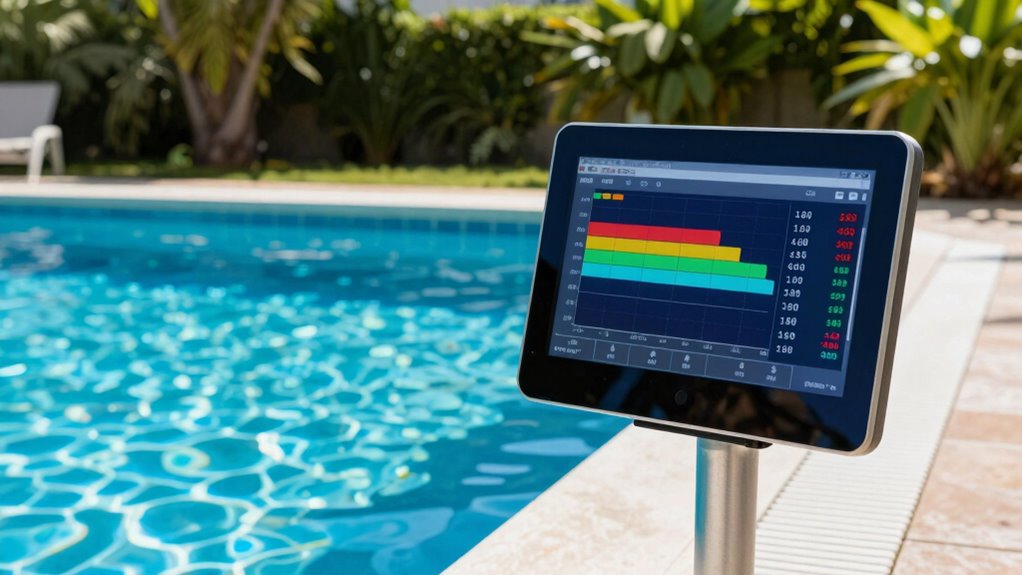
To keep your pool balanced, start by regularly reviewing the data from your smart monitor. Check pH levels first, aiming for a balanced range to prevent corrosion or scale buildup. If the pH is too high, add pH reducers; if too low, use pH increasers. Next, focus on algae prevention by monitoring sanitizer levels, ensuring they stay within the recommended range. Consistent data review helps you identify subtle shifts before they become bigger issues. When adjustments are needed, make small, incremental changes rather than overcorrecting. This careful approach maintains water chemistry stability and reduces chemical waste. By following these steps, you ensure your pool remains inviting, clear, and safe without unnecessary chemical swings or overcorrections.
How to Spot Water Chemistry Trends and Avoid Overreacting
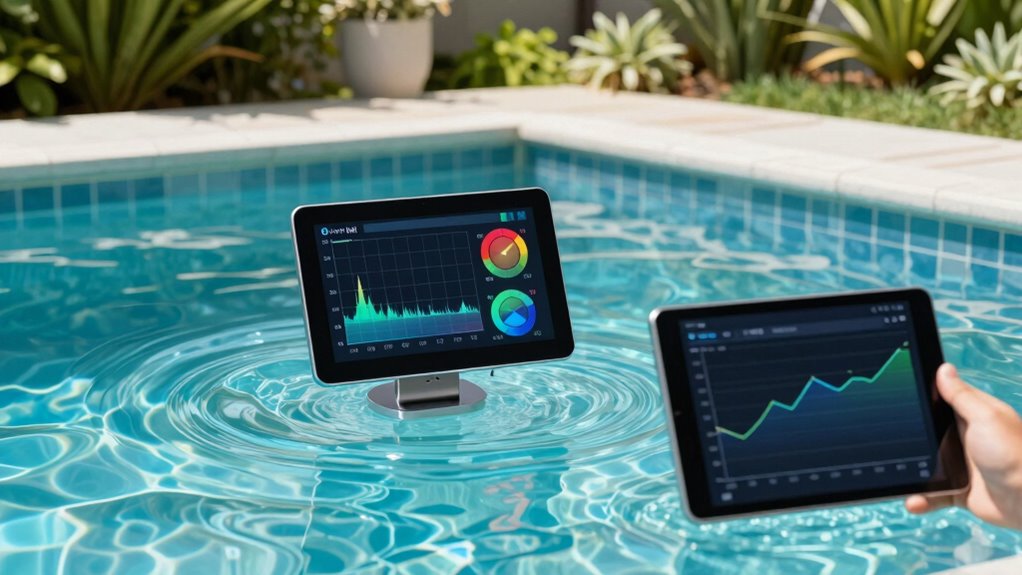
By keeping an eye on your monitor data, you can spot early signs of water chemistry changes before they become problems. Look for consistent patterns rather than reacting to single readings, and give your adjustments time to work. Remember, gradual changes help keep your pool safe and balanced without overreacting.
Recognize Early Changes
Monitoring your pool regularly allows you to catch water chemistry changes before they become serious problems. Pay close attention to subtle shifts in pH, alkalinity, or sanitizer levels, as these early signs indicate a trend rather than an immediate emergency. To trust your data, verify your smart monitor is properly calibrated; sensor calibration is key to maintaining data accuracy. When readings start to drift, note how quickly they change and compare them to previous measurements. Recognizing these early variations helps you avoid overcorrecting, which can lead to more instability. By staying vigilant and understanding the significance of small fluctuations, you can make timely adjustments that keep your water balanced without overreacting to temporary spikes or dips.
Monitor Consistent Patterns
Recognizing consistent patterns in your water chemistry helps you distinguish between normal fluctuations and developing issues. Regular trend analysis reveals how your pool’s chemistry behaves over time, highlighting stable conditions versus changes that need attention. Pattern recognition allows you to see if pH, chlorine levels, or alkalinity fluctuate within acceptable ranges or if a trend points toward a problem. For example, a gradual decline in sanitizer levels might indicate algae growth, while sudden pH swings could signal contamination. By tracking these patterns, you avoid reacting to temporary spikes or dips that don’t require immediate action. Instead, you develop a clear understanding of your pool’s normal behavior, enabling smarter, more measured responses that keep your water balanced without overcorrecting.
Adjust Gradually and Safely
Even when your water chemistry shows signs of imbalance, it’s important to adjust your chemicals gradually rather than making sudden, large changes. Rapid adjustments can lead to cloudy water, equipment strain, and safety hazards. By making small, incremental changes, you give your pool time to stabilize and prevent overcorrections that could compromise pool safety. Keep an eye on trends with your smart monitor, and respond calmly.
- Test water multiple times before adding chemicals
- Adjust pH and alkalinity slowly
- Wait 24 hours between chemical additions
- Regularly inspect pool equipment for proper maintenance
- Monitor chlorine levels consistently to avoid overuse
This careful approach supports safer swimming conditions and preserves your pool’s equipment.
Common Mistakes in Interpreting Pool Data and How to Avoid Them
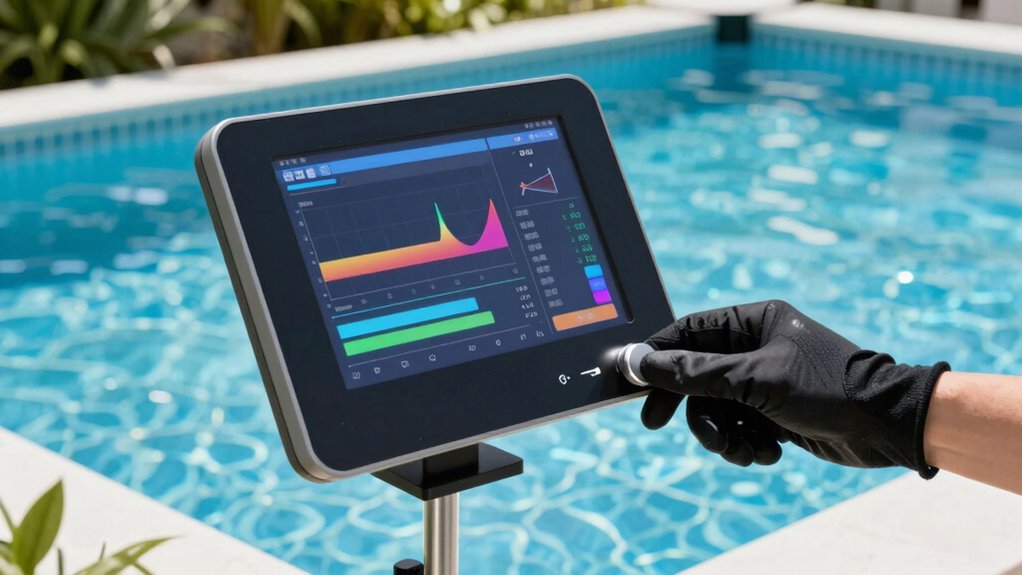
Interpreting pool data accurately can be tricky, especially if you’re new to using smart monitors. One common mistake is reacting too quickly to pH fluctuations, which can lead to overcorrections and unstable water chemistry. Always check multiple readings before adjusting chemicals, as small pH changes are normal and don’t require immediate action. Another mistake is neglecting algae prevention, assuming that sanitizer levels alone handle algae growth. Proper interpretation involves monitoring both pH and sanitizer data together to maintain a balanced environment. Overcorrecting based on a single data point can cause more harm than good, so take your time to analyze trends. By understanding these pitfalls, you’ll keep your pool water clear and balanced without unnecessary chemical swings.
When to Call a Pool Professional for Complex Water Chemistry Issues
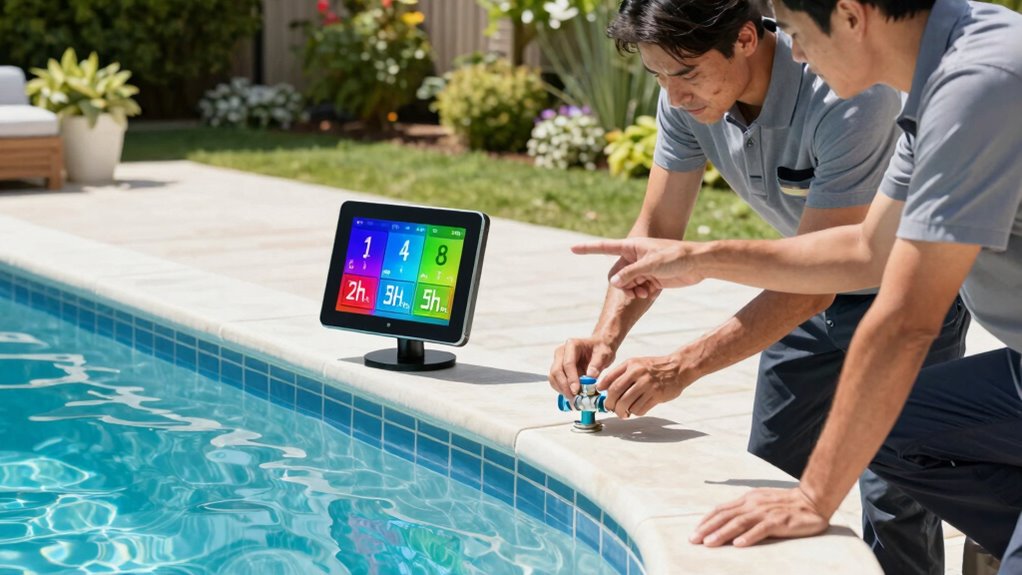
Complex water chemistry issues often require professional expertise when standard testing and troubleshooting don’t resolve the problem. If you notice persistent cloudiness, algae blooms, or fluctuating pH and alkalinity levels, it’s time to call a pool professional. They can accurately diagnose underlying issues and ensure proper chemical balancing. You should seek expert help if:
- Your tests show consistently abnormal pH or chlorine levels
- Algae or cloudiness won’t clear despite regular maintenance
- You’re unsure how to adjust chemicals safely
- Water feels corrosive or overly buffered
- Pool equipment shows signs of chemical damage
Proper pool maintenance involves precise chemical balancing, which experts can optimize to keep your pool safe and inviting. Knowing when to call in professionals saves you time, money, and potential damage.
Frequently Asked Questions
Can Smart Pool Monitors Detect Algae or Bacteria Presence?
Smart pool monitors typically don’t detect algae or bacteria directly, but they excel at algae detection through chemical levels like chloramine and pH. Bacteria monitoring isn’t usually part of their features. You can use this data to maintain proper sanitizer levels and prevent bacterial growth. Keep an eye on chemical readings, and if they indicate imbalance, adjust your chemicals accordingly to keep your pool safe and clear.
How Often Should I Calibrate My Smart Pool Monitor?
You should calibrate your smart pool monitor consistently, ideally every 2 to 4 weeks, to keep data precise. Follow a maintenance schedule that includes regular calibration, ensuring accuracy and avoiding overcorrection. This routine helps you stay in sync with your pool’s needs, preventing problems before they start. Remember, consistent calibration keeps your monitor reliable, so your pool stays pristine, protected, and perfectly balanced.
Are Smart Pool Monitors Compatible With All Pool Types?
Smart pool monitors are generally compatible with most pool types, but you should check the device compatibility for your specific setup. They help you keep an eye on your pool chemistry, ensuring proper chemical balance. If you have a saltwater or traditional chlorinated pool, verify that your monitor supports these types. This way, you get accurate readings and maintain your pool’s health without overcorrecting or causing issues.
What Is the Typical Lifespan of a Smart Pool Monitor Device?
Oh, the eternal question—how long will your smart pool monitor last? On average, expect about 3 to 5 years of device durability if you keep up with routine maintenance tips. To extend its life, avoid exposing it to harsh chemicals or extreme weather. Think of it as a high-maintenance pet; treat it well, and it’ll reward you with years of reliable data—less time troubleshooting, more time swimming.
Do Smart Pool Monitors Require Wi-Fi or Internet Connection?
Smart pool monitors generally require Wi-Fi or an internet connection to function properly. They depend on Wi-Fi for real-time data transmission and updates. Without a stable internet connection, you might experience delays or loss of data, making it harder to manage your pool efficiently. Make certain your device has a reliable Wi-Fi signal to avoid connectivity issues, and check the internet requirements specified by your monitor’s manufacturer for peak performance.
Conclusion
Remember, your pool’s health hinges on reading the data wisely—like a captain steering through calm and stormy waters. Don’t let the numbers tempt you into overcorrecting, risking more trouble than solutions. Instead, trust your monitor, stay patient, and adjust thoughtfully. With a clear eye and steady hand, you’ll keep your pool perfectly balanced—making every swim a splash of perfection. After all, mastery over your pool’s chemistry is just a smart read away.
Halloween Picks
halloween
As an affiliate, we earn on qualifying purchases.