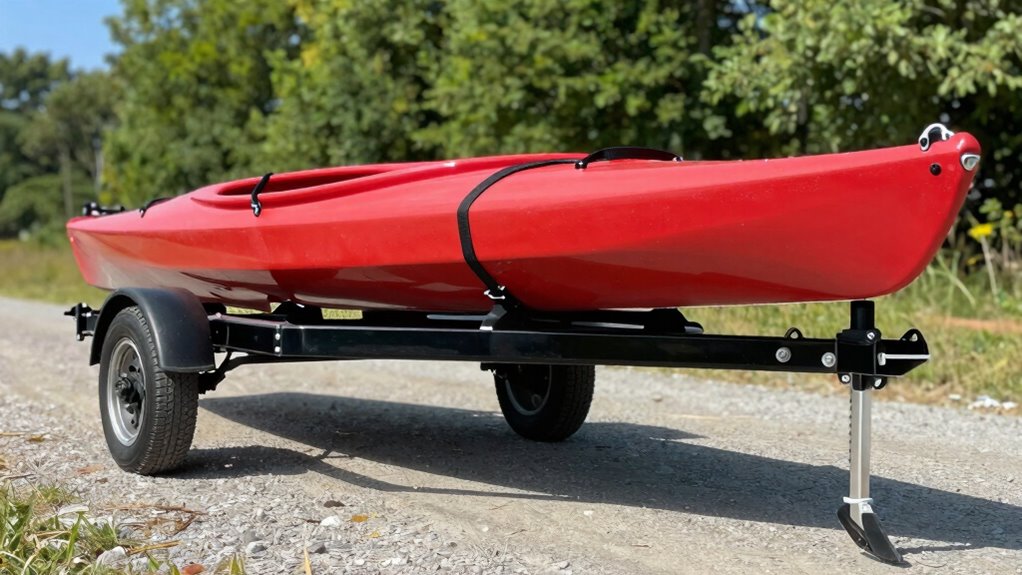

The one measurement people often forget when it comes to kayak trailers is the widest point, including accessories like side racks or lights. Knowing this guarantees your trailer stays within legal limits, promotes safe handling, and makes loading easier. Failing to measure correctly can cause stability issues or legal problems. To avoid mistakes, measure on a flat surface at the broadest point and check again. If you want to get it right, keep going to find out more.

Get pool and patio gear delivered free with Prime
- Fast, free delivery on millions of items
- Prime Video, Amazon Music and more included
- Member-only deals all year
Key Takeaways
- Measure the trailer’s total width at its widest point, including any accessories like racks, lights, or brackets.
- Don’t forget to include side-mounted accessories that may extend beyond the main frame when measuring.
- Always confirm the widest point after modifications or adding accessories to ensure compliance and safety.
- Check local regulations for maximum legal trailer width, typically 8’6″, and ensure your measurement stays within limits.
- Re-measure regularly, especially after adjustments, to prevent errors and maintain safe, legal trailer dimensions.
kayak trailer width measurement tape
As an affiliate, we earn on qualifying purchases.
As an affiliate, we earn on qualifying purchases.
Why Knowing Your Kayak Trailer’s Width Matters for Safety and Legality
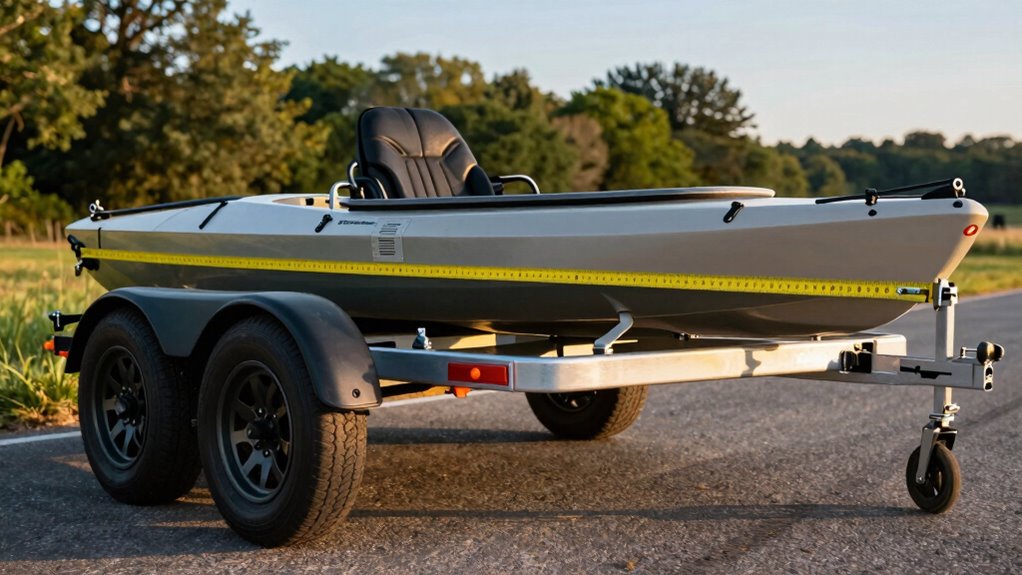
Knowing the width of your kayak trailer is vital because it directly affects your safety on the road and whether you’re complying with legal requirements. A trailer that’s too wide may violate local laws, leading to fines or unsafe driving conditions. Proper width guarantees you stay within legal limits and prevents accidents caused by unstable loads. Additionally, understanding your trailer’s width helps you choose the right trailer accessories, such as lights and reflectors, which are essential for visibility. It also influences your storage solutions; a wider trailer might need more space in your garage or storage unit. Being aware of this measurement makes it easier to plan your trips, secure your kayak safely, and avoid potential hazards, keeping your adventures safe and compliant.
How to Measure Your Kayak Trailer’s Width the Right Way
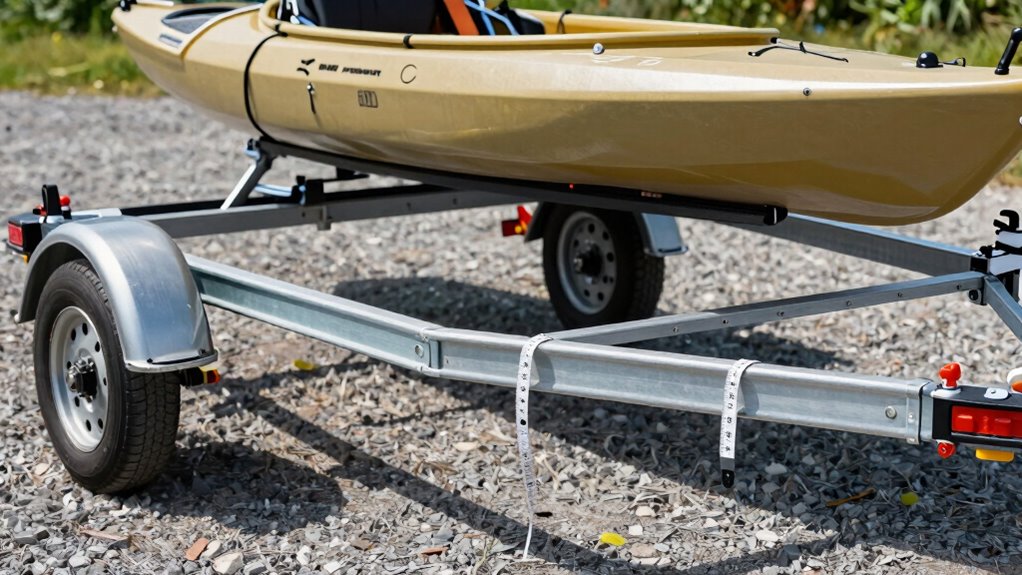
To accurately measure your kayak trailer’s width, start by parking it on a flat, level surface and ensuring it’s empty or has the load evenly distributed. Use a tape measure or a ruler to determine the widest points, typically across the trailer’s widest trailer accessories or frame. Make sure to include any side-mounted racks, lights, or other accessories that contribute to its overall width. Double-check your measurements to avoid errors. Proper measurement helps you stay compliant with legal width limits and ensures safe towing. Regular maintenance tips include checking that trailer accessories are securely attached and not adding unnecessary width. Keeping your trailer’s width precise minimizes issues on the road and simplifies future measurements.
Common Measurement Mistakes and How to Avoid Them
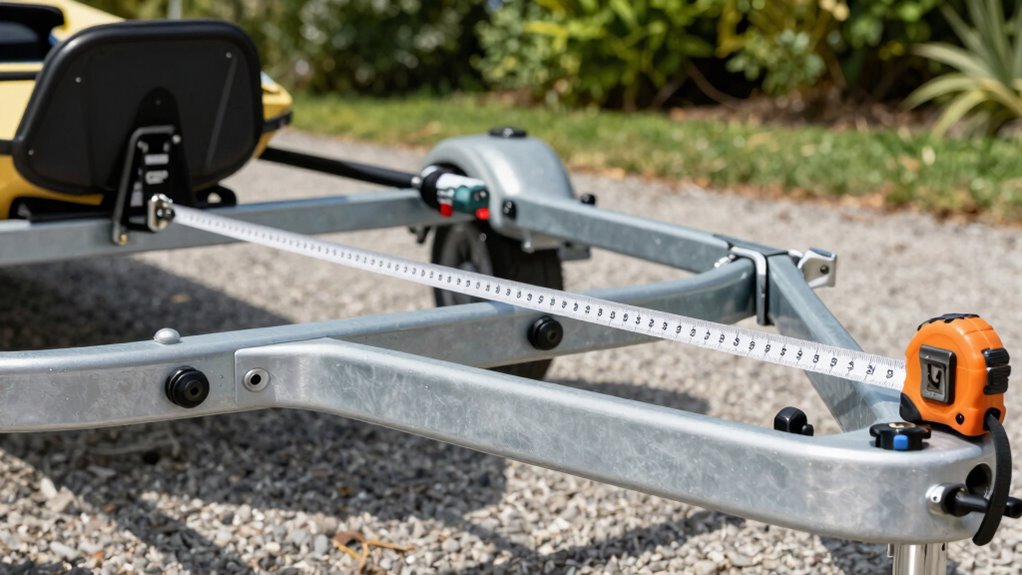
Many people overlook essential measurements like trailer width and tongue length, which can cause fitting issues later. Ignoring the necessary clearance space might lead to difficulty in maneuvering your trailer safely. To avoid these mistakes, double-check all measurements before purchasing or modifying your kayak trailer.
Overlooking Trailer Width
One common mistake when measuring your kayak trailer is overlooking the importance of accurately determining its width. Failing to do so can lead to issues with trailer aesthetics and color coordination, especially if you want a sleek look or matching accessories. An incorrect width measurement might cause your trailer to look awkward or stand out negatively. It can also affect stability and safety on the road. To avoid this mistake, measure the trailer at its widest point, including any side extensions or brackets. Remember, a well-measured width ensures your trailer aligns with your vehicle’s dimensions and maintains a cohesive appearance. Taking this step prevents surprises and helps you choose a trailer that’s both functional and visually appealing.
Ignoring Tongue Length
Have you ever overlooked the importance of measuring your trailer’s tongue length? Many boaters focus on overall trailer size but forget that tongue length directly impacts trailer extension and maneuverability. If your tongue is too short, your trailer may not connect properly or may sway during transport. Conversely, an overly long tongue can make backing up tricky and reduce turning radius. It’s essential to measure precisely and consider how the tongue length affects your vehicle’s hitch position. Proper tongue length ensures a balanced trailer extension, providing stability and safe towing. Don’t assume standard measurements fit all trailers; always double-check your specific kayak trailer to avoid unnecessary adjustments or issues on the road. Correctly measuring tongue length helps optimize your trailer’s performance and safety.
Forgetting Clearance Space
Neglecting to account for clearance space is a common measurement mistake that can lead to difficulties during towing and storage. Without proper clearance, your trailer might scrape or get damaged, and it can also affect trailer aesthetics by causing misalignment or awkward looks. To avoid this, measure extra space beyond the kayak’s length, considering the trailer’s overall dimensions. This ensures safe maneuvering and prevents accidental damage. Additionally, leaving enough clearance helps with color coordination and maintaining a streamlined appearance. Proper clearance makes your trailer easier to load and unload while keeping everything looking neat. Remember, small oversights in clearance can lead to bigger problems down the line, so double-check your measurements to keep your kayak trailer functional, attractive, and easy to tow.
What Are the Legal Width Limits for Kayak Trailers?
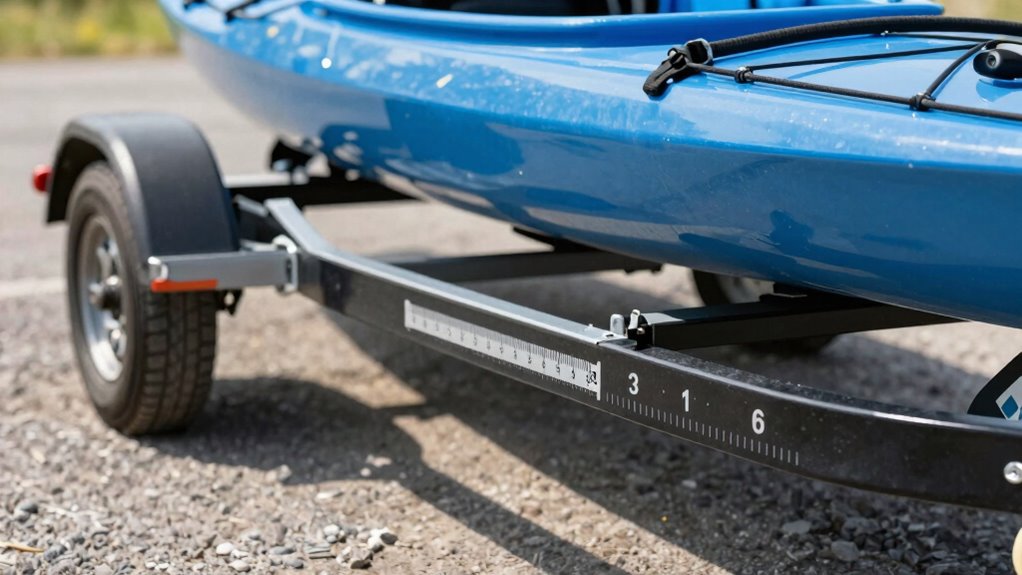
Understanding the legal width limits for kayak trailers is essential to stay compliant on the road. Federal regulations generally set a maximum width, but state-specific rules can vary, so it’s important to verify local laws. To guarantee your trailer meets requirements, measure it accurately and compare it to the applicable limits.
Federal Width Regulations
Federal width regulations set clear limits on how wide kayak trailers can be on public roads. Generally, the maximum legal width is 8 feet 6 inches, including any load. Staying within this limit helps guarantee your trailer complies with federal laws, avoiding fines or safety issues. Proper axle positioning is vital for trailer durability and stability, especially when near the legal width threshold. Correct axle placement helps distribute weight evenly, reducing stress on the frame and axles during transport. While some trailers might be slightly wider for specific needs, you should always verify that your kayak trailer stays within federal limits. Adhering to these regulations ensures safe, legal hauling, and prolongs your trailer’s lifespan by preventing unnecessary strain.
State-Specific Variations
While federal regulations set the general maximum width for kayak trailers, individual states often have their own rules you need to follow. Some states strictly limit width, while others allow slight variations, especially for specific equipment like anchor points. These anchor points, used for securing your kayaks, must be positioned within legal width limits, so they don’t cause your trailer to exceed state standards. Additionally, some states require visible markers or specific color schemes on trailers to enhance safety and visibility on the road. Always check your state’s specific regulations before hitting the road, as non-compliance can lead to fines or safety issues. Being aware of these variations helps ensure your trailer stays within legal limits and your trips go smoothly.
Measuring Your Trailer
To guarantee your kayak trailer stays within legal limits, you need to measure its width accurately. The legal width limit varies by state but typically ranges from 8 to 8.5 feet. Use a tape measure to determine the widest point of your trailer, including any added accessories. Remember, the trailer materials, such as aluminum or steel, can affect overall width—aluminum often being lighter and more streamlined. Confirming your trailer’s width doesn’t exceed legal limits is crucial for safe towing and avoiding fines. Also, check your towing capacity to ensure your vehicle can handle the trailer’s size and weight. Proper measurement helps prevent accidents and ensures compliance with regulations, making your kayak trips safe and hassle-free.
How to Choose the Best Trailer Width for Your Kayak and Vehicle
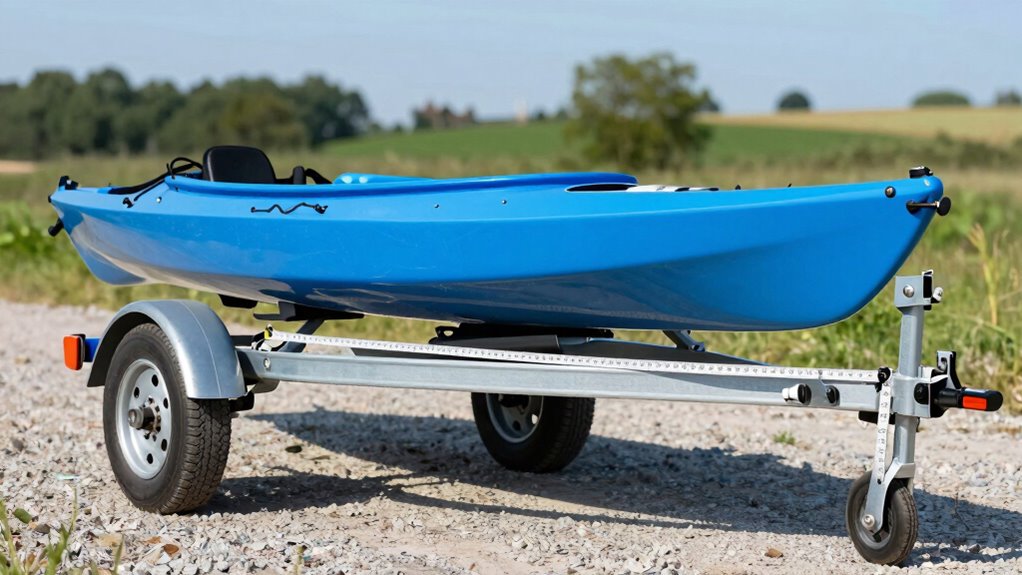
Choosing the right trailer width is essential for safe and efficient kayak transport. A width that matches your kayak and vehicle ensures better kayak stability during transit, preventing sway or tipping. If the trailer is too narrow, your kayak may be unstable, risking damage or accidents. Conversely, an overly wide trailer can affect trailer aesthetics and make maneuvering more cumbersome. Measure your kayak’s width and compare it to your vehicle’s track width to find a balanced fit. Aim for a trailer width that provides enough space for secure straps and padding without being excessively wide. This balance improves stability, keeps your kayak secure, and maintains a clean look on the road. Proper trailer width is a simple yet vital step in protecting your gear and ensuring smooth travel.
How Trailer Width Affects Loading, Unloading, and Storage
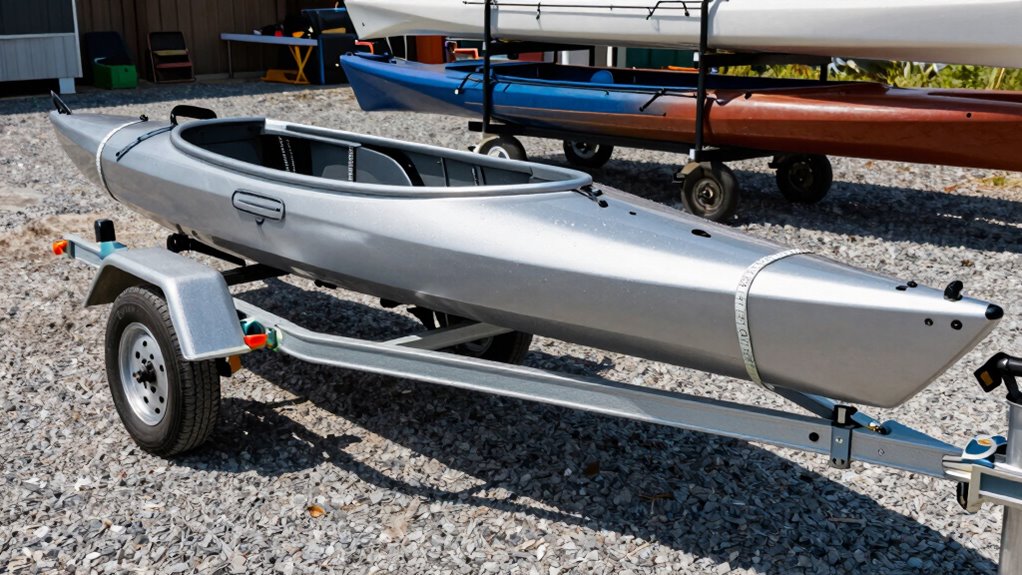
The width of your trailer directly impacts how easily you can load, unload, and store your kayak. A wider trailer provides more space, making it easier to maneuver your kayak on and off without risking damage. However, too wide a trailer can cause issues with trailer tires, especially if they extend beyond the vehicle’s fenders, increasing the risk of damage or accidents. Additionally, the trailer width must be compatible with your hitch setup; an ill-fitting hitch can make loading and unloading cumbersome or unsafe. Proper width guarantees your kayak stays secure during transport and simplifies storage, whether in a garage or storage unit. Balancing width with hitch compatibility and trailer tires helps you achieve safe, efficient, and convenient kayaking trips.
How to Adjust or Customize Your Trailer Width for a Better Fit
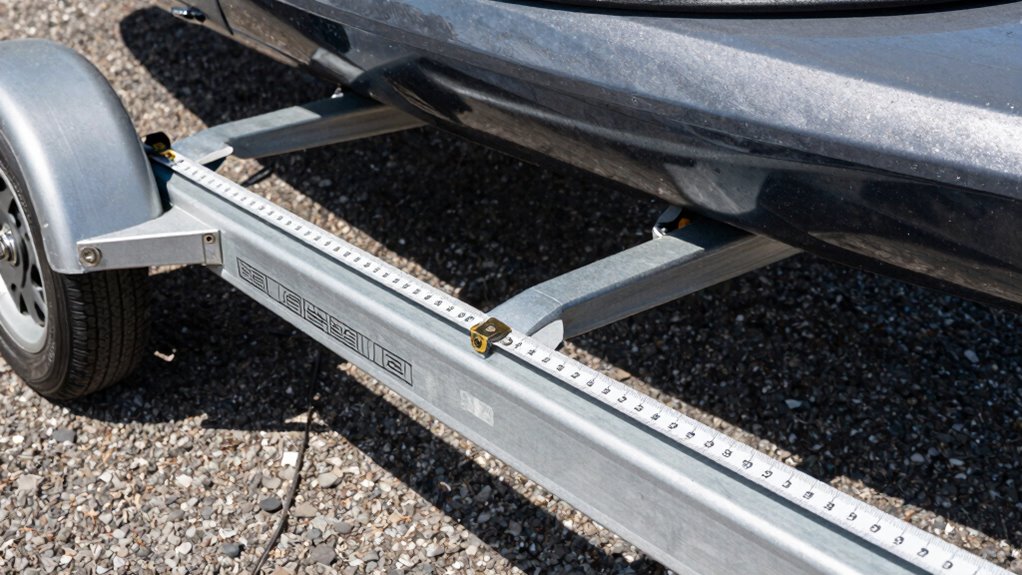
Adjusting or customizing your trailer width can substantially improve how your kayak fits and how safely you transport it. Proper trailer customization guarantees a snug, secure hold, preventing shifting during travel. To perform effective width adjustment, consider these steps:
- Loosen the side frame bolts to allow for lateral movement.
- Slide the trailer sides outward or inward to match your kayak’s width.
- Use spacers or shims if needed for precise alignment.
- Tighten the bolts securely to lock the new width in place.
Visualize expanding the sides to cradle your kayak more tightly, or narrowing to fit snugly into storage. Proper width adjustment enhances stability and safety, making your trailer setup both efficient and reliable.
What Happens If Your Trailer Is Too Wide or Too Narrow?
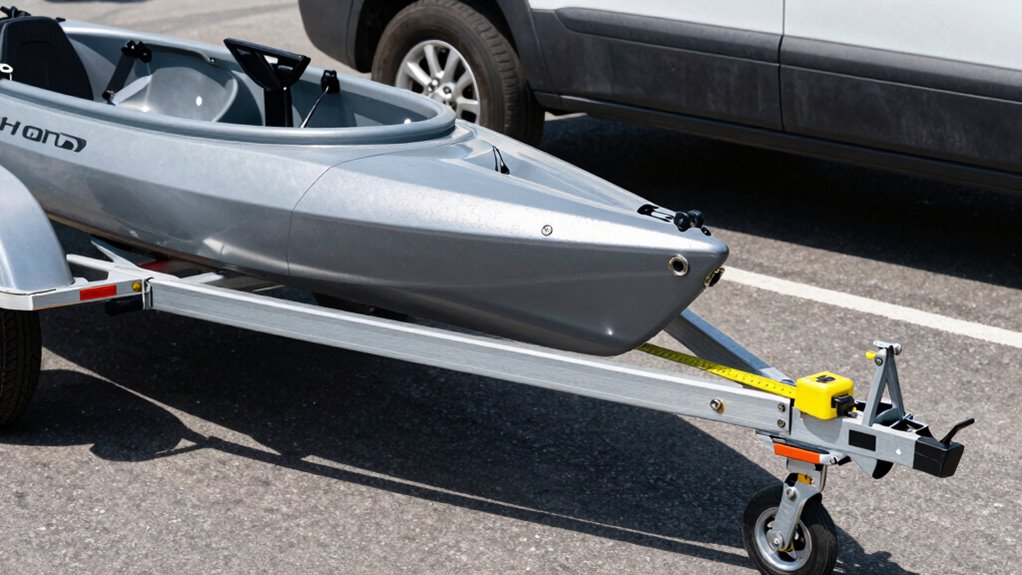
When your trailer isn’t the right width, it can lead to serious issues during transportation. If it’s too wide, your trailer may compromise trailer stability, making it harder to control on the road and increasing the risk of accidents or damage. A wider trailer can also disrupt boat aerodynamics, causing wind resistance that reduces fuel efficiency. Conversely, if your trailer is too narrow, it may not securely hold your kayak, risking shifting or falling off, which jeopardizes safety. An undersized trailer can also cause instability during towing, especially at higher speeds. Ensuring the correct width helps maintain proper trailer stability and supports ideal boat aerodynamics, making your trips safer and more efficient. Proper sizing is essential for smooth and secure transportation.
Final Checklist: Are You Ready With the Correct Trailer Width?
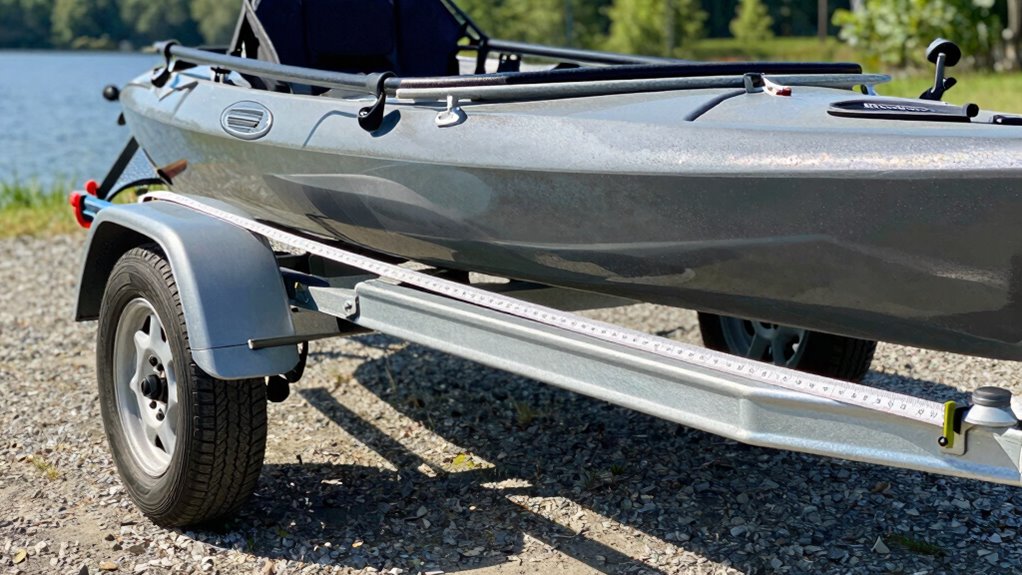
Before hitting the road, double-check that your trailer width matches your kayak and vehicle specifications. Making certain the correct width prevents issues at the trailer hitch and avoids exceeding your vehicle’s towing capacity. To confirm readiness:
- Measure the trailer width at the widest point to ensure it fits within legal limits.
- Verify your vehicle’s towing capacity can handle the trailer’s weight and width.
- Check that the trailer hitch is compatible with your vehicle’s hitch receiver.
- Confirm that the trailer’s overall width aligns with local regulations for safe travel.
Proper width ensures stability, eliminates the risk of side swipes, and guarantees your kayak’s safe transport. Taking these steps keeps your trip smooth and stress-free, so you arrive ready to enjoy your adventure.
Frequently Asked Questions
How Does Trailer Width Influence Overall Vehicle Handling?
Trailer width directly impacts your vehicle’s handling, making turns more or less responsive. When the trailer is wider, you need to check your tire pressure regularly to prevent instability, especially during sharp turns. Proper brake alignment is essential to maintain control, as a wider trailer shifts weight distribution. Overlooking these factors can lead to poor handling, so always verify your trailer width complements your vehicle’s capabilities for safe towing.
Can I Modify My Kayak Trailer to Meet Legal Requirements?
Yes, you can modify your kayak trailer to meet legal requirements. First, check your trailer’s weight, guaranteeing it doesn’t exceed legal limits. If it does, reduce the load or upgrade your trailer. Also, consider brake requirements—adding brakes may be necessary if your trailer surpasses a certain weight. Always verify local regulations, and consult a professional if needed, to ensure your modifications are compliant and safe.
What Tools Are Best for Measuring Trailer Width Accurately?
To measure your trailer width accurately, use a tape measure or a laser distance meter for precise measuring techniques. A tape measure is versatile and easy to use, but a laser tool offers better tool accuracy, especially for wider or hard-to-reach areas. Make certain the tape is straight and taut, or the laser is properly aligned, to get the most accurate readings. This helps you meet legal requirements and avoid issues on the road.
How Often Should I Recheck My Trailer’s Width?
You should recheck your trailer’s width at least once a year—more if you hit rough roads or have an axle alignment issue. Even tiny shifts can cause major problems, like uneven tire pressure or steering issues. Regularly inspecting guarantees your trailer stays in perfect shape, preventing dangerous sway or tire wear. Keep your measurements sharp and your trailer safe, so you can enjoy smooth sailing on every trip.
Does Trailer Width Affect Insurance Coverage Options?
Yes, trailer width can affect your insurance coverage options because wider trailers may require specific trailer lighting and hitch compatibility, which insurers consider when evaluating risk. If your trailer isn’t properly equipped with functioning trailer lighting or compatible hitches, your coverage might be limited or denied. Always make certain your trailer meets safety standards and fits within legal width limits to avoid insurance issues and ensure safe towing.
Conclusion
Don’t overlook your kayak trailer’s width—it’s essential for safety, legality, and ease of use. Even if it seems minor, a proper fit prevents fines and accidents, and makes loading a breeze. If you think measuring is a hassle, remember it’s worth the effort to avoid costly mistakes later. Take the time now to get it right, and enjoy worry-free kayaking trips with confidence and peace of mind.
Fall Picks
fall essentials
As an affiliate, we earn on qualifying purchases.