Understanding your electric SUP pump specs helps you inflate faster and safer. PSI measures the pressure inside your board, affecting stability and safety, while LPM indicates how quickly the pump can inflate the board. The inflation time depends on these specs, your SUP size, and temperature. A pump with the right PSI and high airflow speeds up inflation without risking damage. Keep exploring to learn how to choose and use the perfect pump for your needs.
Key Takeaways
- PSI measures the air pressure inside the SUP, affecting firmness, safety, and paddling performance, and should match the SUP’s recommended PSI.
- LPM indicates the pump’s airflow rate; higher LPM results in faster inflation times.
- Real inflation time depends on pump LPM, SUP size, and desired PSI, with larger boards or higher pressures taking longer.
- Accurate pressure gauges and safety valves prevent over- or under-inflation, ensuring safety and optimal board performance.
- Choosing a pump with appropriate PSI capacity and high LPM, along with reliable features, ensures efficient and safe inflation.
What Do PSI, LPM, and Inflation Time Mean for Your SUP?
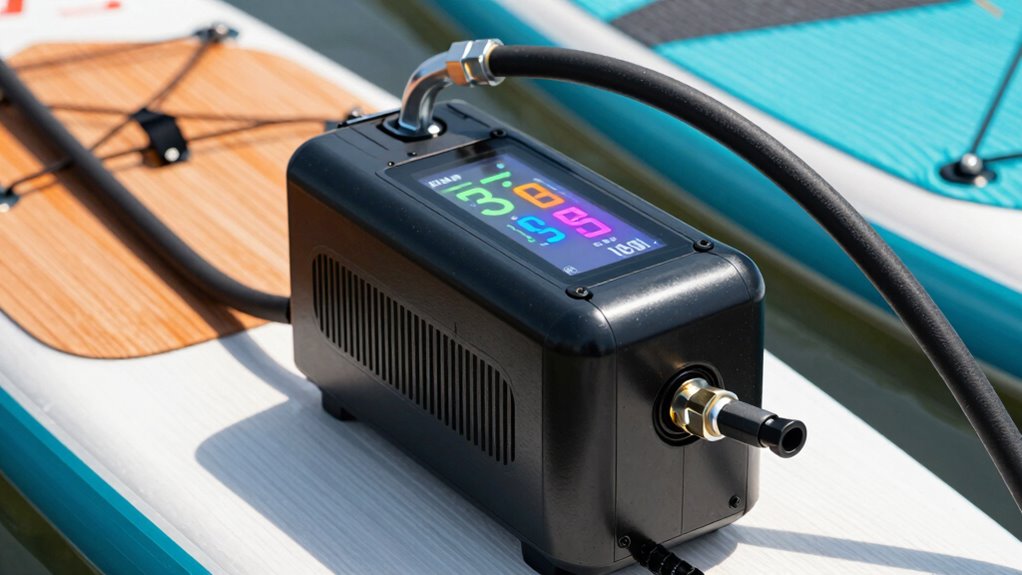
Ever wonder what PSI, LPM, and inflation time really mean for your SUP? PSI measures the air pressure inside your board, which affects its firmness and stability. Proper air pressure guarantees your paddleboard performs safely and efficiently. LPM, or liters per minute, indicates the pump’s airflow rate, directly impacting how quickly your SUP inflates. A higher LPM means faster inflation, saving you time and effort. Inflation time is how long it takes to reach the desired PSI, reflecting the pump’s efficiency. A more efficient pump with good airflow and accurate pressure control makes inflating your SUP easier and more consistent. Understanding these specs helps you choose a pump that offers ideal air pressure, quick inflation, and reliable performance for a better paddling experience.
Why PSI Is Critical for Safe and Effective SUP Inflation
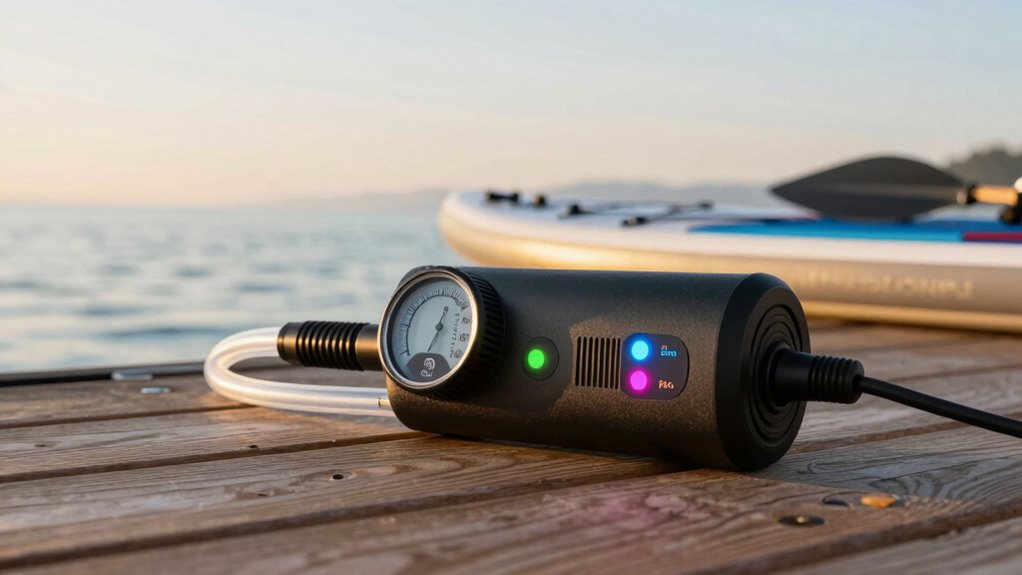
Maintaining the correct PSI during SUP inflation is essential for ensuring your board’s safety and ideal performance. A reliable pressure gauge helps you monitor the inflation level accurately, preventing over- or under-inflation. Over-inflating can stress the board’s structure, risking damage or failure, while under-inflation compromises stability and performance. Safety valves act as safeguards, releasing excess air if pressure exceeds safe limits. They prevent dangerous over-pressurization and protect your board from sudden blowouts. Knowing the right PSI ensures your SUP performs at its best, providing stability and responsiveness on the water. Always keep an eye on the pressure gauge and trust safety valves to keep inflation within safe parameters. Proper PSI management safeguards your investment and enhances your paddling experience.
Understanding LPM: How Airflow Rate Affects Pumping Speed
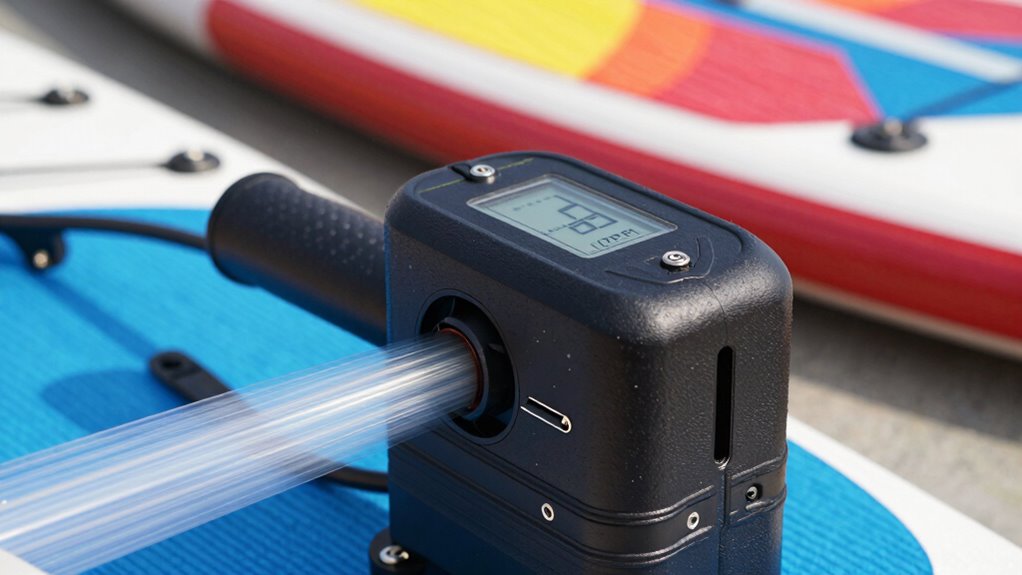
The airflow rate, measured in liters per minute (LPM), directly impacts how quickly you can inflate your SUP. Higher LPM means faster airflow, which boosts your pumping speed. Efficient airflow improves overall airflow efficiency, reducing the time it takes to reach your desired PSI. However, keep in mind that a pump with high airflow rate must also be durable enough to handle extended use without overheating or wearing out prematurely. If airflow is too weak, inflation takes longer, and you might strain the pump, compromising its durability. Finding a balance between airflow rate and pump durability ensures you get quick inflation without risking damage to the pump’s components. Ultimately, understanding LPM helps you choose a pump that offers both speed and longevity.
How to Read and Interpret Your Electric SUP Pump Specs
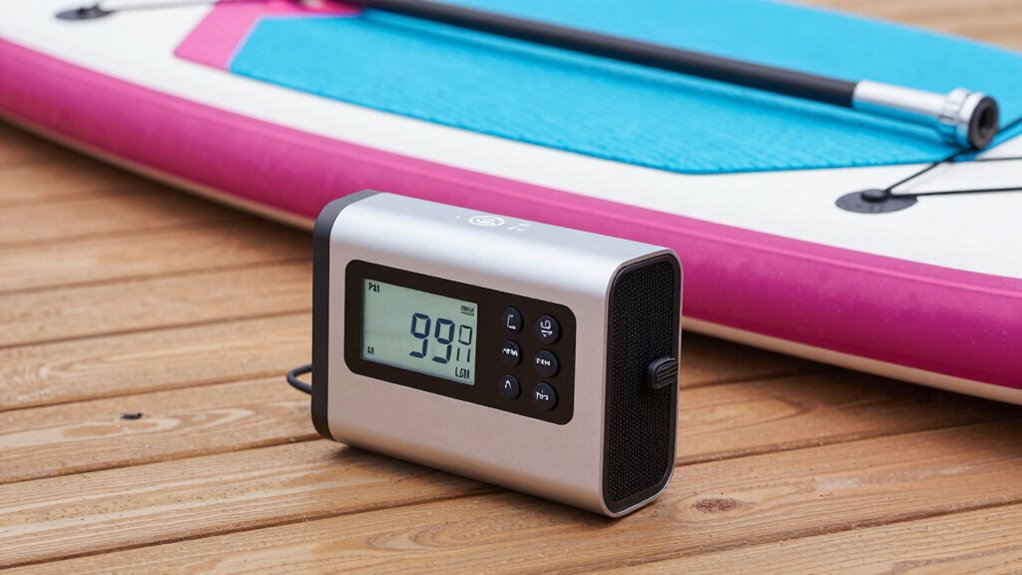
To get the most out of your electric SUP pump, you need to understand its specs, starting with PSI measurements that show the pump’s pressure capacity. Next, look at the LPM ratings to see how quickly it inflates your board, and use this info to estimate inflation time. Knowing how to interpret these numbers helps you choose the right pump for your needs.
Understanding PSI Measurements
Understanding PSI measurements is essential for guaranteeing your electric SUP pump operates correctly and safely. PSI, or pounds per square inch, indicates the pressure your pump applies to inflate your board. To interpret this:
- Check the pressure gauge on your pump, which displays the current PSI during inflation.
- Refer to your SUP’s recommended PSI range, usually found near the inflation valve.
- Guarantee the gauge needle hits the target PSI without overinflating, which can damage the board.
Pressure gauges help you monitor inflation precisely, preventing under- or over-inflation. Knowing the correct PSI ensures ideal performance and safety. Keep an eye on the gauge as you inflate, and always match the pressure with your SUP’s specifications before sealing the inflation valves.
Interpreting LPM Ratings
Ever wonder what the LPM rating on your electric SUP pump really means? LPM, or liters per minute, measures how much air your pump can move in a minute. A higher LPM means faster inflation, saving you time on the water. To interpret this, consider the table below:
| LPM Rating | Inflation Speed | Ideal For |
|---|---|---|
| 10-15 LPM | Moderate | Small boards, quick jobs |
| 15-20 LPM | Fast | Standard boards |
| 20+ LPM | Very fast | Large or multiple boards |
Calculating Inflation Time
Knowing how long it takes to inflate your SUP with an electric pump depends on understanding its specifications. To estimate inflation time, consider these factors:
- Pump capacity (LPM) – Higher LPM means faster inflation.
- Desired pressure (PSI) – Check your SUP’s recommended PSI.
- Pressure gauge reading – Use it to monitor pressure buildup accurately.
Start by noting your pump’s capacity and the target PSI. Divide the total PSI difference by the pump’s flow rate to estimate time. For example, if your SUP needs 15 PSI and your pump delivers 10 LPM, the time roughly equals (desired PSI / PSI per minute). Keep an eye on the pressure gauge to avoid over-inflation. This approach helps you predict inflation time precisely, ensuring a quick, safe setup each time.
How Long Does It Take to Inflate Your SUP? Factors That Make a Difference
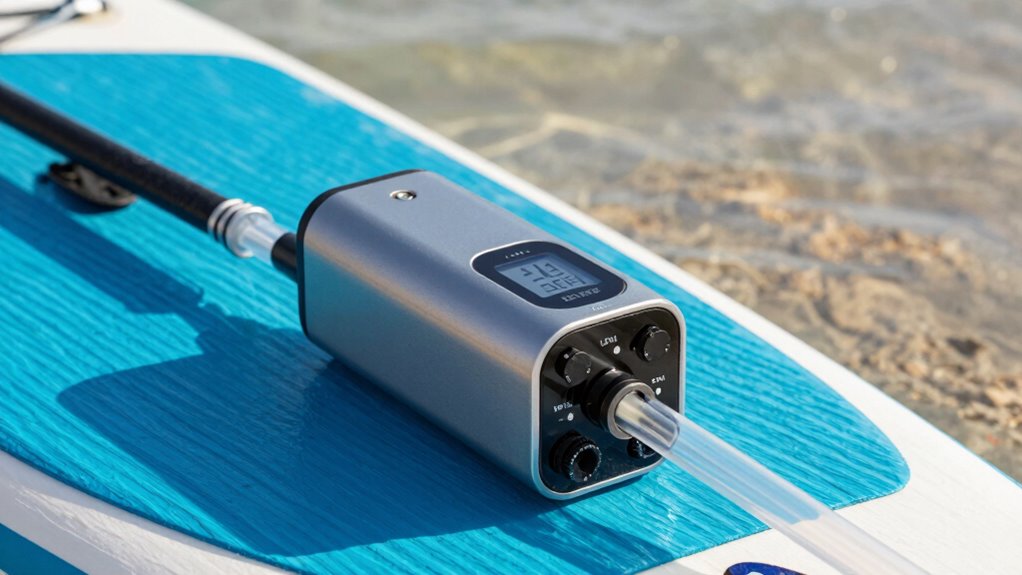
The time it takes to inflate your SUP varies widely depending on several key factors. One major element is the pump’s efficiency, which depends on proper pump maintenance; a well-maintained pump works more effectively, reducing inflation time. Battery life also plays a role—if your pump’s battery is nearing the end of its lifespan, it may struggle to deliver consistent airflow, slowing down the process. Additionally, the size and thickness of your SUP influence inflation speed; larger or thicker boards naturally take longer. Air leaks or damaged seals can further extend inflation times, so regular maintenance is essential. Overall, understanding these factors helps you optimize your pump’s performance and get on the water faster.
Choosing the Best Electric Pump for Your SUP Size and Usage

Choosing the right electric pump depends on your SUP’s size and how you plan to use it. Consider these factors to select the best fit:
- SUP Size: Larger boards need higher PSI and longer inflation times, so pick a pump with sufficient power and LPM.
- Usage Frequency: If you inflate often, prioritize pumps with good battery life and easy pump maintenance.
- Portability & Battery Life: For frequent trips, choose a lightweight pump with long-lasting battery life to avoid interruptions.
Keeping pump maintenance simple guarantees longevity and consistent performance. A pump with durable components and easy cleaning minimizes downtime. By matching your SUP size and usage habits with these features, you’ll enjoy faster, hassle-free inflation and reliable performance on every adventure.
Common Mistakes When Setting PSI and How to Avoid Them
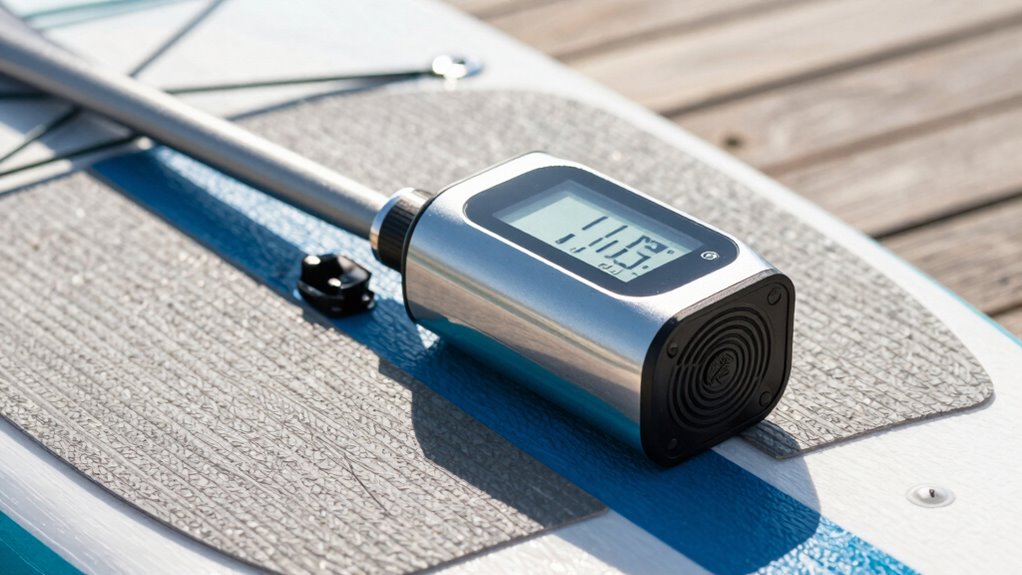
Setting the wrong PSI can lead to overinflation, which risks damaging your board or making paddling harder. You might also be aiming for an inaccurate pressure target, affecting stability and performance. Knowing how to prevent these mistakes ensures you get the best ride every time.
Overinflation Risks
Ever wonder what happens if you overinflate your SUP paddleboard? Overinflation can lead to damage or decreased performance. To avoid this, pay attention to your pressure gauge and proper use of the inflation valve. Common mistakes include:
- Ignoring the recommended PSI range, risking overpressure.
- Relying solely on the feel of the board instead of the pressure gauge.
- Using excessive force on the inflation valve, which can damage it.
Always monitor the pressure gauge carefully, stopping once you reach the recommended PSI. Don’t guess or rush; too much pressure stresses the board’s seams and material. Properly calibrated gauges and gentle adjustment of the inflation valve help prevent overinflation and ensure safe, effective inflation.
Inaccurate Pressure Targets
Are you sure you’re targeting the right PSI when inflating your SUP? Pressure inaccuracies often stem from misconceptions about the ideal PSI for your board. Many inflate to a standard number without checking the manufacturer’s recommendation, risking under- or overinflation. This common mistake can affect board performance and longevity. To avoid these inflation misconceptions, always verify the recommended PSI on your SUP’s label. Use a reliable pressure gauge and adjust gradually, checking frequently. Remember, temperature changes can also alter PSI readings, so consider these factors during inflation. Setting the correct pressure ensures quality performance and safety. By being precise and informed, you prevent pressure inaccuracies that could compromise your paddling experience or cause damage to your board.
Tips to Inflate Your SUP Faster and Save Water Time
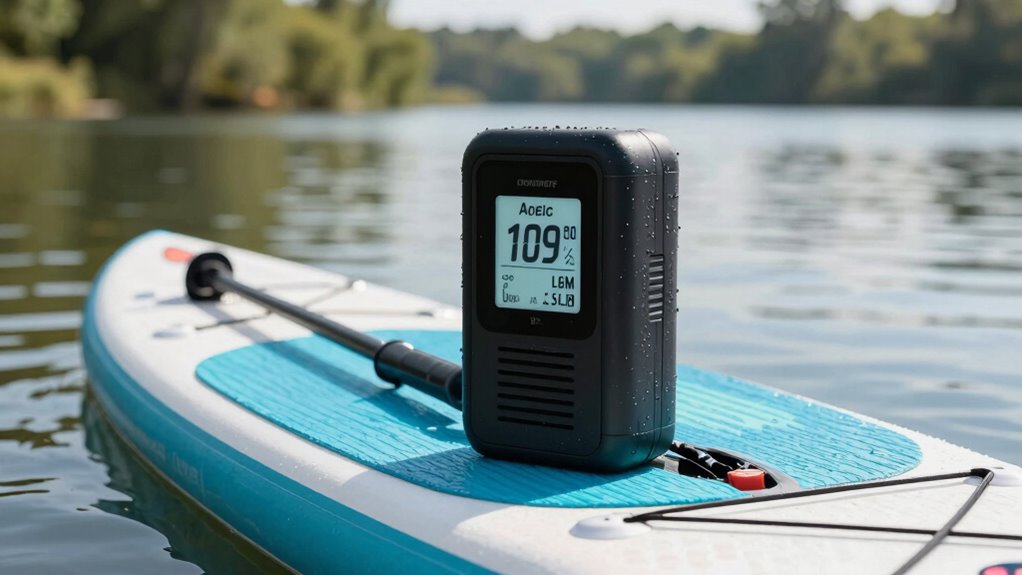
To inflate your SUP more quickly and save water, start by guaranteeing your pump is functioning efficiently. A well-maintained pump can improve battery lifespan, reduce noise levels, and speed up inflation. Here are three tips:
Ensure your pump is well-maintained for faster, quieter SUP inflation and water savings.
- Pre-condition your pump – Fully charge it before use to maximize battery life and ensure consistent pressure.
- Optimize your setup – Use a high-pressure hose and secure connections to prevent leaks, saving time and water.
- Limit interruptions – Keep the pump on a stable surface, and avoid frequent stopping, which can extend inflation time and reduce noise distractions.
Following these steps helps you inflate faster, preserves your pump’s battery, and keeps noise levels manageable, making your SUP experience smoother.
Key Features to Look for in an Electric SUP Pump

Choosing the right electric SUP pump involves focusing on key features that guarantee efficient and reliable inflation. Look for a pump with strong battery life so you won’t need frequent recharges during multiple uses. Longer battery life ensures you can inflate your board without interruptions. Portability features are equally important—compact size, lightweight design, and a comfortable handle make transportation easier. A pump with a rechargeable battery and a quick charge option adds convenience, especially if you’re on the go. Additionally, check for user-friendly controls and clear display indicators for PSI and inflation progress. These features help you operate the pump smoothly and avoid over-inflation. Prioritizing battery life and portability guarantees your electric SUP pump is practical, efficient, and ready whenever you need it.
Frequently Asked Questions
Can I Use a High PSI Pump on a Smaller SUP Safely?
You can use a high PSI pump on a smaller SUP, but you need to prioritize pump safety and PSI compatibility. Overinflating beyond your board’s recommended PSI can damage the material or seams. Always check your SUP’s maximum PSI and avoid exceeding it. Using a pump with adjustable PSI settings helps prevent damage, ensuring safe and efficient inflation without risking your board’s integrity.
How Does Temperature Affect Inflation Time and PSI Accuracy?
Temperature fluctuations can markedly impact inflation time and PSI accuracy. When it’s hot, air expands, causing your pump to read slightly lower PSI and inflate faster, while colder weather makes air contract, leading to higher PSI readings and slower inflation. To guarantee pressure stability, check your SUP’s PSI after inflation and avoid inflating in extreme temperatures. This way, you’ll maintain consistent pressure and avoid over- or under-inflation.
Are There Specific Brands Known for Faster Inflation Times?
Think of some brands as the racehorses of inflation—fast, reliable, and built for the sprint. Brands like Bluefin and Sevylor are renowned for quicker inflation times without sacrificing accuracy. Their reputation for efficiency means you spend less time waiting and more time enjoying your paddleboard. When choosing, prioritize those with proven inflation accuracy and stellar reviews, ensuring your pump’s speed matches its precision, making every ride smoother and more enjoyable.
What Maintenance Is Required for Optimal Pump Performance?
To keep your electric SUP pump performing its best, regularly check and maintain the battery by charging it fully and inspecting for corrosion. Also, calibrate the pump periodically to make certain accurate PSI and LPM readings. Keep the pump clean and free of debris, and store it in a dry place. Proper maintenance helps extend its lifespan, ensures reliable inflation times, and prevents unexpected breakdowns during your water adventures.
How Do Battery Life and Charging Impact Inflation Speed?
Think of your pump’s battery longevity as its stamina—better care extends its life. When you charge efficiently, your pump gets ready faster, keeping inflation smooth and swift. If you neglect proper charging habits, you might notice slower inflation times and reduced battery performance over time. So, to stay on top of your game, keep an eye on charging practices and give your pump the attention it deserves for ideal inflation speed.
Conclusion
Knowing how PSI, LPM, and inflation time work helps you inflate your SUP safely and efficiently. Did you know that using the right pump settings can cut inflation time by up to 30%? By understanding these specs, you’ll get your board ready faster, so you can hit the water and enjoy your day. Keep these tips in mind, and you’ll make every paddle session smoother and more enjoyable.