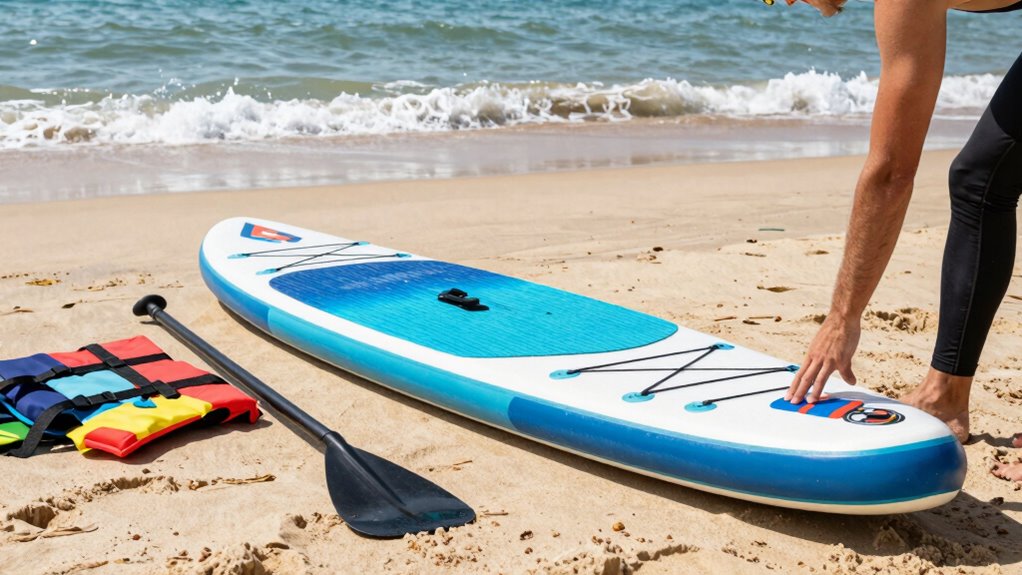
To estimate your SUP’s weight limit, start with its volume: multiply the length, width, and thickness to get cubic inches or feet. Then, multiply that volume by buoyancy factors—roughly 0.9 for foam core boards or higher for inflatable boards—to find the supported weight in pounds. Keep in mind, material strength and design also matter. If you keep exploring, you’ll discover more precise ways to match your weight with the right board.
Key Takeaways
- SUP weight capacity is primarily based on the board’s volume, calculated as length x width x thickness, multiplied by buoyant factors.
- Stronger materials allow for thinner, lighter boards with higher buoyancy, increasing supported weight.
- Increasing width and length enhances stability and support capacity for heavier paddlers.
- Exceeding the recommended weight limit reduces stability, safety, and performance.
- Proper weight distribution and selecting a larger, wider board optimize support near the weight limit.
What Are the Basic Principles That Determine SUP Weight Limits?
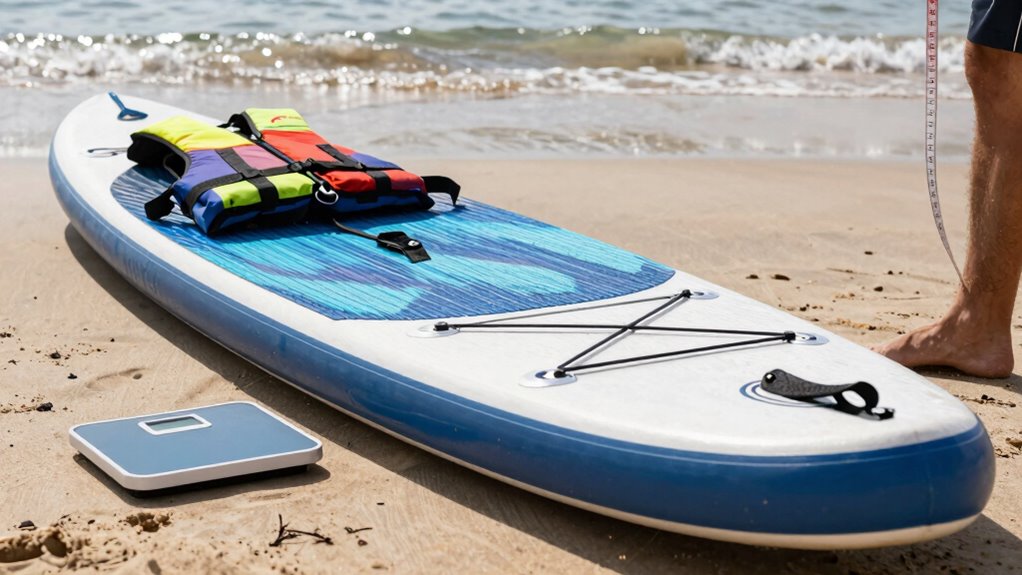
Understanding the basic principles that determine SUP weight limits is essential for ensuring safe and ideal paddling experiences. Your SUP’s material strength plays a pivotal role, as it determines how much weight the board can handle without cracking or warping. Additionally, buoyancy principles explain how the board supports your weight on the water. When you step onto the SUP, your weight displaces water, and the board’s ability to stay afloat depends on its design and construction. A well-made board with strong materials can support more weight while maintaining stability. Remember, exceeding the recommended weight can compromise both safety and performance. By understanding these core principles, you can choose a board suited to your size and paddling style, ensuring a safer, more enjoyable experience on the water.
How to Calculate Your SUP’s Weight Capacity in Simple Steps
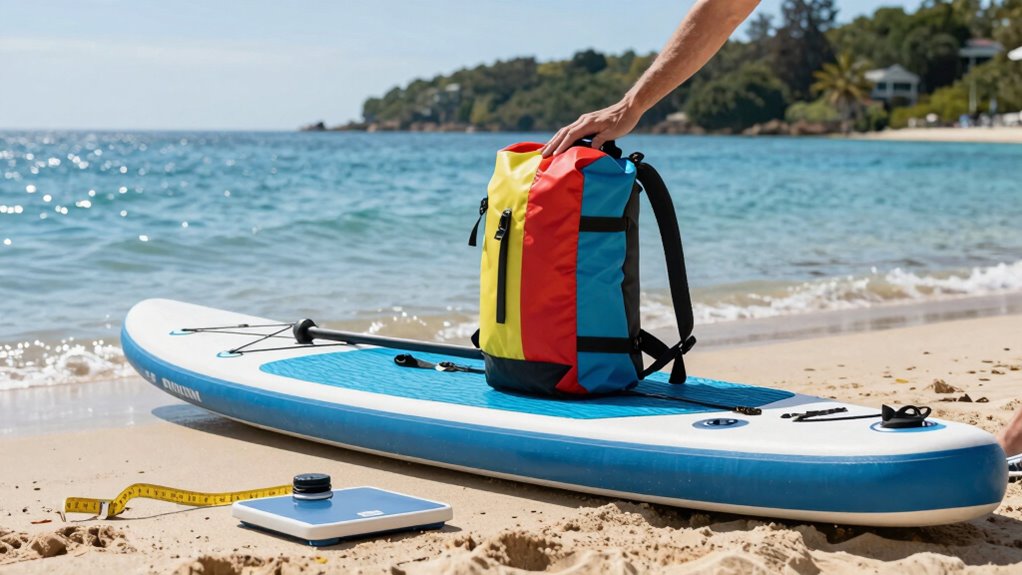
To determine your SUP’s weight capacity, start by gathering its dimensions—specifically, the length, width, and thickness—as these directly impact buoyancy. Longer and wider boards generally offer better stability, which is *essential* for balancing weight. Next, consider the material strength; stronger materials allow for a thinner, lighter board without sacrificing durability, enhancing buoyancy. To estimate weight capacity, multiply the board’s volume (length x width x thickness) by the material’s buoyant factor, which accounts for the board’s ability to support weight. Remember, greater board stability results from a well-designed balance of size and material strength. This simple calculation helps you gauge how much weight your SUP can support safely, ensuring both performance and safety on the water.
What Factors Influence How Much Your SUP Can Support?
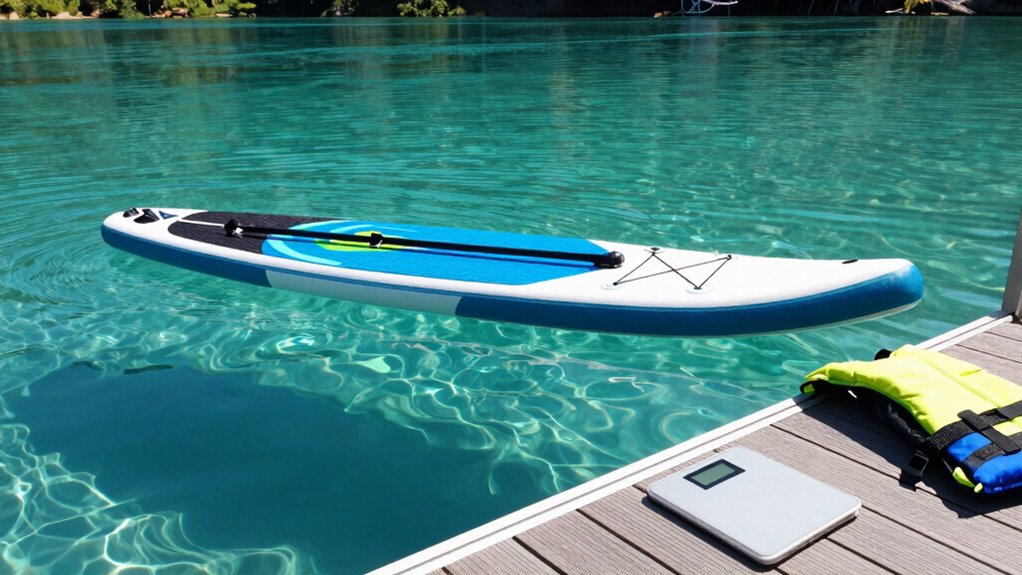
Several factors determine how much weight your SUP can support beyond its size and material strength. Material strength plays a key role, as stronger materials can handle more pressure and weight without deforming or failing. Design considerations are equally important; a well-designed SUP distributes weight evenly, enhancing support capacity. The shape, thickness, and construction techniques influence how weight is spread across the board. Additionally, the deck’s surface area and stability features impact how much weight the board can hold comfortably. Keep in mind that softer or less rigid materials may limit support, while reinforced designs boost capacity. Ultimately, understanding these factors helps you gauge your SUP’s true support potential, ensuring safer, more enjoyable paddling experiences.
How to Pick the Right SUP Size Based on Your Weight and Usage

Choosing the right SUP size depends primarily on your weight and how you plan to use it. To find the best fit, consider your weight against the board’s recommended weight range, which guarantees proper buoyancy and stability. For balance tips, a slightly larger board offers more stability, making it easier to stay upright, especially if you’re a beginner or planning to stand for extended periods. If you have limited storage solutions, opt for a more compact, lightweight board that’s easier to transport and store without sacrificing performance. Remember, a board that’s too small can feel unstable, while one that’s too big may be cumbersome. Picking the right size helps you enjoy your paddling experience safely and comfortably, tailored to your weight and usage needs.
What Should You Do If You’re Close to or Over the Weight Limit?

What should you do if you’re close to or over the weight limit? Prioritize aqua safety by adjusting your stance and redistributing weight on the board. If you’re over the limit, consider these options:
| Action | Effect | Notes |
|---|---|---|
| Shift your weight forward | Improves stability, reduces risk | Keep knees bent for better control |
| Move gear evenly | Balances load, enhances balance | Use waterproof bags to organize gear |
| Reduce gear or snacks | Lightens load, increases safety | Carry essentials only |
| Use a larger or wider SUP | Supports more weight comfortably | Better stability for heavier paddlers |
| Paddle with a partner | Shares load, improves aqua safety | Helps prevent capsizing or fatigue |
Adjusting your weight and gear distribution is key to maintaining safety and stability.
Frequently Asked Questions
How Accurate Are Manufacturer Weight Limits for Different SUP Models?
Manufacturer weight limits for SUP models are generally a good starting point, but they aren’t always perfectly accurate. You should consider manufacturer durability and how weight is distributed on the board. If you’re near the limit, uneven weight distribution can affect stability and performance. Always test your SUP in different conditions and adjust your gear to guarantee safety and longevity, rather than relying solely on the stated weight limit.
Do Weight Limits Vary for Different Types of Paddleboarding?
You’ll find weight limits do vary wildly across different types of paddleboarding, making it feel like comparing apples to towering watermelons. Material differences and paddle length dramatically impact weight capacity, with lightweight, durable materials supporting more weight and longer paddles offering better leverage for heavier riders. So, don’t assume one size fits all—choose your SUP based on these factors to guarantee safety and peak performance for your specific style.
Can I Exceed My Sup’s Weight Limit Safely in Calm Water?
You shouldn’t exceed your SUP’s weight limit, even in calm water, because overloading risks destabilizing the board and causing accidents. Always follow safety precautions like distributing weight evenly and checking the manufacturer’s guidelines. If you’re close to the limit, consider a larger board for better stability. Staying within weight limits helps make sure safe paddling and reduces the chance of falls or damage to your board.
How Does Paddle Size Affect Weight Capacity Considerations?
Your paddle size directly impacts weight capacity considerations by affecting your balance and weight distribution on the board. A longer paddle provides more leverage, making it easier to paddle with heavier loads, but it can also shift your weight unevenly if not handled properly. Conversely, a shorter paddle offers better control and stability, helping you distribute weight more evenly. Always choose a paddle size that complements your weight and paddling style for ideal performance.
Are There Signs That My SUP Is Overloaded During Use?
You’ll notice warning signs like your SUP feeling unstable, wobbling more than usual, or you struggle to maintain balance. Overloading hazards increase if your paddle feels difficult to control or if the board sits lower in the water. Be alert for signs like creaking noises or water splashing over the sides. If you spot these, it’s a clear indication that your SUP is overloaded, and you should lighten your load to stay safe.
Conclusion
Remember, your SUP’s weight limit is like a delicate balance beam—too much and you risk tipping over, too little and you won’t get the glide you desire. When you stay within the right capacity, you’ll feel the water supporting you like a gentle hand, guiding you smoothly across the surface. Keep your weight in check, and you’ll enjoy the ride, feeling light and confident as you carve your path through the shimmering mirror of the lake.