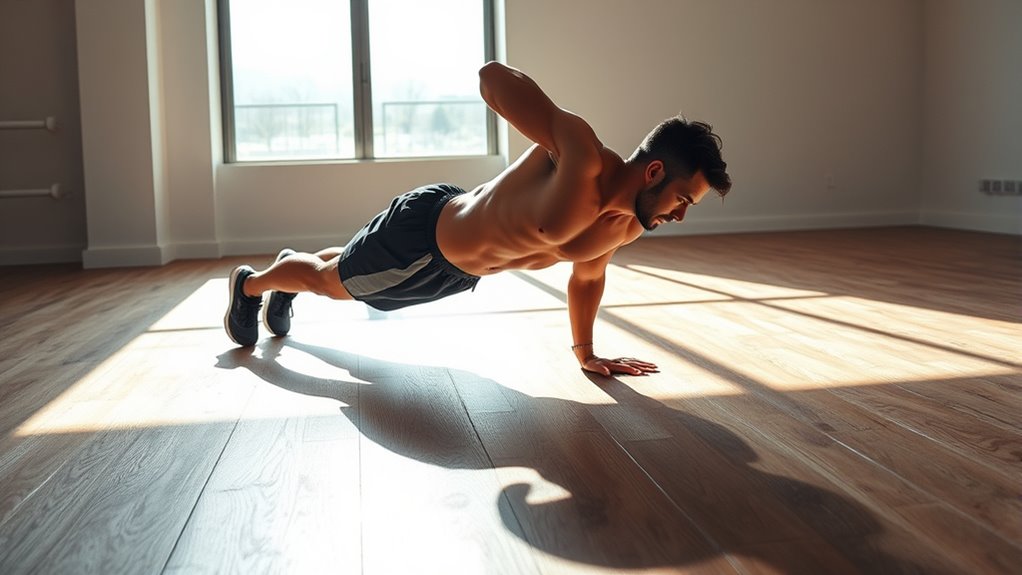

Floating side planks are a great way to strengthen your obliques, shoulders, and hips, improving overall stability and posture. You can make them more challenging by lifting your top leg or reaching your arm overhead, which targets different muscles and enhances balance. To stay safe, focus on proper form and controlled movements. Keep practicing different variations, and you’ll discover new ways to boost your core strength and stability—more tips await to help you progress further.

Get pool and patio gear delivered free — and shop member deals
- Fast, free delivery on millions of items
- Access to Prime Big Deal Days deals on October 6–7
- Prime Video, Amazon Music and more included
Key Takeaways
- Floating side planks target obliques, shoulders, and hips, enhancing core stability and functional strength.
- Proper form involves a straight line from head to heels, with active shoulder engagement and neutral spine.
- Variations include lifting the top leg, reaching overhead, or twisting to increase challenge and target different muscles.
- Maintaining controlled movements and shoulder stability prevents injury and maximizes exercise benefits.
- Gradually progressing with variations supports improved core and shoulder stability for athletic performance.
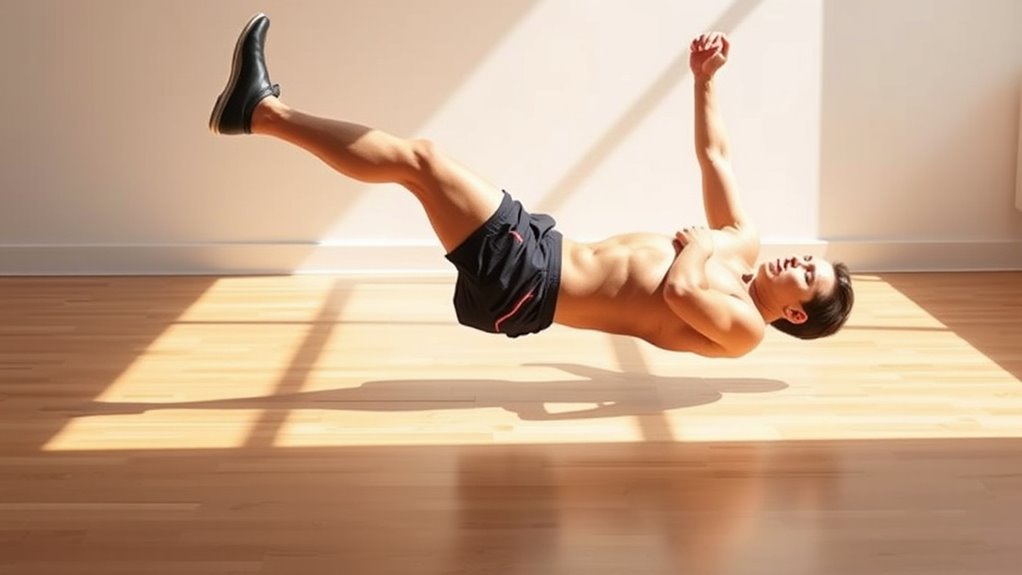
Floating side planks are an effective core exercise that target your obliques, shoulders, and hips while challenging your balance. When performed correctly, they substantially enhance your core stability, which is essential for overall functional strength and injury prevention. You’ll notice that maintaining a stable core during this exercise not only helps you stay balanced but also maximizes the activation of your obliques, making them more resilient and toned. As you lift into the floating position, shoulder engagement becomes essential—you must actively stabilize and hold your shoulder girdle to prevent sagging or shifting, which can compromise form and reduce effectiveness. This dual focus on core stability and shoulder engagement ensures you’re building a solid foundation that benefits other movements and daily activities.
To perform a basic floating side plank, start by lying on your side with your forearm on the ground, elbow directly beneath your shoulder. Engage your core by tightening your abdominal muscles and lift your hips off the ground, creating a straight line from your head to your heels. As you elevate, focus on keeping your shoulder active—press into your forearm to stabilize the shoulder joint. Your shoulder should feel engaged, not strained, as you hold this position. Throughout the hold, avoid letting your hips sag or rise too high; maintaining a neutral spine is key. The challenge here is balancing on your forearm and foot, which forces your core to work harder to prevent wobbling. This stabilization activates deep core muscles, improving core stability over time and helping you develop better posture and balance. Consistent use of proper form and gradual progression will lead to greater strength gains and injury prevention.
Once you’re comfortable with the basic version, you can incorporate variations to increase difficulty or target different muscles. For example, lifting your top leg while maintaining the plank intensifies the engagement of your obliques and hip stabilizers. You can also perform the floating side plank with your top arm reaching overhead or twisting your torso slightly to engage additional core muscles. Remember, the goal is to keep your shoulders engaged and stable regardless of the variation. Proper form is essential; if your shoulders start to shrug or your hips sag, reduce the intensity or revert to the basic position until you build enough strength. Incorporating exercises that promote core stability can help you progress safely and effectively.
Incorporating floating side planks into your routine will improve your core stability and shoulder engagement, making other exercises feel easier and less prone to injury. Focus on controlled movements, and don’t rush through reps. Consistent practice will strengthen your obliques, enhance shoulder joint stability, and elevate your overall athletic performance. Keep these principles in mind, and you’ll unlock the full benefits of this challenging yet rewarding exercise.
As an affiliate, we earn on qualifying purchases.
Frequently Asked Questions
Can Floating Side Planks Improve My Posture?
Yes, floating side planks can improve your posture by strengthening your core, which supports proper spinal alignment. When you hold these planks, you engage your obliques, shoulders, and back muscles, promoting shoulder health and stability. As your core gets stronger, you’ll notice better posture and less strain on your spine during daily activities. Incorporating floating side planks into your routine helps develop a balanced, upright posture over time.
Are Floating Side Planks Suitable for Beginners?
Yes, floating side planks are suitable for beginners if you focus on core engagement and balance training. Start with shorter holds and proper form to build strength gradually. These exercises help improve stability and coordination, making them a great addition to your fitness routine. Remember to listen to your body and progress at your own pace, ensuring you develop proper technique while avoiding injury.
How Do Floating Side Planks Benefit Core Stability?
Floating side planks boost your core stability by increasing muscle engagement, especially in your obliques, transverse abdominis, and lower back. As you hold these positions, your muscles work harder to maintain balance, which improves your overall stability. This exercise challenges your coordination and strengthens your core muscles, making everyday movements easier and reducing injury risk. Regular practice helps you develop a more balanced, stronger core for better posture and functional fitness.
What Equipment Is Needed for Floating Side Planks?
You only need equipment essentials like a mat for comfort during floating side planks. If you don’t have a mat, you can use alternative props like a towel or a soft surface for support. Some people also use small cushions or yoga blocks to elevate their feet or hands for added challenge. Keep it simple with what you have, and focus on maintaining proper form to maximize core stability benefits.
How Often Should I Incorporate Floating Side Planks Into My Workout?
Ever wonder how often you should include floating side planks in your workout? For best results, aim for 2 to 3 times a week. This exercise effectively targets core stability and obliques, but overdoing it might cause strain. Incorporate floating side planks into your workout routine regularly, balancing with other exercises. Consistent exercise frequency helps build strength and endurance while allowing your muscles time to recover.
Conclusion
Incorporating floating side planks into your routine can substantially enhance core strength and stability. Did you know that engaging in regular plank variations can reduce the risk of back injuries by up to 70%? By adding these dynamic movements to your workouts, you’ll not only improve your balance but also boost overall functional fitness. So, keep challenging yourself with different plank variations—you’ll see progress and reap the benefits in everyday life.
Fall Picks
fall essentials
As an affiliate, we earn on qualifying purchases.