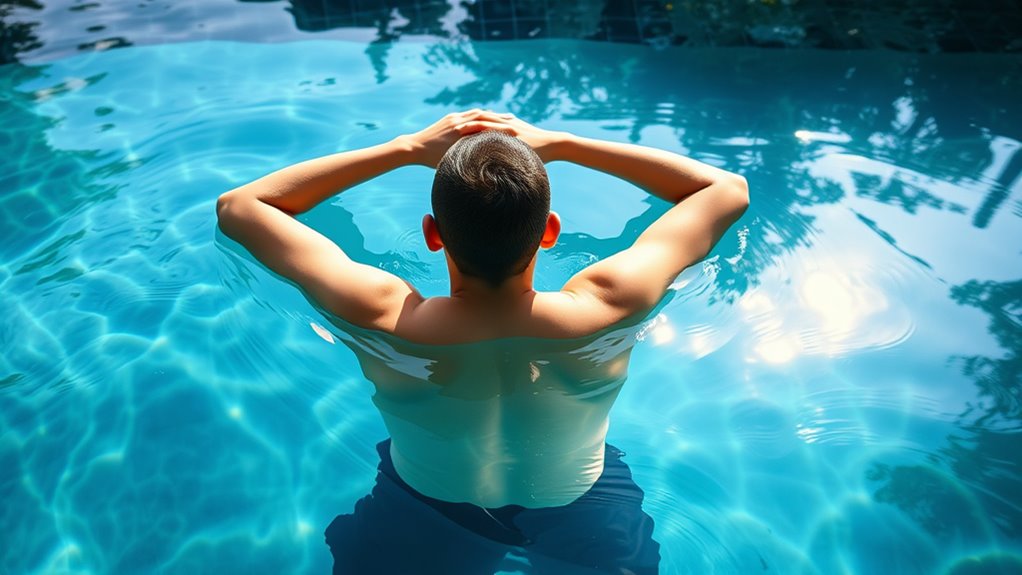

Floating in water helps you manage back tension by encouraging your muscles to relax and promoting better posture. As water supports your body, it distributes your weight evenly, reducing strain on your back muscles. Cooler water can increase tension, but warm water helps you unwind and loosen up. By minimizing external stimuli, floating also calms your nervous system, easing tightness. If you keep exploring, you’ll discover even more ways floating can improve your back health.

Get pool and patio gear delivered free with Prime
- Fast, free delivery on millions of items
- Prime Video, Amazon Music and more included
- Member-only deals all year
Key Takeaways
- Floating promotes even weight distribution, easing strain on back muscles.
- It encourages muscle relaxation, reducing involuntary tension that worsens back discomfort.
- Proper water temperature and sensory deprivation help calm the nervous system, decreasing back stiffness.
- Floating enhances posture and balance, preventing overuse injuries and supporting back health.
- By improving buoyancy and movement efficiency, floating reduces energy expenditure and back strain during swimming.

Mastering floating and back tension management is vital for efficient swimming and injury prevention. When you learn how to float properly, you gain better control over your body, which helps reduce unnecessary strain on your back muscles. One of the key factors that influence your ability to float comfortably is water temperature. If the water is too cold, your muscles tend to tense up involuntarily, making it harder to relax and float effortlessly. Conversely, warmer water encourages relaxation, allowing your muscles to loosen and your body to stay buoyant with less effort. Maintaining an ideal water temperature, around 78 to 82 degrees Fahrenheit, can help you stay relaxed and prevent muscle stiffness that leads to back tension.
Floating also involves a certain level of sensory deprivation, which can be quite beneficial for managing back tension. When you float, the sensation of being suspended in water minimizes external stimuli, allowing your nervous system to calm down. This sensory reduction helps you focus on your body’s internal signals and promotes relaxation of tense muscles, especially in the back. By consciously letting go of tension and allowing your body to drift, you teach your muscles to relax instead of tighten up in response to stress or fatigue. Over time, this practice enhances your proprioception—your awareness of body positioning—which is vital for maintaining proper posture and avoiding back strain during swimming.
Floating reduces external stimuli, calming your nervous system and promoting back muscle relaxation through sensory deprivation and internal focus.
Practicing floating regularly helps you develop a sense of buoyancy and balance, which translates into better back tension management during active strokes. When you master the art of floating, you learn to distribute your weight evenly across your body, reducing the pressure on specific muscle groups. This balanced state prevents overcompensation that often leads to back pain or discomfort. Additionally, floating encourages you to breathe deeply and evenly, which helps relax your back muscles further. Deep breathing, combined with the calming effects of sensory deprivation and appropriate water temperature, creates an environment where your back muscles can unwind naturally. Incorporating proper breathing techniques into your floating practice further amplifies these relaxation benefits.
Incorporating floating into your routine isn’t just about relaxation; it’s a strategic tool for injury prevention and improving overall swimming efficiency. By managing your back tension through controlled floating, you conserve energy, improve your posture, and reduce the risk of strains or overuse injuries. As you become more comfortable floating, you’ll notice a significant difference in how your back feels during and after swimming sessions, making your practice more sustainable and enjoyable. Ultimately, understanding and leveraging water temperature and sensory deprivation through floating empowers you to keep your back healthy and your swimming more effective.
As an affiliate, we earn on qualifying purchases.
Frequently Asked Questions
Can Floating Reduce Chronic Back Pain Long-Term?
Yes, float therapy can reduce chronic back pain long-term. By immersing you in buoyant, warm water, it relieves pressure and relaxes tense muscles, which helps alleviate back pain. Regular sessions may improve your posture, increase flexibility, and decrease inflammation. Over time, this can lead to sustained pain relief and better back health, making float therapy a valuable part of managing chronic back issues.
Is Floating Suitable for Severe Back Injuries?
Floating isn’t suitable for severe back injuries unless your doctor approves it. As an alternative therapy, it can support injury recovery by reducing strain and promoting relaxation. However, with serious injuries, you need to be cautious because floating might aggravate your condition or interfere with your treatment plan. Always consult your healthcare provider before trying floating as part of your injury recovery process.
How Often Should I Float for Back Tension Relief?
Think of floating as watering a garden; your back needs regular, gentle care. You should aim for 1-2 sessions per week, each lasting about 60 to 90 minutes, to see consistent relief. This frequency allows your muscles to relax and reset without overdoing it. Stick to these recommendations, and over time, you’ll notice less tension and more comfort, helping your back feel renewed and balanced.
Are There Any Risks Associated With Floating for Back Issues?
Floating is generally safe, but there are some risks to weigh. Water safety is essential; make certain the facility maintains proper hygiene and monitoring. If you have open wounds or infections, float therapy might not be suitable. Also, be aware of float therapy costs, which can vary. Always discuss your back issues with a healthcare professional beforehand to minimize risks and enjoy the benefits safely.
Can Children Benefit From Floating to Manage Back Tension?
Floating can be a gentle wave for children, helping with relaxation and easing back tension. You might find that it supports child relaxation, making therapy sessions more comfortable. Pediatric therapy often includes floating because it reduces pressure on little spines like a soft cloud. If your child struggles with back discomfort, floating offers a calming, effective way to promote relief and improve overall well-being safely.
Conclusion
As you discover the calming effects of floating, you might just realize that easing back tension isn’t a coincidence. It’s a natural result of giving your muscles the break they need, allowing stress to melt away unexpectedly. Sometimes, the simplest solutions, like floating, align perfectly with your body’s needs without you even realizing it. So, next time you feel overwhelmed, remember—floating isn’t just relaxing; it’s your secret weapon against back tension.
Halloween Picks
halloween
As an affiliate, we earn on qualifying purchases.