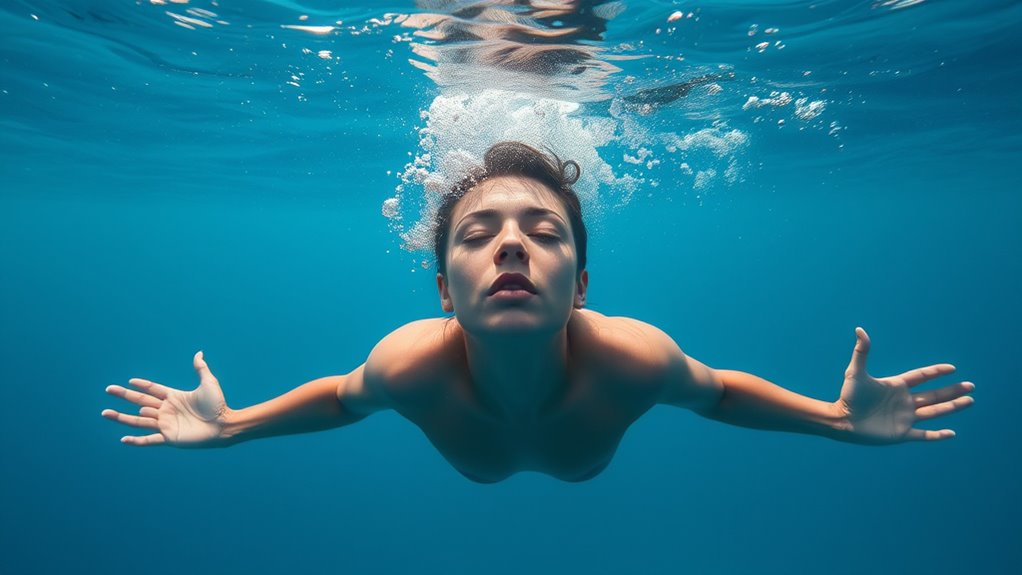

Combining floating with breath-hold training helps you control your buoyancy while improving relaxation and lung capacity. By practicing gentle body positioning and subtle movements, you learn to stay calm and manage your depth effortlessly. This approach builds water confidence, reduces anxiety, and enhances your overall water awareness. As you progress, you’ll notice better body control and a calmer mindset in the water. Keep exploring, and you’ll discover how these techniques can elevate your water experience even further.
Key Takeaways
- Combining floating and breath-hold training enhances relaxation, lung capacity, and water confidence simultaneously.
- Floating improves body position and buoyancy control, making breath-hold exercises more effective and comfortable.
- Integrating relaxation techniques during floating reduces anxiety and promotes calm, extending breath-hold duration.
- Self-awareness cultivated through floating helps regulate depth and breathing, increasing water safety and control.
- This combination leads to better water resilience, improved technique, and a more enjoyable, confident water experience.
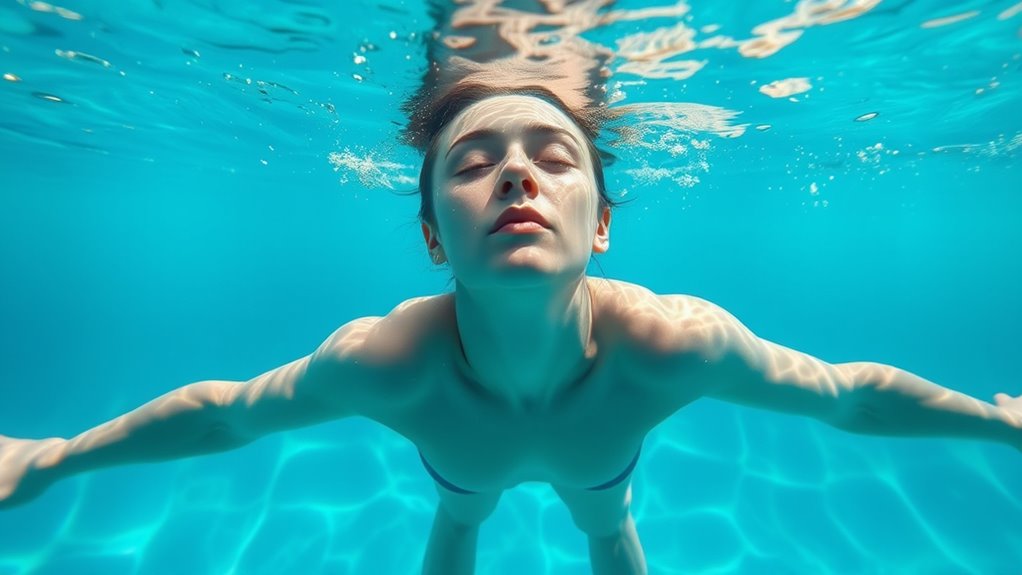
Floating and breath-hold training are powerful techniques that, when combined, can enhance your relaxation, lung capacity, and overall water confidence. These practices work together to improve your ability to stay calm and controlled in the water, helping you develop better depth regulation and comfort at various depths. When you focus on floating, you learn to manage your body’s position and buoyancy, which is essential for maintaining stability and conserving energy during breath holds. This stability creates a foundation for effective relaxation techniques, allowing you to slow your breathing, calm your mind, and reduce anxiety that often accompanies water activities.
Master floating to improve control, relaxation, and confidence in water activities.
As you practice floating, you become more aware of how subtle adjustments in your body position affect your buoyancy. This awareness directly influences your depth regulation, helping you control how deep or shallow you are in the water without unnecessary effort. By consciously relaxing your muscles and focusing on slow, deep breaths, you train your nervous system to respond calmly to changes in depth, making it easier to stay relaxed during breath-hold exercises. Over time, this reduces the instinct to gasp or panic, which can cause rapid oxygen depletion and make water experiences stressful.
Incorporating relaxation techniques into your floating and breath-hold routines is key. Techniques such as progressive muscle relaxation, visualization, or mindfulness help you connect with your body and mind, fostering a sense of peace that translates into better water confidence. When you focus on slow, deliberate breathing—inhale deeply through your nose, exhale smoothly through your mouth—you extend your breath-hold capacity and improve your lung capacity. This, in turn, makes it easier to stay relaxed and comfortable underwater, even at greater depths.
The synergy between floating and breath-hold training also enhances your overall water resilience. As you learn to regulate your depth effortlessly, you become less dependent on external cues or equipment and more intuitive about your body’s signals. This self-awareness, combined with relaxation techniques, minimizes panic responses and promotes a calm, controlled experience in the water. With consistent practice, you’ll notice improved lung capacity, greater confidence, and a more natural ability to stay relaxed in challenging situations. In a nutshell, mastering these techniques allows you to enjoy water activities more fully, with a sense of mastery over your body and breath.
Additionally, understanding body awareness is crucial, as it helps you fine-tune your movements and responses in the water, leading to safer and more effective practice.
Frequently Asked Questions
How Does Floating Enhance Breath-Hold Training Effectiveness?
Floating enhances your breath-hold training by promoting deep relaxation, which helps you stay calm during breath-holds. It encourages relaxation techniques that reduce stress and oxygen consumption. Additionally, floating engages your core and stabilizing muscles, improving overall control and endurance. This combination makes it easier to extend your breath-hold time, as you learn to relax your body and mind simultaneously, boosting your training effectiveness markedly.
Are There Specific Floating Techniques Best Suited for Breath-Hold Practice?
Imagine you’re a leaf drifting on a calm pond. You should focus on buoyancy techniques that keep you effortlessly afloat and relaxation methods that calm your mind. These floating techniques, like gentle back floats or slow side glides, help you conserve energy and promote deep relaxation, essential for breath-hold mastery. By practicing these, you create a peaceful state, making it easier to extend your breath-hold times naturally.
Can Beginners Safely Combine Floating With Breath-Hold Exercises?
Yes, beginners can safely combine floating with breath-hold exercises if you follow safety precautions and beginner tips. Always practice in a controlled environment like a pool with supervision, start with short breath-holds, and listen to your body. Never push yourself too hard, and make sure you’re comfortable with floating techniques first. This approach helps you build confidence and improves your safety while practicing breath-hold and floating together.
What Are Common Mistakes to Avoid During Combined Floating and Breath-Hold Training?
You should avoid common mistakes like ignoring equipment hazards, which can cause accidents or discomfort, and overexertion risks that lead to dizziness or loss of control. Always stay within your limits, use proper equipment, and listen to your body. Rushing through exercises or pushing too hard can increase danger. Focus on gradual progress, prioritize safety, and make certain you have supervision or assistance if needed.
How Long Should Sessions of Combined Floating and Breath-Holding Last?
For combined floating and breath-hold training, aim for session durations of 15 to 30 minutes, depending on your experience level. Keep the timing ideal by starting with shorter sessions and gradually increasing as your comfort improves. Listen to your body, taking breaks when needed, and avoid overexertion. Consistency is key, and focusing on quality over quantity helps maximize benefits while reducing risks.
Conclusion
By merging floating with breath-hold training, you open a powerful duo that can transform your mind and body faster than you ever imagined. This combination pushes your limits and deepens your connection to your breath and body, creating a calm within chaos. Stick with it, and you’ll discover a serenity so profound, it feels like you’ve tapped into a secret world hidden beneath the surface. Immerse yourself and watch your resilience grow beyond what you thought possible!