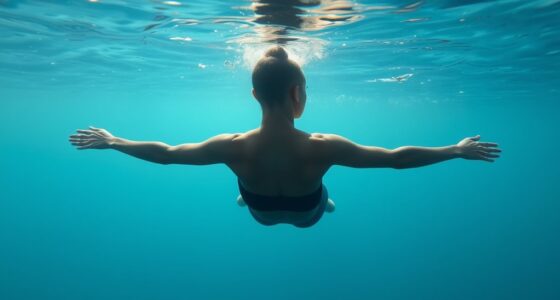

Floating reduces gravity’s pull on your body, allowing blood to circulate more evenly and effortlessly. As you relax in water, hydrostatic pressure helps push blood toward your core, easing strain on your heart and vessels. This gentle support can improve venous return, lower swelling, and promote healthier circulation. By calming your nervous system, floating also reduces stress on your heart. Keep exploring to discover how this natural method benefits your cardiovascular health.
Key Takeaways
- Floating reduces gravity’s pull, allowing more even blood distribution and easing strain on the cardiovascular system.
- Hydrostatic pressure from immersion helps push blood toward the core and prevents pooling in extremities.
- The gentle compression during floating facilitates blood vessel dilation and improves overall circulation.
- Floating eases the workload on the heart, promoting efficient oxygenated blood flow and reducing circulatory fatigue.
- Relaxation while floating lowers blood pressure and heart rate, supporting better autonomic nervous system balance and heart health.

Floating in water can markedly influence blood circulation by reducing the effects of gravity on your body. When you’re immersed, your body experiences a significant decrease in the gravity effect, which normally pulls blood downward toward your lower extremities. This reduction allows blood to circulate more evenly throughout your body, alleviating the strain on your heart and vascular system. As you float, hydrostatic pressure—the force exerted by the water surrounding you—becomes a key factor. This pressure acts uniformly on your body, compressing your tissues and blood vessels equally from all directions. The result is an increase in venous return, meaning more blood is pushed back to your heart with less effort. This improved circulation can help reduce swelling and alleviate pressure in your legs and feet, which often suffer from poor blood flow when standing or sitting for extended periods.
The hydrostatic pressure exerted by water is directly proportional to the depth of immersion. The deeper you go, the greater the pressure, which further enhances blood flow dynamics. This pressure not only helps push blood toward your core but also promotes the dilation of blood vessels, making it easier for blood to circulate. The gentle compression helps prevent blood pooling in your extremities, a common issue when gravity isn’t countered. Consequently, floating creates an environment where your cardiovascular system can operate more efficiently, easing the workload on your heart and reducing fatigue. This is especially beneficial for people with circulatory issues or those recovering from certain medical conditions, as it encourages a healthier flow of oxygenated blood throughout your body.
Additionally, floating can influence your autonomic nervous system, which controls involuntary functions like heart rate and blood pressure. When you float, your body enters a state of relaxation, often lowering your overall blood pressure and heart rate. This calming effect further supports ideal blood circulation by reducing stress-induced constriction of blood vessels. Moreover, research suggests that the reduction of gravity’s impact during floating can also lead to decreased cardiovascular strain, promoting overall heart health. The overall experience of floating, with its combination of decreased gravity effect and increased hydrostatic pressure, creates a natural, gentle boost for your circulatory health. It allows your body to reset, promoting better blood flow and reducing strain on your cardiovascular system. Whether you’re floating in a pool, a flotation tank, or a calm body of water, you’re giving your circulatory system a chance to function more effectively, ultimately supporting your overall health and well-being.

BEAMNOVA Hydrostatic Test Pump with 3.17 Gallon Gauge Tank
- Working Pressure Range: 0-50 Bar / 726 PSI
- Flow Volume: 45 ML
- Tank Capacity: 3.17 Gallons
As an affiliate, we earn on qualifying purchases.
As an affiliate, we earn on qualifying purchases.
Frequently Asked Questions
Can Floating Help Reduce Blood Pressure Naturally?
Floating can help reduce blood pressure naturally by promoting hydrotherapy benefits and stress reduction. When you float, the gentle weightlessness calms your nervous system, lowering stress hormones that can increase blood pressure. This relaxation improves blood circulation and helps your body manage stress better. Regular floating sessions may contribute to healthier blood pressure levels over time, supporting overall cardiovascular health and providing a calming, natural way to relax your mind and body.
Does Floating Improve Circulation in Specific Health Conditions?
Floating acts like a gentle wave, helping improve circulation in certain health conditions by leveraging water buoyancy and stress relief. When you float, your body relaxes, easing pressure on blood vessels and promoting better blood flow. This can be especially beneficial for those with circulation issues or conditions like arthritis. By reducing stress and supporting your body’s natural movement, floating enhances circulation, helping you feel more energized and healthier.
How Often Should One Float for Optimal Blood Flow Benefits?
You should float 1 to 2 times a week for ideal blood flow benefits. Aim for sessions lasting about 60 to 90 minutes, which gives your body enough time to relax and improve circulation. Follow these frequency recommendations to prevent overstimulation or fatigue, and listen to your body’s signals. Regular floating can enhance blood flow, reduce tension, and support overall health when done consistently within these suitable durations.
Are There Any Risks Associated With Floating and Blood Circulation?
Think of floating as a gentle dance with your circulation—most times, it’s safe and soothing. However, risks assessment is vital; if you have circulation concerns or cardiovascular issues, floating might pose rare risks like blood pressure fluctuations. Always consult your healthcare provider beforehand. While floating generally promotes relaxation, staying informed guarantees you avoid unintended effects, allowing your body’s rhythm to flow harmoniously without risking your health.
How Does Floating Compare to Other Relaxation Methods for Circulation?
Floating, especially through weightless therapy and aquatic relaxation, often improves blood circulation more effectively than many other methods. When you float, your body relaxes completely, reducing muscle tension and promoting better blood flow. The buoyancy eases pressure on your cardiovascular system, encouraging circulation. Compared to ground-based relaxation, floating uniquely stimulates your body’s natural circulation process, helping you feel more refreshed and energized after each session.
Conclusion
Just like a leaf gently drifting on a calm stream, floating allows your blood to flow freely, unhindered by gravity or tension. Embracing this weightless state, you give your circulation the chance to rejuvenate and reset. Remember, sometimes letting go and surrendering to the flow can restore balance within. Like the leaf’s peaceful journey, your body benefits most when you trust the gentle current of your circulatory system, guiding you toward better health and harmony.