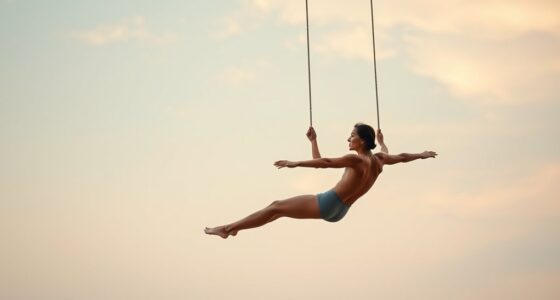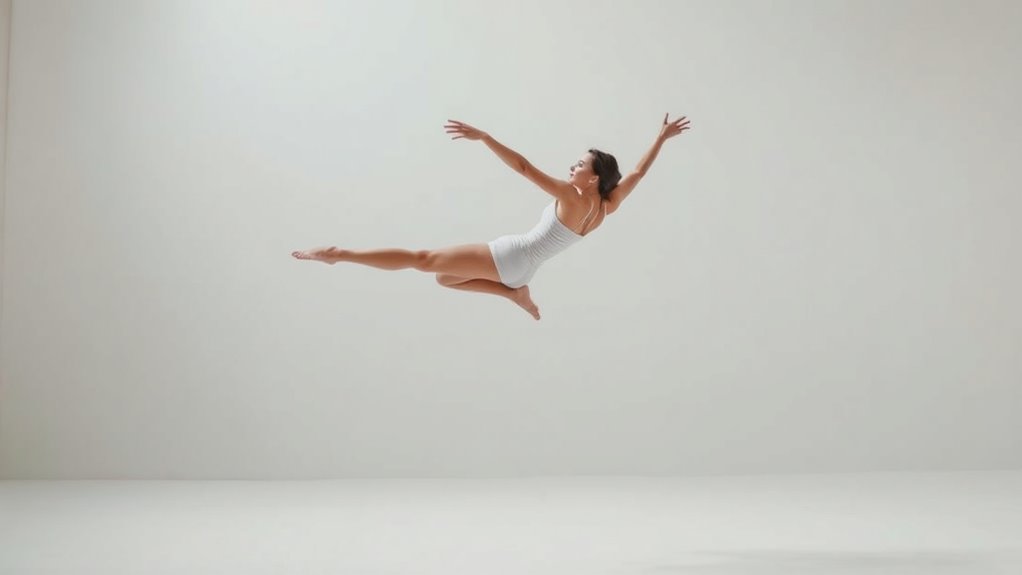
Floating shifts your reliance from gravity to visual and vestibular cues, affecting your sense of balance and proprioception. As your body adjusts, your brain interprets movement differently, which can cause disorientation or a feeling of instability. Over time, your nervous system recalibrates, improving your awareness of body position and stability. Continuing to explore this topic will reveal how your senses adapt and what this means for balance in different environments.

Get pool and patio gear delivered free with Prime
- Fast, free delivery on millions of items
- Prime Video, Amazon Music and more included
- Member-only deals all year
Key Takeaways
- Floating reduces gravitational cues, causing reliance on visual and vestibular signals for balance and spatial orientation.
- Visual cues, such as water surfaces, serve as anchors that influence perceived upright positioning while floating.
- The vestibular system detects subtle movements and equilibrium changes, helping maintain balance during floating.
- Sensory mismatch between visual and vestibular inputs can lead to disorientation, prompting nervous system recalibration.
- Repeated floating experiences enhance proprioceptive awareness and adaptation, improving overall balance and body awareness.
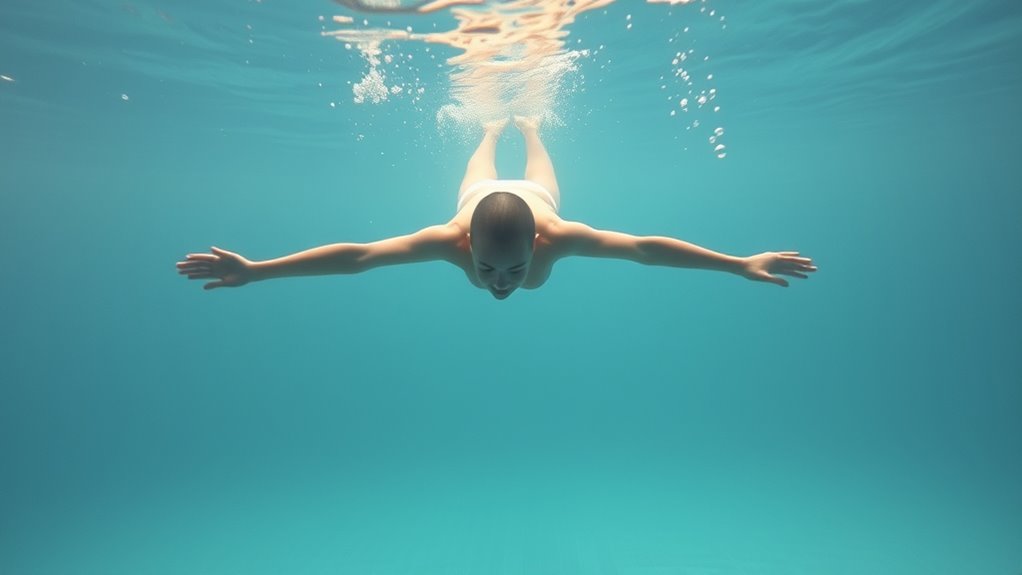
Have you ever wondered how some objects seem to defy gravity and float effortlessly in water or in the air? It’s a fascinating phenomenon that taps into how your brain interprets sensory information. When you float, your visual perception and vestibular system work together to create a sense of weightlessness and stability. Your visual perception provides cues about your surroundings, such as the surface of the water or the airspace around you, helping your brain understand orientation. At the same time, your vestibular system, located in your inner ear, detects changes in movement and position, sending signals about your balance and spatial orientation.
When you float, your visual perception might tell you that you’re stationary or in motion, depending on what you see and how your eyes interpret the environment. For example, in water, the surface acts as a visual anchor, helping your brain judge whether you’re upright or tilted. The vestibular system, however, senses the absence of gravity’s pull or the gentle movements of floating, providing feedback that your body is in a different state of equilibrium. This combination of cues can create a unique sensation—sometimes exhilarating, sometimes disorienting—that influences how you perceive your body’s position in space.
Floating impacts balance and proprioception because it shifts the usual inputs your brain relies on. Normally, your sense of balance depends heavily on your vestibular system, your visual cues, and proprioception—the sense of where your body parts are without looking. When you float, especially in water, the usual gravitational cues are altered or reduced. The visual perception might be less reliable if your surroundings are uniform or if you’re blindfolded, causing your brain to depend more heavily on vestibular input. This can lead to a temporary mismatch between what you see and what your inner ear detects, making it harder to maintain a sense of upright position.
This altered sensory integration influences your proprioception—your awareness of your body’s position and movement. As your body adapts to floating, your nervous system recalibrates how it processes these signals to keep you balanced. The more you float, the more your brain learns to interpret the subtle cues from your vestibular system and visual perception, improving your overall sense of stability over time. This adaptation can enhance your proprioceptive awareness, helping you develop better control over your movements, even outside of floating environments.
Ultimately, floating teaches your brain to modify how it processes sensory information. It highlights the importance of the vestibular system and visual perception in maintaining balance and spatial awareness. By understanding this relationship, you can appreciate how your body continuously adapts to different conditions, making floating not just a relaxing experience but also a powerful tool for enhancing your balance and proprioception skills.
floating balance training equipment
As an affiliate, we earn on qualifying purchases.
As an affiliate, we earn on qualifying purchases.
Frequently Asked Questions
How Quickly Does Floating Improve Overall Balance Skills?
Floating can improve your overall balance skills within a few sessions, especially when you incorporate sensory integration and vestibular training. As you adapt to the sensory input from floating, your brain learns to better process balance signals. Consistent practice enhances proprioception and stabilizes your vestibular system, leading to quicker improvements over time. Keep at it, and you’ll notice more confident, steady movements as your balance improves through these targeted training methods.
Are There Any Risks Associated With Floating for Balance?
There are minimal risks associated with floating for balance, but you should be aware of risk factors like claustrophobia or skin sensitivities. To stay safe, follow safety precautions such as ensuring proper hygiene, using quality facilities, and informing staff about any health concerns. Always listen to your body, and if you feel uncomfortable or dizzy, exit the float tank immediately to prevent accidents or adverse reactions.
Can Floating Therapy Help With Specific Balance Disorders?
Floating therapy can help with specific balance disorders by enhancing sensory integration and supporting vestibular rehabilitation. As you float, your body experiences reduced sensory input, allowing your brain to better process balance signals. This calming environment promotes neuroplasticity, aiding in the retraining of your vestibular system. Regular sessions may improve coordination, reduce dizziness, and strengthen your overall balance, making it a useful complementary treatment for balance-related issues.
How Often Should One Float to See Balance Improvements?
Think of floating as watering a delicate plant—consistency helps it thrive. To see balance improvements, aim for sessions twice a week, allowing your sensory deprivation experiences to reinforce relaxation techniques and recalibrate your proprioception. Regular floating helps your nervous system adapt and strengthen, making your balance sharper over time. Stick with this routine, and you’ll notice steady progress as your body learns to trust its senses again.
Does Floating Benefit Athletes in Enhancing Proprioception?
Yes, floating benefits athletes by enhancing proprioception through sensory deprivation, which reduces external distractions. This deepens your awareness of your body’s position and movement, directly improving vestibular function. As you float, your brain adapts to new sensory inputs, strengthening neural pathways involved in balance. Regular floating sessions help you develop better spatial orientation, ultimately boosting performance in your sport and reducing injury risk.
Conclusion
As you drift into the tranquil embrace of floating, your senses become like a tightrope walker gracefully balancing above a calm lake. The weightless serenity sharpens your proprioception, turning your body into a finely tuned instrument. With each session, you’re sculpting your inner compass, enhancing stability like a sturdy oak standing tall amid swirling winds. Embrace floating as your secret tool to master balance and dance effortlessly through life’s delicate tightropes.
Halloween Picks
halloween
As an affiliate, we earn on qualifying purchases.