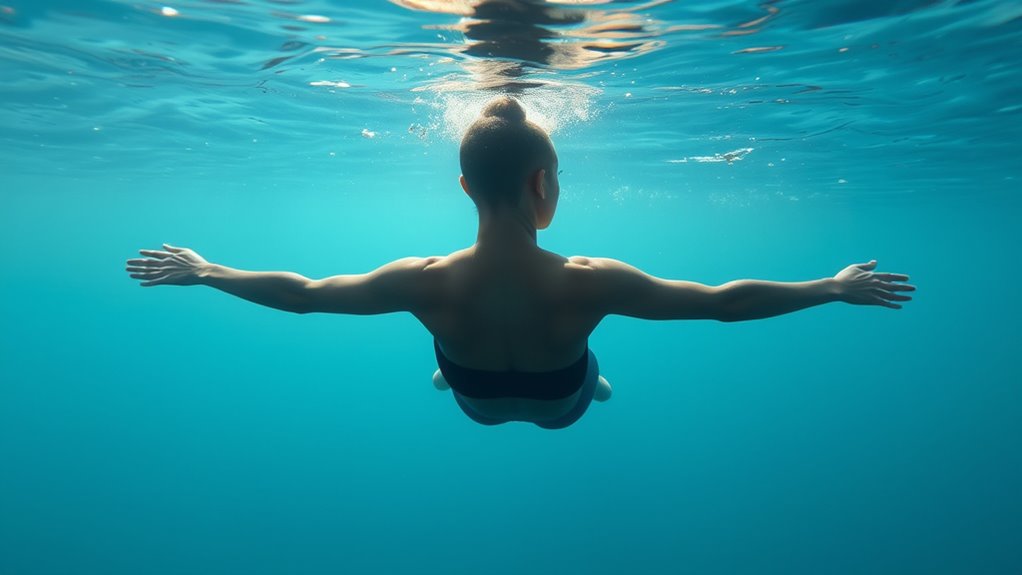

To improve your floating, focus on steady, deep breaths to stay relaxed and centered. Keep your spine aligned by gently elongating from your head to your tailbone, engaging your core to support posture. This synergy of breath, posture, and core engagement helps you maintain stability and effortless buoyancy. When these elements work together, floating becomes easier and more natural. If you want to learn how to perfect this technique, there’s more to discover below.

Get pool and patio gear delivered free with Prime
- Fast, free delivery on millions of items
- Prime Video, Amazon Music and more included
- Member-only deals all year
Key Takeaways
- Practice diaphragmatic breathing to promote relaxation and maintain steady oxygen flow during floating.
- Align the spine by elongating from head to tailbone, supporting better posture and buoyancy.
- Engage core muscles gently to stabilize the body, reduce tension, and enhance balance in water.
- Coordinate deep breaths with posture adjustments to optimize lung capacity and ease of movement.
- Combine controlled breathing, proper alignment, and core engagement for improved floating stability and energy efficiency.
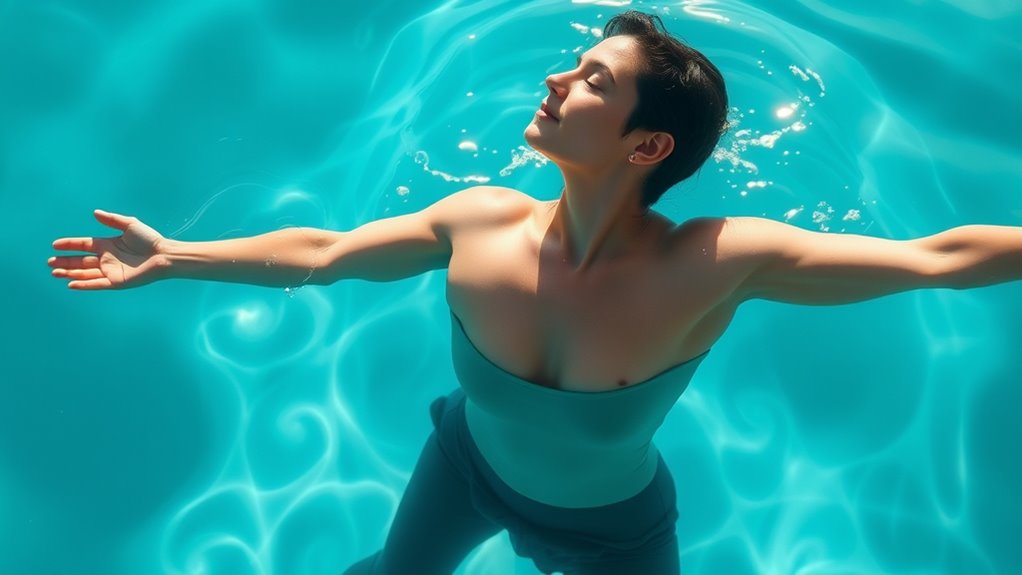
Have you ever wondered how your breathing and posture influence your overall strength and well-being? When you’re floating, these elements become even more vital because they directly impact how easily you maintain balance, conserve energy, and stay relaxed. Breath control isn’t just about inhaling and exhaling; it’s about using your breath to support your body’s alignment and stability. Proper breathing helps you stay calm and focused, which is essential when you’re suspended in water. When you master your breath, you can regulate your heart rate, reduce unnecessary tension, and avoid fatigue. It also encourages better spinal alignment, which is fundamental for efficient movement and overall health.
Proper breathing and posture enhance floating stability, energy conservation, and overall well-being in water.
Spinal alignment plays a key role in how your body functions during floating. When your spine is properly aligned, your muscles work more efficiently, and your joints don’t have to compensate for poor posture. This means less strain on your back, neck, and shoulders, making it easier to stay relaxed and focused. Good spinal alignment also improves your breathing because an aligned spine creates more space for your lungs to expand fully. When your back is slumped or misaligned, your chest cavity compresses, restricting airflow and making it harder to control your breath. Conversely, maintaining a neutral spine helps you take deep, controlled breaths, maximizing oxygen intake and reducing stress.
To achieve ideal spinal alignment while floating, focus on elongating your spine from the crown of your head down through your tailbone. Imagine gently lifting your head upward and lengthening your back rather than collapsing into the water. This posture supports better breath control, as your lungs have room to expand, and your diaphragm can move freely. As you practice, pay attention to how your body feels; a relaxed, aligned spine makes it easier to breathe smoothly and stay buoyant. Incorporating deep, diaphragmatic breaths while maintaining this alignment helps you stay centered and conserve energy. It also prevents unnecessary tension from creeping into your neck or shoulders.
When you combine mindful breath control with maintaining proper spinal alignment, you create a synergy that enhances your floating experience. You’ll find it easier to stay calm and balanced, even in challenging water conditions. This connection between your breath, posture, and core engagement becomes a foundation for more advanced techniques. Not only does it improve your floating stability, but it also carries over to other water activities, supporting your overall strength and resilience. Mastering these elements means you can float with ease, confidence, and a sense of control, turning a simple act into a powerful tool for well-being. Additionally, understanding how core engagement influences your posture can further improve your stability and help you float more effortlessly.
diaphragmatic breathing exercises
As an affiliate, we earn on qualifying purchases.
As an affiliate, we earn on qualifying purchases.
Frequently Asked Questions
How Does Breathing Affect Buoyancy During Floating?
Breath control directly impacts your buoyancy balance while floating. When you inhale deeply, your lungs fill with air, increasing your overall buoyancy and helping you stay afloat effortlessly. Exhaling slowly decreases buoyancy, making you sink slightly. By mastering breath control, you can fine-tune your buoyancy, maintaining a comfortable floating position. Proper breathing techniques guarantee you stay relaxed and balanced in the water, making floating easier and more efficient.
What Are Common Posture Mistakes Swimmers Make When Floating?
You often make posture mistakes like improper hand position and poor head alignment when floating. Keep your hands relaxed and close to your sides to maintain balance. Make sure your head stays in line with your spine, not tilted up or down, to reduce drag and improve buoyancy. Correcting these habits helps you stay relaxed, conserve energy, and float more effortlessly. Focus on maintaining a streamlined position for better floating stability.
How Can Core Engagement Improve Floating Stability?
Imagine a tightrope walker balancing effortlessly; that’s core engagement in floating. By activating your core muscles, you create a stable center, preventing unnecessary swaying. This stability enhances your buoyancy and control, making floating easier and more efficient. Conversely, muscle relaxation can cause instability, making you work harder to stay afloat. Focus on core activation to maintain a steady, relaxed posture, transforming your float into a smooth, effortless experience.
Are There Specific Breathing Techniques for Beginners?
Yes, as a beginner, focus on simple breathing patterns like slow, steady inhales and exhales to stay relaxed. Practice relaxation techniques such as deep breathing exercises before entering the water to reduce anxiety. These methods help you stay calm, improve buoyancy, and make floating easier. Remember, consistency is key—over time, you’ll become more comfortable and confident with your breathing, enhancing your overall floating experience.
How Do Different Body Types Influence Floating Posture?
Imagine a vintage submarine steering the depths—your body type influences how you float. With varied body fat distribution and muscle tone, you might find certain postures easier or harder. Those with more body fat may stay buoyant effortlessly, while leaner bodies might need to adjust posture slightly. Understanding these differences helps you optimize your floating technique, making your experience smoother and more relaxed regardless of your unique physique.
Conclusion
Mastering breathing, posture, and core engagement while floating transforms your experience in the water. Did you know that proper technique can increase buoyancy by up to 30%? By focusing on steady breaths, aligned posture, and active core muscles, you’ll move more efficiently and feel more confident. Keep practicing these skills, and you’ll notice your comfort and stamina improve with every session. Remember, every small adjustment brings you closer to effortless floating and greater water mastery.
Halloween Picks
halloween
As an affiliate, we earn on qualifying purchases.