
To create mesmerizing water-level landscaping with floating aesthetics, integrate water features that naturally respond to environmental changes, like rainfall or drought. Use floating islands, lily pads, or platforms to add visual interest and habitat value. Incorporate sustainable practices such as rainwater harvesting to maintain water levels and reduce reliance on municipal supplies. Naturalistic edges with rocks and plants blend water features seamlessly into the landscape, making your outdoor space vibrant and lively. Exploring these ideas further will reveal how to craft truly dynamic landscapes.
Key Takeaways
- Incorporate water features that adapt to changing water levels for a natural, dynamic appearance.
- Use floating elements like lily pads and platforms to enhance visual interest and habitat value.
- Harvest rainwater to maintain water levels, promoting sustainability and reducing reliance on municipal supplies.
- Design naturalistic edges with rocks and plants to seamlessly integrate water features into the landscape.
- Implement responsive systems with sensors and pumps to mimic natural water flow and ebb and flow patterns.
Water-level landscaping transforms outdoor spaces by integrating water features that respond dynamically to changing water levels, creating a seamless and natural look. When you design with this approach, you harness the fluidity of water to enhance your landscape’s beauty and functionality. One of the key elements to contemplate is rainwater harvesting, which not only conserves water but also supplies your water features sustainably. By collecting rainwater from rooftops or paved surfaces, you can feed into ponds, streams, or other water features, reducing reliance on municipal water supplies and lowering your environmental footprint. This integration ensures your landscape remains vibrant and alive even during dry spells, as the harvested rainwater maintains the water levels in your features naturally.
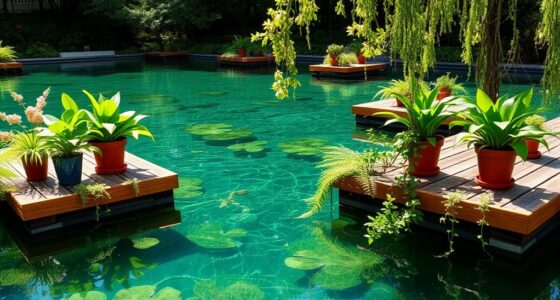
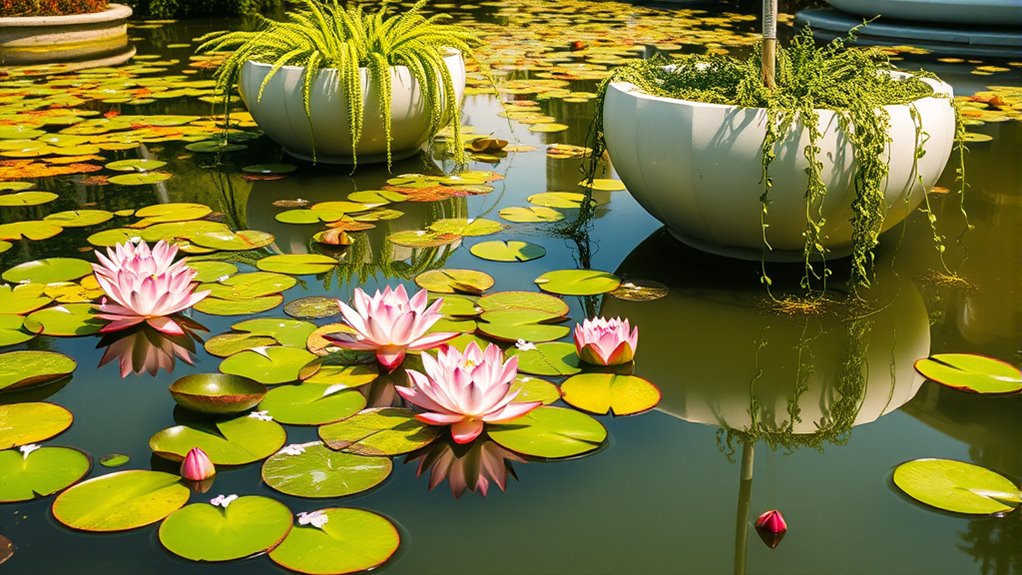
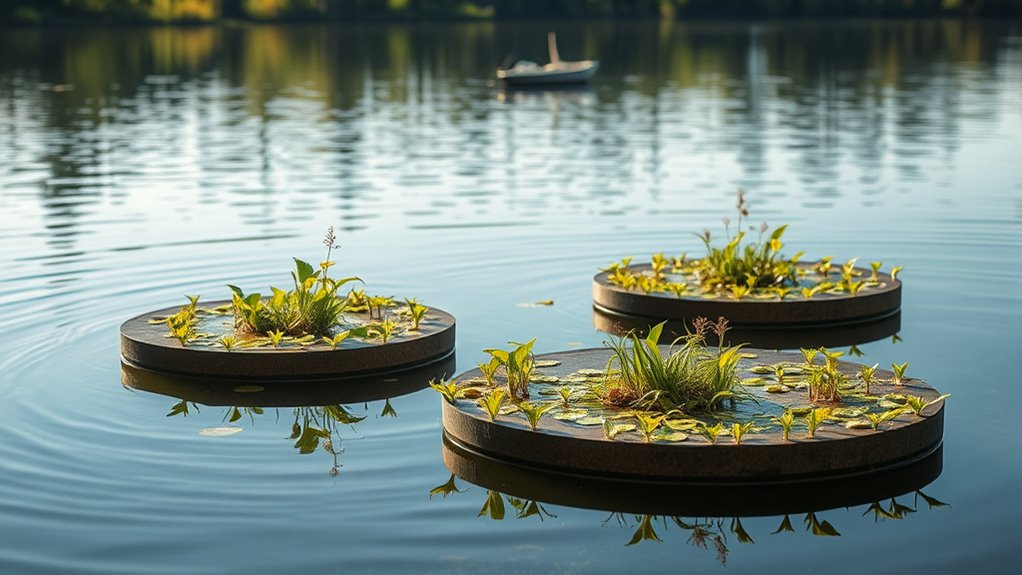
In terms of water feature design, it’s important to think about how water flows and responds to environmental changes. You want to create features that appear to be part of the landscape, rather than separate, static installations. Floating elements, such as lily pads, islands, or decorative platforms, can enhance this effect by shifting with water levels, making the entire scene feel organic and untouched by human intervention. These floating components not only add visual interest but also serve practical purposes, like providing habitat for wildlife or creating shaded resting spots for you to enjoy the space.
As you plan your water feature, consider incorporating adjustable elements that respond to rainfall or drought conditions. Automating water levels with sensors and pumps allows your pond or stream to rise and fall naturally, mimicking the ebb and flow of a real waterway. This responsiveness adds a dynamic quality that draws the eye and invites curiosity. Furthermore, designing water features with naturalistic edges—using rocks, plants, and irregular contours—helps blend the water into the landscape, making it appear as though it’s always been part of the terrain.

Pond Test Strips – 7-1 Pond Water Testing Kit with Ebook – Pond pH Test Kit with 50 Quick and Accurate Fish Tank Test Strips – 50 Test Strips by JNW Direct
- 7-in-1 Pond Water Testing: Tests hardness, chlorine, pH, nitrates, and more
- Fast and Easy to Use: Dip and read results within seconds
- Reliable and Accurate Results: Includes comprehensive color chart for precision
As an affiliate, we earn on qualifying purchases.
As an affiliate, we earn on qualifying purchases.
Frequently Asked Questions
How Do I Prevent Algae Growth in Water-Level Landscaping?
To prevent algae growth in your water-level landscaping, focus on algae control by limiting nutrient buildup and reducing sunlight exposure. You can achieve this through regular water circulation, which keeps water moving and discourages algae from settling. Consider adding a fountain or aerator, and keep debris out of the water. Maintaining proper filtration and avoiding overfeeding fish also help keep algae at bay, ensuring a healthy, attractive pond.
What Are the Best Plants for Floating Gardens?
Think of your floating garden as a miniature island, where the right plants can thrive. You should choose water-loving plants like water lettuce, duckweed, and water hyacinths, which float effortlessly and provide natural filtration. For your floating garden design, these plants create a lush, vibrant look and help control algae. Their rapid growth keeps the water clear, making your floating oasis both beautiful and healthy.
How Often Should Floating Structures Be Maintained?
You should perform regular maintenance on your floating structures every four to six weeks. Stick to a consistent maintenance schedule and conduct inspection routines to check for wear, algae buildup, or damage. This helps prevent issues and guarantees your floating garden remains healthy and functional. Be proactive, and clean or repair any problems promptly, especially after storms or heavy weather, to keep your floating aesthetic looking its best.
Can Water-Level Landscaping Be Used in Small Ponds?
Imagine transforming your tiny backyard pond with water-level landscaping; yes, you can definitely use it. For example, a small urban garden incorporated a mini pond design featuring floating aquatic decor options, creating a lush, natural look. Water-level landscaping works well in small ponds because it enhances aesthetic appeal, maximizes space, and adds visual interest without overwhelming the limited area. You’ll enjoy a serene, beautiful setting with minimal effort.
What Safety Measures Are Recommended for Floating Installations?
For floating installations, you should prioritize installation safety by securing all elements properly to prevent shifting or tipping. Regularly check the structural stability of floats and anchoring systems, especially during storms or high winds. Use corrosion-resistant materials and ensure weight distribution is even. Keep safety equipment nearby, and educate yourself on emergency procedures. These measures help protect your installation and guarantee it remains safe and stable over time.
Conclusion
Embracing water-level landscaping transforms your space into a living canvas, where floating aesthetics dance like ripples on a calm pond. You harness the power of water’s ever-changing nature, creating a harmonious balance that feels both natural and refined. With thoughtful design, your landscape becomes a symphony of serenity, inviting you to unwind and reconnect. Let your outdoor space flow like a gentle stream, where beauty rises and falls with the tide, always inviting you back for more.