
To evaluate weather patterns before your floating trip, start by checking local weather forecasts for temperature, wind speed, and precipitation. Pay attention to recent rainfall or storms that can change river currents and create hazardous conditions. Look at wind forecasts, as strong gusts can make navigation difficult. Monitoring updates from reliable sources like weather apps and river agencies helps you stay informed. By understanding these factors, you’ll be better prepared for safe and enjoyable adventures—keep going to learn more.
Key Takeaways
- Monitor local weather forecasts, focusing on temperature, wind, precipitation, and river flow reports from reliable sources.
- Observe wind direction and strength, as strong gusts can create choppy waters and affect navigation.
- Check recent rainfall or snowmelt data to assess river current strength and potential flooding risks.
- Look for updates on river conditions and currents from local outfitters or river agencies before your trip.
- Be aware of upcoming weather changes and plan your floating trip during stable weather conditions for safety.
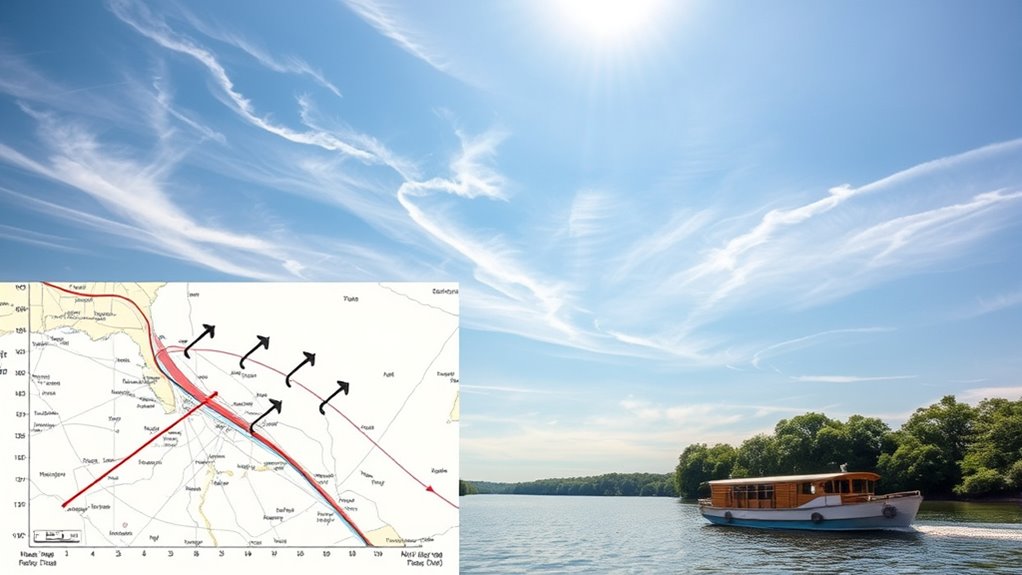
Planning a floating trip relies heavily on understanding weather patterns, as they directly impact safety and enjoyment. One of the most important factors to consider is the river currents, which can vary markedly depending on recent rainfall, snowmelt, and upstream dam releases. Strong river currents can make paddling more challenging, increase the risk of capsizing, or carry you into dangerous areas like rocks or rapids. Before heading out, check recent reports or talk to local outfitters to get a sense of how fast the current is flowing. If the currents are swift, it might be best to delay your trip or choose a different section of the river. Slow-moving waters are safer for beginners and more relaxing for everyone else. Remember, even a calm-looking river can become dangerous with sudden changes in flow, so always stay updated on current conditions. Properly tuning your equipment, such as paddles or float devices, can also improve safety and efficiency on the water.
Wind forecasts are equally vital when planning your floating adventure. Winds can influence your experience in multiple ways. Strong gusts can make steering and controlling your boat difficult, especially if you’re in a lightweight craft like a kayak or inflatable float. Wind can also cause waves to build up, making the water choppier and increasing the risk of falling out or capsizing. Checking the wind forecast before you go helps you decide whether to proceed or postpone your trip. Calm days with light breezes are ideal, ensuring a smooth, enjoyable glide down the river. If the forecast predicts high winds, consider rescheduling or choosing a sheltered stretch of water. Additionally, wind direction matters—blowing upstream or across the river can affect your paddling effort, while a consistent, gentle breeze from behind can assist your progress.
To get accurate weather information, consult reliable sources like local weather stations, weather apps, or river agencies. Pay attention not just to temperature and precipitation but also to wind forecasts and river current reports, which are often updated regularly during the day. Keep in mind that weather conditions can change rapidly, especially in mountain or remote areas, so plan to monitor updates before and during your trip. Preparing for fluctuations in river currents and wind forecasts ensures you can adapt on the fly, prioritize safety, and maximize your enjoyment on the water. By understanding these key weather patterns, you’ll be better equipped to choose the right day for your floating trip, ensuring a safe and memorable experience. Additionally, understanding the Kia Tuning options available can help you optimize your vehicle for adventures, including floating trips where a reliable and well-tuned vehicle can be crucial for transportation to remote launch sites.

Abahub 210-230cm Adjustable Kayak Paddle for Kayak,Boating,Black
- Adjustable Length for Family Use: 210-230 cm adjustable kayak paddle
- Portable and Detachable Design: Three-piece, travel-friendly kayak paddle
- Feathered Blades for Efficiency: Offset blades reduce wind resistance
As an affiliate, we earn on qualifying purchases.
As an affiliate, we earn on qualifying purchases.
Frequently Asked Questions
How Do Seasonal Changes Affect Weather Predictions for Floating Trips?
Seasonal changes considerably impact weather predictions for floating trips. You’ll notice fluctuations in seasonal temperature, which can influence water levels and safety conditions. Precipitation trends also vary, with wetter seasons bringing more chances of storms or high water, while drier periods tend to offer more stable conditions. By staying aware of these seasonal shifts, you can better plan your trip, ensuring safer and more enjoyable floating experiences.
Can Sudden Weather Shifts Occur During Long-Term Forecasts?
Imagine your floating trip as sailing a boat through changing tides. Sudden weather shifts can indeed happen despite long-term forecasts, especially when weather pattern stability falters. While forecast accuracy has improved, unpredictable factors like storms or cold fronts still create surprises. Always stay alert, check updates regularly, and be prepared for quick changes—think of it as steering through uncharted waters where surprises await even the best sailors.
What Tools Are Best for Real-Time Weather Updates on the Water?
You should use tools like a waterproof weather radio or a smartphone app that provides real-time updates. Satellite imagery helps you see storms forming and moving, giving you a visual of changing weather patterns. Keep an eye on barometric pressure readings; falling pressure often signals an approaching storm. These tools together help you stay informed, enabling you to make safe decisions on the water and avoid sudden weather shifts.
How Does Cloud Cover Influence River Currents and Safety?
Cloud cover can substantially influence river currents and safety, as it often indicates changing weather conditions. When thick clouds roll in, expect increased rainfall that can cause rapid water level rises and stronger currents. This makes floating trips riskier, especially if you’re unprepared. Keep an eye on cloud cover to gauge potential weather shifts, and always stay alert to changing river currents to guarantee your safety during your float.
Are There Specific Weather Patterns That Indicate Ideal Floating Conditions?
While calm days often promise smooth floating adventures, keep an eye out for specific weather patterns that signal ideal conditions. Clear skies, gentle wind patterns, and stable storm fronts usually create the best experience. Avoid days with strong wind patterns or approaching storm fronts, as they can stir the water and compromise safety. Trust your instincts and check forecasts carefully to verify your trip is both enjoyable and safe.
Conclusion
By understanding weather patterns, you can plan your floating trip with confidence, avoiding storms and sudden changes. By checking forecasts, reading clouds, and monitoring winds, you guarantee safety and enjoyment. By staying informed, you make smarter decisions, and by being prepared, you embrace adventure. Weather patterns guide you, protect you, and empower you. So, embrace the knowledge, trust your observations, and float with peace of mind—because a well-informed trip is a truly memorable one.