
Underwater visibility depends on factors like particles, algae, weather, and water conditions that can limit how much light reaches your eyes. Suspended sediments, pollution, and storms stir up sediments, reducing clarity. Warmer water can lead to algae blooms, further clouding your view. Currents also transport particles, affecting how far you can see. Knowing how these elements interact helps you plan better dives and improve your underwater experiences—if you keep exploring, you’ll uncover more ways to maximize your visibility.

Get pool and patio gear delivered free — and shop member deals
- Fast, free delivery on millions of items
- Access to Prime Big Deal Days deals on October 6–7
- Prime Video, Amazon Music and more included
Key Takeaways
- Water particles, algae, pollutants, and sediments decrease light penetration, reducing visibility underwater.
- Weather conditions like storms and overcast skies limit natural light, impacting clarity.
- Water temperature influences algae blooms, which can cloud water and lower visibility.
- Currents stir up sediments and pollutants, causing murky conditions and decreased sightlines.
- Using artificial lighting and planning dives during clear conditions enhance underwater visibility and safety.

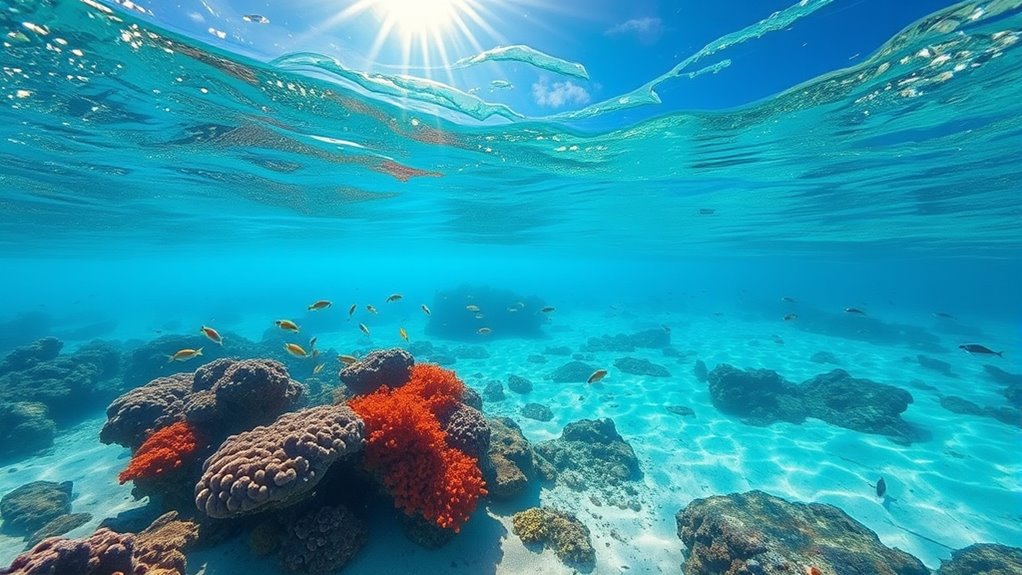
Have you ever wondered what determines how clearly you can see beneath the water’s surface? The answer largely depends on water clarity, which is influenced by multiple factors, but one of the most essential is light penetration. Light penetration refers to how much sunlight filters through the water, impacting how well you can see underwater. When sunlight reaches the water, it interacts with particles, plankton, and other substances suspended in the water, affecting both the amount of light that gets through and how far it travels. Clear water allows more light to penetrate deeper, making everything beneath the surface appear brighter and more detailed. Conversely, when water is murky or filled with sediments, light struggles to reach below, resulting in poor visibility.
You’ll notice that in areas with high water clarity, you can see farther and more sharply. This is because the light has less obstruction, giving you a clearer view of fish, coral, or the ocean floor. On the other hand, if the water contains a lot of algae, plankton, or pollutants, the light absorption increases, reducing light penetration. This creates a hazy or foggy underwater environment, making it harder to spot objects or see distant features. Factors like weather, water temperature, and currents also influence water clarity and light penetration. For example, after heavy rains or storms, sediments get stirred up, and visibility drops considerably. Similarly, warmer water often promotes algae blooms, which can decrease clarity. Additionally, market volatility can impact the availability and quality of certain water conditions, affecting visibility for divers and snorkelers alike.
Understanding how light penetration affects water clarity can help you plan your dives or snorkeling trips better. On clear days with good light penetration, you’ll enjoy vibrant colors and crisp details. During overcast conditions or in areas with high particulate matter, your view becomes limited, so adjusting your expectations and diving strategies is essential. For instance, in murkier waters, staying closer to the reef or underwater structures improves your chances of seeing interesting marine life. Additionally, using a good underwater flashlight can help compensate for poor natural light, especially in deeper or less clear waters.
In essence, water clarity and light penetration shape your underwater experience. They determine how much you see, how vividly you see it, and how far your vision extends beneath the surface. By understanding these elements, you can better anticipate conditions, select suitable gear, and maximize your enjoyment and safety during underwater adventures. Whether you’re exploring vibrant coral reefs or searching for elusive marine creatures, recognizing the role of water clarity and light penetration will help you make the most of every dive or snorkel session.
underwater flashlight for diving
As an affiliate, we earn on qualifying purchases.
As an affiliate, we earn on qualifying purchases.
Frequently Asked Questions
How Does Water Temperature Influence Underwater Visibility?
Water temperature effects underwater visibility by influencing how light penetrates the water. When water is warmer at the surface and colder below, thermal stratification occurs, creating layers that limit mixing. This often results in clearer water near the surface but murkier conditions below. As you dive, you’ll notice visibility varies with temperature changes, making it essential to understand how thermal stratification impacts your view, especially in different seasons and locations.
Can Marine Life Affect the Clarity of the Water?
You bet marine life can impact water clarity. When marine plant life flourishes or plankton blooms occur, they release particles that cloud the water, making visibility a real challenge. These tiny organisms can turn clear waters murky in no time. So, if you’re diving or snorkeling, expect that lively marine ecosystems might obscure your view, proving that sometimes, the smallest creatures have the biggest effect on underwater visibility.
What Role Do Ocean Currents Play in Visibility Conditions?
Ocean currents considerably influence visibility conditions by moving deep water and surface agitation. When currents bring nutrient-rich deep water upward, they can increase plankton and sediment, reducing clarity. Conversely, steady currents help clear away particles, improving visibility. Surface agitation from wind or boat traffic stirs up sediments, making the water murkier. Understanding these factors helps you choose better diving or snorkeling spots with clearer water for a prime experience.
How Do Human Activities Impact Underwater Visibility?
You might think humans are great at preserving clarity underwater, but pollution sources and sediment disturbance tell a different story. Your activities, from dumping waste to disturbing the seabed, actually cloud the water and reduce visibility. Ironically, what we do to enjoy the ocean often hampers our view, making it harder to appreciate its beauty. So, your actions directly impact how clearly you see beneath the surface.
Are There Seasonal Variations in Underwater Visibility?
Yes, you’ll notice seasonal variations in underwater visibility. During spring and summer, increased sunlight promotes seasonal plankton and algae blooms, which can markedly reduce visibility. In contrast, fall and winter often bring clearer waters as plankton levels decrease, and algae blooms subside. These natural cycles influence how well you can see underwater, so plan your dives accordingly to maximize your visibility experience.
Conclusion
Remember, your underwater visibility can change faster than the blink of an eye, so always stay alert to the conditions around you. Factors like water clarity, weather, and your equipment play huge roles in what you see below the surface. By understanding these elements, you can navigate the underwater world more confidently—turning a murky abyss into a crystal-clear wonderland. Master these influences, and you’ll open a universe more breathtaking than you ever imagined.
Halloween Picks
halloween
As an affiliate, we earn on qualifying purchases.