
To choose water-safe sunscreen for floaters, look for options labeled as reef safe with ingredients like zinc oxide or titanium dioxide, which are gentle on aquatic life. Make sure it’s water resistant for at least 40 to 80 minutes to stay effective during swimming or splashing. Reapply as needed, especially after towels or water exposure. If you want to discover more about selecting the best sun protection for water activities, keep exploring for helpful tips.

Get pool and patio gear delivered free with Prime
- Fast, free delivery on millions of items
- Prime Video, Amazon Music and more included
- Member-only deals all year
Key Takeaways
- Select sunscreens labeled as reef safe, free from harmful chemicals like oxybenzone and octinoxate.
- Ensure the product is water resistant for at least 40 to 80 minutes to stay effective during water activities.
- Check for environmentally friendly ingredients that minimize ecological impact on marine life and coral reefs.
- Reapply sunscreen after swimming, sweating, or towel drying to maintain protection and reduce runoff.
- Choose water-safe sunscreens that combine sun protection with eco-conscious formulations for safe water recreation.
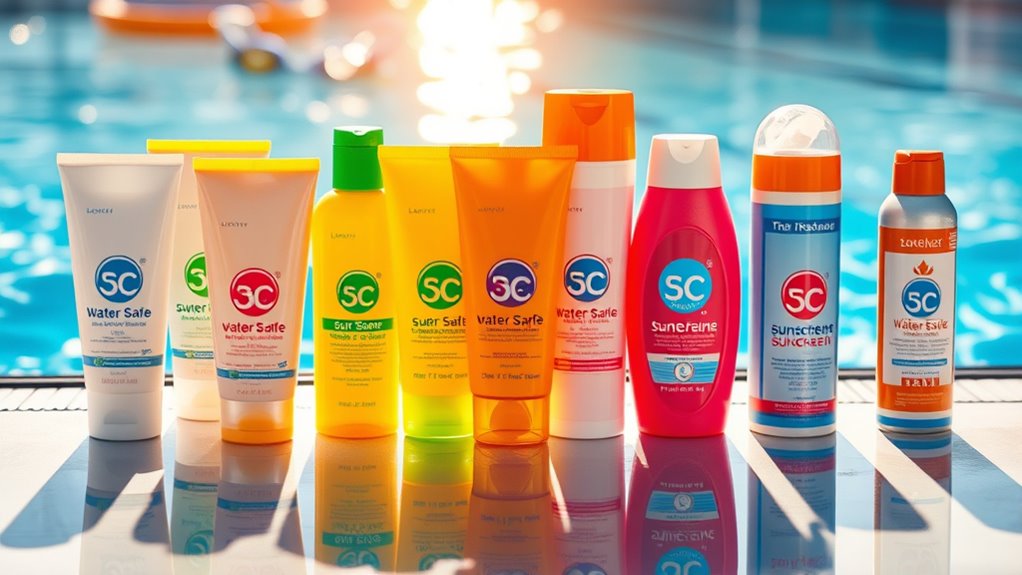
When you’re spending time in or around water, choosing a water-safe sunscreen is essential to protect your skin without harming the environment. As a floater, you likely spend a lot of time on or near lakes, pools, or oceans, so selecting the right sunscreen is crucial for both your skin health and the environment’s well-being. Look for sunscreens that contain reef safe ingredients, which are free from harmful chemicals like oxybenzone and octinoxate that can damage coral reefs and marine life. These ingredients are formulated to provide effective sun protection while minimizing ecological impact. Additionally, water resistant formulations are vital because they stay on your skin longer, even when you’re swimming or sweating. This means you won’t need to reapply as often, reducing the risk of runoff that could harm aquatic ecosystems.
When choosing a water-safe sunscreen, always check the label for both reef safe ingredients and water resistant claims. A good sunscreen for water activities should be labeled as water resistant for at least 40 to 80 minutes, depending on your activity level. This ensures that your protection remains effective during swimming, splashing, or sweating. Keep in mind, though, that no sunscreen is completely waterproof, so reapplication is necessary after prolonged exposure or towel drying. By selecting a product with these features, you’re not only safeguarding your skin but also helping preserve the health of the water bodies you enjoy. Recognizing the importance of attention in creative practice can also inspire innovative ways to approach sun protection and environmental care during your water activities.
reef safe mineral sunscreen for water activities
As an affiliate, we earn on qualifying purchases.
As an affiliate, we earn on qualifying purchases.
Frequently Asked Questions
Are Mineral Sunscreens Better for Floaters Than Chemical Ones?
Mineral sunscreens are better for floaters because they use zinc oxide or titanium dioxide, which sit on your skin and reflect UV rays, reducing the risk of eye irritation. Chemical sunscreens absorb UV light and can sometimes cause eye discomfort or irritation, especially if they run into your eyes. For floaters, mineral options offer safer eye safety considerations, giving you peace of mind while protecting your skin from sun damage.
How Often Should I Reapply Water-Safe Sunscreen During Outdoor Activities?
During outdoor activities, you should reapply water-safe sunscreen every two hours, especially if you’re swimming or sweating. For instance, if you’re at the beach for four hours, reapply at the two-hour mark and again after swimming or heavy sweating. Your reapplication frequency depends on your sun exposure duration; the longer you’re exposed, the more often you should reapply to stay protected.
Can Water-Resistant Sunscreen Cause Eye Irritation for Floaters?
Water-resistant formulas can sometimes cause eye irritation, especially if they get into your eyes during swimming or sweating. If you have floaters, you should be cautious because eye irritation may worsen discomfort. To reduce this risk, apply sunscreen carefully around your eyes, avoid direct contact, and choose sunscreens labeled as hypoallergenic or designed for sensitive skin. Always rinse your eyes if you experience irritation.
Is SPF 30 Sufficient, or Should I Opt for Higher Protection?
SPF 30 can be sufficient for daily sun protection, but if you’re outdoors for extended periods, opting for a higher SPF offers better protection. SPF importance lies in blocking more UV rays, reducing eye irritation risk and safeguarding your retina. For floaters, higher sun protection levels help prevent aggravation. Consider your activity level and sun exposure; if in doubt, choose SPF 50 for maximum coverage and peace of mind.
Are There Specific Brands Recommended for Floaters With Sensitive Eyes?
You’ll be amazed at how some brands revolutionize eye comfort! For floaters with sensitive eyes, opt for brands offering sensitive eye formulations and hypoallergenic options. Look for sunscreens like Neutrogena Sensitive Skin or Blue Lizard Sensitive, which are designed to minimize irritation. These brands prioritize gentle ingredients, ensuring you stay protected without risking discomfort. Trust these options to keep your eyes safe and happy during water adventures!
Conclusion
Remember, selecting a water-safe sunscreen is essential for protecting your skin during water activities. Look for broad-spectrum options with SPF 30 or higher, and verify they’re labeled water-resistant. Did you know that only 14% of people regularly reapply sunscreen after swimming? Staying vigilant and reapplying as needed will keep your skin safe and healthy while you enjoy the water. Make smart choices and surf or swim with confidence!
Fall Picks
fall essentials
As an affiliate, we earn on qualifying purchases.